Decoded War Secrets Lead to Gold‑Packed Submarine Found 50 Years Later at 17,000 Feet
A decoded clue uncovers a sunken Japanese submarine at 17,000 ft, revealing a hidden stash of Nazi gold and a wartime treasure.
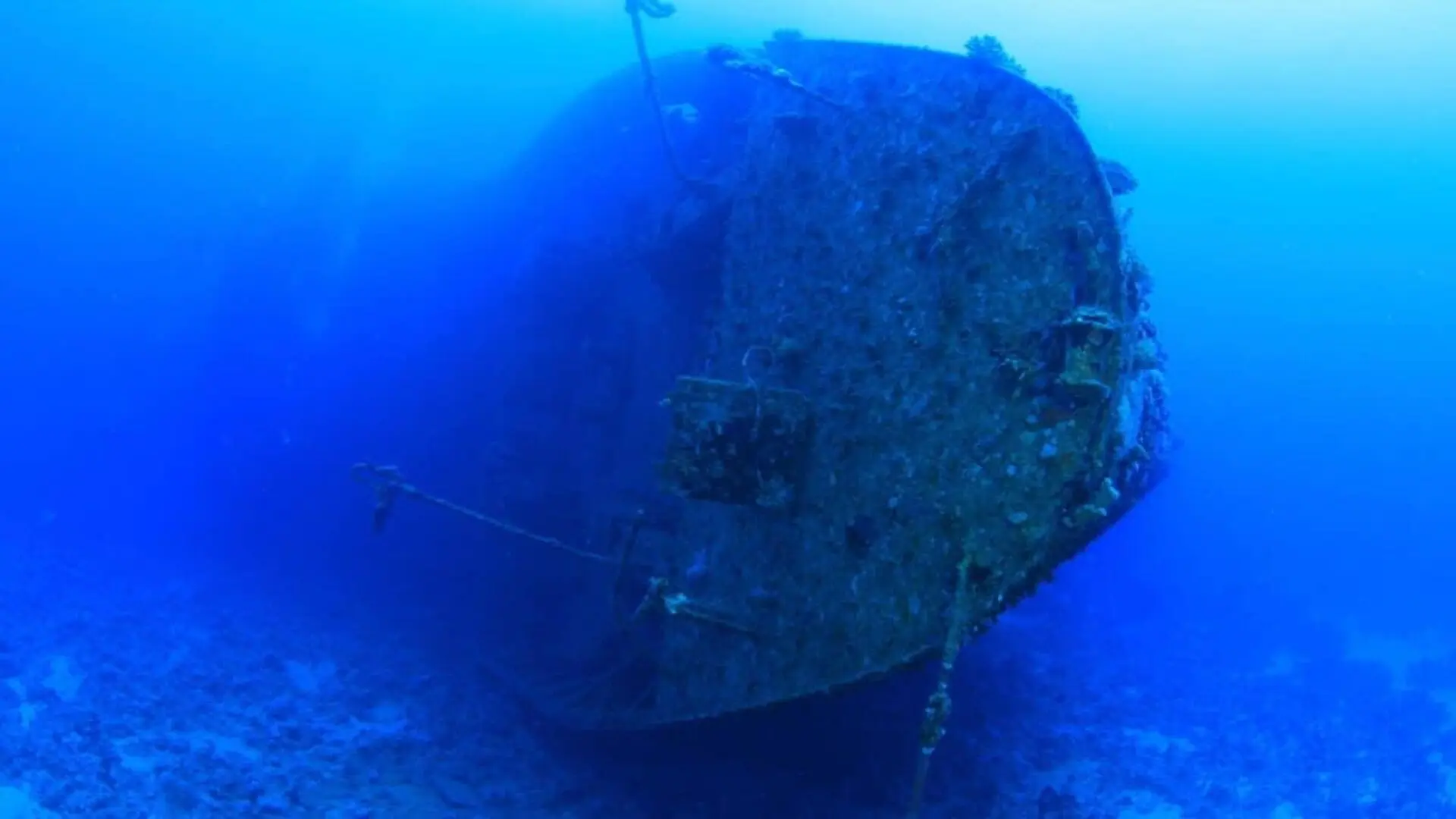
In the dark hours of June 23‑24 1944, a Japanese submarine surfaced in the mid‑Atlantic to complete a transfer with the German U‑boat U‑530. While the vessel was still on the surface, an Avenger torpedo bomber emerged from the night, ending the rendezvous.
The aircraft, piloted by Lieutenant Commander Jesse Taylor of the escort carrier USS Bogue, was dispatched to the exact sector of ocean after Allied codebreakers decrypted the Axis transmission that listed the meeting point, time, and a payload of two tons of gold. The interception plan was built entirely on intercepted Japanese and German communications before the I‑52 even departed Singapore.
Taylor’s after‑action report, recorded on a shipboard tape recorder, noted that the I‑52 sank with 109 crew members, 146 gold bars, and a hold full of tin, tungsten, molybdenum, rubber, quinine and opium. The wreck remained hidden on the ocean floor for more than half a century until researcher Paul Tidwell, working with the ocean‑exploration firm Meridian Sciences (later Nauticos), pinpointed its location in May 1995 at a depth exceeding 17,000 feet, roughly 20 miles from the coordinates recorded by the U.S. Navy at the time of the attack.
Axis Supply Mission Across the Atlantic
By early 1944, Allied naval patrols had effectively sealed off conventional sea lanes between Germany and Japan. To bypass these blockades, both powers turned to purpose‑built cargo submarines capable of transporting high‑value materials across oceans.
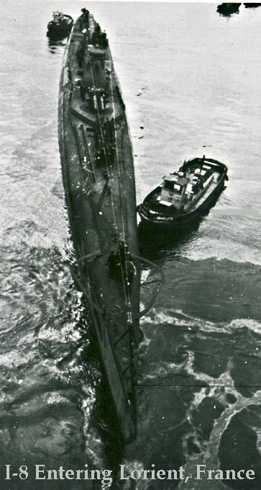
The I‑52 was one of three Type C3 submarines built for this clandestine trade. At 356.5 feet long and a full‑load displacement of 3,158 tons, she left Kure Naval Base in March 1944, took on additional cargo at Singapore, and set a course for the German‑controlled port of Lorient, France. The two‑ton gold shipment was meant to pay for Zeiss optics and other precision equipment that Japanese industry could not produce.
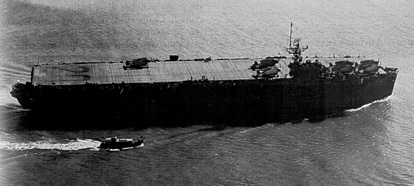
Allied planners already knew the submarine’s itinerary because British and American cryptographers had cracked both the German Enigma and Japanese naval codes. A carrier task force centered on the Bogue was therefore sent from Norfolk specifically to intercept the I‑52.
Acoustic Torpedo Strikes and Recorded Descent
On the night of the encounter, TBM Avenger bombers launched from the Bogue amid poor weather, each armed with depth bombs, sonobuoys, and a weapon labeled a Mark 24 mine—a cover for an acoustic homing torpedo, the first of its kind deployed in combat, designed to lock onto a submarine’s propeller noise according to contemporary accounts.
Taylor detected the I‑52 on radar, made an initial run with depth bombs that missed, and then released the acoustic torpedo on his second pass. The ship’s recorder captured the sound of propeller blades, an underwater explosion, and a crushing noise described as similar to a tin can being flattened.
A second Avenger, flown by Lieutenant Commander Bill Gordon, arrived after Taylor’s aircraft left, tracked faint propeller noises, and dropped another acoustic torpedo shortly after 01:00 UTC on June 24. Both pilots were later awarded Distinguished Flying Crosses. The following day, debris—including floating rubber and human tissue—was recovered, while the U‑530 escaped undetected.
Archive Hunt Reveals Accurate Coordinates
The wreck remained elusive for decades, in part because the Navy’s original attack coordinates were off by more than ten miles. The discrepancy was understandable: the strike occurred at night, in adverse weather, far from any reliable navigational reference, with aircraft operating near the limits of their range.
When Tidwell began his investigation in 1990, he sifted through records in the United States, Britain, Germany, and Japan, eventually locating the Bogue’s deck log, Taylor’s attack report, and the war diary of the U‑530.
The team applied a technique called RENAV (re‑navigation), originally devised for reconstructing modern nuclear‑submarine tracks. By feeding historical ship logs into a Kalman filter that merged data from multiple vessels and accounted for currents, wind, and frequent course changes, the analysts shifted the estimated wreck site more than ten miles from the Navy’s initial figure. The revised coordinates, transmitted to the search vessel via satellite email, proved accurate within half a mile.
Discovery Shows Submarine Intact With Cargo
The 1995 expedition launched from Barbados aboard the Russian research vessel Yuzhmorgeologiya, towing a MAK‑1M side‑scan sonar a hundred metres above the seafloor at pressures approaching 8,000 psi. After two weeks of searching the primary area without success, fuel supplies dwindled and a competing British team was already on a parallel hunt.
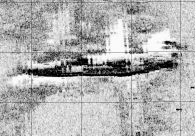
On May 2, a sonar contact appeared near the RENAV‑derived position. A high‑resolution pass before dawn revealed a debris field, a crater from the torpedo blast, and a submarine hull standing upright with its conning tower still intact.
A sled‑mounted camera swept over the stern, capturing the rudder guard rail—a distinctive feature of this Japanese class—confirming the identification. Rather than exploding under pressure, the I‑52 appears to have flooded gradually through the torpedo wound before reaching crush depth, leaving the hull largely preserved.
Dredging of the surrounding debris recovered fragments of painted wood, thin metal, and electrical insulation, enough to substantiate a salvage claim. Tidwell later told Naval History Magazine that the gold was almost certainly still lodged in the bow section, with an estimated market value of about $190 million as of late 2024.
This article has been fact checked for accuracy, with information verified against reputable sources. Learn more about us and our editorial process.
Last reviewed on .
Article history
- Latest version
Reference(s)
- “I-52 – Nauticos, LLC.” <https://nauticos.com/ocean-discovery/i-52/>.
- “Bogue.” <https://nauticos.com/wp-content/uploads/2015/07/Bogue.jpg>.
- <https://www.usni.org/magazines/naval-history-magazine/1995/december/we-got-sonofabitch>.
- “I 8.” <https://nauticos.com/wp-content/uploads/2015/07/I-8.jpg>.
- “Sonar.” <https://nauticos.com/wp-content/uploads/2015/07/Sonar.jpg>.
Cite this page:
- Posted by Zara Tariq