Deep Lake Ontario Dive Uncovers Pristine 19th‑Century Schooner With Both Masts Intact
Divers probing a supposed shipwreck under Lake Ontario uncovered an unexpected, mysterious object that defies typical wreck expectations.
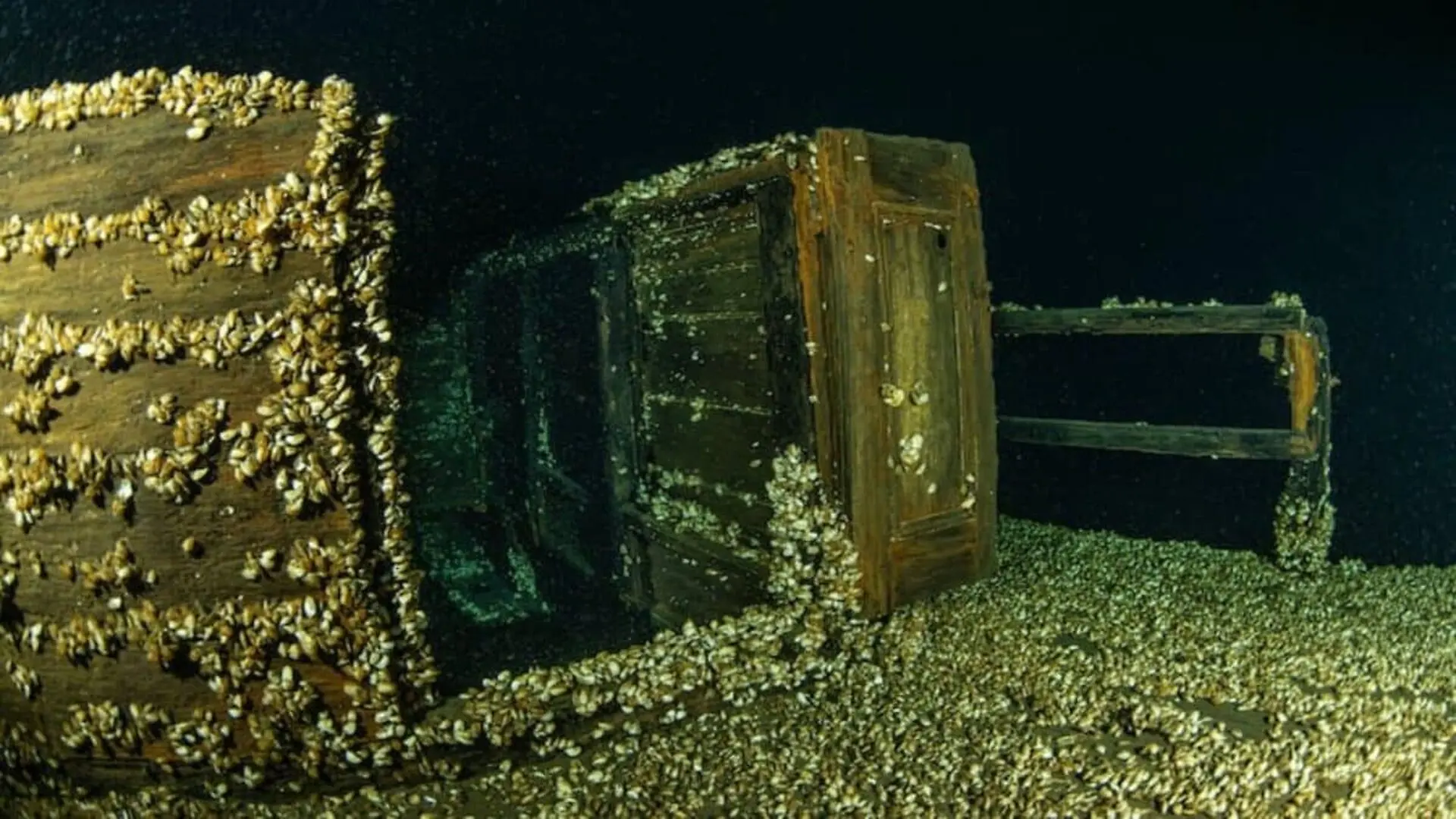
A team of Canadian divers probing Lake Ontario for a 1917 shipwreck instead encountered a two‑masted schooner that appears to be a century older. Resting upright at more than 300 feet beneath the water near Toronto, the vessel’s masts are still standing.
The investigation began after a fiber‑optic cable survey between Buffalo and Toronto revealed an anomalous shape on the lakebed. Researchers initially thought the feature might be the Rapid City, a schooner built in 1884 that sank in 1917.
A Remarkably Preserved Wreck
Instead of a decayed hull, the divers found a schooner whose overall form remained intact, with both masts still vertical. The Ontario Underwater Council described the find as “extraordinary” for a Great Lakes vessel. Council president Heison Chak said the sight caught the team off guard.
“It took us a few moments to calm ourselves down because it’s overwhelming finding a pristine wreck that is all in one piece,” he told the CBC. “It’s got its shape. It hasn’t broken down both masts. We saw two — both masts were standing, which is pretty rare.”
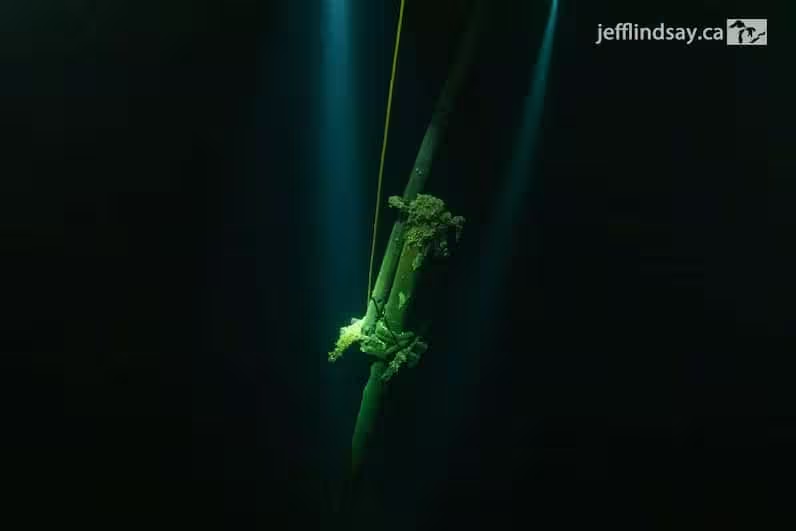
Chak noted that such preservation is rare; many wrecks he has examined show collapsed or damaged masts due to boat traffic, anchors, or divers. The depth likely shielded the schooner from disturbance.
“This is deep enough that I don’t think anyone’s been on it,” he said. “I think we’re the first group and that joy was just overwhelming.”
Construction Clues Point to Early 19th‑Century Design
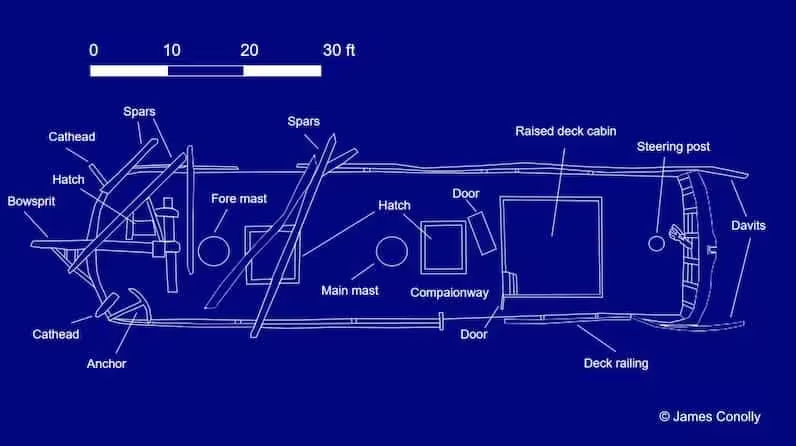
The most striking aspect of the discovery is the vessel’s build. James Conolly, an archaeologist‑diver from Trent University, observed that several features were uncommon after the mid‑1800s. While later ships typically employed metal rigging, this schooner retains rope rigging, a characteristic that “immediately puts it into, likely, the first half of the 19th century.”
Additional details include the absence of a steering wheel on the aft deck, an early‑type windlass, and the lack of a centerboard winch—components that became standard on Great Lakes vessels in the 1850s. These indicators suggest a construction window between 1800 and 1850.
The period between 1800 and 1850 was a bustling era for Great Lakes commerce, yet documentation of shipbuilding practices remains sparse. An intact hull from this time offers a valuable reference for scholars seeking to reconstruct construction methods and trade patterns.
Skepticism Remains on Precise Dating
Charles Beeker, a professor at Indiana University who specializes in Great Lakes shipwrecks, cautioned that the early‑century estimate is provisional. He emphasized the importance of confirming the vessel’s identity and origin.
“I don’t want to diminish the value of it,” Beeker noted. “They may be able to identify the vessel, maybe identify the shipyard, and that would be useful to look at an actual intact vessel on the bottom to compare to what little we do have in terms of drawings, and tonnage and information from these vessels, and the older you go, the less information we have.”
The research team plans a follow‑up expedition to capture detailed measurements, high‑resolution photography, and wood samples. These data could refine the construction date and shed light on the schooner’s role in early Great Lakes navigation.
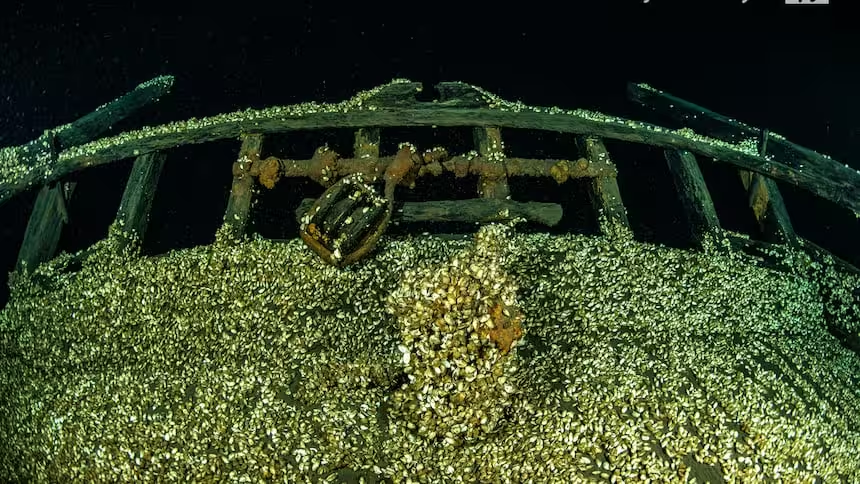
Invasive quagga mussels now blanket much of the wooden structure, obscuring details and threatening long‑term preservation. As Conolly warned, wrecks that have survived for centuries may face accelerated decay due to biological and environmental pressures. For the moment, the schooner remains unnamed, awaiting further study.
This article has been fact checked for accuracy, with information verified against reputable sources. Learn more about us and our editorial process.
Last reviewed on .
Article history
- Latest version
Reference(s)
- <https://us3.campaign-archive.com/?u=3b9d27473e590fa65d1552091&id=e38f62b1d8>.
- “OUC’s Team.” Ontario Underwater Council <https://underwatercouncil.com/oucs-team/>.
- “A 19th-century shipwreck near Toronto emerges almost untouched by time | CBC News.”, November 16, 2025 CBC <https://www.cbc.ca/news/canada/lake-ontario-great-lakes-toronto-shipwreck-9.6978162>.
- “James Conolly - Archaeology - Trent University.” <https://www.trentu.ca/archaeology/faculty-research/james-conolly>.
- “Charles Beeker.” <https://news.iu.edu/live/profiles/842-charles-beeker>.
Cite this page:
- Posted by Zara Tariq