5,000-Year-Old Tombs Uncovered Show How Egyptians First Mastered Pyramid Building
Newly found Egyptian tombs prompt archaeologists to rethink the origins of a famed ancient architectural marvel.
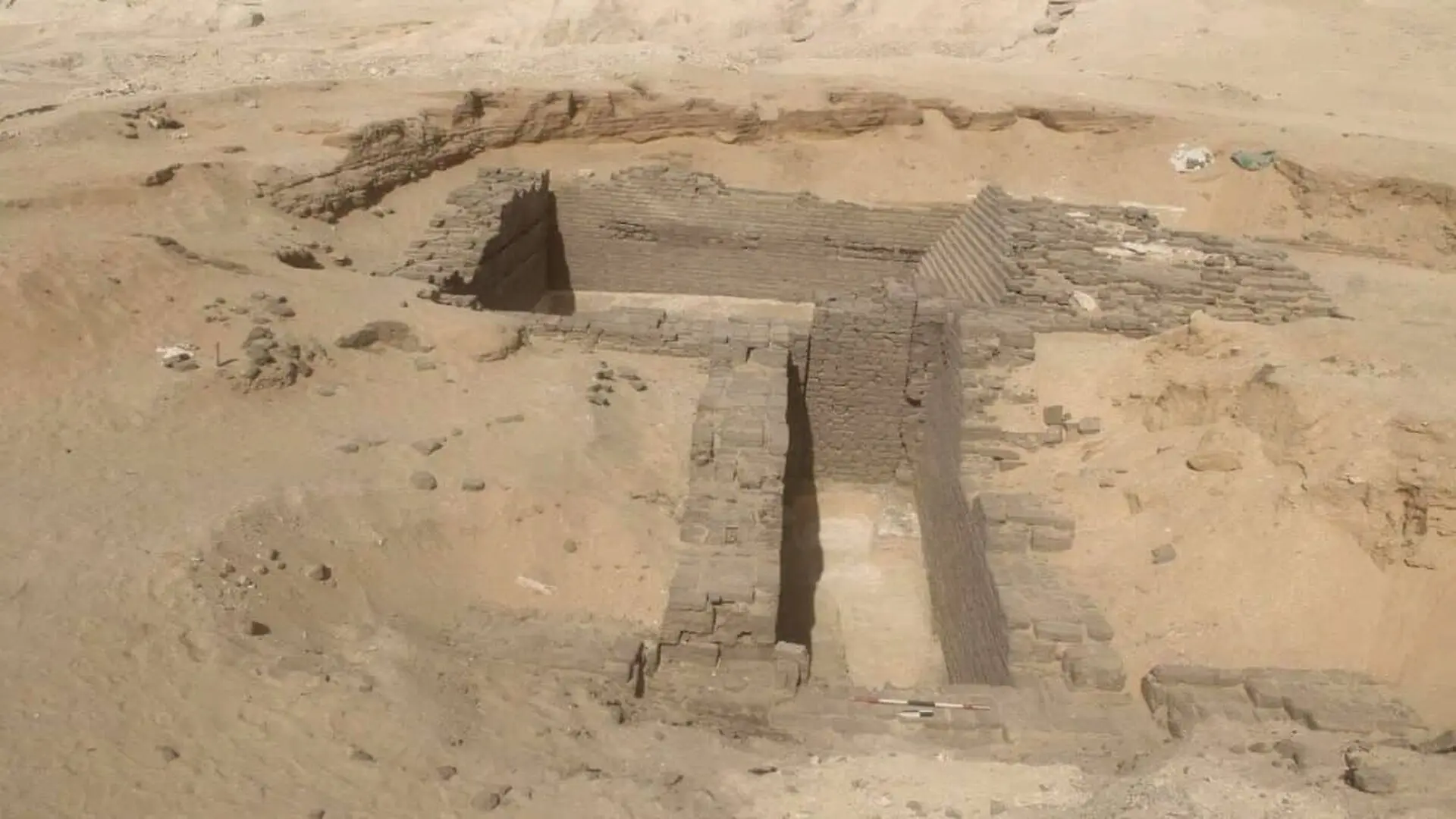
Archaeologists from Egypt’s Supreme Council of Antiquities have opened two sealed tombs dating to the Early Dynastic era, offering fresh insight into burial customs that predate the iconic pyramids of Giza.
Newly Opened Early Dynastic Tombs Reveal Pre‑Pyramid Burial Practices
The two tombs, untouched for roughly five millennia, were discovered at the Jabal al‑Tayr site in Minya Governorate. Their uncovering adds concrete data to the gradual evolution of Egyptian funerary architecture before the age of massive stone pyramids.
Jabal al‑Tayr: A Millennial Necropolis
Although the valley of the Kings dominates popular imagination, Jabal al‑Tayr has served as a burial ground for countless generations. Excavations have identified interments ranging from the Predynastic era through the Late Period, spanning roughly 664 – 332 B.C.
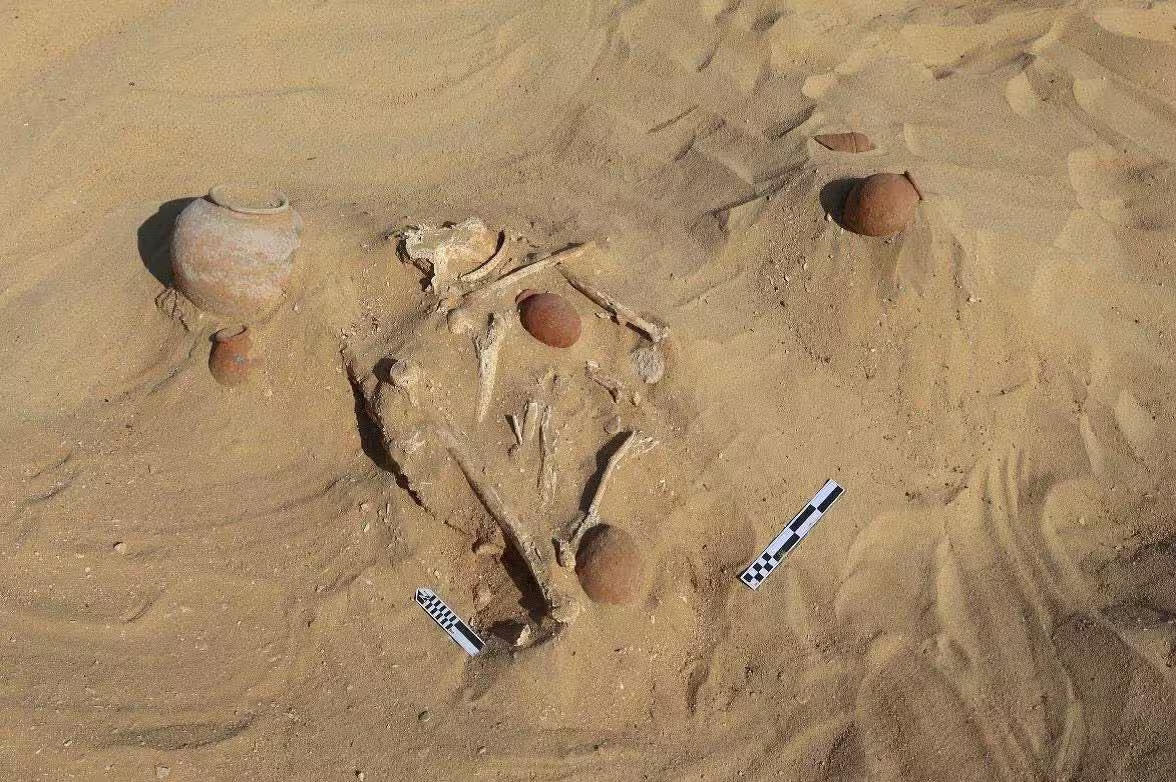
The earliest Egyptian graves emerged around 3100 B.C.E., consisting of modest pits lined with bricks and sealed with plaster. Over successive generations, these tombs expanded in size and complexity, eventually incorporating mastaba superstructures that housed grave goods and signaled the deceased’s rank.
Architectural Parallels with First Dynasty Royal Tombs
One of the newly revealed chambers bears a striking resemblance to the tomb of King Hor‑Den at Abydos, which dates to approximately 2950 B.C.E. Hor‑Den’s burial complex, the largest known from the First Dynasty, featured a ritual annex, dual storage chambers, and an extensive network of 133 subsidiary rooms surrounding the main sarcophagus.
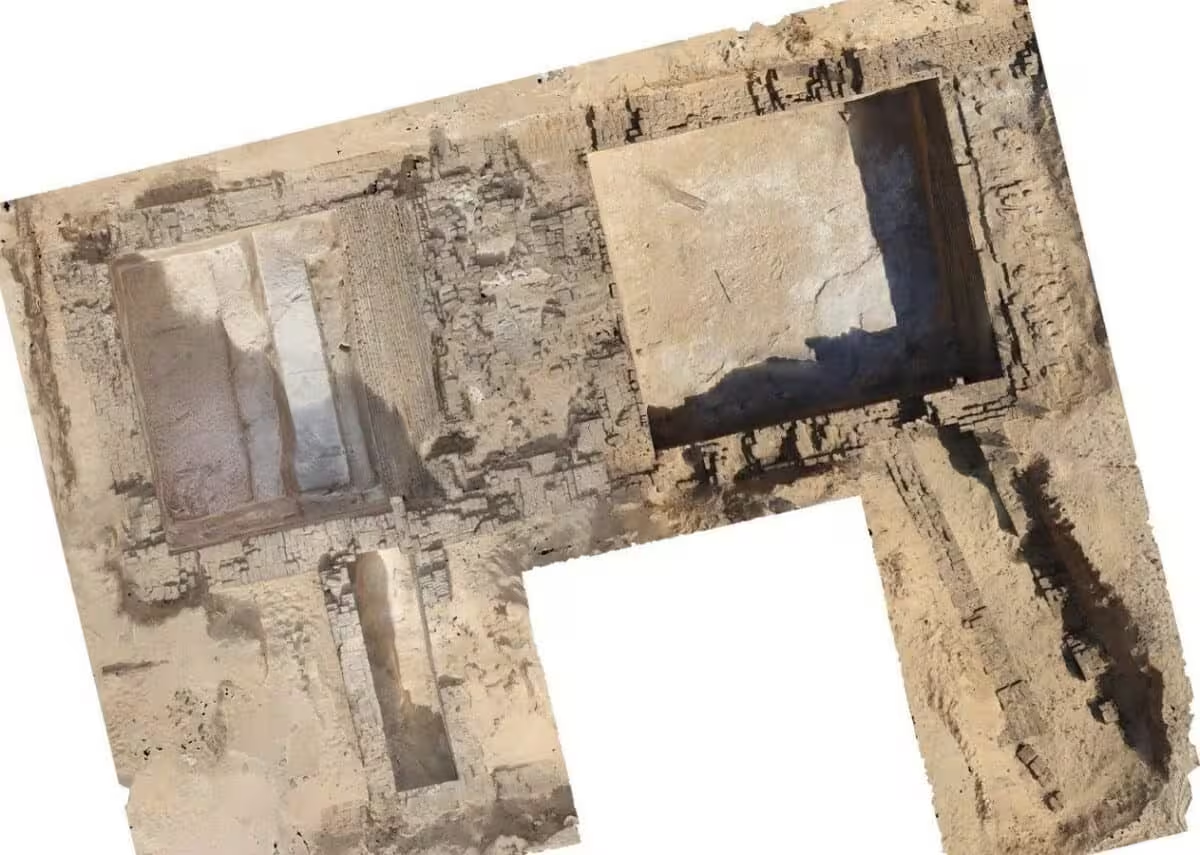
The team noted that the lower portions of one tomb’s walls are noticeably thicker, tapering toward the top—a design choice that suggests an early understanding of load distribution.
Construction Techniques and Material Insights
Both chambers were assembled from stone blocks, a material also highlighted in a recent study on ancient Egyptian stone transport. The first tomb retained oxide traces indicative of stone shaping, while embedded wooden supports reveal early attempts at reinforcing structural integrity. The second tomb remains largely intact, preserving the original blockwork.
Additional Finds Expand the Site’s Chronology
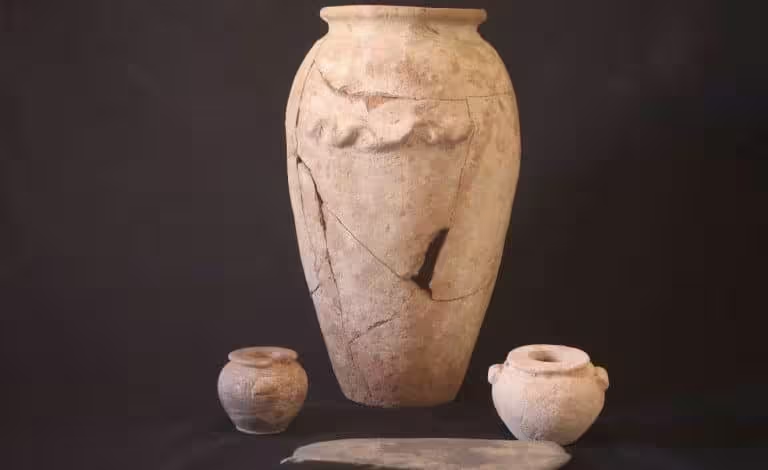
Beyond the Early Dynastic structures, excavators uncovered several Predynastic burials containing crouched skeletal remains wrapped in plant mats, accompanied by ceramic vessels. The pottery displays a black‑rim pattern consistent with the Naqada II and Naqada III phases, predating the First Dynasty.
Later interments from the Late Period yielded wooden coffins, underscoring the site’s continuous use as a cemetery across many centuries. The Ministry of Tourism and Antiquities highlighted these discoveries in a recent Facebook announcement, noting the alignment of the artifacts with established chronological frameworks.
Researchers emphasize that ongoing excavations aim to further illuminate the complex’s long‑term role in Egypt’s funerary landscape, promising additional revelations from this historically layered burial ground.
This article has been fact checked for accuracy, with information verified against reputable sources. Learn more about us and our editorial process.
Last reviewed on .
Article history
- Latest version
Cite this page:
- Posted by Zara Tariq