Invasive Tree and Sagging Power Line Sparked the 2003 Northeast Blackout
Invasive tree sparks massive blackout, plunging 50 million people into darkness and revealing a critical power‑grid vulnerability.

A seemingly innocuous tree in northern Ohio set off a chain of events that contributed to the 2003 Northeast blackout, leaving an estimated 50 million people across the United States and Canada without electricity for up to four days, according to the final report of the U.S.-Canada Power System Outage Task Force.
Tree Contact Sparks Initial Line Trips
At 3:05 p.m. on August 14, 2003, a 345‑kilovolt transmission line near Cleveland failed when its conductors brushed a tree. Two additional high‑voltage lines later encountered overgrown vegetation, removing critical pathways for electricity flow in the region.
Investigators found that the Harding‑Chamberlin line was operating at only 44 percent of its normal and emergency rating when it contacted the tree, while the Hanna‑Juniper line was at 88 percent of its rating during a similar incident. A third line suffered a comparable vegetation‑related fault shortly thereafter.
Why Conductors Sag and Touch Trees
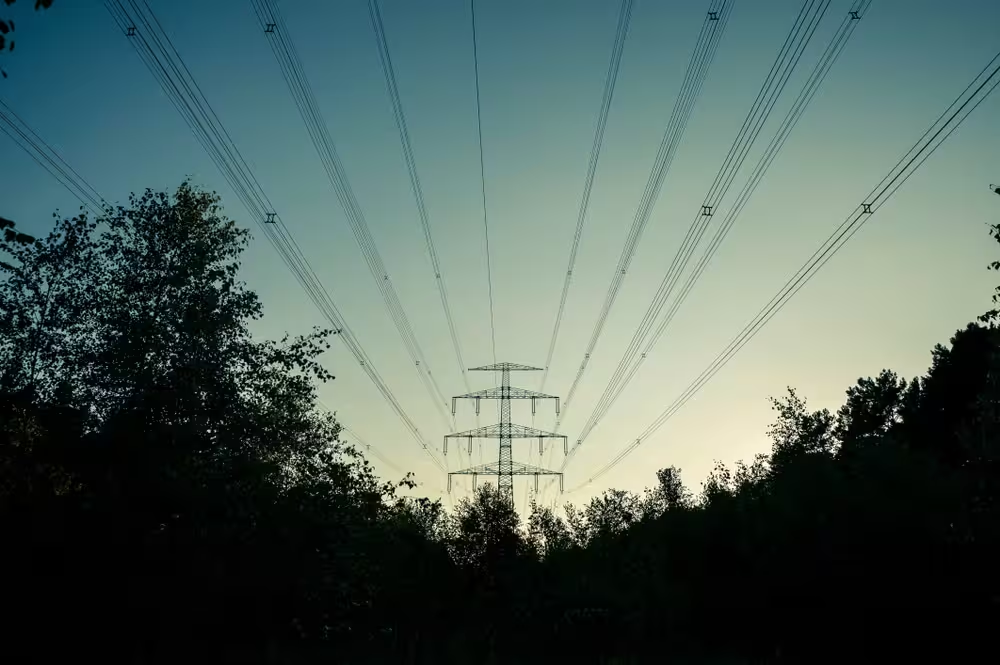
Transmission conductors expand as they heat up, causing the line to sag closer to the ground. High electricity demand, hot weather and calm wind conditions can raise conductor temperatures, narrowing the safety gap between wires and nearby foliage. The Tennessee Valley Authority provides a detailed guide on how utilities calculate the lowest point a line may reach under various operating and weather scenarios, and why cleared corridors are essential for preventing tree contact.
When a conductor approaches a tree, electricity can arc through the air or travel along the vegetation toward the ground. Protective devices detect the resulting fault and disconnect the line within a fraction of a second, redirecting the load onto other parts of the network.
Invasive Tree‑of‑Heaven Fuels the Problem
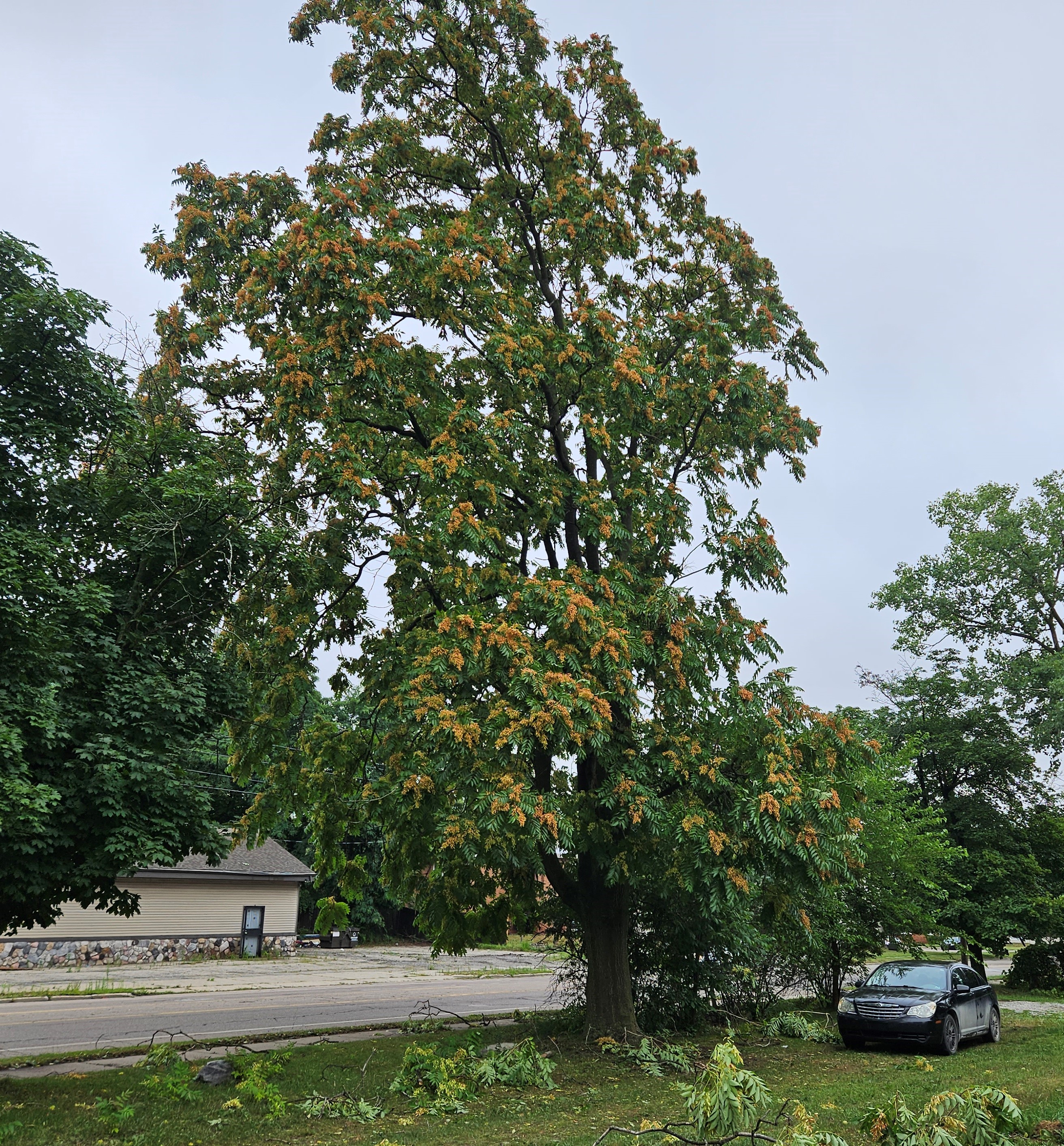
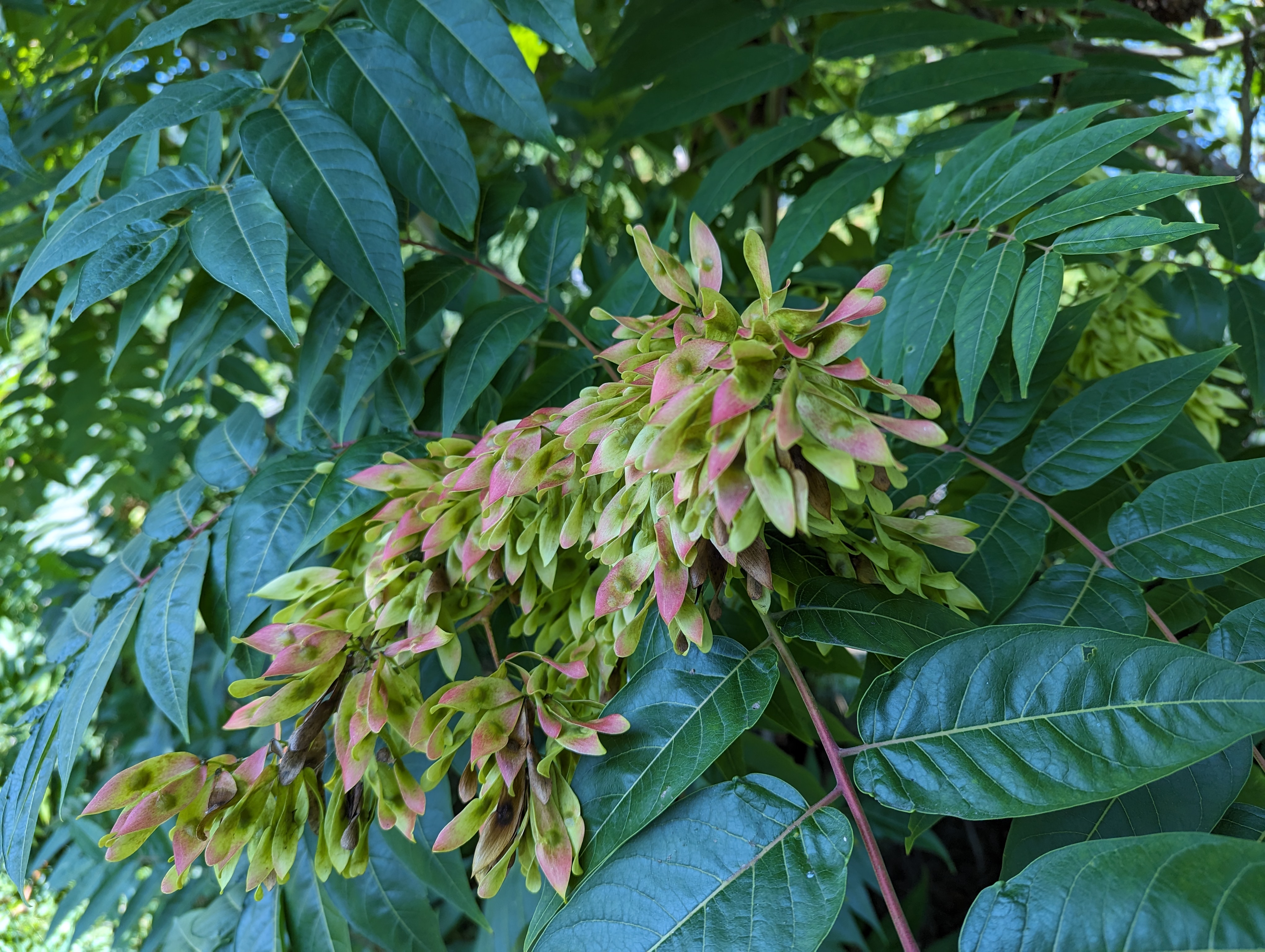
Subsequent analysis linked the Ohio faults to the tree‑of‑heaven (Ailanthus altissima), an aggressive invasive species native to China. Introduced as an ornamental plant, it thrives in poor soils, tolerates pollution, heat, road salt and other stresses that limit many native trees, allowing it to dominate disturbed habitats such as road shoulders, railway corridors, vacant lots and utility rights‑of‑way.
The species spreads through wind‑carried seeds and prolific root suckers. The Connecticut Invasive Plant Working Group notes that root suckers can emerge up to 50 feet from the parent tree, creating dense clusters of stems. Cutting the trunk often fails to eradicate the root system; instead, damage can stimulate additional shoots, necessitating repeated treatment of the living roots.
Tree‑of‑heaven also releases chemicals that suppress the growth of nearby native plants, giving it a competitive edge. Its rapid reproduction enables it to colonize open ground before slower‑growing species can establish.
Grid Visibility Deteriorates as Load Shifts
The initial line trips forced electricity onto remaining transmission paths. One line, already operating at roughly 82 percent of its capacity, surged to about 120 percent after the first two outages, placing extra strain on an already weakened network.
Compounding the problem, FirstEnergy’s alarm‑processing software failed at 2:14 p.m., yet control‑room staff were unaware that critical warnings had stopped arriving. Although neighboring utilities reported abnormal conditions, operators did not synthesize the information into a coherent picture of the escalating disturbance.
By 4 p.m., additional lines and generating stations began disconnecting in rapid succession. Automatic protection systems isolated equipment to prevent physical damage, but the reduced number of available routes fragmented the Eastern Interconnection into unstable sections, triggering a broad cascading power failure.
Root Causes and Recommendations
The task force identified four primary contributors: FirstEnergy’s limited understanding of system vulnerabilities, operators’ lack of awareness as conditions deteriorated, inadequate vegetation management, and regional reliability organizations’ insufficient diagnostic support. The investigation described the event as “largely preventable,” a conclusion echoed in the U.S. Department of Energy’s historical summary. Its final report issued 46 recommendations covering operator training, communication protocols, emergency procedures, vegetation control, system monitoring, and enforceable reliability standards.
From Voluntary Guidance to Mandatory Standards
Prior to 2003, most North American electricity reliability rules were voluntary. In response to the blackout, Congress enacted the Energy Policy Act of 2005, establishing a federal process for approving and enforcing mandatory reliability standards for entities that own, operate, or use the bulk‑power system. The legislation authorized an Electric Reliability Organization under the oversight of the Federal Energy Regulatory Commission, empowering regulators to impose financial penalties and other sanctions for non‑compliance.
Vegetation control now occupies a formal role in transmission reliability planning. Utilities are required to inspect rights‑of‑way, maintain adequate clearances, assess hazardous growth, and take corrective action before trees encroach on the operating space of high‑voltage conductors.
Tree‑of‑Heaven’s Role in Insect Invasions
Beyond its impact on power infrastructure, tree‑of‑heaven serves as the preferred host for the spotted lanternfly, an invasive insect that damages grapevines, fruit trees, hardwoods and other plants. The U.S. Department of Agriculture emphasizes ongoing research aimed at reducing both the tree and insect populations while limiting pesticide use and protecting native flora and pollinators.
This article has been fact checked for accuracy, with information verified against reputable sources. Learn more about us and our editorial process.
Last reviewed on .
Article history
- Latest version
Reference(s)
- <https://www.tva.com/the-powerhouse/stories/wintertime-transmission-bag-the-sag>.
- “Tree-of-Heaven (Ailanthus altissima) | Connecticut Invasive Plant Working Group | College of Agriculture, Health and Natural Resources | University of Connecticut.”, April 3, 2014 <https://cipwg.uconn.edu/tree-of-heaven/>.
- “Timeline of Events: 2003.”, September 13, 2011 Energy.gov <https://www.energy.gov/lm/timeline-events-2003>.
- “PLAW 109publ58.” <https://www.congress.gov/109/plaws/publ58/PLAW-109publ58.pdf>.
- “Tree of Heaven Serves as Devilish Host to Spotted Lanternfly : USDA ARS.” <https://www.ars.usda.gov/oc/dof/tree-of-heaven-serves-as-devilish-host-to-spotted-lanternfly/>.
Cite this page:
- Posted by Zara Tariq