A Town Worker Accidentally Found Gold Worth 40,000 Euros While Mowing the Lawn
Saqueados lingotes de ouro saxões reaparecem em campo com mistério de seis meses resolvido inesperadamente
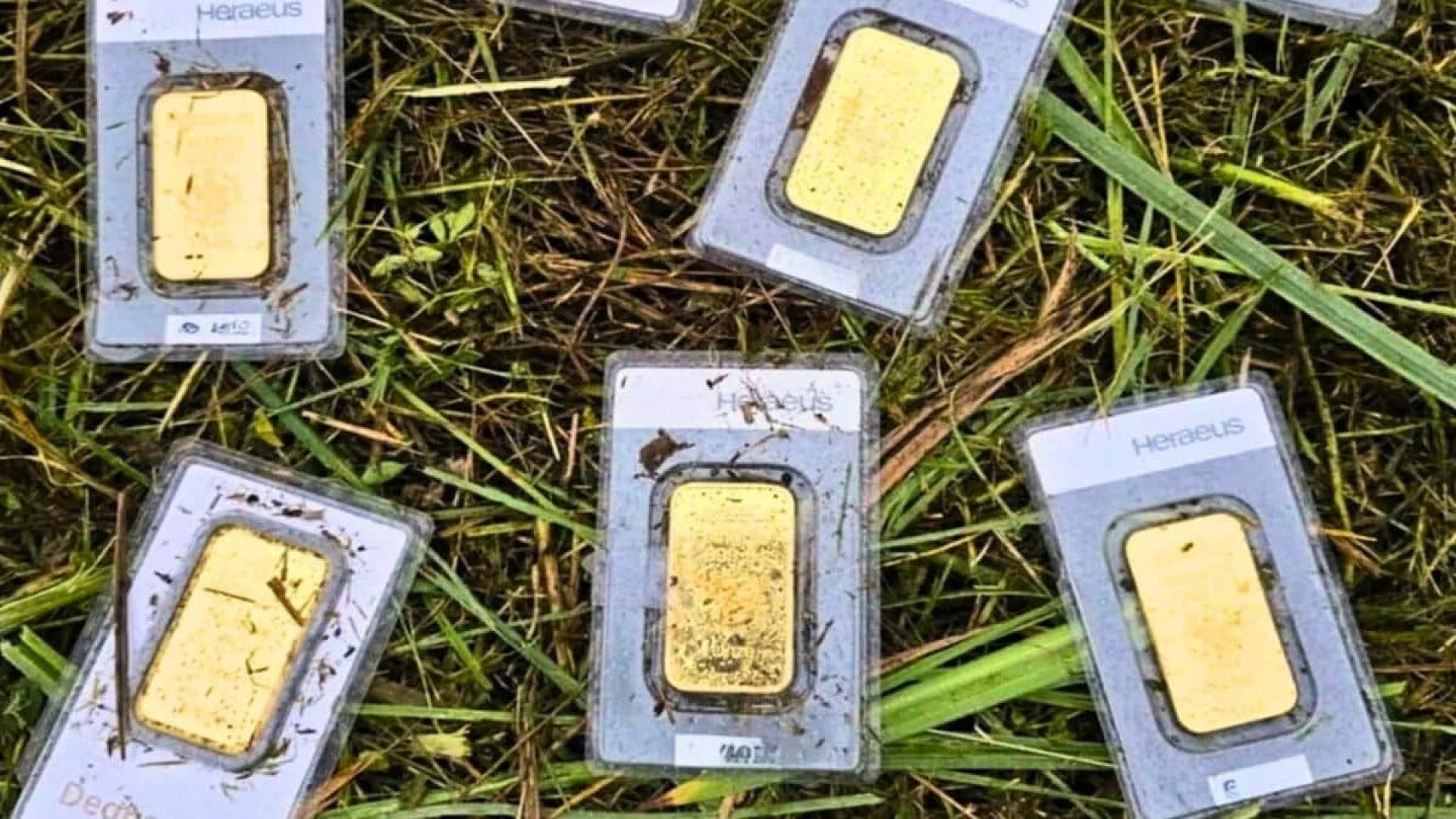
While trimming grass beside a rain‑water retention basin near Bannewitz, a municipal employee uncovered a glinting object in the freshly cut area last October. He initially collected eight sealed parcels, and officials later added two more, bringing the total to ten gold bars, each about 28 grams, arranged in a fan‑shaped spread across the meadow.
Valued at roughly 40,000 euros, the bars were still in their original wrappers, preserving the manufacturer’s details and serial numbers. No individual stepping forward in the subsequent months could demonstrate ownership of the metal, as noted in a report by Daily Galaxy.
Dozens of Inquiries, No Proof of Purchase
German civil law’s Fundrecht provision grants owners of valuable lost items six months to substantiate a claim. For the Bannewitz gold, the deadline expired on 17 April 2026. Mayor Heiko Wersig told the Süddeutsche Zeitung that the municipality received between twelve and fifteen separate enquiries during that window.
Claimants offered disparate explanations: one individual suggested the bars had slipped from his pocket while walking, another alleged they were cargo from a malfunctioning drone, and a local resident linked the find to a family‑scam involving gold coins. None of the scenarios matched the discovered bars.
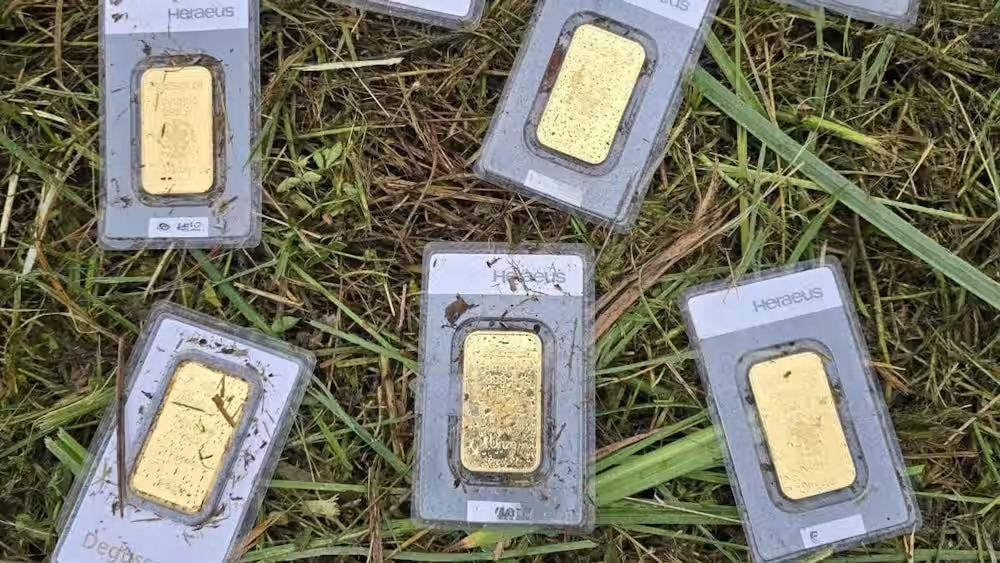
Authorities traced the serial numbers on the packaging in an attempt to locate a buyer, but the search yielded no identifiable purchaser. Each claimant was asked to present a receipt matching the manufacturer’s registration numbers; no one succeeded.
Scatter Layout Triggers Police Investigation
The fan‑like distribution of the bars suggested they might have been ejected from a moving vehicle, prompting police to explore whether the gold was linked to a chase or another criminal incident.
Mayor Wersig reported that investigators found no connection to any illegal activity. The bars were stored in a Dresden police evidence room while officials awaited a legitimate claimant, and the municipality reported the find to police immediately after the worker’s discovery.

The Brussels Times noted that a sewage‑treatment employee first encountered the metal during routine maintenance. “I sent employees from our public order office out there and they found two more bars,” Wersig told the Süddeutsche Zeitung, emphasizing that the origin of the gold remains unknown.
Council to Allocate Gold Proceeds to Community Groups
With the claim period now closed, the gold legally belongs to the Bannewitz municipality. Mayor Wersig indicated that the estimated 40,000‑euro proceeds will be directed to local civic groups, potentially including the volunteer fire department, two sports clubs, two music schools, and a senior‑citizens association.
One proposal on the table would allocate a single bar to each of ten community organizations, allowing them to sell or retain the metal as they wish. Wersig said he would have preferred a different outcome, stating, “I want to keep nothing that does not belong to me.”
He also remarked that extensive media coverage effectively served as public notice, reaching potential owners across Germany, yet no verified claimant emerged before the 17 April deadline. The town council is expected to finalize the distribution plan in the coming weeks.
This article has been fact checked for accuracy, with information verified against reputable sources. Learn more about us and our editorial process.
Last reviewed on .
Article history
- Latest version
Reference(s)
- Beer, Joshua. “Goldfund in Sachsen: Wenn sich kein Eigentümer meldet, gehört es der Gemeinde.”, April 2, 2026 Süddeutsche Zeitung <https://www.sueddeutsche.de/panorama/gold-gefunden-sachsen-bannewitz-eigentuemer-frist-li.3462314>.
- “The Brussels Times.” <https://www.brusselstimes.com/2054974/time-running-out-for-gold-bars-found-in-dresden-to-be-claimed>.
Cite this page:
- Posted by Zara Tariq