Archaeologists Just Unearthed a Well-Preserved 1,100-Year-Old Hoard of Gold Jewelry Along an Ancient Route in Saudi Arabia
Un descubrimiento arqueológico en Arabia Saudita revela un tesoro de oro de más de mil años bajo un asentamiento antiguo
In the Al‑Qassim province of Saudi Arabia, a team of archaeologists has unearthed a trove of gold ornaments that date to roughly the 10th‑century Abbasid era. Buried for over a millennium, the assemblage includes more than a hundred items decorated with floral patterns and vivid gemstones.
The Saudi Ministry of Culture reports that the find emerged from current digs coordinated by the Saudi Heritage Commission. The location sits on the former Basran pilgrimage corridor that connected Iraq with Mecca, a pathway frequented for centuries by pilgrims, traders and other travelers.
While investigators have not yet identified the original owners or the circumstances that led to the deposition of such an ornate set, the fine workmanship of the objects immediately impressed the team.
Floral‑Motif Gold Artefacts Reveal Abbasid Artistry
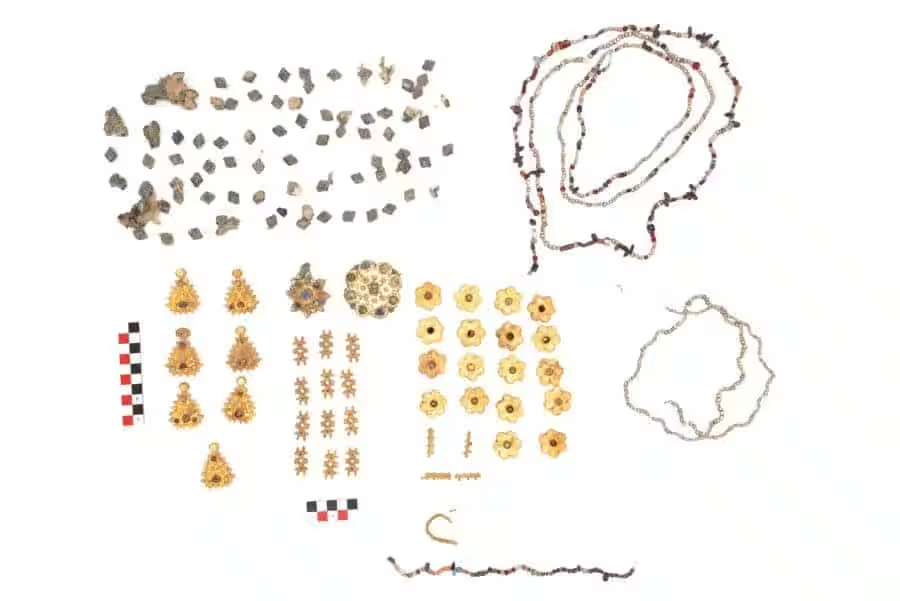
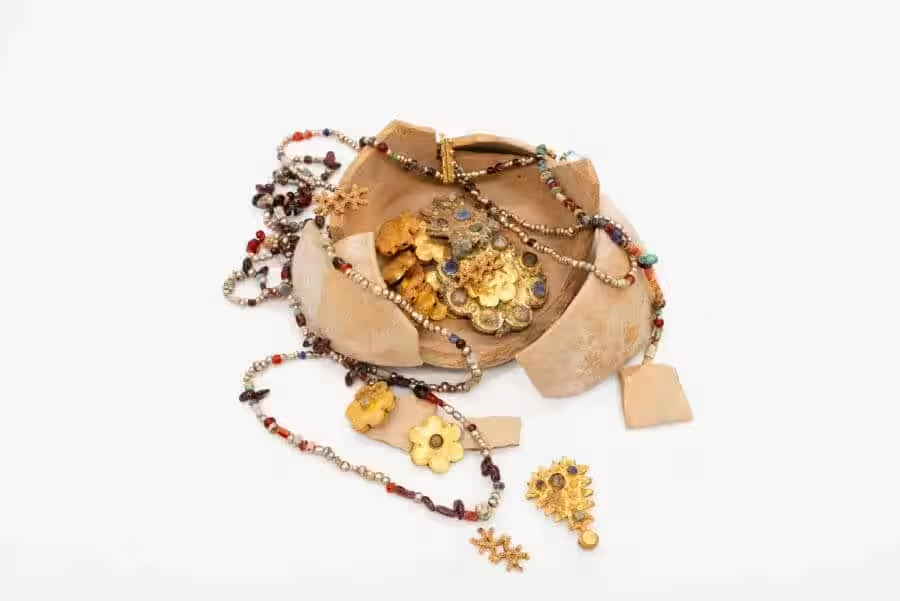
A statement from the Saudi Heritage Commission notes that the find comprises about 100 gold objects—pendants, beads, necklaces and disc‑shaped pieces—many bearing floral motifs, while others showcase colored stones.
“One of the most important discoveries of this sixth season was the uncovering of the ‘Diriyah Treasure,’ which consists of a collection of gold pieces, gemstones and oxidized copper fragments,” a specialist working with the Saudi Heritage Commission noted in a translated video.
إلى معامل الترميم، قطعٌ مكتشفة من موقع ضرية في منطقة القصيم، نحفظ حضورها في الذاكرة الأثرية.#هيئة_التراثpic.twitter.com/td6yAfuGPs
— هيئة التراث (@MOCHeritage) May 19, 2026
Analysts explain that the ornaments were produced from thinly hammered gold sheets, a process demanding exacting skill. Designs were impressed onto the metal, and certain pieces were set with stones mounted within gold settings.
The preservation of the items astonished the team; despite a millennium beneath the soil, most retain sharp detailing and remain in good condition. Some of the pieces appear so refined that they could be mistaken for contemporary jewelry at first glance.
The inclusion of colored gemstones suggests active trade networks in the area during the Abbasid era, when pilgrims and merchants regularly moved goods along these routes, connecting far‑flung markets.
Broader Dig Uncovers Domestic Structures
The gold find was part of a larger investigation of the Diriyah settlement, where excavators uncovered stone foundations, hearths, mud‑brick walls and plastered rooms.
Additional artifacts such as ceramic sherds, glass pieces and metal implements were recovered, indicating a permanent habitation rather than a temporary encampment.
Situated close to the Basran pilgrimage corridor, the settlement likely served as a frequent stop for travelers moving between Iraq and Mecca. The flow of pilgrims, merchants and other wayfarers may explain how such refined gold items arrived at the site.
Find Highlights Kingdom’s Rich Archaeological Legacy
The commission noted that the dig forms part of a broader initiative to catalogue and protect historic locations throughout the Kingdom.
“This discovery at Diriyah reflects the abundance of the Kingdom’s cultural heritage and its longstanding role as a crossroads of trade routes and cultural exchange,” said Dr. Jasir Suliman Alherbish, CEO of the commission.
He said the programme also provides scholars with deeper insight into the area’s past and bolsters measures to safeguard its archaeological heritage.
The original owners and reasons for the deposition remain unknown, yet the assemblage offers valuable clues about the people and craftsmanship linked to a key Islamic trade artery more than a millennium ago.
This article has been fact checked for accuracy, with information verified against reputable sources. Learn more about us and our editorial process.
Last reviewed on .
Article history
- Latest version
Reference(s)
- “Heritage Commission Discovers Abbasid-Era Gold Jewelry in Qassim.” <https://spa.gov.sa/en/N2591484>.
- “https://twitter.com/MOCHeritage/status/2056678499621261693/video/1.” <https://t.co/td6yAfuGPs>.
- “Dr Jasir Suliman Alherbish.” <https://www.ithra.com/en/special-programs/Islamic-art-conference/speakers/dr-jasir-suliman-alherbish>.
Cite this page:
- Posted by Zara Tariq