Archaeologists Opened A Giant Jar On A Mysterious Plain In Laos, And Inside They Found Bones That Shouldn’t Have Been Together
Unearthing ancient secrets of Laos’ mysterious 2,000-year-old stone jar sites
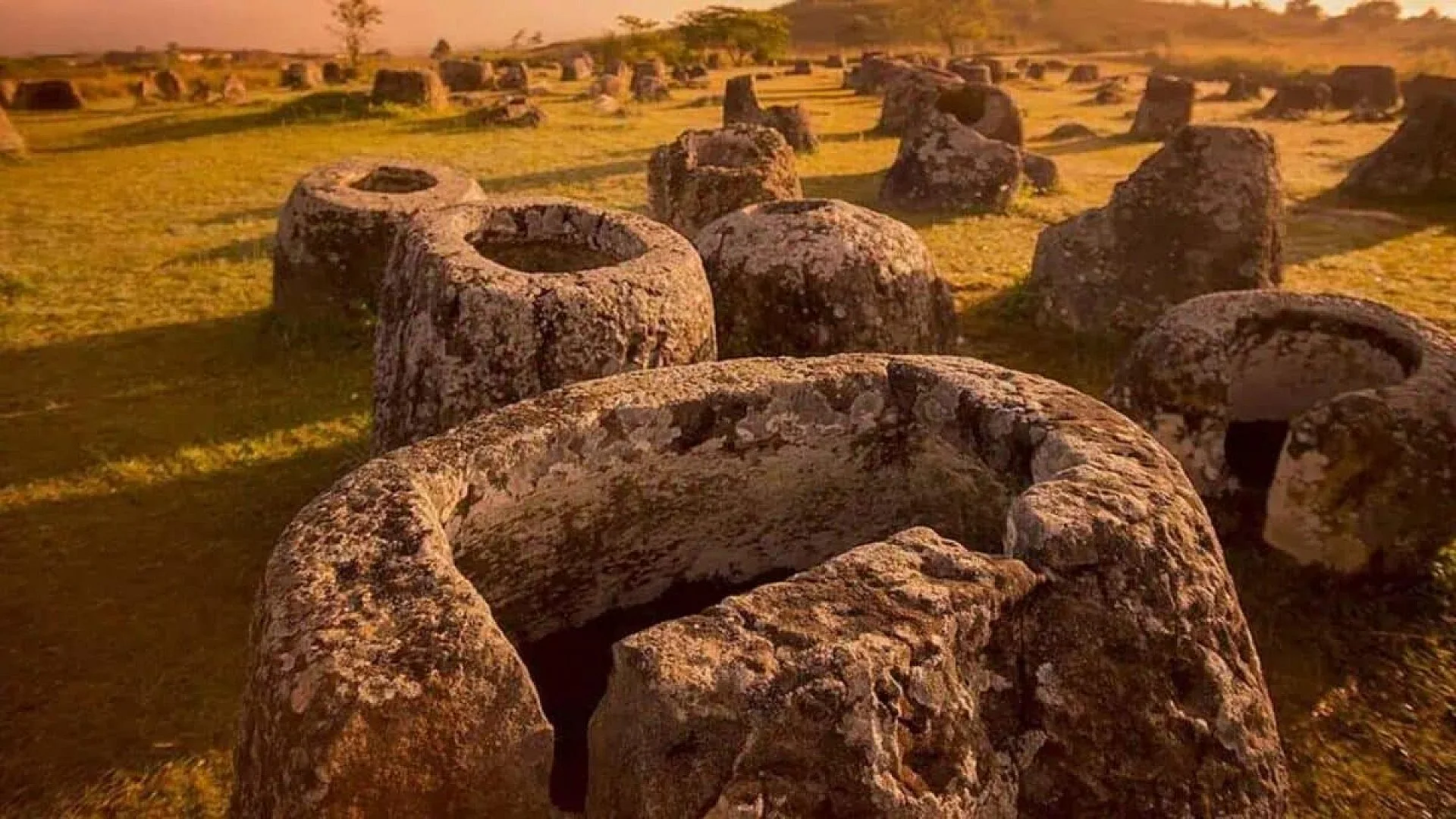
Across the Xiangkhoang Plateau in Laos, thousands of massive stone jars have long puzzled scholars. New excavations now reveal the purpose of at least one of these enigmatic containers.
Because millions of unexploded cluster munitions from the 1960s Laotian Civil War rendered much of the terrain off‑limits, researchers were forced to work around dangerous zones. Careful, phased digging is finally shedding light on how the jars were employed and on the communities that built them.
Stretching across forested ridges and open grasslands, the Plain of Jars features stone vessels ranging from 1 to 3 meters tall. Decades of speculation gave way to new evidence, based on work by Nicholas Skopal of James Cook University, that confirms the jars were not simple storage pits.
Centuries‑Long Bone Accumulation
The centerpiece of the recent work is Jar 1 at Site 75, a conglomerate stone vessel roughly two meters wide at its base. Skopal noted that the jar was partially buried and heavily fragmented, requiring three field seasons from 2022 to 2024 to expose fully.
“Archaeologists generally agree they were used in mortuary rituals, but we don’t know how they were exactly used, who made them, or how old they are,” he noted.
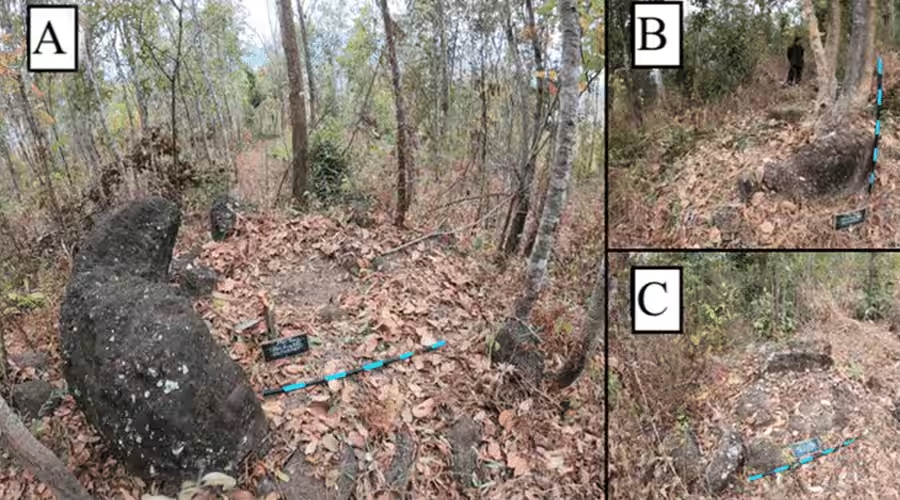
Inside the jar, archaeologists uncovered a dense assemblage of skeletal fragments representing roughly 37 individuals. Radiocarbon dating indicates that the bones were deposited incrementally over a span of about 270 years. According to Skopal:
“We determined that it was an example of secondary interment during the 9th and 12th centuries CE, in which human remains were deposited after an initial period of decomposition elsewhere.”
Smaller containers may have served as primary collection points, with the larger jars acting as interim holding spaces before bones were moved again. Variation in these practices likely existed across different groups.
Grave Goods Reveal Far‑Reaching Contacts
Human remains were accompanied by a suite of artifacts, as reported in Antiquity. The assemblage includes 20 glass beads, five stone slabs, fragments of pottery, a small bell and an iron knife. Some pottery shards interlock to form a complete vessel, while the knife and bell match items recovered from other burial contexts, underscoring their role as valuable grave offerings.
Chemical analysis of the glass beads points to origins in South India and Mesopotamia, indicating that the jar‑using communities participated in extensive trade networks.
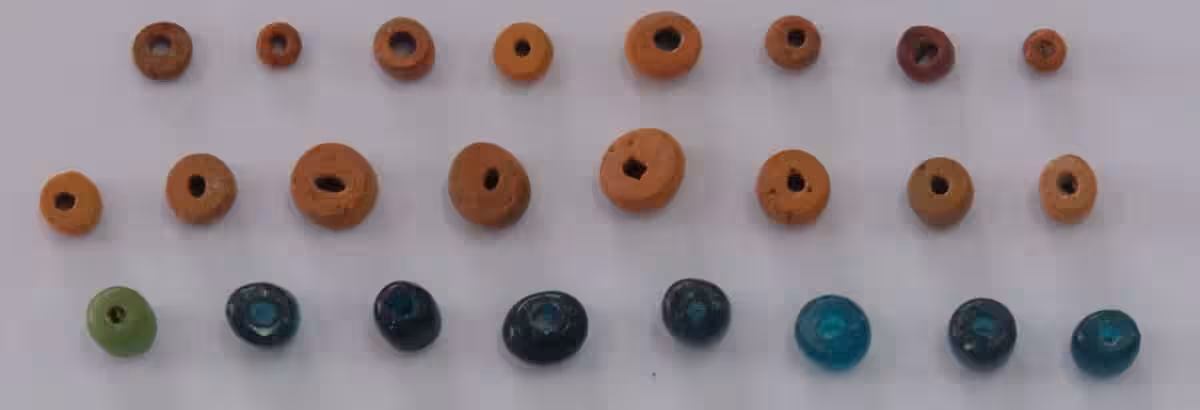
Skopal emphasized that the societies inhabiting the Plain of Jars were not isolated; they engaged in cultural and economic exchanges that spanned considerable distances during the first millennium CE.
Multi‑Generational Family Burials
The capacity of Jar 1 suggests that the vessels were used by family or extended‑family groups, serving as focal points for repeated ancestral rites over successive generations. The arrangement of bones and artifacts indicates a pattern of ceremonial use spanning centuries.
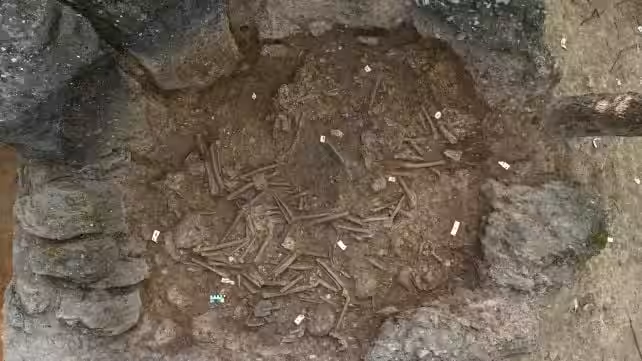
Ongoing analyses of the skeletal material aim to reconstruct kinship ties, lifestyle patterns, and social organization. Skopal noted that these studies could confirm whether the jars functioned as multi‑generational family burial sites.
“The preservation encountered here offers an exceptional window into past mortuary practices, and indicates that many comparable sites may still exist, awaiting discovery,” he added that: “continued investigation of these landscapes has the potential to fundamentally transform our understanding of the cultural and social dynamics that shaped the region.”
This article has been fact checked for accuracy, with information verified against reputable sources. Learn more about us and our editorial process.
Last reviewed on .
Article history
- Latest version
Reference(s)
- “Nicholas Skopal.” <https://scholar.google.com/citations?user=CQfRCBUAAAAJ&hl=en>.
- Skopal, Nicholas., et al. “The death jar: a new mortuary tradition at the Plain of Jars, Lao PDR.” Antiquity, May 19, 2026, pp. 1-18. Antiquity Publications, doi: 10.15184/aqy.2026.10352. <https://doi.org/10.15184/aqy.2026.10352>.
- “Plain of Jars Archaeological Project.” Plain of Jars Archaeological Project <https://www.plain-of-jars.org/>.
Cite this page:
- Posted by Zara Tariq