Abyssal Nodules Produce Dark Oxygen, Acting Like Natural Batteries Deep Below the Sea
Oxygen discovered forming in the Pacific’s deepest darkness may change the debate over deep‑sea mining, highlighting hidden ecosystems.
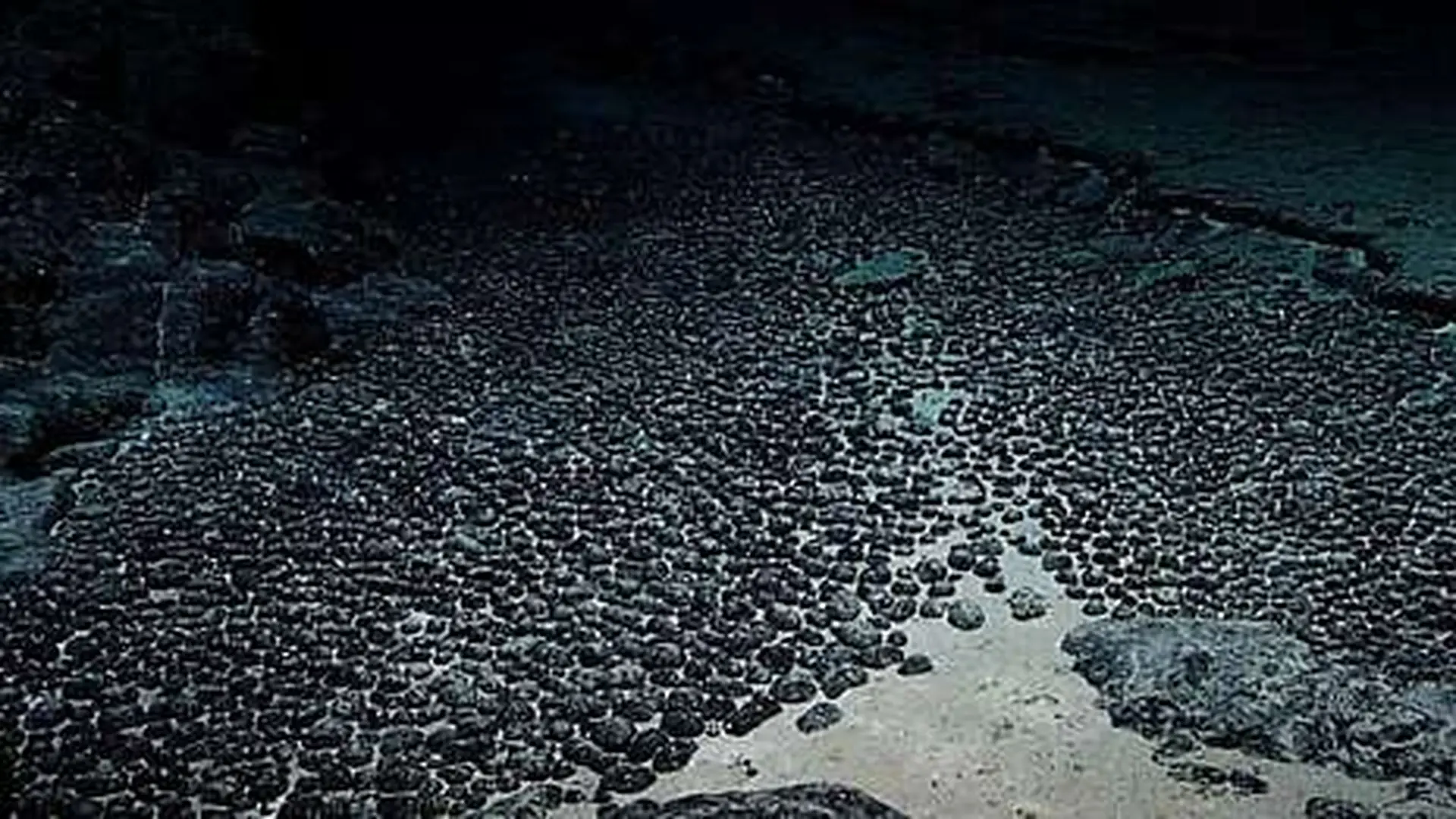
At a depth exceeding 4,000 m in the Pacific’s abyss, researchers observed a surprising rise in oxygen levels inside sealed experimental units placed on the seafloor, contrary to the expected decline caused by microbial respiration and chemical oxidation.
Unexpected Oxygen Build‑up Detected on Deep‑Sea Floor
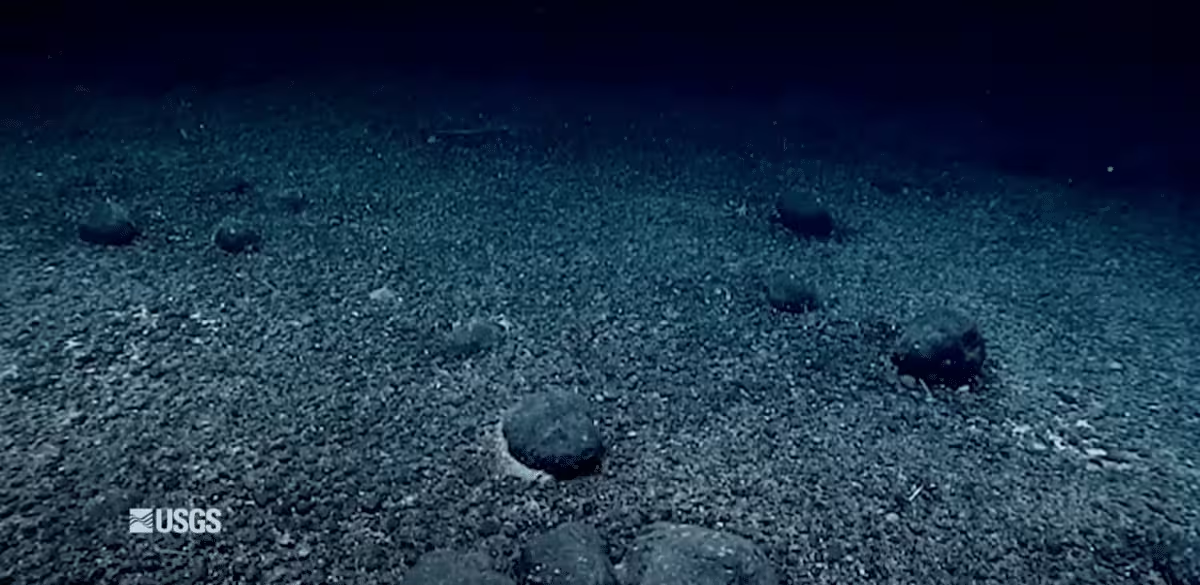
The anomaly was recorded in the Clarion‑Clipperton Zone, an expansive abyssal plain stretching between Hawaii and Mexico. This area is peppered with metal‑rich, rounded rocks known as polymetallic nodules. Scientists linked the oxygen increase to these nodules and coined the phenomenon “dark oxygen,” referring to oxygen generation in an environment devoid of sunlight.
The observations, detailed in a 2024 Nature Geoscience paper, may reshape how the chemistry of nodule fields is evaluated. Although the proposed mechanism remains unproven, the data introduce a new variable for stakeholders assessing the environmental impact of extracting manganese, nickel, cobalt, copper, and other valuable metals from the seabed.
Benthic Chamber Experiments Reveal Net Oxygen Production
The team originally deployed benthic chambers to quantify oxygen consumption rates on the ocean floor. These devices isolate a small sediment patch and monitor chemical changes in the enclosed water, allowing estimation of combined biological and abiotic oxygen demand.
Instead of a decline, the instruments reported “more O₂ accumulating in the chambers than being consumed, resulting in net O₂ production.” This pattern emerged across 25 separate incubations, some of which contained no added material.
Initial oxygen concentrations averaged roughly 185 µmol L⁻¹. Over an average duration of 47 hours, peak values rose to between 201 and 819 µmol L⁻¹, corresponding to estimated production rates of 1.7–18 mmol O₂ m⁻² day⁻¹. Independent Winkler titrations corroborated the electronic sensor readings.
The magnitude of the increase varied among trials and correlated with the total surface area of nodules present inside each chamber. A review of earlier datasets from the eastern and western sectors of the Clarion‑Clipperton Zone also revealed similar oxygen gains. The authors warned that the phenomenon may be episodic and that short‑term experiments cannot yet be extrapolated across the entire region.
Polymetallic Nodules May Function as Natural Electrochemical Cells
Control experiments conducted away from the seabed ruled out external water influx as a source of the observed oxygen. Calculations showed that radiation‑driven reactions and the abiotic breakdown of manganese oxides could account for less than 0.5 % of the measured increase.
When experiments contained only polymetallic nodules, oxygen still accumulated. These nodules form over millions of years as concentric layers of manganese and iron oxides accrete metals from surrounding seawater and sediments onto a nucleus such as a shell fragment. Their stratified mineral architecture prompted investigators to test whether different layers might hold distinct electrical potentials.
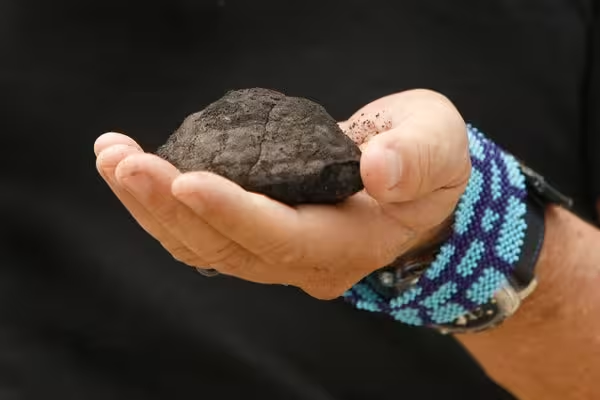
Electrical surveys of 12 nodules at 153 distinct points recorded potentials up to 0.95 V. The researchers hypothesized that redox gradients between the metal‑rich layers could drive electron flow, effectively turning the nodules into tiny geobatteries.
One plausible outcome is seawater electrolysis, a reaction that splits water into hydrogen and oxygen. Conventional electrolysis typically requires higher voltages than those measured, but the presence of manganese oxides, nickel, and other catalytic minerals could lower the energy threshold, while multi‑surface voltage differences might sustain the process. The authors present this scenario as a working hypothesis rather than a definitive mechanism.
Key uncertainties persist, such as the primary energy source, the duration of oxygen generation, and whether buried versus exposed nodule surfaces behave differently. A slowdown observed in later trials may reflect diminishing electrical potential, catalyst alteration, or an altogether separate process yet to be identified.
Findings Influence Debate Over Deep‑Sea Mineral Extraction
The Clarion‑Clipperton Zone hosts one of the planet’s richest deposits of seafloor nodules. An industry overview emphasizes its strategic importance for future commercial ventures seeking metals essential for batteries and other high‑tech applications.
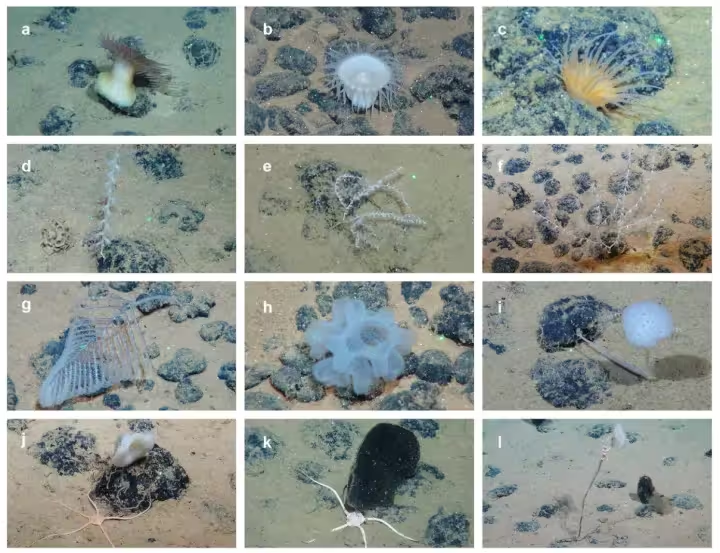
Harvesting these nodules would also eliminate the hard substrates that support a diverse community of sponges, corals, anemones, and other organisms in an otherwise soft‑sediment environment. Because nodule formation spans geological timescales, any cleared area would not regain its original structure within a human lifespan.
The Deep Sea Conservation Coalition points out that the discovery adds a little‑understood chemical process to environmental impact assessments. Researchers still lack quantitative estimates of how much oxygen undisturbed nodule fields may produce or whether local fauna and microbes rely on this hidden source.
These considerations are directly relevant to deep‑sea mining, as extraction equipment would not only remove nodules but also stir up sediments, potentially burying exposed surfaces elsewhere and unveiling previously covered areas. The study highlights sediment disturbance as a factor that could modify oxygen production if electrically active surfaces are integral to the process.
This article has been fact checked for accuracy, with information verified against reputable sources. Learn more about us and our editorial process.
Last reviewed on .
Article history
- Latest version
Reference(s)
- Sweetman, Andrew. “Evidence of dark oxygen production at the abyssal seafloor - Nature Geoscience.”, vol. 17, no. 8, pp. 737-739. Nature, doi: 10.1038/s41561-024-01480-8. <https://www.nature.com/articles/s41561-024-01480-8>.
- <https://oceanminingintel.com/insights/the-5-minute-briefing-the-clarion-clipperton-zone>.
- Cruz, Camila. “Groundbreaking Discovery in the Deep Ocean – Oxygen Production by Polymetallic Nodules Targeted by the Deep-Sea Mining Industry.”, July 22, 2024 Deep Sea Conservation Coalition <https://deep-sea-conservation.org/oxygen-production-polymetallic-noduces-deepsea/>.
Cite this page:
- Posted by Bilal Abbasi