Why Scientists Are Desperate To Land A Spacecraft On Mercury
Mercury’s iron core, mysterious dark crust, and ancient magnetic field hold secrets that scientists may only unlock by landing on its surface.
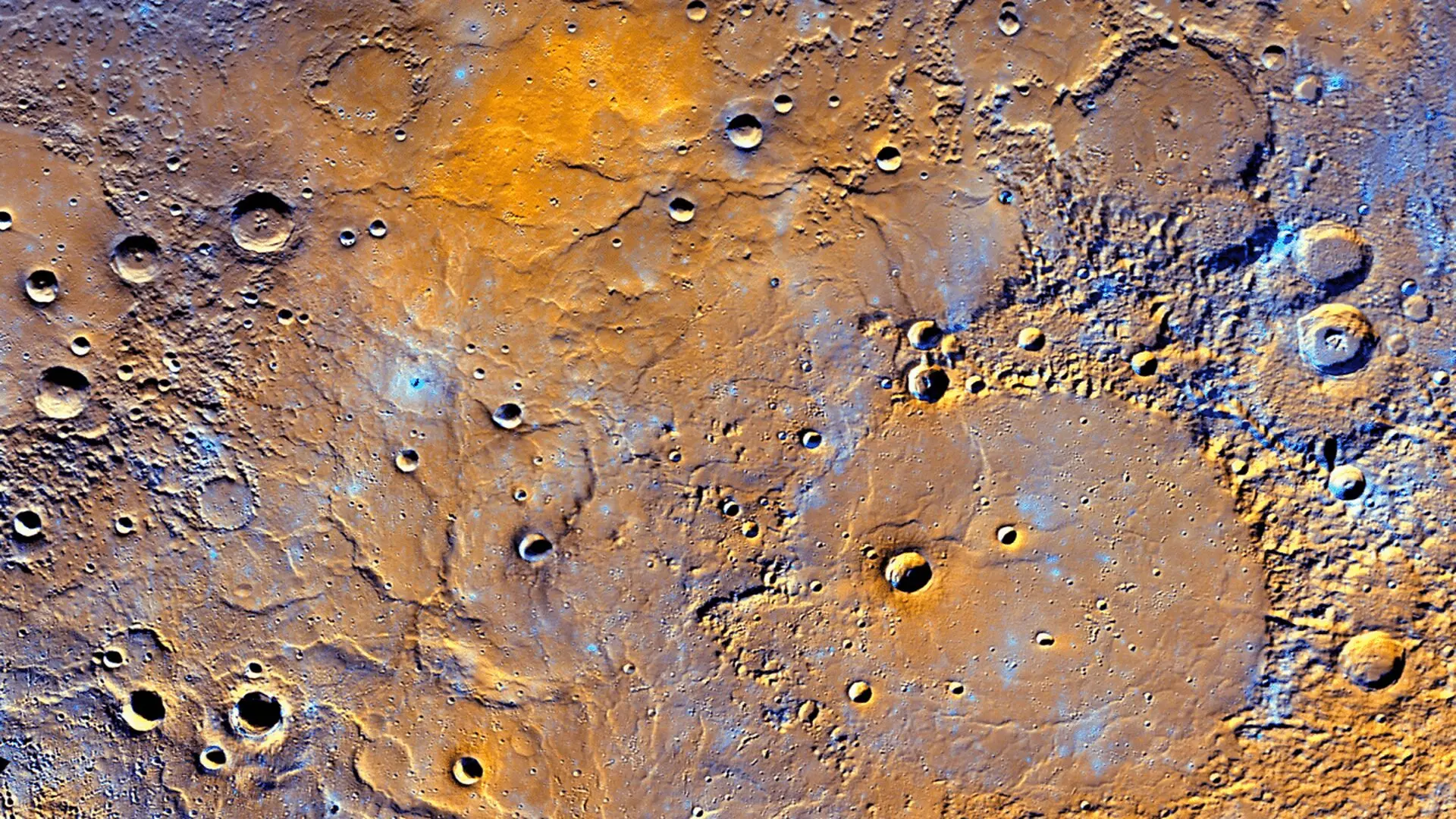
Mercury remains a planetary enigma, defined by a disproportionately massive iron core, a shrinking exterior, and an elusive magnetic field that defies simple explanation. While modern orbital missions have captured data from afar, researchers argue that the most pressing questions regarding the planet’s formation and evolution will likely remain unanswered until a spacecraft successfully touches down on its cratered surface.
A Metal-Heavy Anomaly in the Inner Solar System
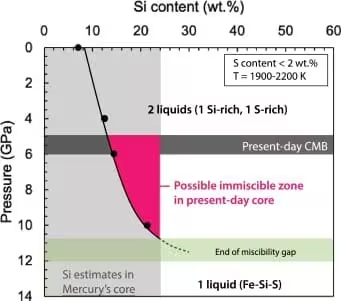
As the smallest planet in our solar system, Mercury possesses an internal composition that is strikingly top-heavy. Data suggest that its iron-rich core accounts for roughly 85 percent of the planet’s radius, a staggering ratio that dwarfs Earth’s own internal structure. This configuration has forced planetary scientists to weigh two primary theories: either Mercury was constructed from an unusually metal-rich batch of protoplanetary material, or it once featured a more substantial rocky mantle that was violently stripped away by massive collisions during the chaotic infancy of the solar system.
According to Anne Pommier of the Carnegie Institution for Science, determining which of these scenarios played out is essential for understanding the broader diversity of rocky worlds. As astronomers continue to identify dense, iron-rich exoplanets across the galaxy, Mercury serves as a vital laboratory for determining whether such bodies are cosmic outliers or standard results of planetary development. However, as noted by planetary scientist Paul Byrne of Washington University in St. Louis, the chemical data required to resolve these theories are currently out of reach for orbiters alone.
Decoding an Ancient Magnetic Legacy
Mercury is also one of the few rocky planets in our neighborhood to maintain a global magnetic field, a feat that is difficult to reconcile with its small size and intense proximity to the Sun. A 2024 study published in Earth and Planetary Science Letters highlights that while this field is roughly 100 times weaker than Earth’s, it appears to be a long-standing feature. Evidence of crustal magnetization suggests that magnetic activity was already present on the planet as early as 3.7 to 3.9 billion years ago.
The prevailing model suggests this magnetism is driven by convection within a partially molten metallic core. Yet, sustaining this dynamo effect through billions of years of planetary cooling remains a point of intense academic debate. Furthermore, the presence of this field does little to protect the planet from the harsh solar environment. Lacking a significant atmosphere, Mercury is blanketed only by a tenuous exosphere of sodium, hydrogen, and oxygen—a thin veil that is constantly eroded by the unrelenting solar wind.
Tectonic Contraction and Carbon-Rich Secrets
Mercury’s surface acts as a visual history book, etched with fault lines and massive cliffs that indicate the planet has literally shrunk as its core cooled. These tectonic features are key to understanding the planet’s thermal history, but they are not the only mysteries embedded in the regolith. Vast patches of dark, low-reflectance material dot the surface, which some researchers believe may be remnants of a primordial, carbon-rich crust. The hypothesis posits that as a magma ocean crystallized early in Mercury’s history, graphite floated to the surface, forming a dark layer that was later fragmented by volcanic activity and asteroid impacts.
The Immense Challenge of a Surface Mission
Executing a landing on Mercury is a task of extraordinary complexity. Because the planet has almost no atmosphere, a lander cannot rely on parachutes or aerodynamic braking; instead, it would require a fuel-heavy, rocket-powered descent to ensure a safe arrival. Furthermore, the journey to Mercury requires shedding massive amounts of orbital energy to overcome the Sun’s gravitational pull, a feat that has limited the history of exploration to a few flybys and orbital missions like the ones documented by Universe Today.
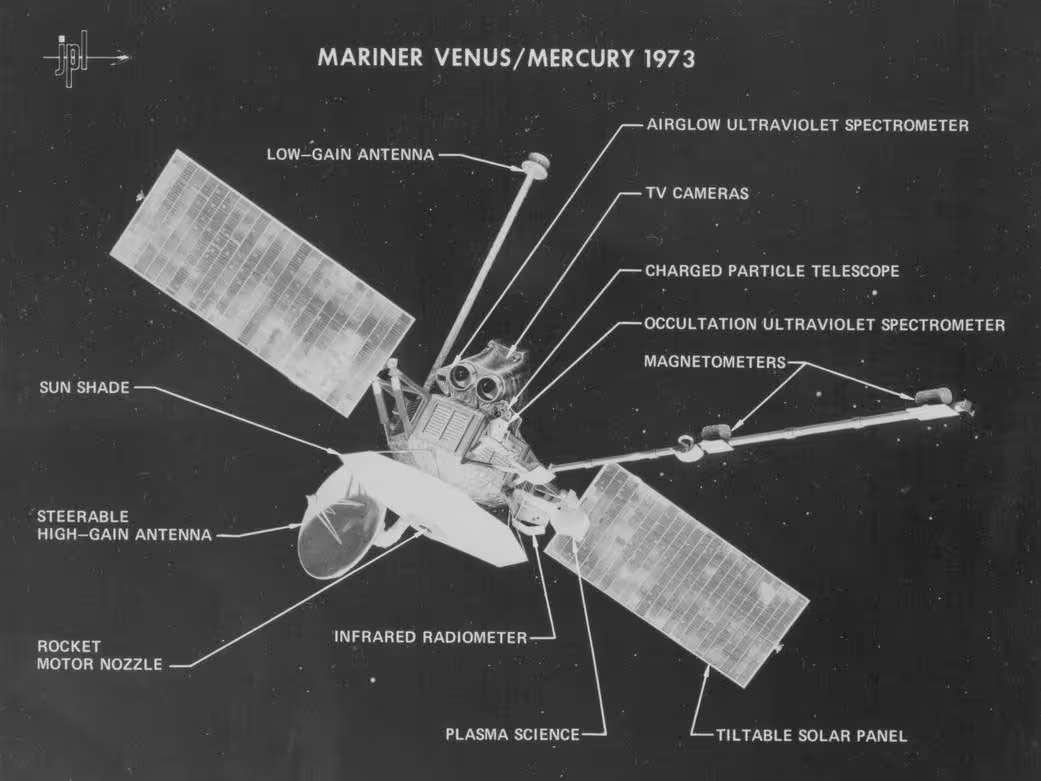
While the BepiColombo mission—a joint effort between the European and Japanese space agencies—is currently expanding our understanding of the planet from orbit, the lack of direct surface analysis remains a significant hurdle. Without physical samples, scientists lack a ground-truth calibration for their models, and the elusive quest to identify a Mercury-originating meteorite continues. Until a lander mission secures funding and reaches the surface, the innermost planet will remain a world of incomplete narratives, keeping its most profound secrets hidden beneath a layer of dust that no human instrument has yet touched.
This article has been fact checked for accuracy, with information verified against reputable sources. Learn more about us and our editorial process.
Last reviewed on .
Article history
- Latest version
Reference(s)
- “Dr. Anne Pommier.”, October 16, 2026 <https://carnegiescience.edu/bio/dr-anne-pommier-0>.
- Davies, Christopher J.., et al. “Thermal and magnetic evolution of Mercury with a layered Fe-Si(-S) core.” Earth and Planetary Science Letters, vol. 641, September 1, 2024, pp. 118812 Elsevier BV, doi: 10.1016/j.epsl.2024.118812. <https://www.sciencedirect.com/science/article/pii/S0012821X24002450>.
- Dorminey, Bruce. “Enigmatic Mercury Will Remain A Puzzle Until Someone Sends A Lander.”, October 17, 2026 Universe Today <https://www.universetoday.com/articles/enigmatic-mercury-will-remain-a-puzzle-until-someone-sends-a-lander>.
Cite this page:
- Posted by Aisha Ahmed