Uranus And Neptune Look Like Twins But Have Startlingly Different Chemical Histories
New carbon monoxide data suggests Neptune and Uranus formed through different chemical processes, revealing distinct histories for our solar system’s giants.
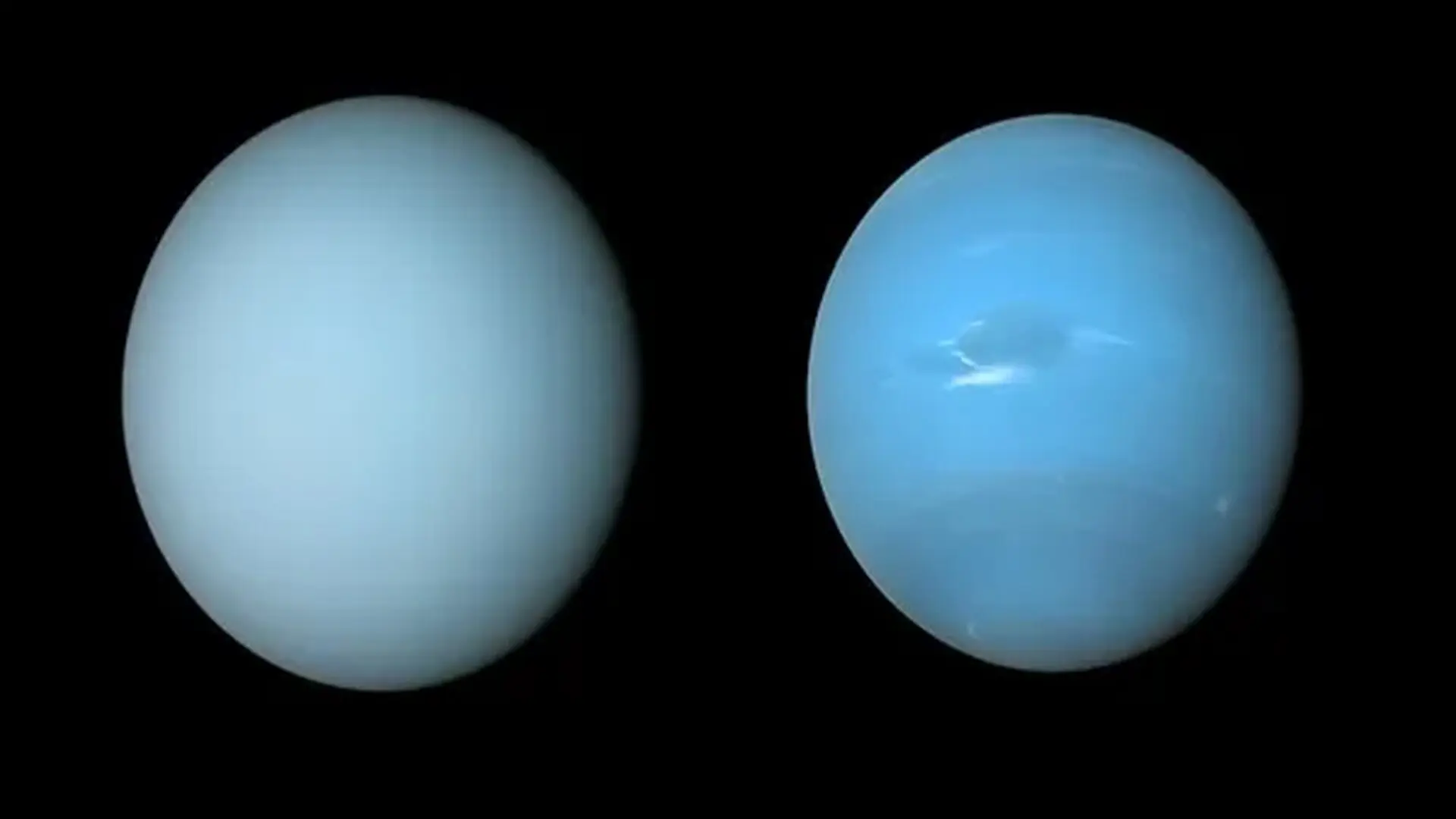
Though they are often grouped together as the solar system’s “ice giants,” new research suggests that Uranus and Neptune may be distant chemical cousins rather than planetary twins. A study published in Astronomy & Astrophysics indicates that the two worlds likely formed from different reservoirs of raw materials, hinting at distinct evolutionary paths in the early solar system.
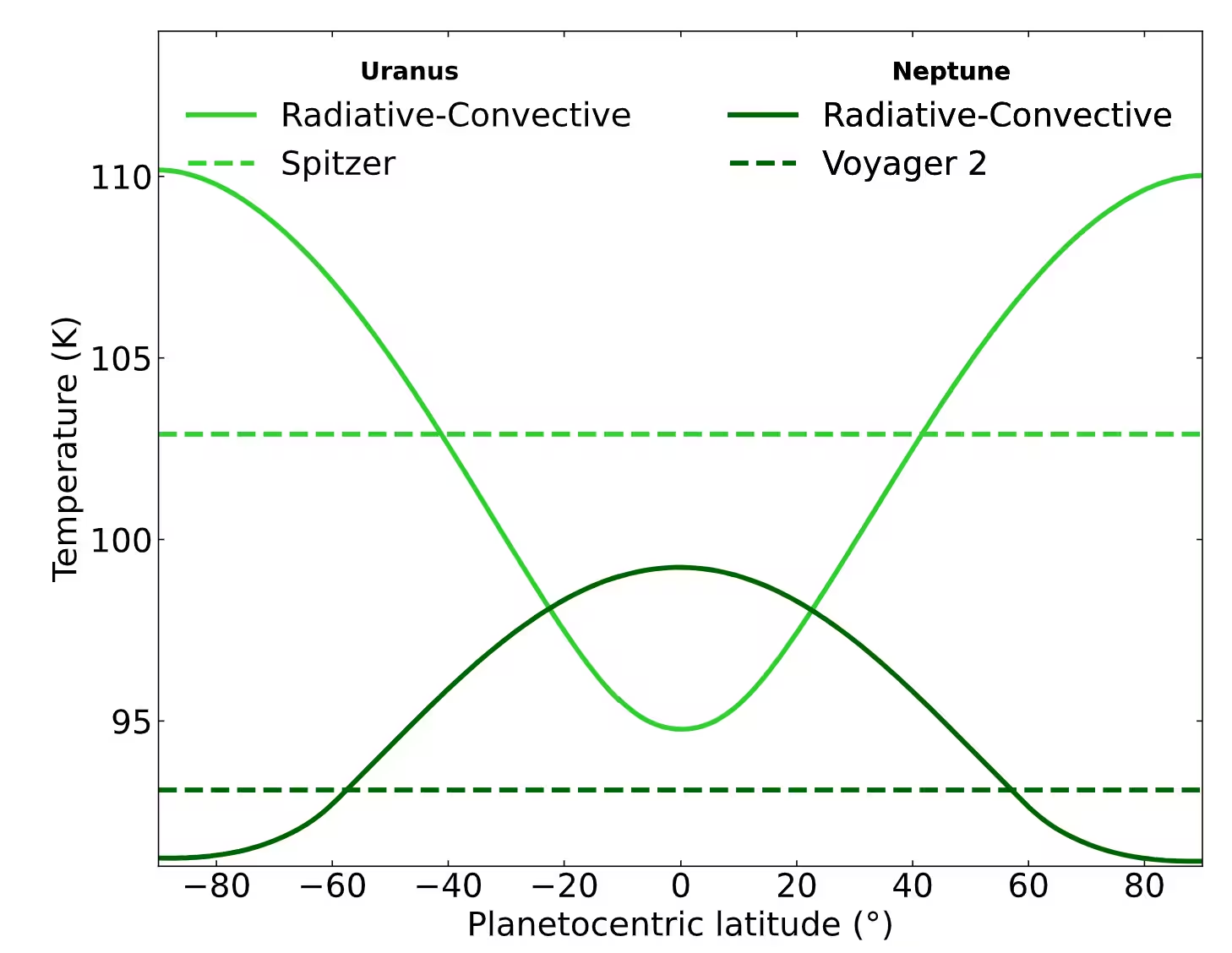
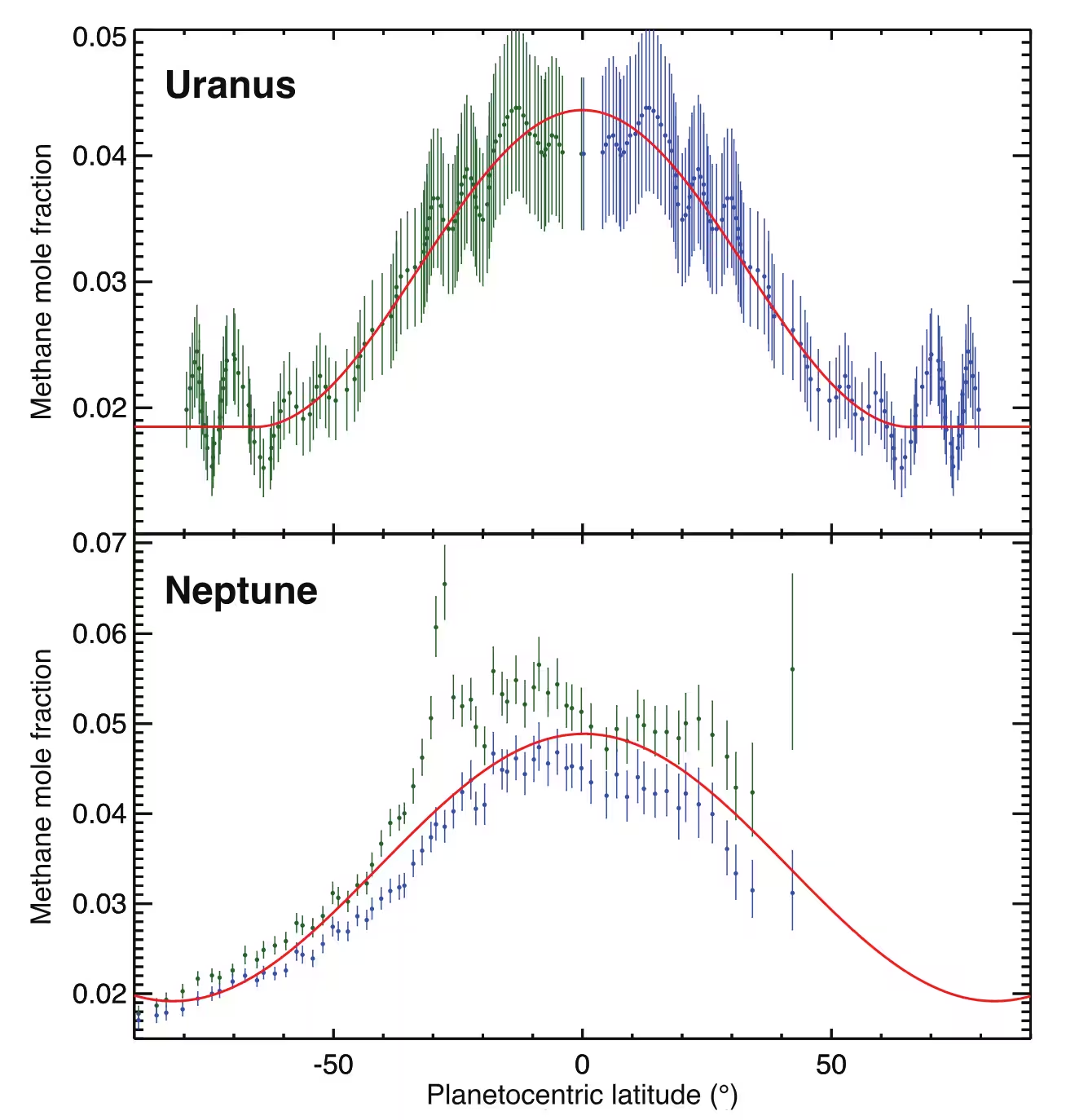
Led by researchers including Olivier Mousis of the Southwest Research Institute, the team employed complex atmospheric models to peer beneath the opaque, featureless cloud decks of both planets. Because water and other key compounds remain buried deep within their atmospheres, the scientists used carbon monoxide as an indirect proxy to trace the chemical signatures of the planets’ deep interiors.
Unlocking the secrets of the deep atmosphere
The researchers found that while both planets share a gaseous exterior dominated by hydrogen and helium, their deeper reservoirs differ significantly. By analyzing carbon monoxide—which becomes “frozen” into the atmosphere as gases circulate between high-pressure depths and the cooler upper layers—the team inferred that Neptune possesses a significantly more oxygen-rich deep atmosphere than Uranus.
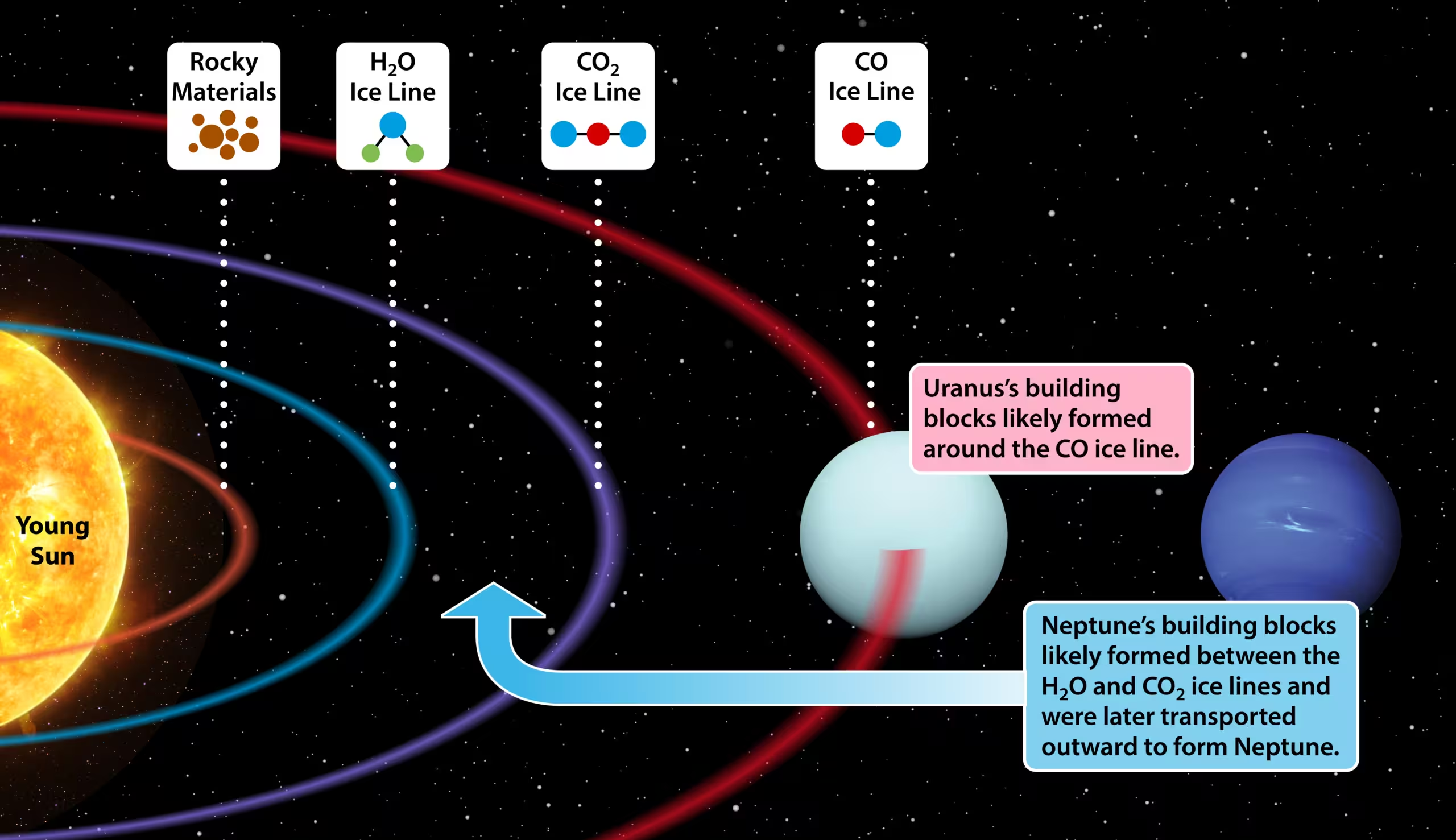
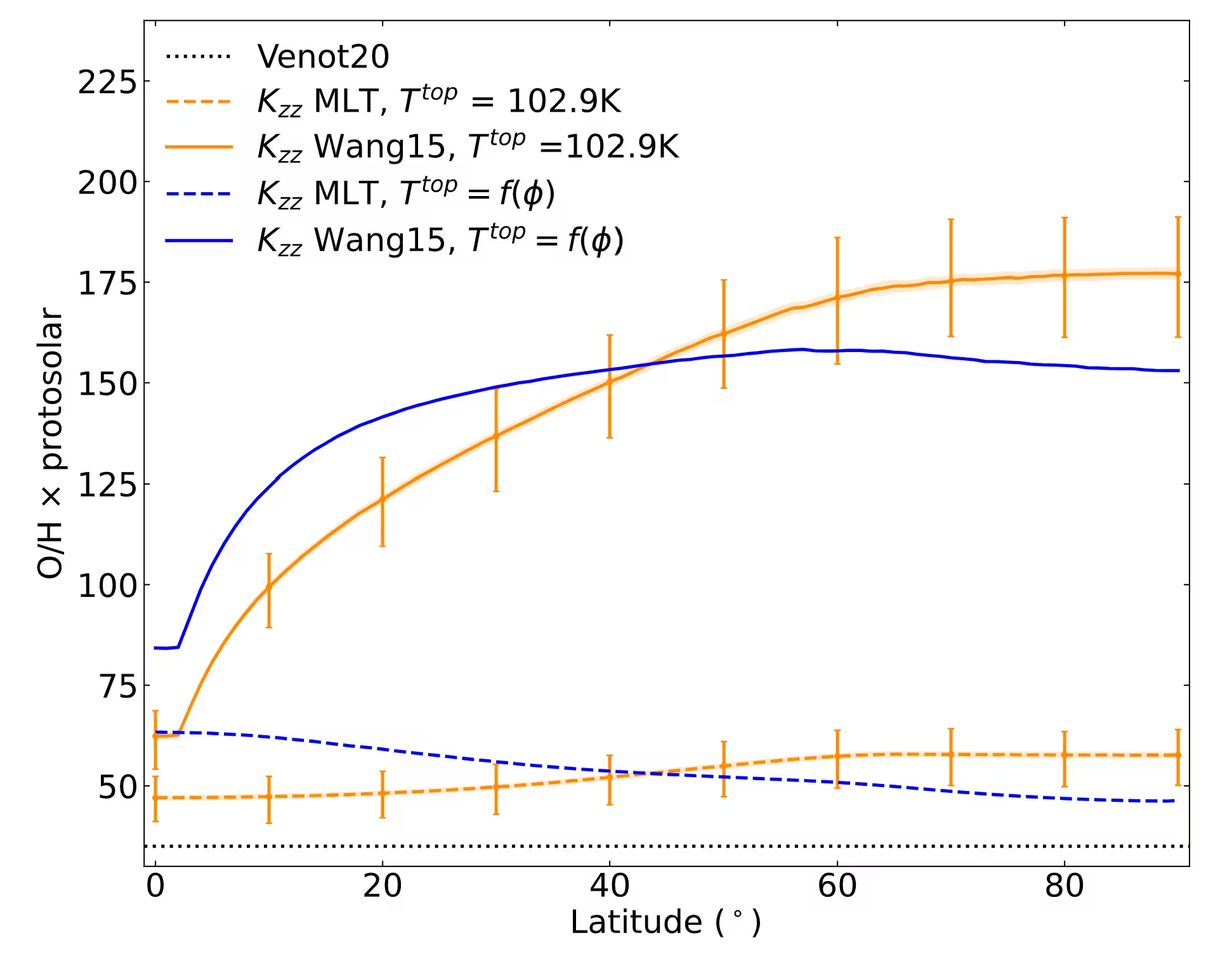
To reach these conclusions, the team utilized high-resolution data from the Atacama Large Millimeter/submillimeter Array. They determined that Neptune exhibits an oxygen enrichment level roughly 222 to 342 times that of the protosolar value, whereas Uranus shows a lower enrichment range of approximately 62 to 177 times. These findings suggest that the planets were constructed from varying proportions of “building blocks” found at different locations within the protoplanetary disk surrounding the young Sun.
Clues from the protoplanetary disk
The chemical variation implies that the two worlds may have originated in distinct regions of the early solar system where different ice lines dictated the availability of carbon and oxygen. Neptune’s lower carbon-to-oxygen ratio, for example, points toward a formation environment where water ice was abundant, a scenario consistent with the theory that the planet may have formed closer to the Sun before migrating to its current, distant orbit.
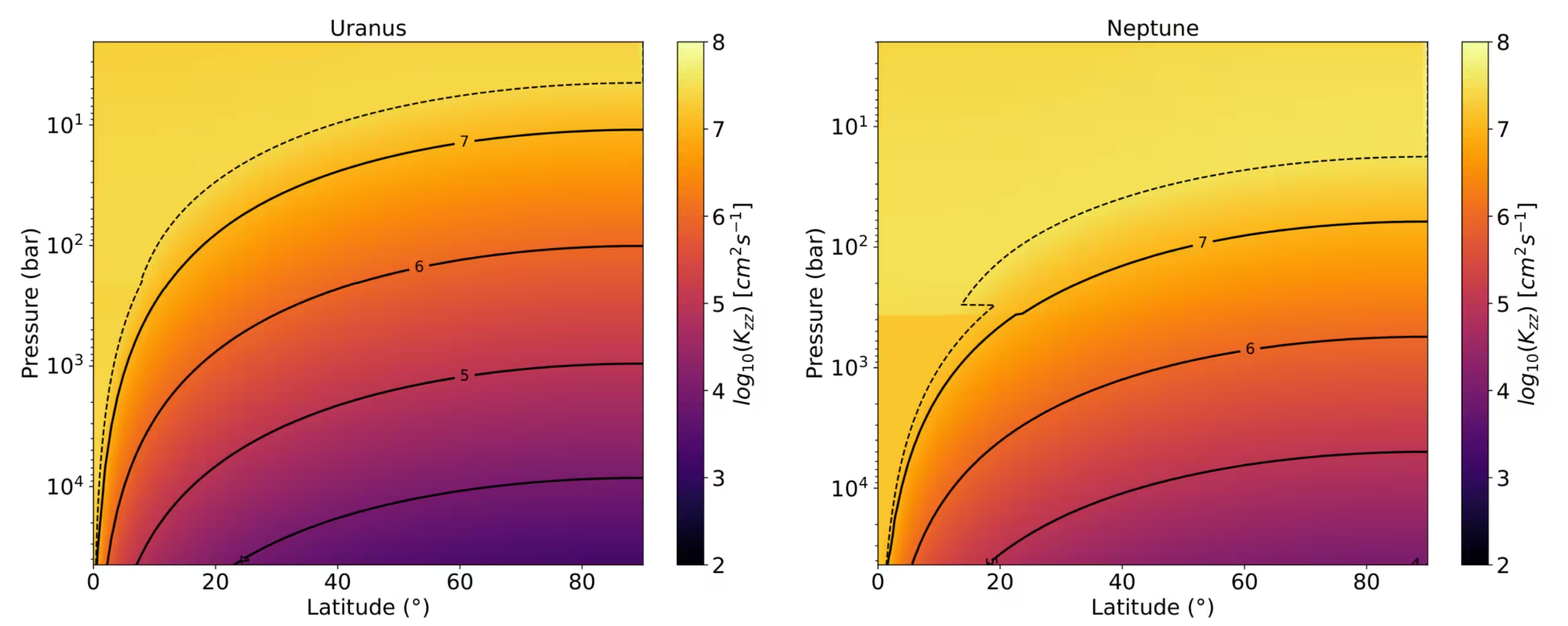
However, the researchers caution that these findings are not definitive. Vertical mixing—the process by which gases move between different atmospheric pressures—remains the greatest source of uncertainty in their models. If mixing operates differently on Uranus than on Neptune, it could potentially account for some of the observed chemical disparities, narrowing the gap between the two worlds.
The need for direct exploration
Since the Voyager 2 flybys in the 1980s, our understanding of these worlds has relied primarily on remote sensing. The study highlights the critical need for a dedicated mission, such as the proposed Uranus Orbiter and Probe, to conduct in-situ measurements. A probe descending into the atmosphere could provide ground-truth data, allowing scientists to confirm their models and resolve the ambiguity surrounding the planets’ deep chemical inventories.
As astronomers continue to discover exoplanets similar in size to these ice giants throughout the galaxy, unraveling the histories of Uranus and Neptune has become increasingly relevant. By decoding the chemical “fingerprints” left behind by their formation, researchers hope to better understand the diverse origins of planets in our own neighborhood and beyond.
Essential resources for further reading
- Detection of stratospheric HCN and tropospheric CO in Uranus and the implication for their sources(Astronomy & Astrophysics, 2026)
- The Deep Composition of Uranus and Neptune from In Situ Exploration and Thermochemical Modeling(Space Science Reviews, 2020)
- New chemical scheme for giant planet thermochemistry: Update of the methanol chemistry and new reduced chemical scheme(Astronomy & Astrophysics, 2020)
- Mass Spectrometer Experiment for a Uranus Probe(Space Science Reviews, 2024)
- Uranus Orbiter and Probe: Mission Challenges and Concept Updates Since the Origins, Worlds, and Life Decadal Survey(The Planetary Science Journal, 2026)
This article has been fact checked for accuracy, with information verified against reputable sources. Learn more about us and our editorial process.
Last reviewed on .
Article history
- Latest version
Reference(s)
- <https://www.aanda.org/articles/aa/full_html/2026/10/aa60770-26/aa60770-26.html>.
- “Southwest Research Institute | R&D From Deep Sea to Deep Space.” <https://www.swri.org/>.
- “Uranus Orbiter And Probe.” <https://science.nasa.gov/wp-content/uploads/2023/10/uranus-orbiter-and-probe.pdf>.
- Cavalié, T.., et al. “Detection of stratospheric HCN and tropospheric CO in Uranus and the implication for their sources.” Astronomy & Astrophysics, vol. 710, June 29, 2026, pp. A362 EDP Sciences, doi: 10.1051/0004-6361/202660695. <https://doi.org/10.1051/0004-6361/202660695>.
- Cavalié, Thibault., et al. “The Deep Composition of Uranus and Neptune from In Situ Exploration and Thermochemical Modeling.” Space Science Reviews, vol. 216, no. 4, May 18, 2020 Springer Science and Business Media LLC, doi: 10.1007/s11214-020-00677-8. <https://link.springer.com/article/10.1007/s11214-020-00677-8>.
- Venot, O.., et al. “New chemical scheme for giant planet thermochemistry.” Astronomy & Astrophysics, vol. 634, February 12, 2020, pp. A78 EDP Sciences, doi: 10.1051/0004-6361/201936697. <https://doi.org/10.1051/0004-6361/201936697>.
- Vorburger, Audrey., et al. “Mass Spectrometer Experiment for a Uranus Probe.” Space Science Reviews, vol. 220, no. 6, August 22, 2024 Springer Science and Business Media LLC, doi: 10.1007/s11214-024-01096-9. <https://link.springer.com/article/10.1007/s11214-024-01096-9>.
- Simon, Amy. “Uranus Orbiter and Probe: Mission Challenges and Concept Updates Since the Origins, Worlds, and Life Decadal Survey.”, vol. 7, no. 6, April 6, 2026 <https://ntrs.nasa.gov/citations/20260004996>.
Cite this page:
- Posted by Aisha Ahmed