Astronomers Discover Mysterious Mismatch in How 31 Nearby Stars Shine
A new study of nearby stars has revealed an unexpected, puzzling difference in a familiar phenomenon, challenging current understanding of stellar behavior.
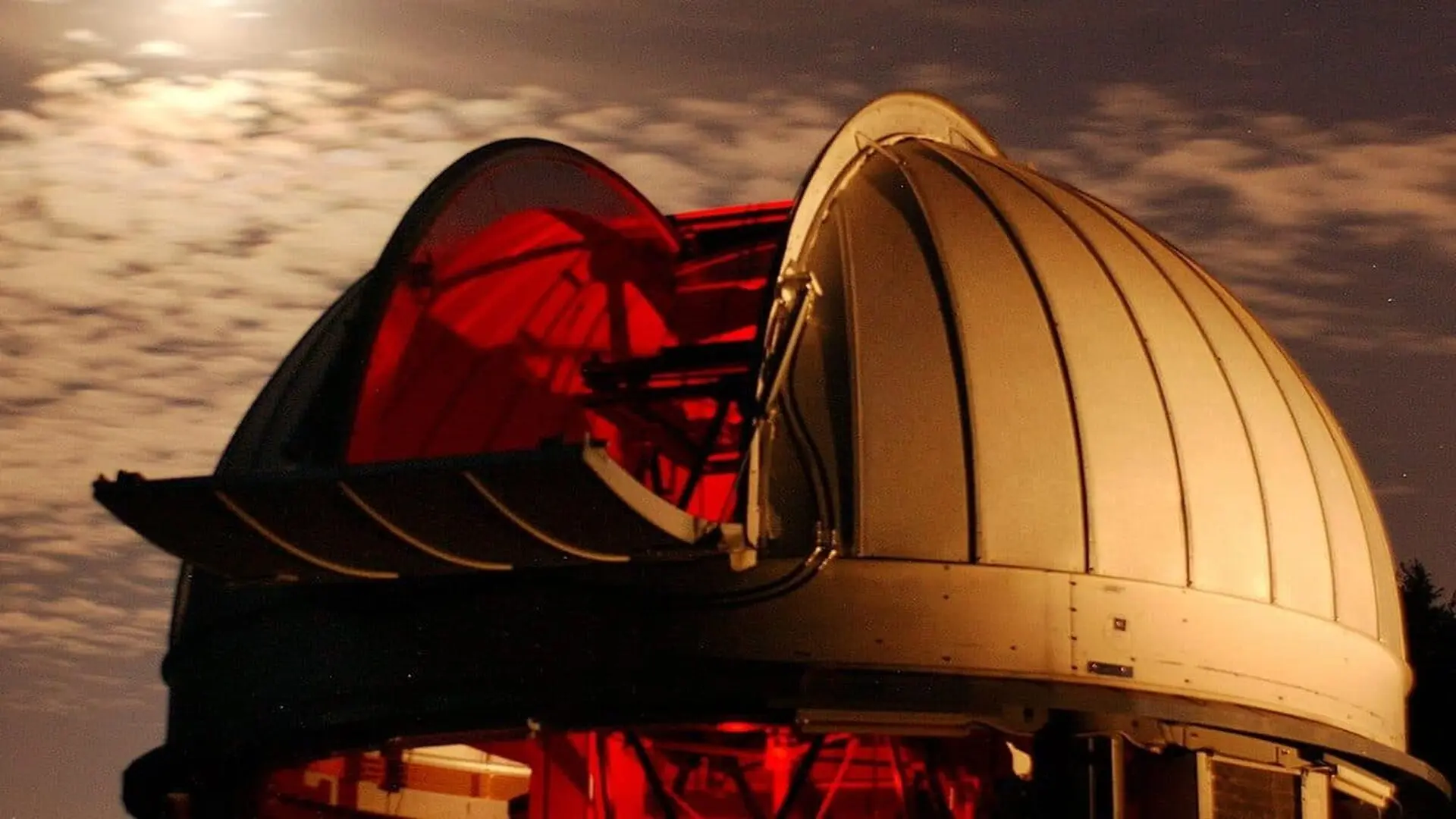
Astronomers using the high-precision CHARA Array have uncovered a significant discrepancy in how distant stars behave, challenging long-standing models of stellar atmospheres. By analyzing 31 nearby stars, researchers observed that light dims toward the edges of these stellar disks—a phenomenon known as limb darkening—more intensely than current theoretical frameworks anticipate.
Limb darkening occurs because the light reaching an observer from the center of a star travels a relatively direct path through its outer layers. In contrast, light emanating from the edges must traverse a longer, angled route, leading to increased scattering and absorption by the stellar atmosphere. While this effect has been documented on the Sun since the 18th century, observing it across a wide range of stars has historically been limited by the immense distances involved.
Unexpected Divergence from Predictive Models
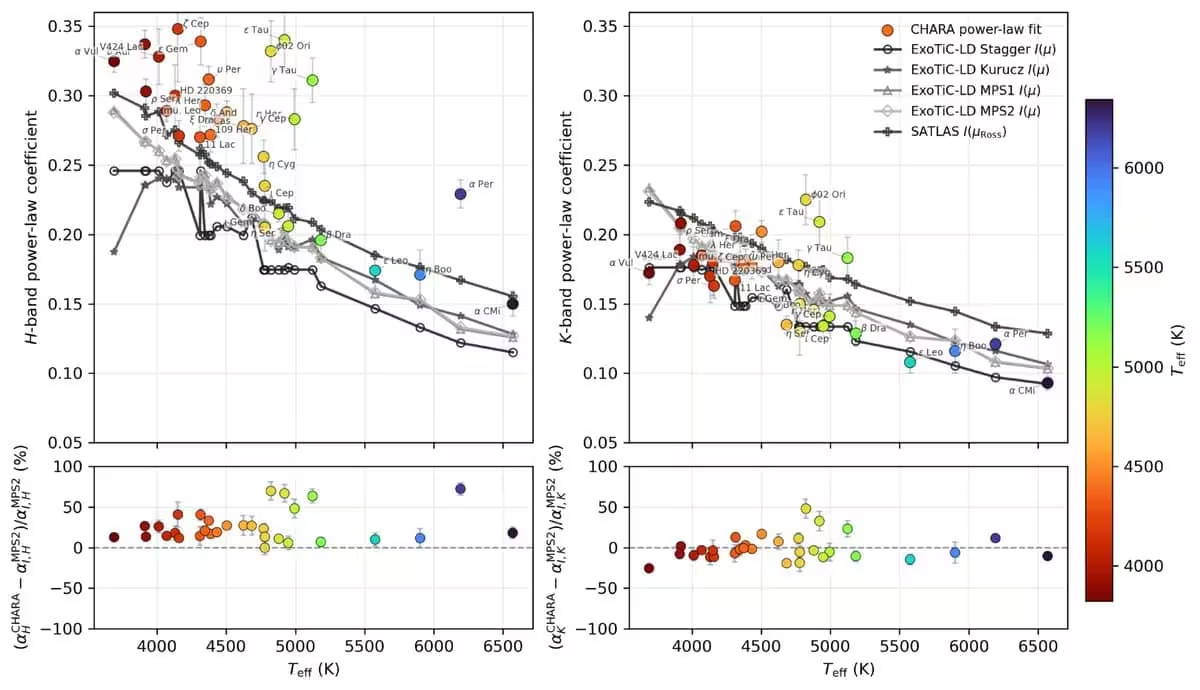
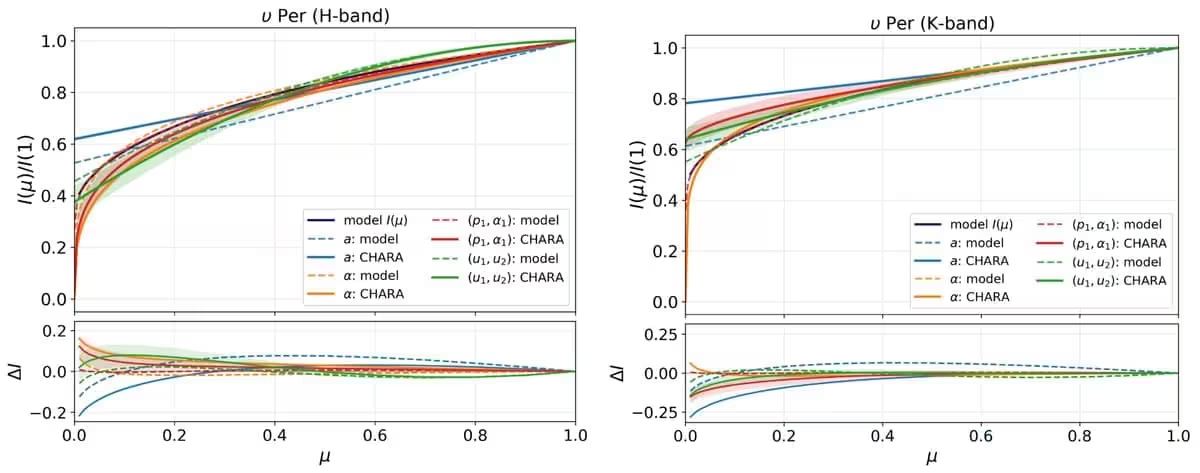
The research, led by Narsireddy Anugu and published in The Astronomical Journal, utilized the Center for High Angular Resolution Astronomy (CHARA) Array to map brightness variations at two specific near-infrared wavelengths: 1.6 micrometers and 2.2 micrometers. As expected, limb darkening was less pronounced at the longer 2.2-micrometer wavelength, as light at this frequency is less prone to scattering.
However, the magnitude of the difference was startling. The team measured the limb darkening effect to be approximately 38 percent weaker at the longer wavelength. Existing stellar atmosphere models, which are used to estimate these variables, had predicted a difference of only about 20 percent. This substantial gap indicates that while the general trend predicted by astrophysicists is correct, the underlying physics governing the intensity of this light-fading effect in stellar atmospheres is more complex than previously assumed.
Refining Stellar Understanding
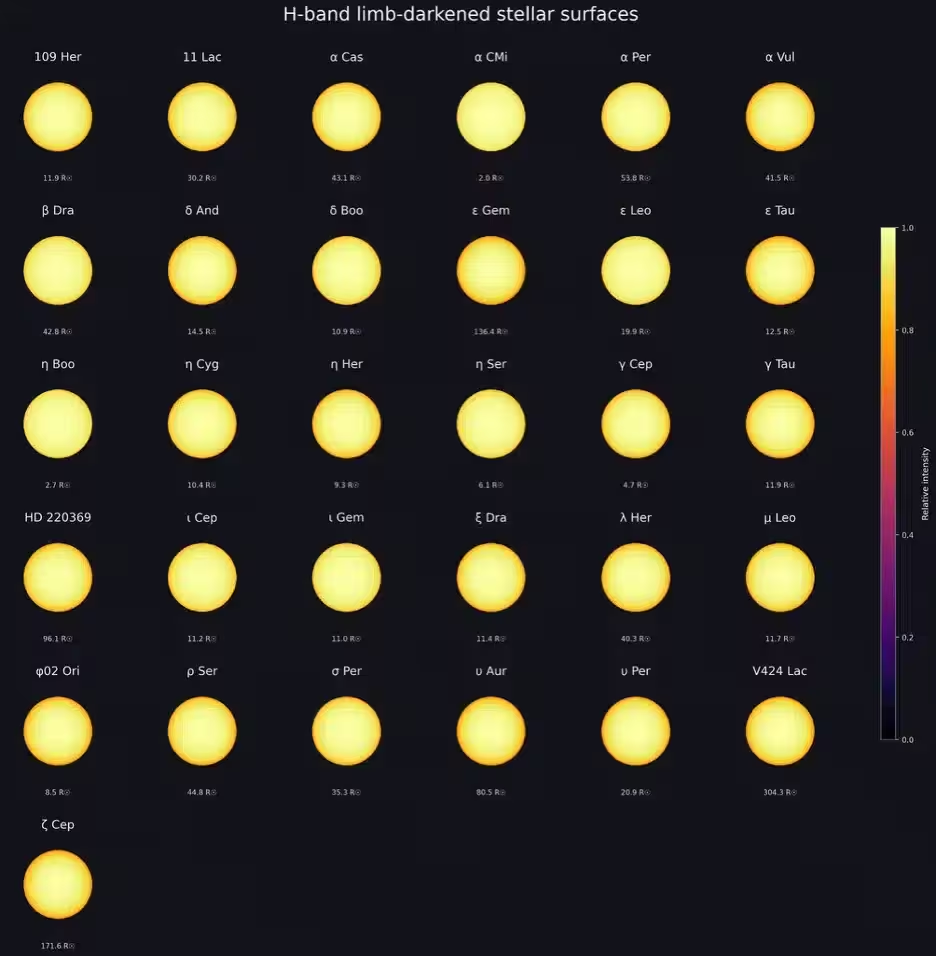
The implications of this study reach beyond mere observation. Limb darkening serves as a critical diagnostic tool for understanding the temperature, density, and physical structure of a star’s outer layers. By refining the precision of these measurements across a diverse sample of 31 stars, researchers have provided the scientific community with high-quality data that can be used to recalibrate atmospheric models.
Prior to these findings, such direct measurements were largely confined to the Sun or a handful of exceptionally large stars like Betelgeuse. The ability of the CHARA Array to resolve these patterns across a larger, more varied set of targets marks a significant step forward in observational stellar physics, highlighting a clear need to revisit the parameters used in current theoretical simulations.
This article has been fact checked for accuracy, with information verified against reputable sources. Learn more about us and our editorial process.
Last reviewed on .
Article history
- Latest version
Reference(s)
- Anugu, Narsireddy., et al. “Empirical H - and K -band Limb Darkening for 31 CHARA Stars: A Near-infrared Benchmark for Stellar-Atmosphere Models.” The Astronomical Journal, vol. 172, no. 4, September 16, 2026, pp. 214 American Astronomical Society, doi: 10.3847/1538-3881/ae9878. <https://iopscience.iop.org/article/10.3847/1538-3881/ae9878>.
Cite this page:
- Posted by Aisha Ahmed