Simple Camera Detects Hidden Thermal Issues in LIGO Mirrors and Enhances Wave Detection
A simple camera method may boost gravitational‑wave detectors, enabling detection of more black‑hole mergers.
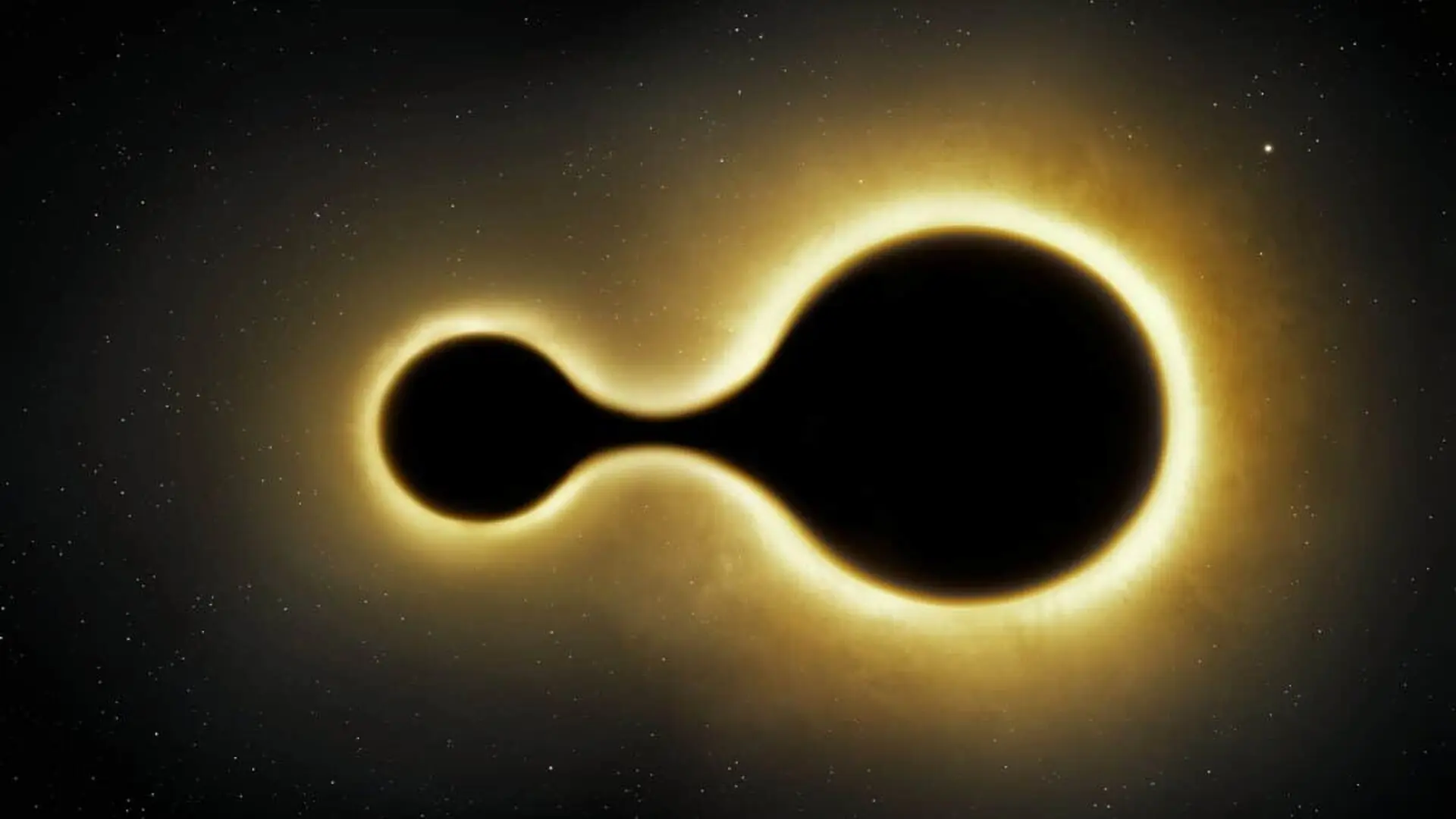
Scientists have demonstrated that a readily available digital camera can serve as a diagnostic tool for the Laser Interferometer Gravitational‑Wave Observatory (LIGO), offering a low‑cost method to track thermal fluctuations on its mirrors and thereby tighten the search for black‑hole collisions.
Off‑the‑Shelf Imaging Provides Insight Into LIGO’s Mirror Temperatures
LIGO’s interferometers have opened a new window on the cosmos by detecting minute ripples in spacetime generated by cataclysmic events such as black‑hole mergers. Yet the observatory’s extraordinary sensitivity—measuring displacements smaller than a proton’s diameter—demands relentless control of environmental disturbances.
A research team led by physicist Christopher Richardson explored whether a commercial camera could capture subtle temperature patterns on the interferometer’s test masses. By recording these thermal maps, the team hopes to identify heat‑related noise sources that can mask or mimic genuine gravitational‑wave signals.
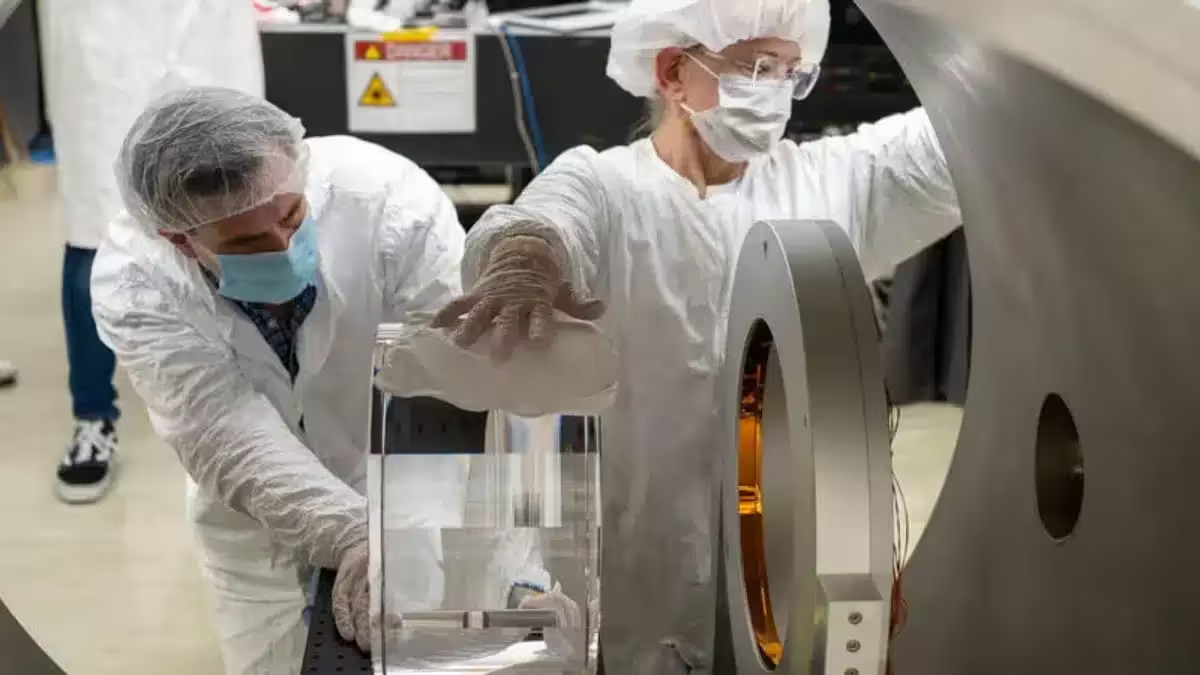
“You can think of it like taking an infrared picture of a car engine,” Richardson said in the statement. “An engineer can look at the temperature pattern on the outside and infer what’s happening inside the engine. We’re doing the same thing with LIGO’s mirrors.”
Simple Technology, Significant Impact
Unlike many upgrades to gravitational‑wave facilities that rely on bespoke components and years of development, the camera‑based approach leverages a mass‑produced device to gather data on one of the most delicate parts of the interferometer. Because LIGO’s mirrors must remain virtually unchanged, even slight thermal gradients can introduce noise that obscures astrophysical signals.
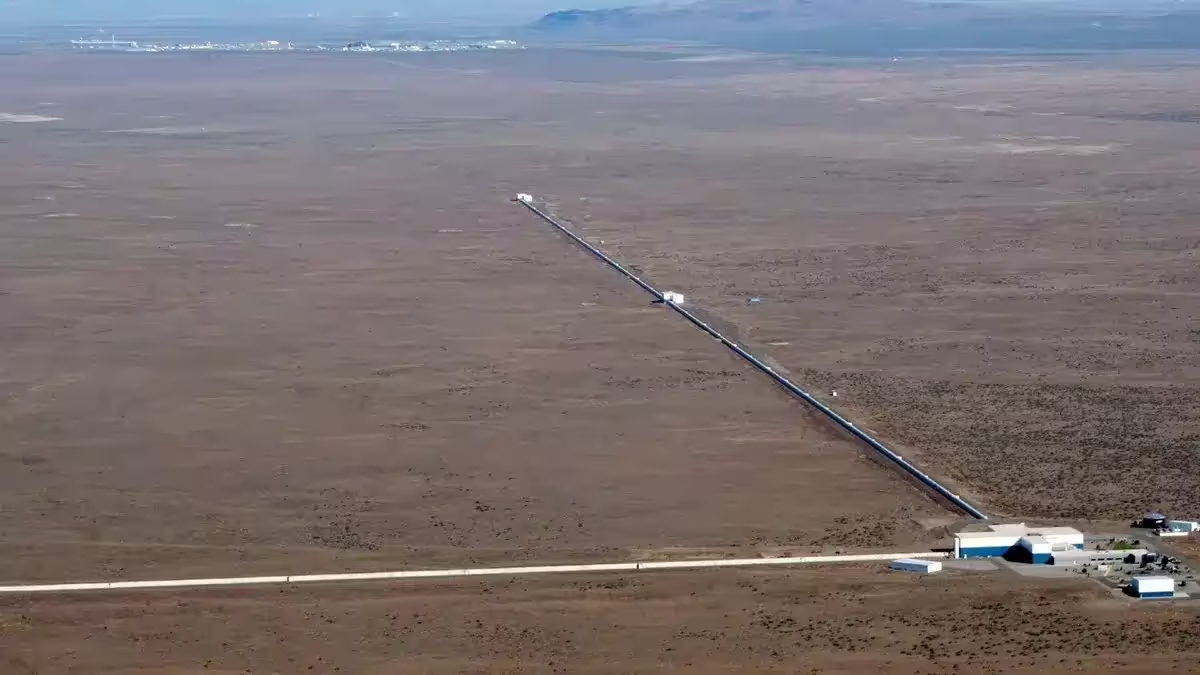
By mapping these thermal signatures, researchers can pinpoint the origins of temperature‑induced disturbances and devise mitigation strategies that sharpen the interferometer’s sensitivity.
“It doesn’t require any new technology development, which is almost unheard of for solving a LIGO instrumentation problem,” Richardson said in a statement.
Preparing for the Next Generation of Gravitational‑Wave Detectors
Upcoming observatories aim to boost sensitivity by roughly an order of magnitude, a target that hinges on suppressing quantum‑mechanical noise and other subtle interference sources. Enhanced thermal monitoring of the mirrors could become a key component of this broader effort.
“The goal for the next generation of gravitational‑wave detectors is to achieve about 10 times the sensitivity of today’s instruments,” Richardson said in the statement. “One of the key obstacles to achieving that is reducing the fundamental quantum mechanical noise that limits the precision of the measurements.”
While the camera system does not replace the sophisticated instrumentation already employed by LIGO, it offers a complementary diagnostic that could accelerate the refinement of current and future detectors. Such pragmatic innovations may help the field capture weaker signals from distant black holes, neutron stars, and other extreme astrophysical phenomena.
This article has been fact checked for accuracy, with information verified against reputable sources. Learn more about us and our editorial process.
Last reviewed on .
Article history
- Latest version
Cite this page:
- Posted by Aisha Ahmed