NASA’s New Space Telescope Is About To Flood Earth With Data On Hidden Planets And Black Holes
Nearly 900 astronomers are gearing up to use NASA’s Roman Space Telescope to hunt for hidden planets, black holes, and breakthrough cosmic discoveries.
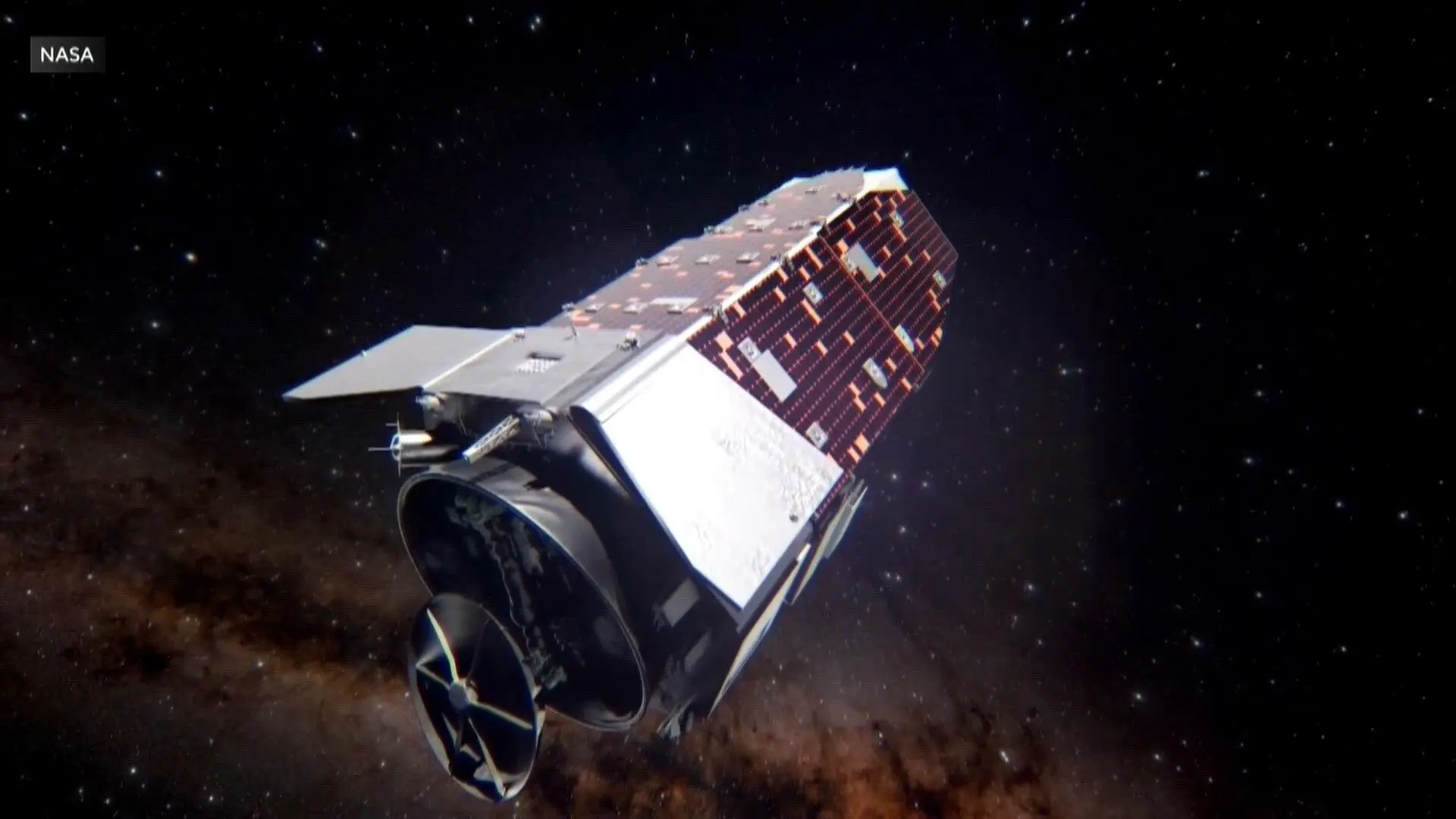
NASA’s Nancy Grace Roman Space Telescope, which successfully reached its operational zone near the second Lagrange point following its August 30, 2026, launch, is poised to fundamentally alter our understanding of the cosmos. As the mission transitions from its initial commissioning phase, with NASA confirming successful instrument focusing on October 14, the scientific community is bracing for an unprecedented deluge of data. The telescope is engineered to transmit roughly 1.4 terabytes of information back to Earth daily, a massive influx that will be made accessible to the global research community within 48 hours of processing.
To navigate this information flow, a consortium of approximately 900 astronomers, led by Jessica Lu of the University of California, Berkeley, and David Weinberg of Ohio State University, has mobilized. Their objective is to harness this continuous feed to investigate everything from isolated black holes and exoplanets to the mysterious forces driving the acceleration of the universe.
Harnessing Gravitational Microlensing
At the heart of Roman’s capabilities is a 2.4-meter mirror paired with a high-resolution, 288-million-pixel near-infrared camera. A central pillar of its mission, the Galactic Bulge Time-Domain Survey, will focus on the densely populated core of the Milky Way, revisiting specific fields every 12 minutes to detect subtle fluctuations in light.
Researchers will utilize a technique known as gravitational microlensing, where the gravity of a foreground object acts as a lens, bending and magnifying the light of a distant star. By analyzing these temporary brightenings, scientists can infer the presence of planets, brown dwarfs, or even isolated black holes that remain otherwise invisible. Because these signatures require complex modeling to distinguish, the collaborative effort is essential for refining the mathematical tools needed to extract meaningful discoveries from the data stream.
The Quest to Unmask Dark Energy
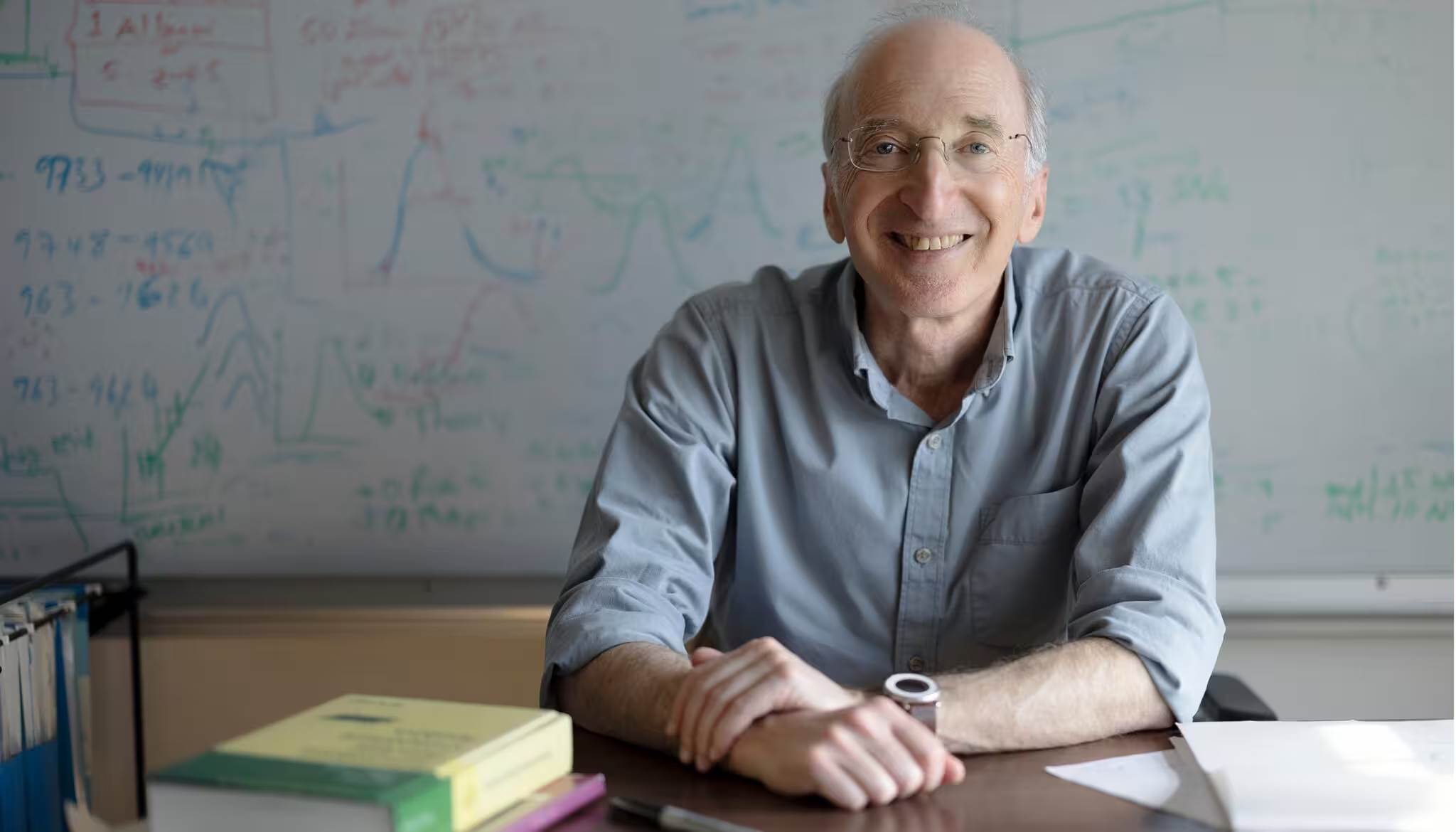
Beyond the search for celestial bodies, the Roman mission addresses a fundamental cosmological mystery: the nature of dark energy. Nearly three decades after physicist Saul Perlmutter and his colleagues provided the first evidence of the universe’s accelerating expansion, the Roman telescope is set to provide the most rigorous testing ground yet for this phenomenon.
The mission will employ Type Ia supernovae as “standard candles” to map the history of cosmic expansion. By observing these stellar explosions across vast distances and different epochs, scientists aim to determine whether the influence of dark energy has remained constant or if it evolves over time. These space-based observations will complement data from the ground-based Dark Energy Spectroscopic Instrument (DESI), which maps the distribution of galaxies to track the universe’s structure.
Synergy in Future Observations
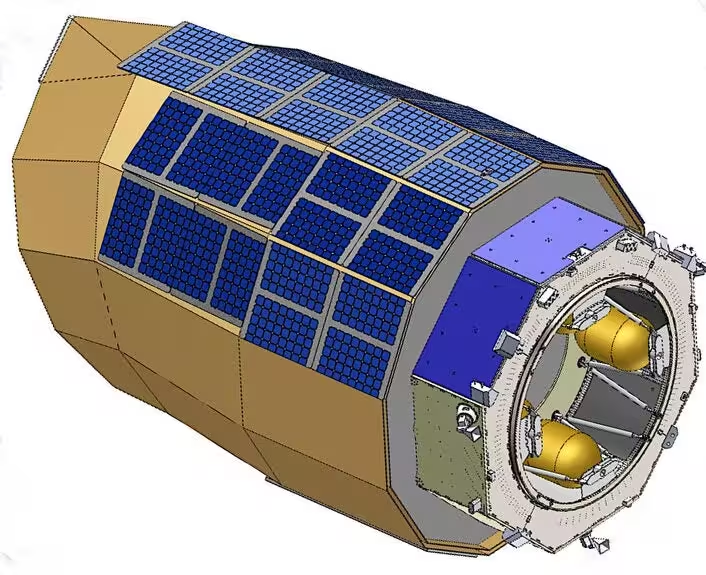
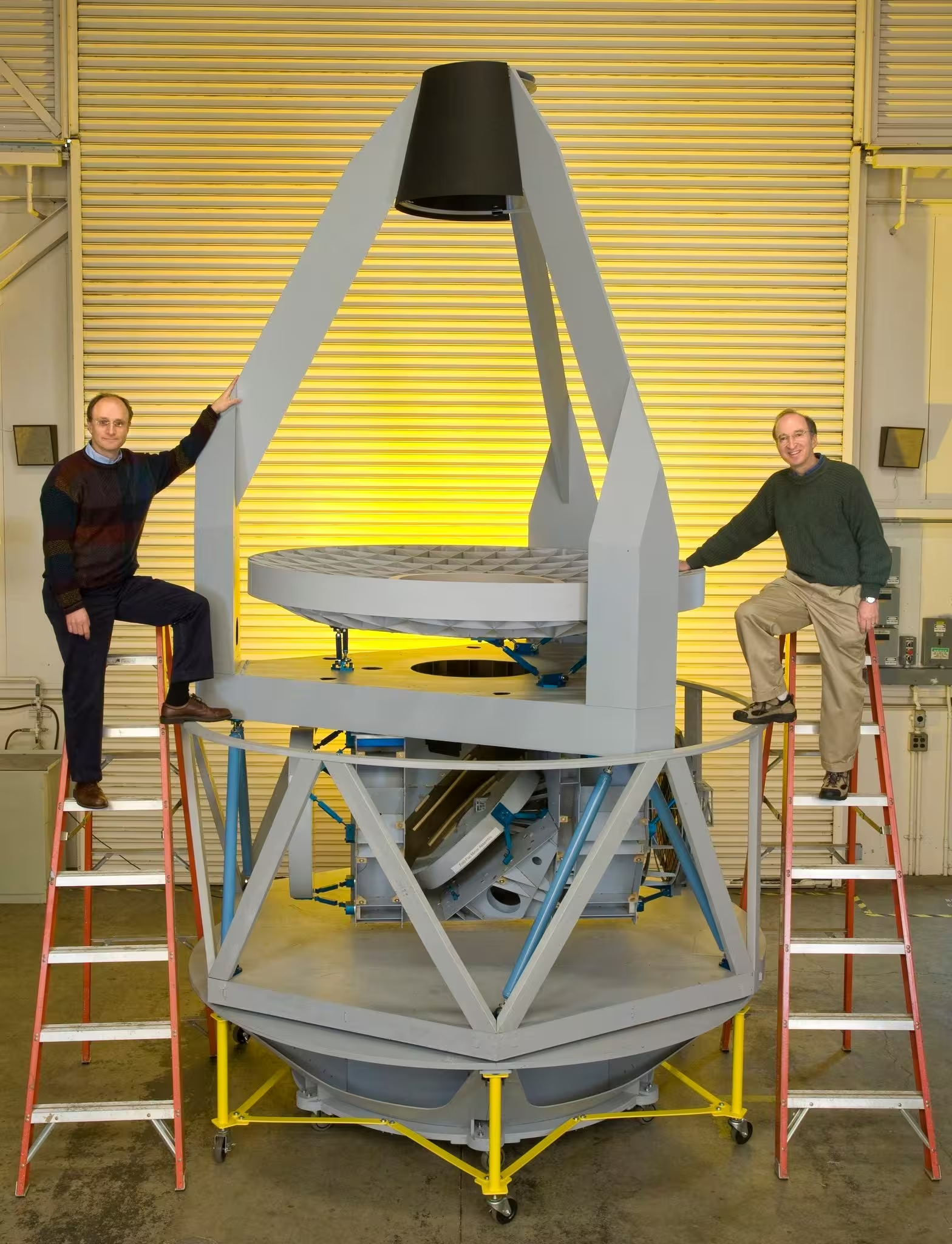
The scientific return of the Roman mission may be further enhanced by the proposed Lazuli Space Observatory. A privately funded initiative supported by Eric and Wendy Schmidt, this three-meter telescope is designed to provide high-resolution spectroscopy that could offer a more granular look at the targets identified by Roman. By providing the detailed chemical and velocity data necessary to distinguish between subtle variations in supernova light, Lazuli could help complete a long-sought picture of cosmic evolution that was first proposed as the Supernova Acceleration Probe (SNAP) in 1999.
As the Roman Science Collaboration continues to refine its analysis algorithms, the focus remains on transforming raw telemetry into a coherent map of the universe. The mission’s ultimate success, according to researchers, rests not only on the precision of the telescope’s hardware but on the ability of the international scientific community to process and interpret the unprecedented volume of data that will soon become public property.
Technical Resources and Further Reading
- NASA’s Roman Mission Shares Detailed Plans to Scour Skies: An overview of the primary surveys and mission objectives.
- An Isolated Mass-gap Black Hole or Neutron Star Detected with Astrometric Microlensing: A study on the mechanics of detecting compact objects via microlensing.
- Measurements of Ω and Λ from 42 High-Redshift Supernovae: The foundational 1999 paper that established the case for dark energy investigation.
- The Lazuli Space Observatory: Architecture & Capabilities: Documentation regarding the technical design and scientific potential of the proposed Lazuli mission.

This article has been fact checked for accuracy, with information verified against reputable sources. Learn more about us and our editorial process.
Last reviewed on .
Article history
- Latest version
Reference(s)
- Abdul Karim, M.., et al. “DESI DR2 results. II. Measurements of baryon acoustic oscillations and cosmological constraints.” Physical Review D, vol. 112, no. 8, October 6, 2025 American Physical Society (APS), doi: 10.1103/tr6y-kpc6. <https://journals.aps.org/prd/abstract/10.1103/tr6y-kpc6>.
- Balzer, Ashley. “NASA’s Roman Mission Shares Detailed Plans to Scour Skies - NASA.”, April 24, 2025 NASA <https://www.nasa.gov/missions/roman-space-telescope/nasas-roman-mission-shares-detailed-plans-to-scour-skies/>.
- Lam, Casey. “An Isolated Mass-gap Black Hole or Neutron Star Detected with Astrometric Microlensing.”, vol. 933, no. 1, June 7, 2022 <https://ntrs.nasa.gov/citations/20230003522>.
- <https://escholarship.org/uc/item/9k9027m0>.
- Roy, Arpita. “The Lazuli Space Observatory: Architecture & Capabilities.” arXiv.org <https://arxiv.org/abs/2601.02556>.
Cite this page:
- Posted by Aisha Ahmed