New Forensic Evidence Suggests Ancient Egyptian Servants Were Victims Of Human Sacrifice
Analysis of 5,000-year-old skulls reveals signs of fatal head injuries, providing compelling new evidence for the ritual sacrifice of ancient Egyptian royals.
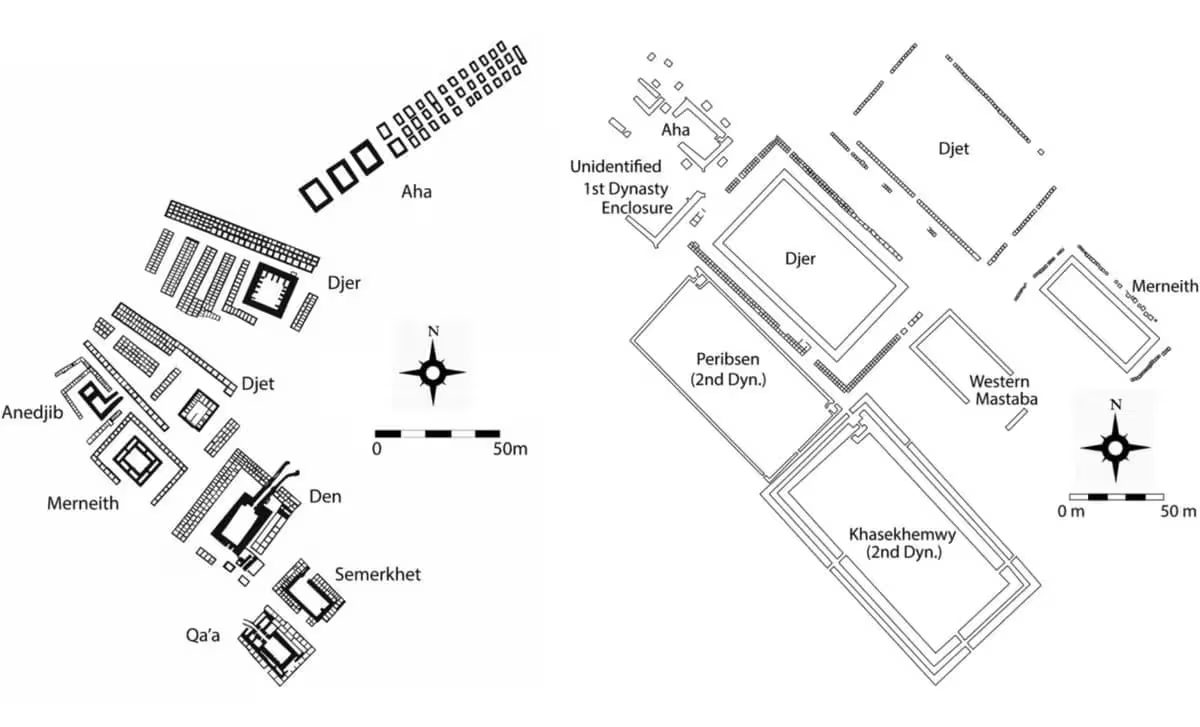
For more than a century, the sprawling burial grounds at Abydos have served as a source of intense scholarly debate. Surrounding the majestic funerary complexes of Egypt’s First Dynasty monarchs (c. 3078–2900 BCE) are hundreds of smaller, modest graves. While early explorers hypothesized that these individuals were sacrificed to serve their kings in the afterlife, physical proof has remained elusive. A new analysis, published in Frontiers in Environmental Archaeology, now suggests that the truth may have been hidden in plain sight, masked by over a century of outdated assumptions and investigative limitations.
Forensic Re-evaluation of Ancient Remains
Anthropologist Roselyn Campbell of Purdue University has re-examined human remains originally unearthed in the 1920s by renowned British archaeologist Flinders Petrie. By applying modern forensic techniques to these century-old samples, Campbell identified distinct patterns of perimortem cranial trauma—injuries sustained at or near the time of death—that had previously gone unnoticed.
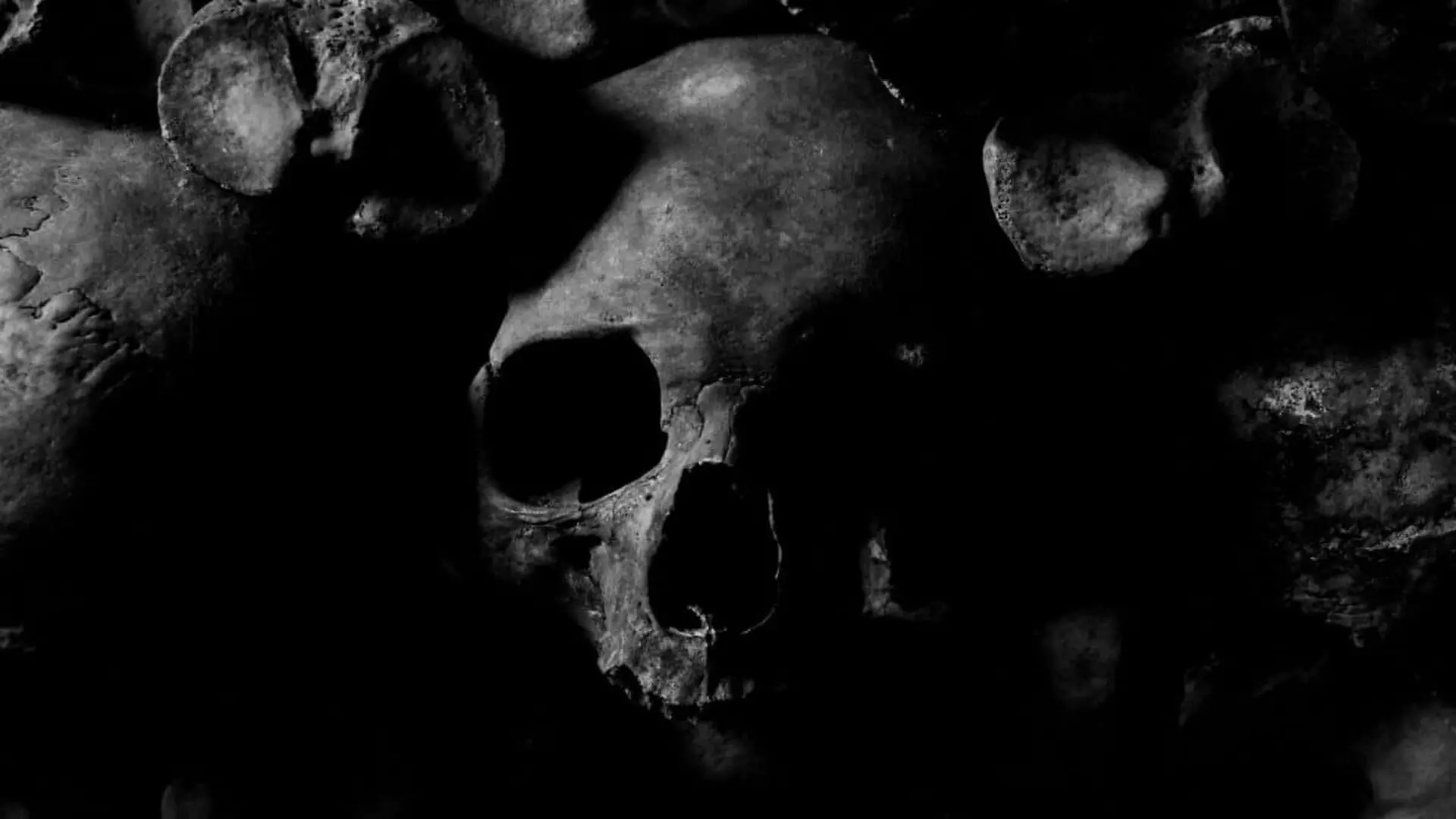
Of the 46 skulls analyzed, 18 exhibited clear evidence of cranial damage, accounting for 39% of the study group. The injuries primarily consisted of linear fractures, though researchers also identified instances of sharp-force trauma, including a penetrating wound to the side of the head and a deep laceration near the eye socket. These findings suggest a violent end for at least a portion of the population buried in the shadow of the royal tombs.
Debunking Old Interpretations
Flinders Petrie, who famously suspected that these individuals were victims of human sacrifice, struggled to find definitive skeletal evidence to support his theory. Lacking the forensic tools of the modern era, he erroneously suggested that some individuals might have been buried alive, a conclusion drawn from the unusual, often jumbled positioning of the skeletons. Current taphonomic knowledge suggests, however, that these displacements are likely a natural consequence of post-mortem decomposition rather than signs of a struggle during interment.
Furthermore, the nature of the fractures discovered by Campbell does not align with the standard weaponry of the era, such as the ceremonial maces often depicted in royal iconography. While these weapons typically leave depressed fractures, the linear breaks seen at Abydos hint at the use of different, perhaps blunter, implements. The fact that many of these fractures were obscured by paraffin wax—used by early excavators to stabilize the bones—explains why they eluded detection for so many decades.
Beyond the Royal Inner Circle
The identity of those buried in these subsidiary graves has also been clarified by this research. Contrary to long-held beliefs that these were royal consorts or family members, grave goods and inscriptions suggest a more professional demographic. The recovered artifacts, including vessels, tools, and administrative titles, point toward a population of mid-level officials, skilled artisans, and household staff.
This demographic shift challenges our understanding of early Egyptian power structures and the phenomenon of retainer sacrifice. While the new data provides compelling evidence of violence, it does not confirm that all deaths were intentional or state-mandated. The absence of trauma in over half the studied skulls leaves the possibility of natural death open, suggesting a complex reality where the royal court was supported by a diverse group whose final moments remain a subject of active inquiry. By revisiting the work of early pioneers with contemporary precision, archaeologists continue to peel back the layers of history, transforming our view of one of the world’s most enduring civilizations.
This article has been fact checked for accuracy, with information verified against reputable sources. Learn more about us and our editorial process.
Last reviewed on .
Article history
- Latest version
Reference(s)
- Campbell, Roselyn. “New data from old bones: using bioarchaeology and forensics to reassess legacy data from ancient Abydos, Egypt.” Frontiers in Environmental Archaeology, vol. 5, October 5, 2026, pp. 1858940 Frontiers, doi: 10.3389/fearc.2026.1858940/full. <https://www.frontiersin.org/journals/environmental-archaeology/articles/10.3389/fearc.2026.1858940/full>.
- “Roselyn Campbell.” Loop <https://loop.frontiersin.org/people/3304188/overview>.
Cite this page:
- Posted by Vikram Desai