Diver Cleaning Lake Trash Makes Rare Discovery of 1,000-Year-Old Indigenous Canoe
Experts believe this shipwreck was intentionally scuttled long ago, raising new questions about its mysterious history and the motive behind the sinking.
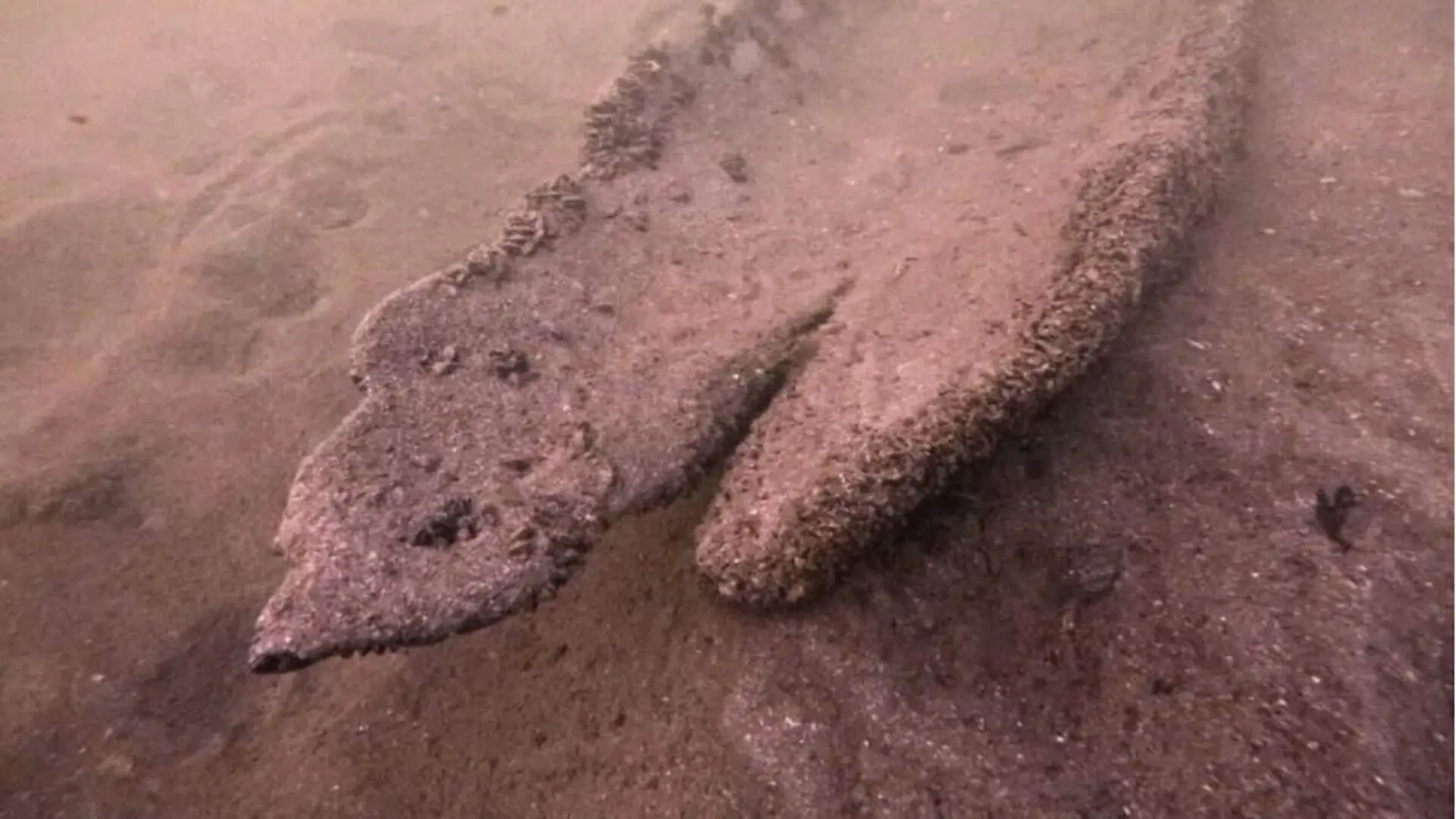
What began as a routine underwater cleanup near Milwaukee has led to a significant historical discovery. During a May 6 dive in Pewaukee Lake, volunteer Mark Schachtner spotted an unusual object resting 15 feet below the surface. While Schachtner, a veteran diver with the Four Seasons Dive Club, was accustomed to finding discarded bottles and lake debris, he immediately recognized that this 17-foot-long structure was something far more substantial.
Subsequent investigation by the Wisconsin Historical Society confirmed that the artifact is an ancient dugout canoe, crafted from a single white oak trunk. Radiocarbon analysis later dated the vessel to between A.D. 992 and 1049, placing it in the transition between the Late Woodland period and the emergence of Mississippian cultural influences in the region.
Engineering an Ancient Vessel
Maritime archaeologist Tamara Thomsen collaborated with the diving team to document the canoe, revealing intricate details about its construction. The vessel measures 1.8 feet across at its widest point, with thick walls and a reinforced base. Marks discovered along the hull indicate a sophisticated combination of controlled fire and manual scraping—likely performed with stone implements or shells—to carve the interior.
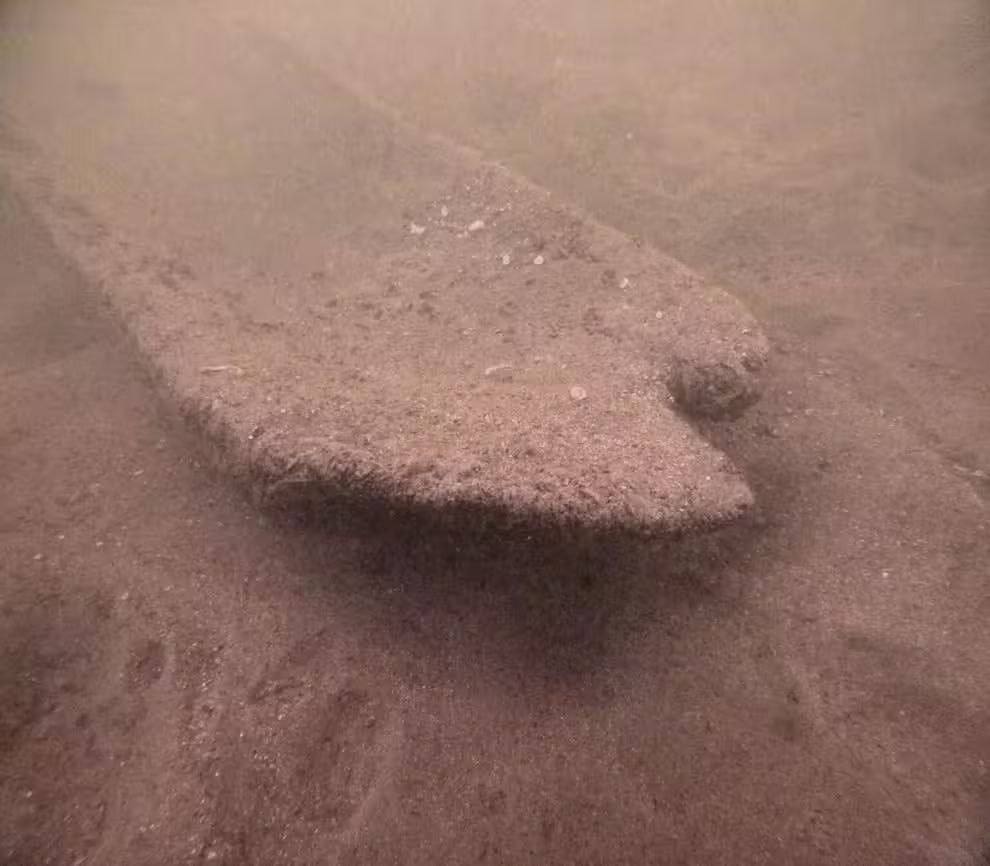
Jon Greendeer, president of the Ho-Chunk Nation, emphasized the labor-intensive nature of this craftsmanship. These vessels were essential infrastructure for early Indigenous populations, providing a primary means of transporting cargo, fishing equipment, and people across regional waterways.
Strategic Submergence
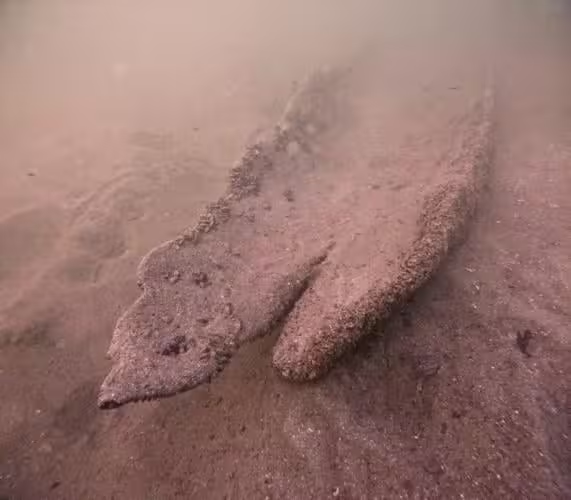
The canoe currently remains in the lakebed, partially buried by sediment. Thomsen suggests the vessel was likely cached—a common practice where Indigenous people would intentionally sink their canoes in the off-season to protect the wood from drying out and cracking. Once submerged, the water-saturated wood would remain preserved until needed for future travel.
This discovery adds to a growing catalog of approximately 130 dugout canoes identified across Wisconsin. Larry Plucinski, the tribal historic preservation officer for the Bad River Band of Lake Superior Chippewa, noted that such items were traditionally viewed as communal property rather than private assets, available for anyone within the community who required them.
Preservation in Situ
Unlike previous recoveries in Lake Mendota, there are no plans to raise the Pewaukee canoe. Excavating such delicate, waterlogged timber presents significant preservation risks, as exposure to air can cause the wood to rapidly deteriorate. By keeping the artifact underwater, the Wisconsin Historical Society—in coordination with tribal nations—is ensuring its long-term integrity.

The precise coordinates of the site remain confidential to protect the cultural heritage resource. State law strictly prohibits the unauthorized disturbance, removal, or damage of the canoe, which is now formally cataloged in the state’s archaeological database.

This article has been fact checked for accuracy, with information verified against reputable sources. Learn more about us and our editorial process.
Last reviewed on .
Article history
- Latest version
Cite this page:
- Posted by Vikram Desai