Scientists Just Discovered a Hidden Magma Reservoir Beneath One of the World’s Most Dangerous Volcanoes
Six years of satellite data reveal a hidden pattern of magma movement beneath a famous volcano, prompting researchers to closely monitor its activity.
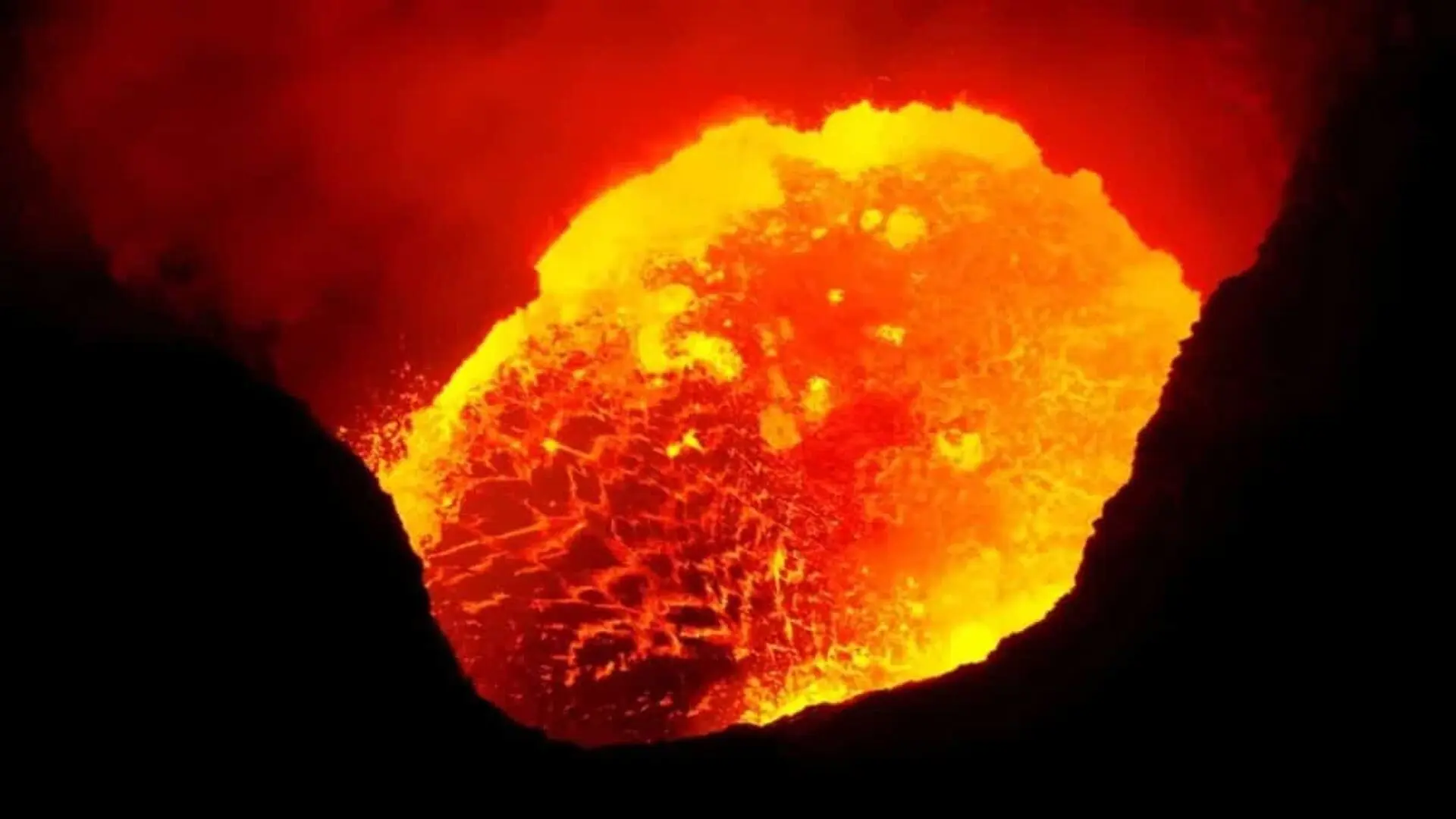
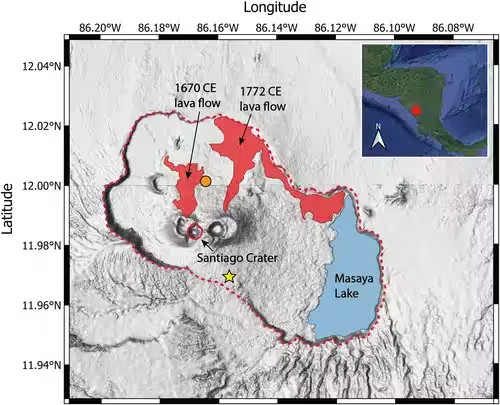
New satellite observations have unveiled a complex subterranean dance occurring beneath Nicaragua’s Masaya Volcano, suggesting that the site is actively shifting as magma moves through its internal plumbing. The findings offer a rare, detailed look at the subsurface dynamics of a volcanic system situated just 20 kilometers (12 miles) from the capital city of Managua, home to nearly 2 million people.
Masaya is widely recognized for the persistent lava lake nestled within its Santiago crater, a feature that has earned it the ominous moniker, the “Mouth of Hell.” While the volcano has remained free of major lava flows since 1772, it remains a site of significant geological activity, characterized by regular gas emissions and intermittent explosions over the last 50 years.
Mapping Magma Movement via Satellite Radar
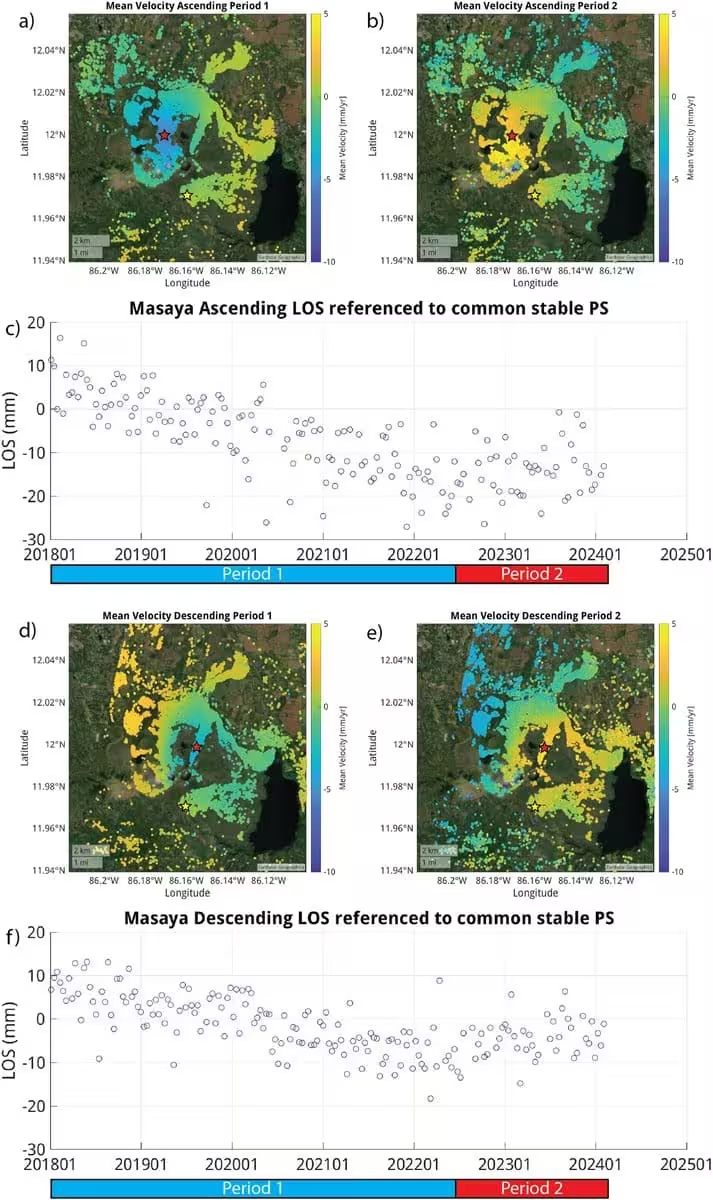
Researchers from Pennsylvania State University utilized radar imagery captured by the Sentinel-1 satellites to monitor subtle ground deformations between 2018 and 2024. Their analysis, recently detailed in Geophysical Research Letters, revealed two distinct behaviors occurring in different segments of the volcanic complex.
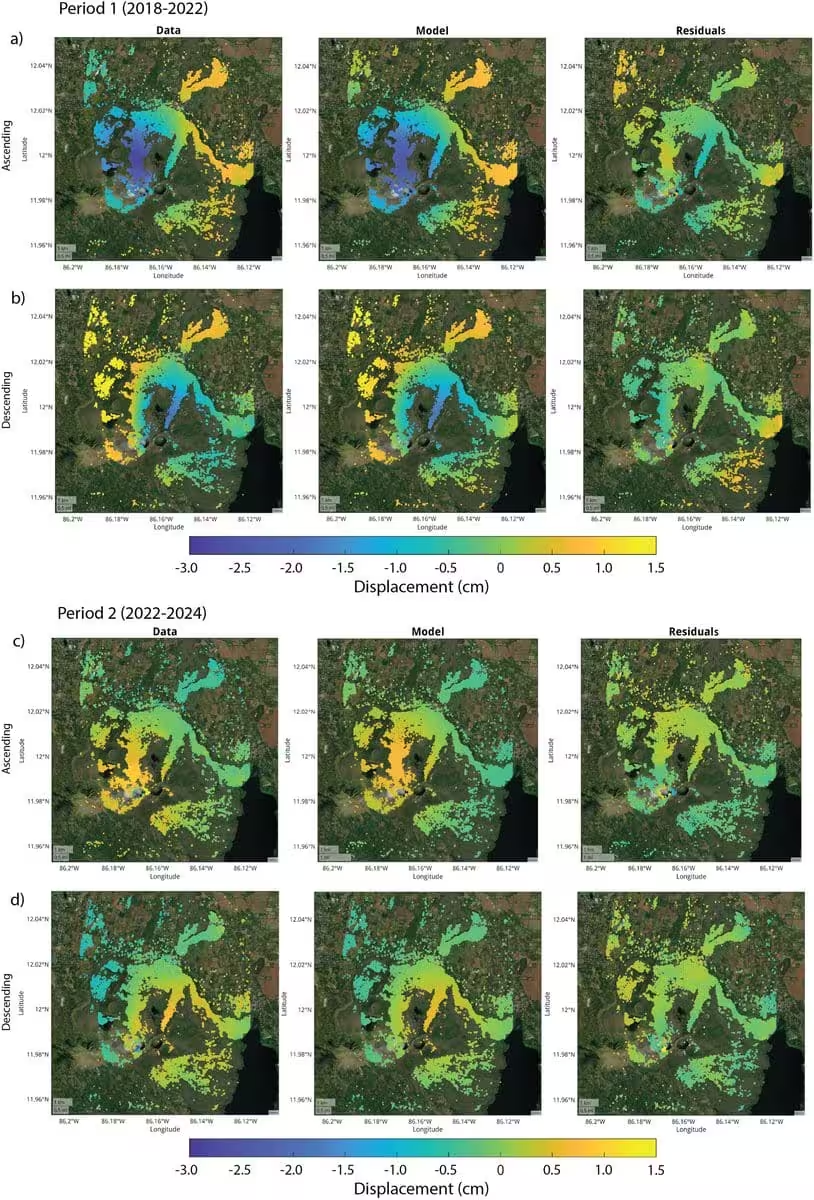
The study focused on the Masaya Central Reservoir, located north of the Santiago crater. Data indicated that the ground above this chamber subsided by approximately 3 centimeters (1.2 inches) between 2018 and mid-2022, a sign that magma was likely being withdrawn from the storage zone. However, that trend reversed in mid-2022, with the ground beginning to uplift, suggesting a potential influx of new magma.
“When it’s subsiding, that means that there’s probably magma draining away from the volcano, but once the ground starts uplifting again, that can mean that there’s potentially new magma moving in,” said lead author Lizzie Johnson.
A Multilayered Plumbing System
Simultaneously, the ground surrounding the Santiago crater itself exhibited a different pattern, showing consistent deflation throughout the entire six-year study period. This discrepancy suggests that the volcano does not rely on a single, monolithic reservoir, but rather a more complex architecture of interconnected storage zones.
Researchers suspect that a secondary, shallower reservoir exists roughly 200 meters (656 feet) beneath the surface, operating independently of the deeper central chamber. This discovery clarifies why different parts of the volcano can display conflicting deformation signals at the same time.
Long-Term Monitoring and Public Safety
While the recent magma influx is noteworthy, experts emphasize that there is no immediate indication of an impending eruption or increased danger to the local population. Nonetheless, the volcano remains a significant environmental factor due to its consistent release of sulfur dioxide, which can trigger acid rain and affect air quality in nearby communities.
The research underscores the necessity of continued geodetic monitoring to better understand these subsurface interactions. By tracking these patterns, scientists aim to refine hazard mitigation strategies not only for Masaya but for other basaltic volcanoes globally that feature active lava lakes.
“Having a thorough understanding of Masaya’s volcanic activity and its related hazards is critical,” Johnson noted, adding that future long-term studies remain essential for maintaining effective surveillance of such high-risk sites.
This article has been fact checked for accuracy, with information verified against reputable sources. Learn more about us and our editorial process.
Last reviewed on .
Article history
- Latest version
Reference(s)
- “Sentinel-1.” <https://www.esa.int/Applications/Observing_the_Earth/Copernicus/Sentinel-1>.
- Johnson, E.., et al. “Double Trouble: Two Active Magma Reservoirs Identified at Masaya Volcano, Nicaragua, Using Satellite Geodesy.” Geophysical Research Letters, vol. 53, no. 14, July 23, 2026 American Geophysical Union (AGU), doi: 10.1029/2026GL123214. <https://doi.org/10.1029/2026GL123214>.
- “Elizabeth Johnson, Ph.D..” <https://www.jmu.edu/geology/people/all-people/johnson-elizabeth.shtml>.
Cite this page:
- Posted by Vikram Desai