North Korea Nuclear Test Site Is Still Shaking Years Later Due to Persistent Geological Damage
Years after the 2017 nuclear test, researchers have linked ongoing seismic activity to reawakened faults beneath Mt. Mantap.
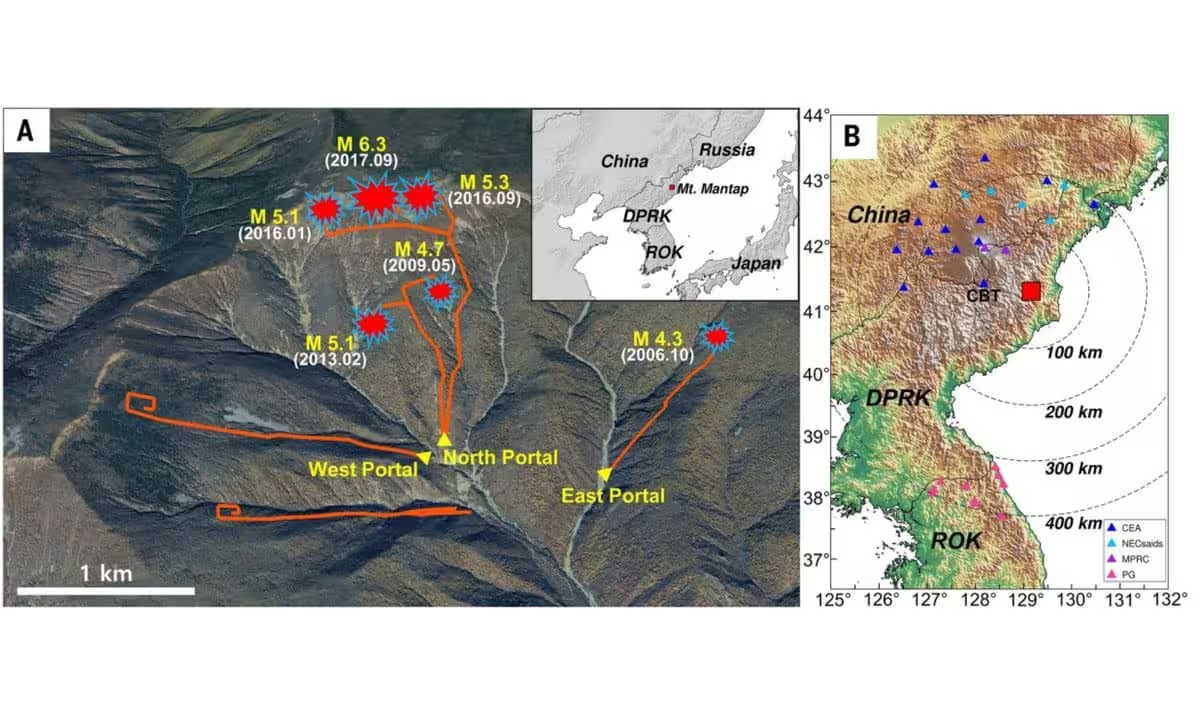
Deep within the Hamgyong Mountains of northeastern North Korea, the 7,234-foot peak of Mt. Mantap has become the center of a complex geological investigation. While the mountain itself is not the highest in the range—a distinction held by nearby Kwanmo Peak—it gained global notoriety as the site of the Punggye-ri nuclear testing facility. Between 2006 and 2017, North Korea conducted a series of underground nuclear explosions at the location, violating the international norms established by the 1996 Comprehensive Nuclear Test Ban Treaty, which the country never signed.
Lingering Seismic Instability at the Blast Site
The final and most powerful detonation occurred on September 3, 2017, registering a magnitude of 6.3 on U.S. Geological Survey monitors. The sheer force of the thermonuclear event was enough to physically displace Mt. Mantap, with satellite radar data confirming the mountain shifted roughly 12 feet horizontally and subsided by nearly two feet. Typically, the seismic aftermath of such an explosion follows a predictable decay, where crustal deformation relaxes and earthquake activity dissipates over time, as was observed at historical test sites like the Nevada National Security Site and the Soviet-era Semipalatinsk facility. However, Mt. Mantap has defied these expectations.
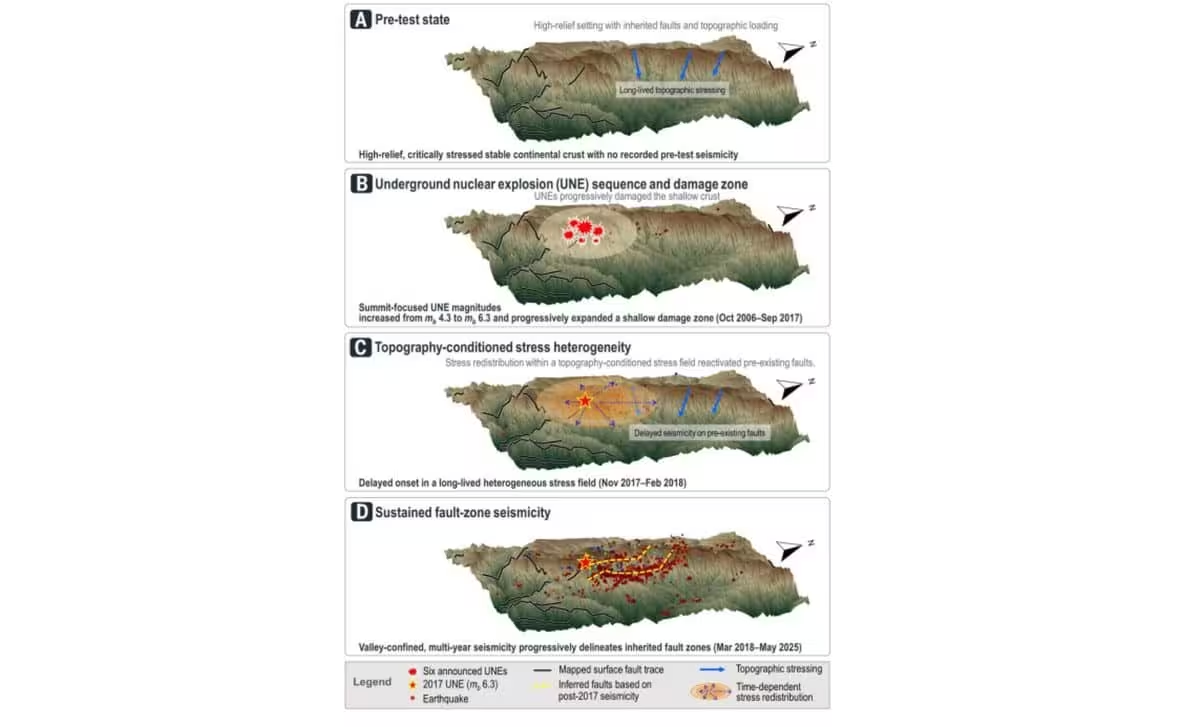
According to a new study published in Science, the region experienced a counterintuitive surge in seismic activity rather than a decline. Investigators found that both the frequency of tremors and the rate of seismic moment release accelerated in the years following the 2017 test, indicating that the crust beneath the mountain was not settling into equilibrium, but instead undergoing an expanding process of structural failure.
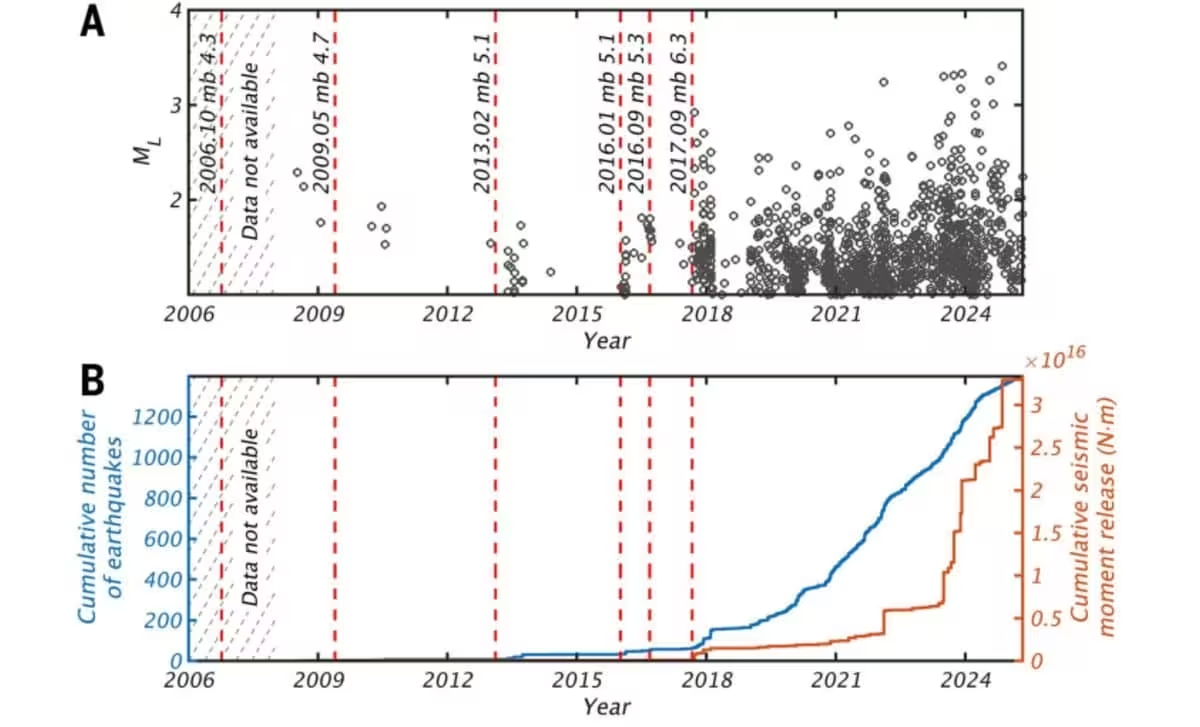
Tracking Over 1,400 Tectonic Events
Given the restricted nature of the Punggye-ri site, researchers utilized seismic data collected by stations in China and the Republic of Korea between 2008 and 2025. They successfully identified 1,400 distinct seismic events during this timeframe, with 955 of those occurring after the final 2017 nuclear explosion. Mapping the hypocenters of these earthquakes revealed they were not random, but concentrated along two distinct, subparallel faults oriented to the north-northwest.
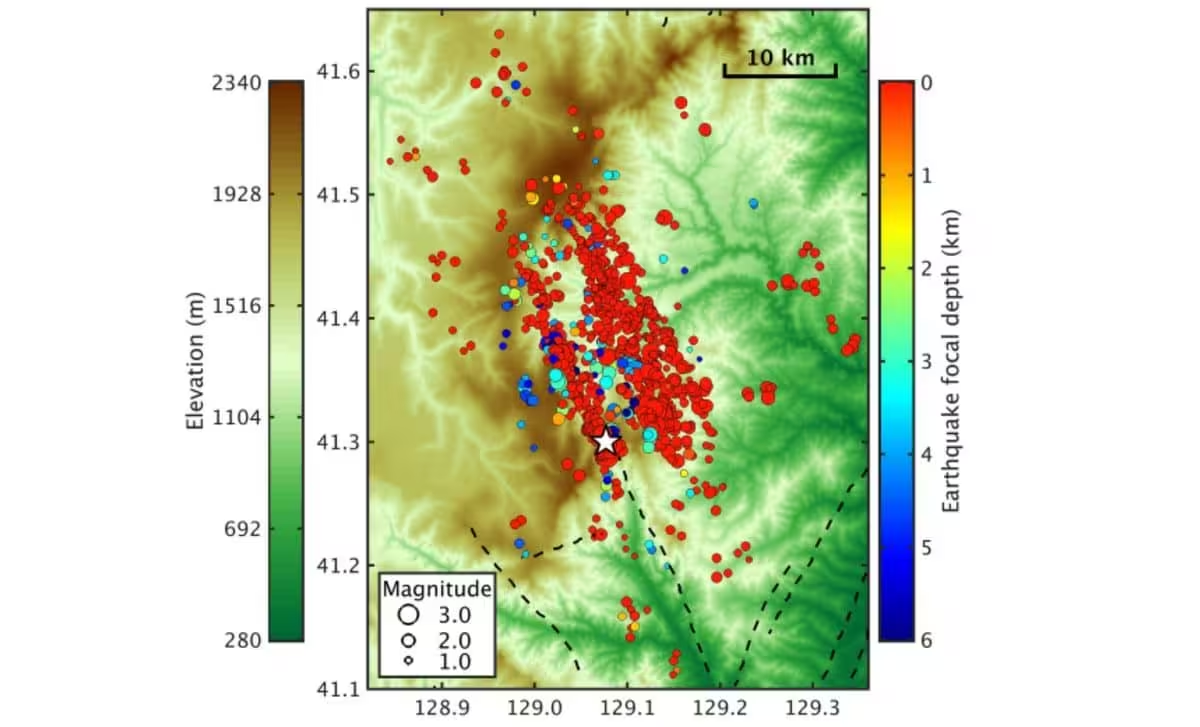
One of these fault lines appears to be an extension of a previously mapped structure, now seemingly reactivated by the intense pressure of the underground blasts. The other, while not previously documented, shows a clear “fault-like geometry.” Because North Hamgyong Province is typically considered a stable, low-seismicity region of intraplate crust, this ongoing activity suggests that the nuclear testing has fundamentally altered the local stress landscape.
Stress Redistribution and Long-Term Geological Consequences
The study authors conclude that the explosions permanently damaged the fracture network in the shallow crust, triggering a delayed and persistent structural adjustment. As the stress field redistributed, it gradually engaged neighboring faults, expanding the footprint of seismic activity well beyond the original blast zones.
“The explosions altered the stress field and fracture network in the shallow crust, initiating a prolonged phase of structural adjustment,” the researchers noted. “Over time, stress redistribution gradually activated nearby faults, and the seismicity became organized into a broader fault network rather than remaining confined to localized damage zones.”
This research highlights the significant human activity impact on geological stability, showing how high-intensity testing can force the reactivation of dormant fault lines. For global monitoring agencies, this creates a new challenge: the ongoing, test-induced seismicity could potentially mask or interfere with the detection of future nuclear activities in the region.
This article has been fact checked for accuracy, with information verified against reputable sources. Learn more about us and our editorial process.
Last reviewed on .
Article history
- Latest version
Reference(s)
- <https://www.ctbto.org/our-mission/the-treaty>.
- Fan, Xingli., et al. “Nuclear tests at Mt. Mantap have reactivated intraplate faults.” Science, vol. 393, no. 6817, September 17, 2026, pp. 1209-1212. American Association for the Advancement of Science (AAAS), doi: 10.1126/science.adx5917. <https://www.science.org/doi/10.1126/science.adx5917>.
Cite this page:
- Posted by Vikram Desai