Japan’s Radical Plan to Wrap the Moon in a Giant Solar Power Ring
A proposed 6,800-mile lunar solar ring could harvest massive amounts of energy and beam it back to Earth, offering a radical solution for global power needs.
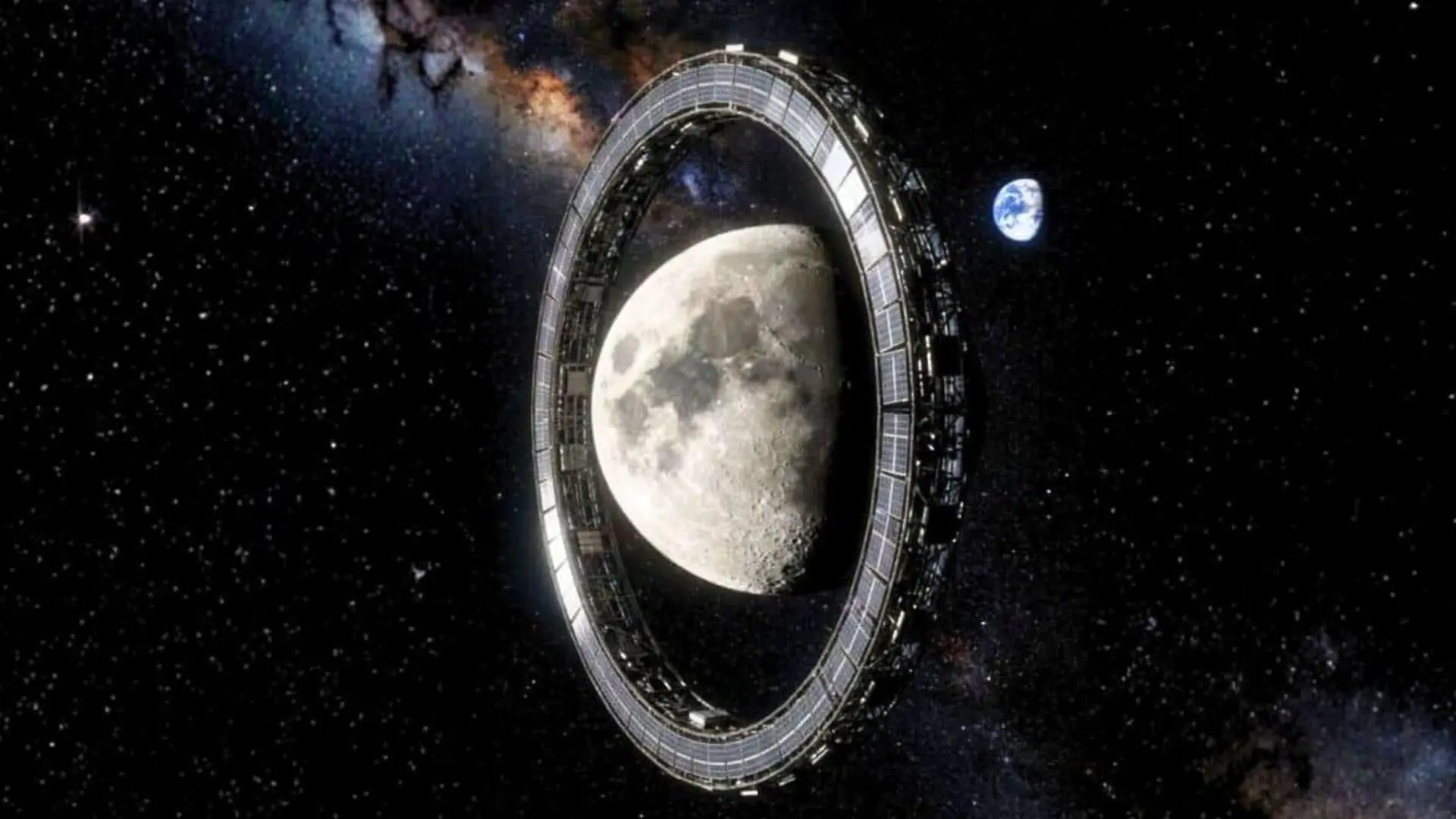
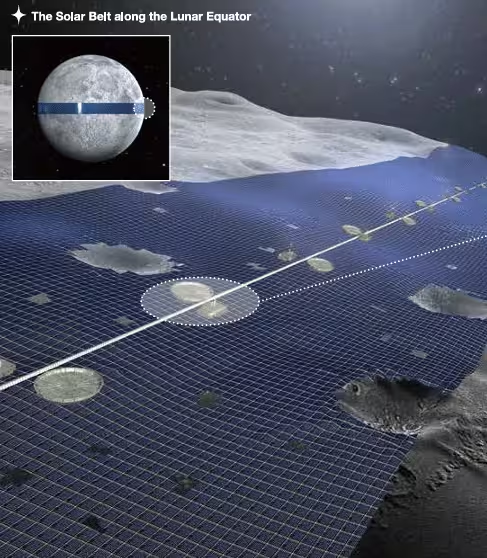
Tokyo-based construction giant Shimizu Corporation has proposed an ambitious architectural feat that would transform the Moon into a massive power plant for Earth. Known as the Luna Ring, the concept involves wrapping the Moon’s equator in a continuous, 11,000-kilometer-long belt of solar panels. By harvesting solar energy in an environment free from clouds and atmospheric interference, the project aims to beam a nearly limitless supply of clean electricity back to our planet.
The engineering strategy relies on an autonomous approach to lunar development. Rather than transporting vast quantities of building materials from Earth, the plan envisions utilizing local lunar resources. By extracting hydrogen from Earth to combine with lunar soil, robots could synthesize water, which would then be processed with native gravel and sand to create concrete. Additional solar-powered infrastructure would convert lunar regolith into glass fiber and functional solar cells. The entire assembly process would be managed by tele-operated machines, minimizing the need for human presence on the surface.
Harvesting Perpetual Sunlight
The primary advantage of the lunar equator is its consistent exposure to solar radiation. While any single point on the Moon experiences roughly two weeks of darkness during each rotation, a ring spanning the entire circumference would ensure that sections of the array are always illuminated. Without weather patterns to obstruct light, the solar panels would consistently receive an intensity of about 1,361 watts per square meter, significantly higher than peak levels on Earth.
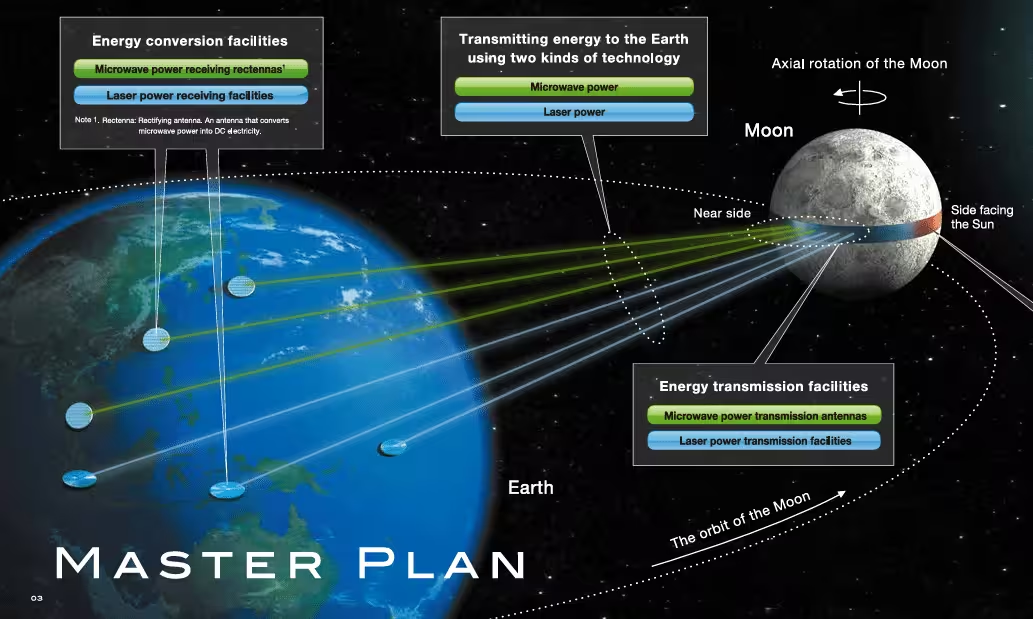
To deliver this energy to the surface, electricity would be routed to the Earth-facing side of the Moon. There, the power would be converted into microwave and laser beams directed at specific ground stations. These stations would house rectennas—specialized antennas capable of capturing the transmission and converting it back into usable electricity. Shimizu estimates that the system could produce up to 13,000 terawatts of power, potentially dwarfing current global electricity consumption.
A Vision Born from Crisis
The proposal gained significant public attention following the 2011 Fukushima Daiichi nuclear disaster. As Japan grappled with a severe energy shortage and the decommissioning of much of its nuclear fleet, the prospect of a space-based renewable source became a focal point for researchers like Tetsuji Yoshida, the president of the company’s space consulting group. For proponents, the Luna Ring represented a potential path toward eliminating the necessity for fossil fuels and biomass-based energy production.
Engineering Hurdles and Future Outlook
Despite its technical promise, the project faces monumental challenges. Currently, the project has no funding, and there has been no formal endorsement from major space agencies like JAXA or NASA. Critics point to the prohibitive costs, which experts suggest could range from $100 billion to several trillion dollars. Furthermore, the logistical complexity of operating autonomous robots from 238,855 miles away—navigating a communication delay of approximately 2.6 seconds—remains a significant hurdle.
While a full-scale lunar ring remains a distant concept, the core technology of wireless power transmission is undergoing rigorous testing. The California Institute of Technology successfully demonstrated space-based wireless energy transfer in 2023, and the European Space Agency is actively investigating the feasibility of orbital solar power through its SOLARIS program. For Shimizu, the Luna Ring is one of several forward-thinking “dream” projects, joining concepts for sprawling underwater cities and massive urban structures that challenge the boundaries of modern civil engineering.
This article has been fact checked for accuracy, with information verified against reputable sources. Learn more about us and our editorial process.
Last reviewed on .
Article history
- Latest version
Reference(s)
- KeepTrack, “Shimizu's Luna Ring - The Plan to Wrap the Moon in Solar Panels.”, April 5, 2026 KeepTrack <https://keeptrack.space/deep-dive/luna-ring-shimizu-lunar-solar-power>.
Cite this page:
- Posted by Vikram Desai