NASA’s Curiosity Rover Just Drilled Into A New Martian Target In Search Of Ancient Secrets
NASA’s Curiosity rover has officially surpassed 38 kilometers of travel and climbed over 1 kilometer in elevation while exploring the Martian surface.
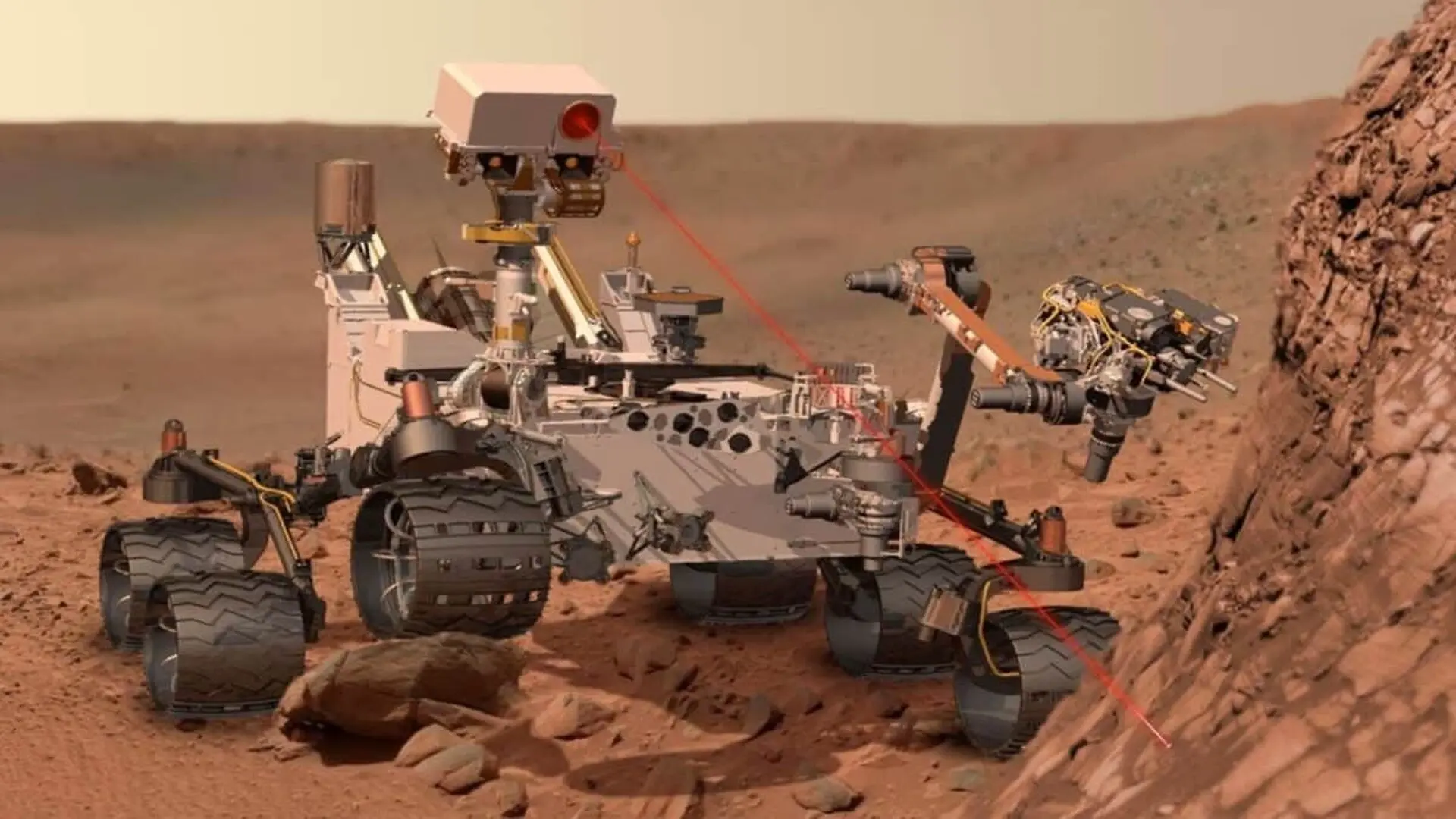
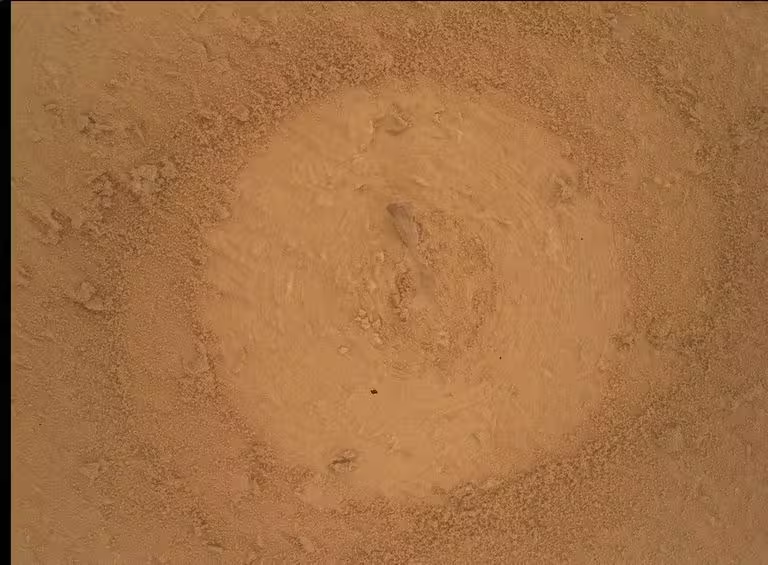
NASA’s Curiosity rover has achieved a new milestone in its long-running exploration of Gale crater, successfully collecting its 48th rock sample from a site dubbed Basque Lakes. The drilling operation occurred within the Cache Creek region, a significant waypoint as the robotic explorer continues its arduous ascent of Mount Sharp.
The naming of the site draws inspiration from British Columbia’s Cache Creek—a location noted for its diverse geological profile, including ancient oceanic crust, volcanic formations, and saline lakes. By drawing parallels to Earth’s own complex environments, mission scientists hope to better understand the chemical history of the Martian surface. Curiosity, which has now traversed more than 38 kilometers (24.6 miles) and climbed over a kilometer (0.6 miles) in elevation, has long surpassed its original landing zone objectives, reaching geological terrain that was initially considered far out of reach.
Rigorous Pre-Drill Assessment
Before committing its drill to the Martian surface, the Curiosity team conducted a multi-layered evaluation of the Basque Lakes target. The rover utilized its APXS instrument to characterize the rock’s elemental chemistry, while the MAHLI camera provided high-resolution imagery from a distance of just one centimeter. Supplemental data was gathered by the ChemCam laser, which vaporized small portions of the target to analyze its composition. A final pre-load test confirmed the physical stability of the rock, allowing the mission team to proceed with the extraction.
Decoding the Martian Mineral Record
With the sample successfully secured, researchers are now turning their attention to the CheMin instrument. This X-ray diffraction tool will analyze the powdered rock to identify specific mineral phases, offering a clearer picture of the environmental conditions that existed when these sediments were originally deposited. Lucy Thompson, a senior research scientist at the University of New Brunswick, has noted that the location could prove to be a “gold mine of minerals,” potentially mirroring the unique geochemical signatures found in the Canadian namesake region.
Maintaining Operational Momentum
Despite the high power requirements inherent in drilling and internal analysis, the rover has maintained an active scientific schedule. Alongside the Basque Lakes extraction, Curiosity deployed its Mastcam to document the surrounding topography and used ChemCam to inspect nearby bedrock known as Peace River, as well as the unique geological structures at the base of a nearby butte, referred to as Cordillera.
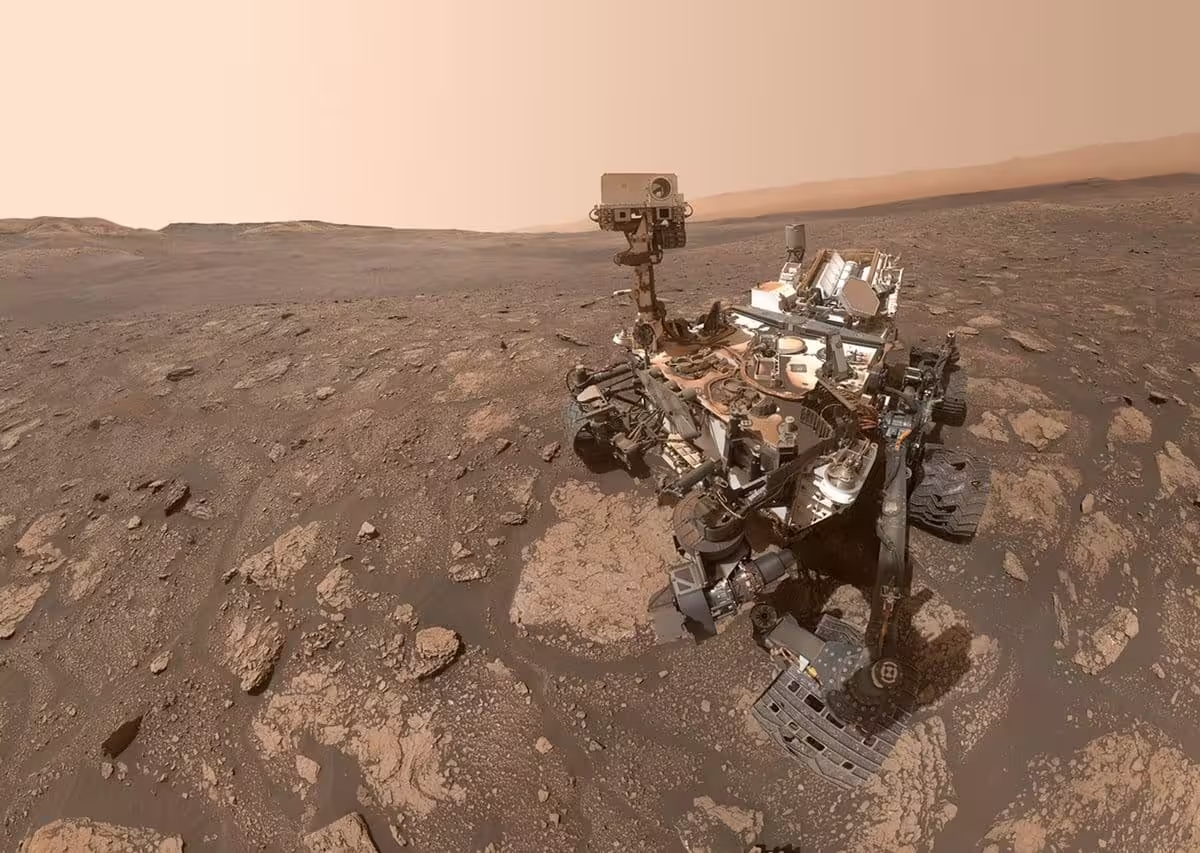
As the mission progresses, the rover will continue to leverage its Sample Analysis at Mars (SAM) instrument suite to deepen the study of the Basque Lakes material. Once these comprehensive tests conclude, Curiosity is expected to deposit the remaining sample remnants and resume its slow, systematic climb up the slopes of Mount Sharp, continuing its years-long survey of the Mars environment.
This article has been fact checked for accuracy, with information verified against reputable sources. Learn more about us and our editorial process.
Last reviewed on .
Article history
- Latest version
Reference(s)
- “Alpha Particle X-ray Spectrometer (APXS).” <https://an.rsl.wustl.edu/help/Content/About%20the%20mission/MER/Instruments/MER%20APXS.htm>.
- “MSL Mars Hand Lens Imager (MAHLI) Description.” <https://www.msss.com/msl/mahli/MAHLI_description.html>.
- “ChemCam – on Mars.” <https://www.msl-chemcam.com/>.
Cite this page:
- Posted by Vikram Desai