Ancient Human Footprints Discovered in Saudi Arabia Reveal a Lost Green Desert
Ancient footprints offer a rare and compelling glimpse into the past, challenging what we know about human history without the need for tools or bones.
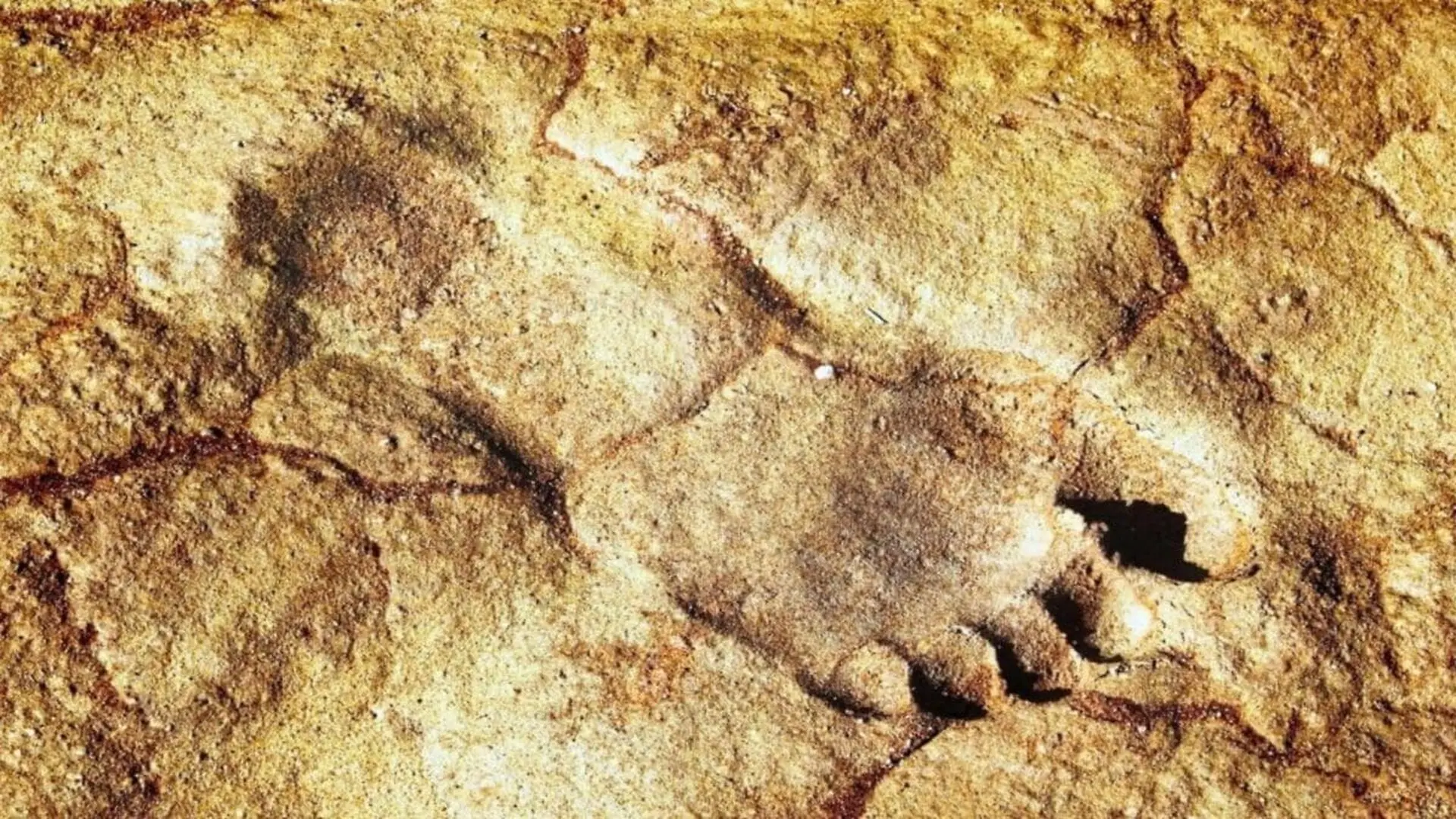
Deep within the Nefud Desert of northern Saudi Arabia, wind-swept sands have revealed a remarkable window into the prehistoric past. Along the perimeter of a long-vanished lakebed known as Alathar, researchers discovered a series of fossilized footprints that date back between 112,000 and 121,000 years. These indentations, preserved in ancient sediment, provide some of the earliest concrete evidence of Homo sapiens venturing into the Arabian Peninsula.
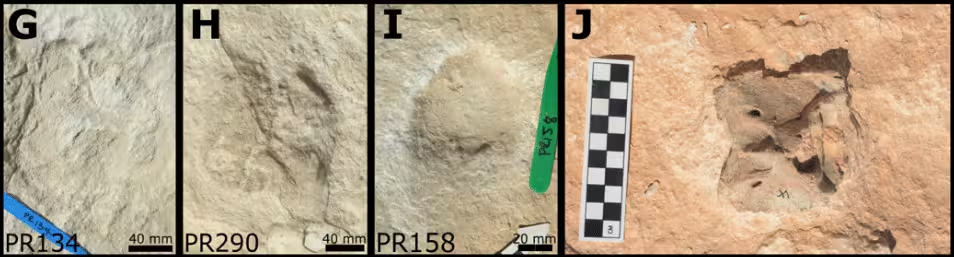
The discovery, detailed in the journal Science Advances, includes seven distinct human footprints appearing to belong to a small group of two or three individuals traveling together. Their path crossed a bustling watering hole frequented by a diverse cast of megafauna. In total, the site yielded 376 tracks, including 107 belonging to camels, 43 left by elephants, and others attributed to horses and large bovids, potentially including a giant buffalo.
Chronology Captured in Sediment
The tracks were brought to light by erosion in 2017, stripping away layers of sediment that had kept the surface protected for millennia. To determine the age of these prints, a team led by Mathew Stewart of the Max Planck Institute for Chemical Ecology employed optically stimulated luminescence. This dating technique relies on the fact that sand grains act as natural clocks, resetting their internal timing mechanism the moment they are shielded from sunlight by burial.
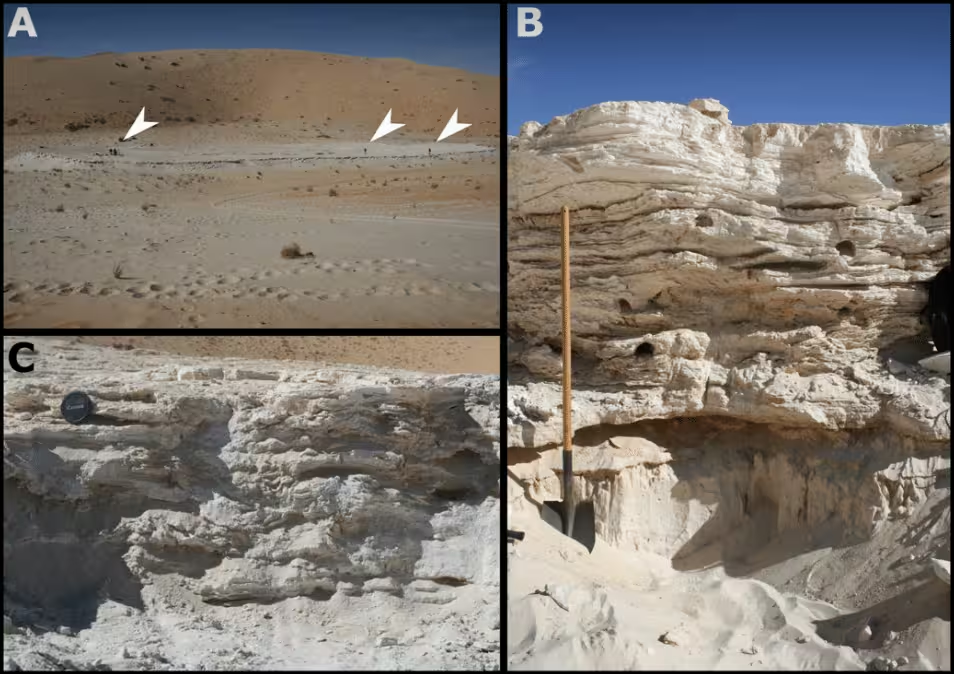
Simon Armitage of Royal Holloway, University of London, explains that the sand grains effectively record the time elapsed since they were last exposed to the sun. By analyzing the layers immediately above and below the footprint horizon, the team successfully placed the visit during the last interglacial period, an era when the Arabian interior was significantly wetter than its current arid state.
A Lush Landscape Transformed
The Nefud Desert, currently characterized by vast stretches of sand, looked vastly different over 100,000 years ago. According to researcher Richard Clark-Wilson, seasonal monsoon shifts once pushed deep into the Arabian interior, creating expansive grasslands and permanent freshwater lakes. Alathar was one such oasis, serving as a critical resource for both wildlife and wandering human groups.
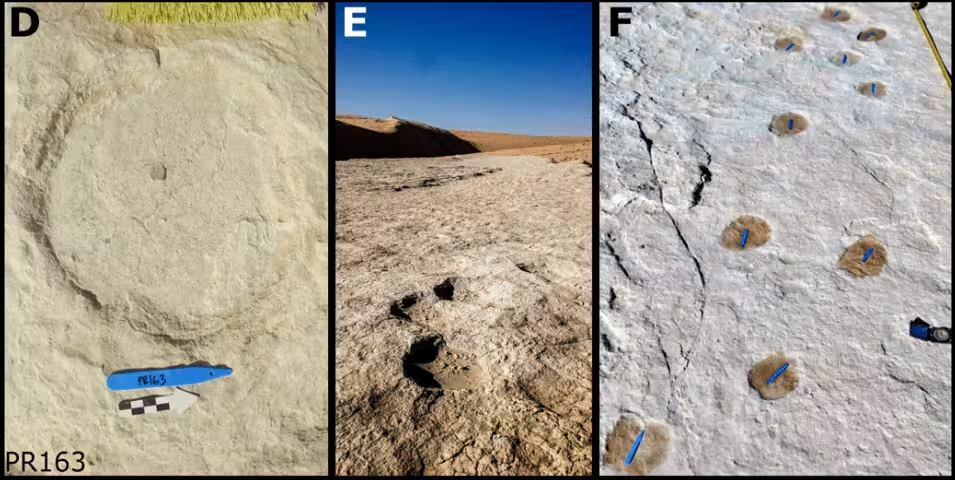
The heavy trampling of the mud around the lake suggests that herbivores congregated there during the dry season as water sources dwindled. Beyond the tracks, the site yielded 233 fossils, including remnants of oryx and elephants, with some bones displaying the unmistakable bite marks of local predators.
Brief Encounters at the Shoreline
The attribution of the human prints to Homo sapiens is supported by the regional timeline, as the species is known to have inhabited the Levant and Arabia during this window—a period when Neanderthals were notably absent from the area. The physical dimensions of the prints also align more closely with early modern humans than with Neanderthal anatomy.
Notably, the absence of stone tools and clear butchery marks suggests that these individuals were not camping or hunting at the lake. Stewart suggests that the group likely used the site as a temporary watering hole while passing through the region. Because experimental data shows that muddy footprints typically degrade within days, these tracks represent a fleeting, high-resolution snapshot of a prehistoric journey that took place over a period of mere hours or days.
This article has been fact checked for accuracy, with information verified against reputable sources. Learn more about us and our editorial process.
Last reviewed on .
Article history
- Latest version
Reference(s)
- Stewart, Mathew., et al. “Human footprints provide snapshot of last interglacial ecology in the Arabian interior.” Science Advances, vol. 6, no. 38, September 18, 2020 American Association for the Advancement of Science (AAAS), doi: 10.1126/sciadv.aba8940. <https://www.science.org/doi/10.1126/sciadv.aba8940>.
- Staff, News. “120,000-Year-Old Human Footprints Found in Saudi Arabia.”, September 21, 2020 Sci.News <https://www.sci.news/archaeology/alathar-footprints-08869.html>.
Cite this page:
- Posted by Vikram Desai