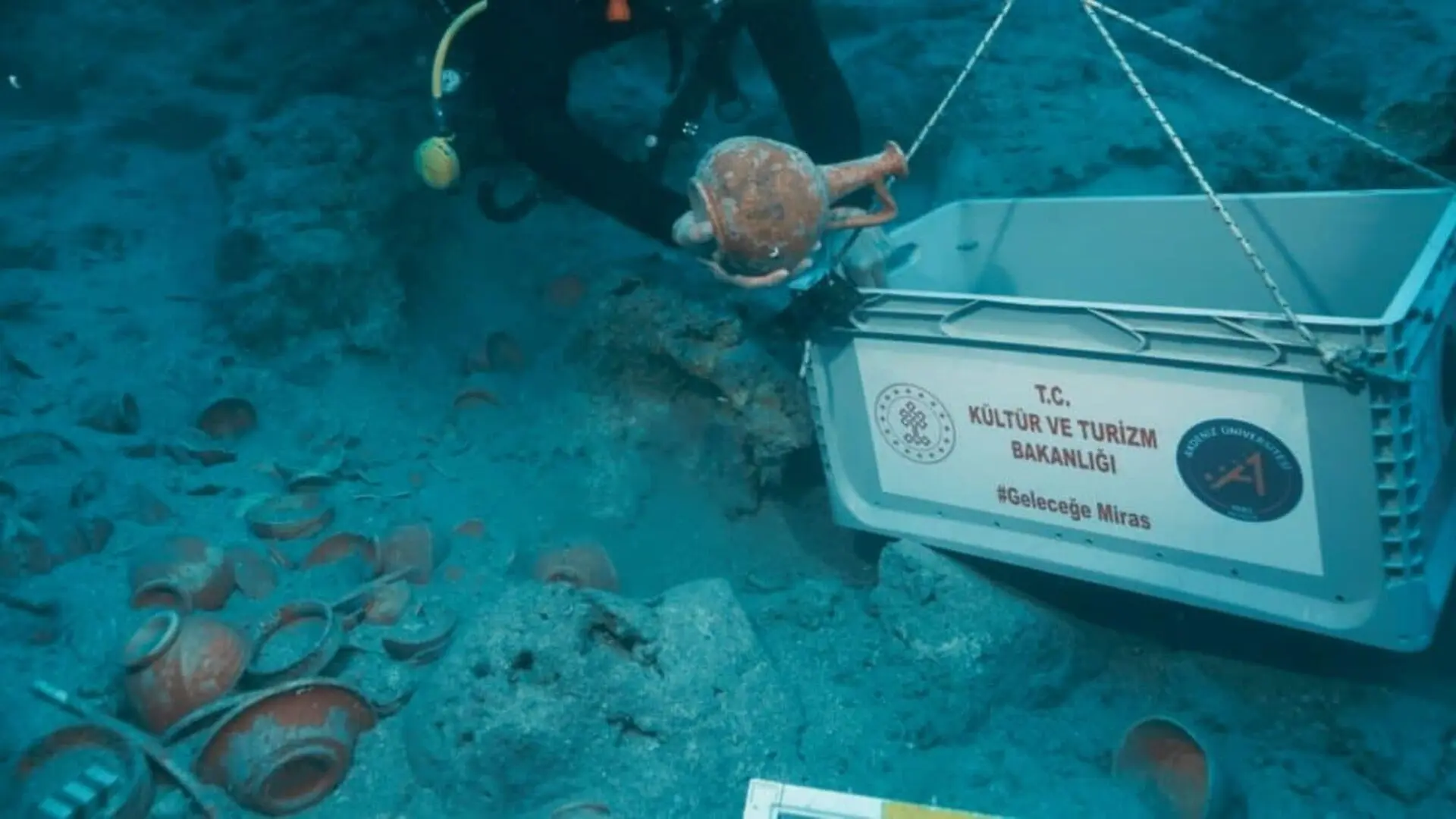
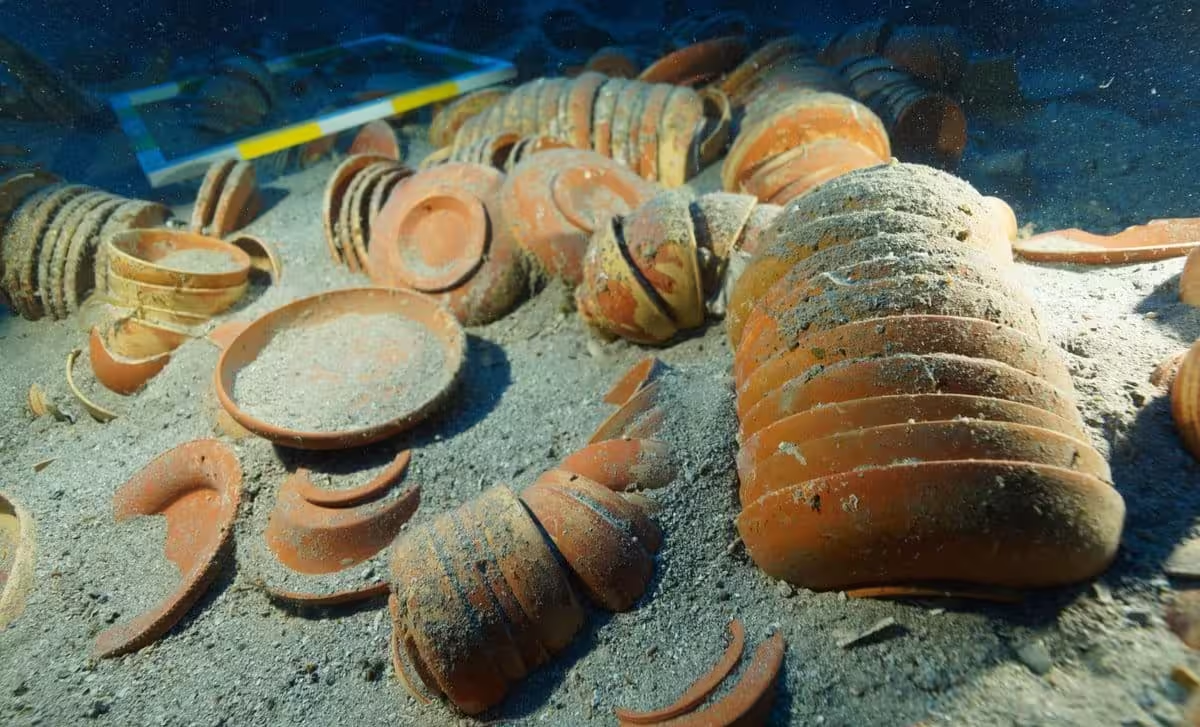
Underwater archaeologists operating off the coast of Adrasan, in Turkey’s Antalya province, have unveiled a remarkable maritime time capsule dating back to the first century B.C. Resting at depths between 42 and 55 meters (approximately 138 to 180 feet), the shipwreck contains a vast, well-preserved collection of ancient ceramic tableware that provides an unprecedented look at the logistics of Mediterranean commerce two millennia ago.
The excavation, which commenced in 2025, has relied on sophisticated robotic systems to navigate the challenging depths. Researchers have recovered thousands of individual ceramic items, spanning 122 distinct shapes and sizes. This diverse inventory includes specialized vessels such as soup bowls, fish plates, nut dishes, and serving trays, all of which appear to have originated from the production center of Rhosus, near modern-day Arsuz in Hatay province.
The exceptional condition of these artifacts is largely attributed to the ship’s original loading practices. The cargo was organized into wooden crates, with layers of clay packed between the items to absorb shock and prevent breakage during the voyage. According to findings reported by the Turkish Ministry of Culture and Tourism, this protective clay barrier effectively shielded the ceramics from the ocean environment, allowing them to remain intact for over 2,000 years.
Beyond the tableware, the site has yielded amphorae linked to Aegean islands and coins minted in Antioch. These items help confirm that the vessel was a key link in a sprawling maritime network that connected production hubs in Anatolia with affluent consumers in Rome and across the Mediterranean.
The discovery is particularly significant for classical historians because it provides physical context for a well-known literary reference. In a letter dated to 50 B.C., the Roman statesman Marcus Tullius Cicero specifically mentioned ordering Rhosica vasa, or dishes from Rhosus. While scholars have long associated this term with the high-quality fine wares of the era, the Adrasan wreck serves as tangible evidence of the scale and reach of this specific trade.
Turkey’s Minister of Culture and Tourism, Mehmet Nuri Ersoy, noted that the collection reflects the high-end dining expectations of the Roman elite. The presence of these ceramics in a shipwreck suggests that the vessel was likely en route to the Italian coast when it encountered a storm and foundered in shallow waters.
Akdeniz’in derinliklerinden 2.100 yıllık sofra takımlarını gün yüzüne çıkarıyoruz.
Antalya Adrasan’da 2025 yılında başlattığımız sualtı kazılarında, seramik yüklü gemi batığından bugüne kadar binlerce eser çıkardık.
This discovery is part of an ongoing series of underwater investigations along the Turkish coastline, which have recently uncovered a wealth of historical information, including 1,500-year-old cargo vessels and ships carrying ancient olive oil supplies. As excavation at the Adrasan site continues, experts expect the site to further clarify the chronological and economic relationships that defined the late Hellenistic and early Roman maritime economy.
Desai, Vikram. “2,100 Year Old Shipwreck Reveals Why Ancient Luxury Tableware Survived Intact.” BioScience. BioScience ISSN 2521-5760, 04 October 2026. <https://www.bioscience.com.pk/en/subject/earth-science/thousands-of-pieces-of-luxury-tableware-emerge-from-a-2-100-year-old-mediterranean-wreck>.
Desai, V. (2026, October 04). “2,100 Year Old Shipwreck Reveals Why Ancient Luxury Tableware Survived Intact.” BioScience. ISSN 2521-5760. Retrieved October 04, 2026 from https://www.bioscience.com.pk/en/subject/earth-science/thousands-of-pieces-of-luxury-tableware-emerge-from-a-2-100-year-old-mediterranean-wreck
Desai, Vikram. “2,100 Year Old Shipwreck Reveals Why Ancient Luxury Tableware Survived Intact.” BioScience. ISSN 2521-5760. https://www.bioscience.com.pk/en/subject/earth-science/thousands-of-pieces-of-luxury-tableware-emerge-from-a-2-100-year-old-mediterranean-wreck (accessed October 04, 2026).