Rare 560 Million Year Old 3D Fossil Discovered in Norwegian Sheep Field
A remarkable new fossil discovery in the Norwegian Arctic has finally revealed the identity of a mysterious creature that left marks on the ancient seafloor.
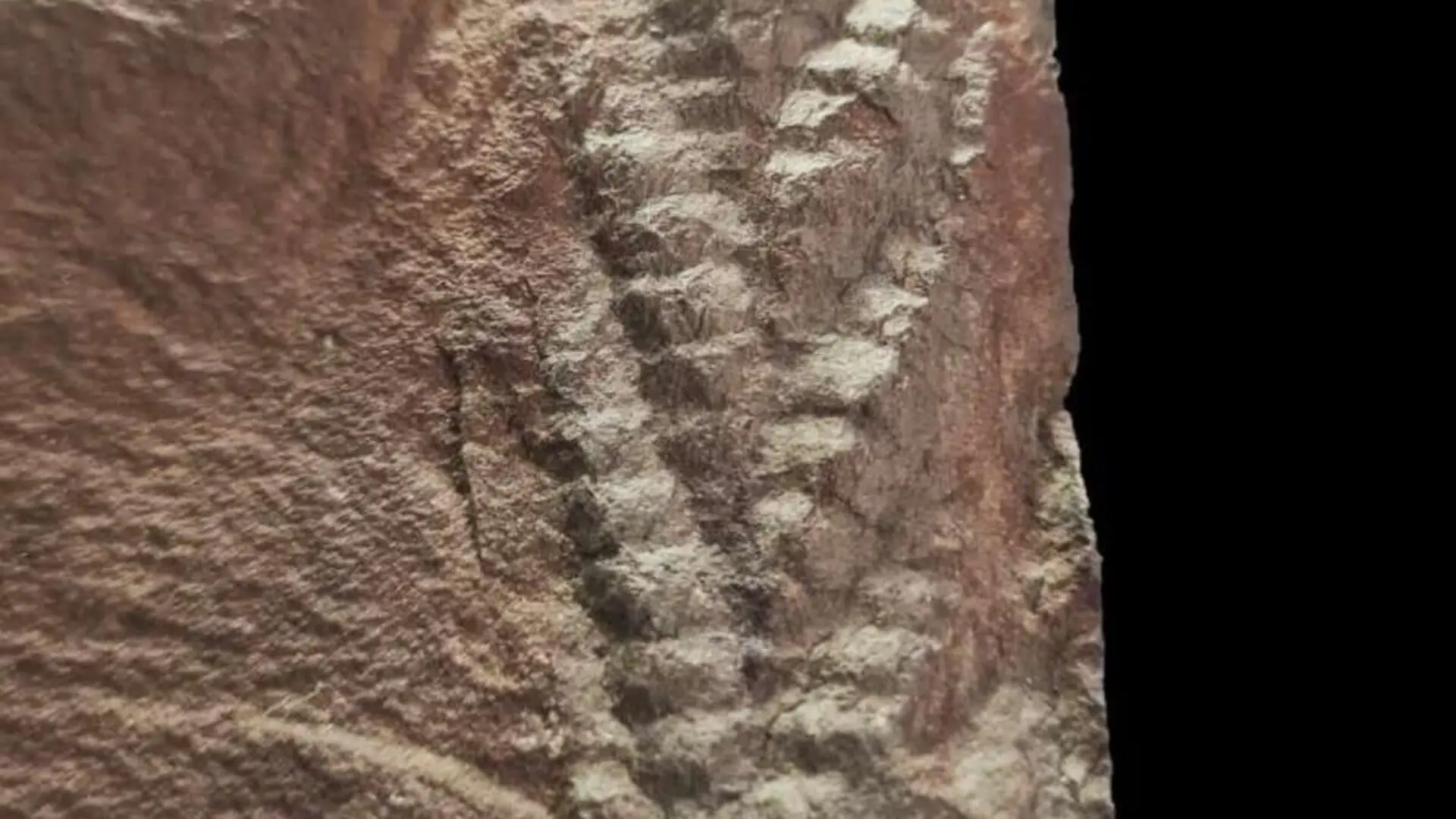
Paleontologists have uncovered a remarkable 560-million-year-old fossil in a remote sheep field in the Norwegian Arctic, marking the first time this species has been confirmed in Scandinavia. The specimen, an example of the ancient organism Charnia, dates back to the Ediacaran Period, a pivotal era when the earliest complex lifeforms emerged on Earth. The discovery, detailed in the journal Palaeontology, represents the first significant addition to the known record of these ancient organisms in Europe in several decades.
A Rare Glimpse into 3D Ancient Life
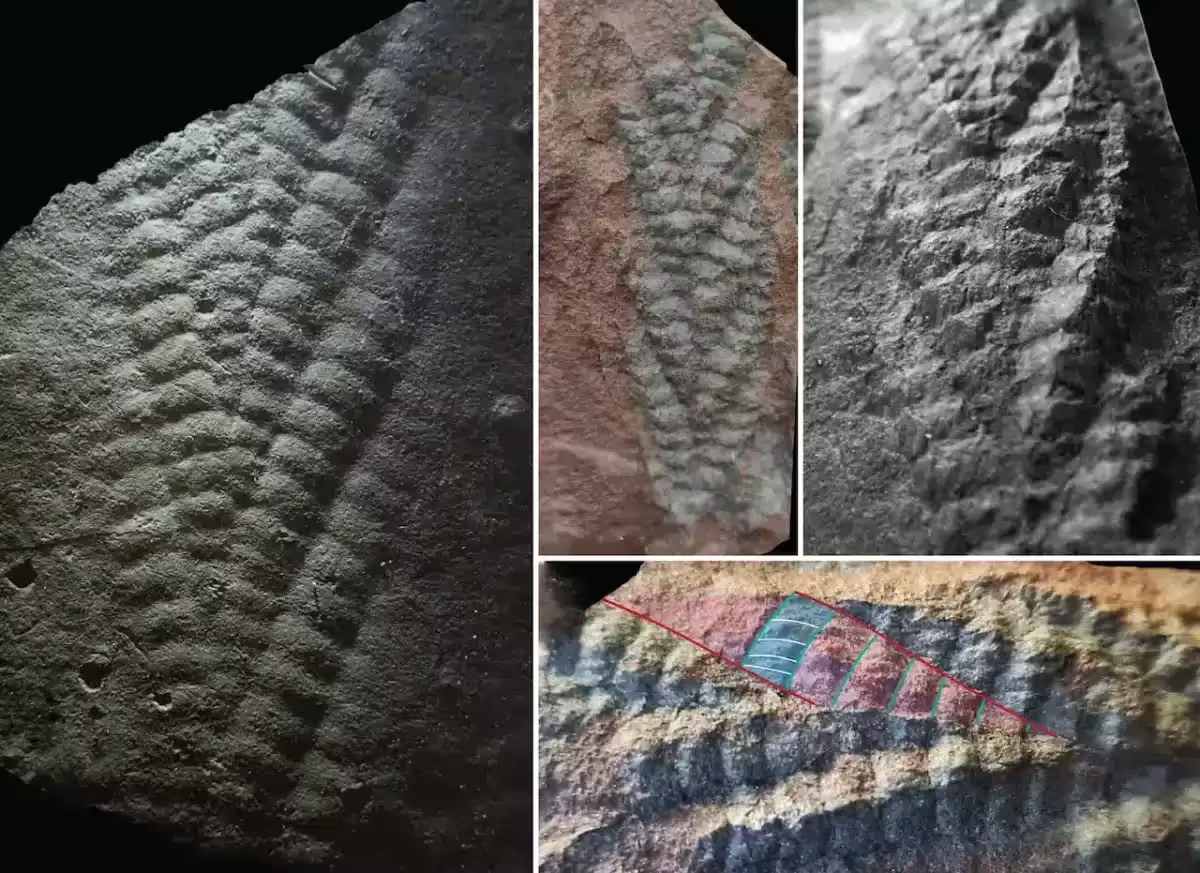
Resembling a prehistoric fern, Charnia was a stationary, soft-bodied organism that lacked organs, mouths, or any means of active locomotion. Scientists often describe these creatures as akin to sedentary, goo-filled jellyfish. While many fossils from this deep past are found as two-dimensional impressions—comparable to flowers pressed within a book—this particular specimen is exceptional for its three-dimensional preservation.
The creature was likely entombed by an underwater avalanche, a sudden geological event that buried it in sediment and shielded its physical form from the crushing weight of subsequent rock layers. This unique burial process allowed researchers to observe structural details, such as delicate ridges known as keels along the organism’s branches, which are typically obscured in flattened specimens. Dr. Yorick Veenma of the University of Cambridge’s Department of Earth Sciences noted that examining this species in three dimensions provides a rare opportunity to identify biological characteristics that are impossible to discern in traditional, compressed fossils.
The Challenge of Finding Ediacaran Treasures
Finding such specimens is notoriously difficult, primarily because Ediacaran organisms lived long before the evolution of skeletons. As Professor Neil Davies, a co-author on the study, explained, the lack of hard parts means that most remains were simply crushed over millions of years. Furthermore, the geological record for this specific window of time is limited, leaving researchers to rely on a small number of global sites where conditions were perfect for preservation.
“A lot of fossils from the period occur as impressions where they’ve been squashed down under layers of rock.”
Expanding the Map of Early Life
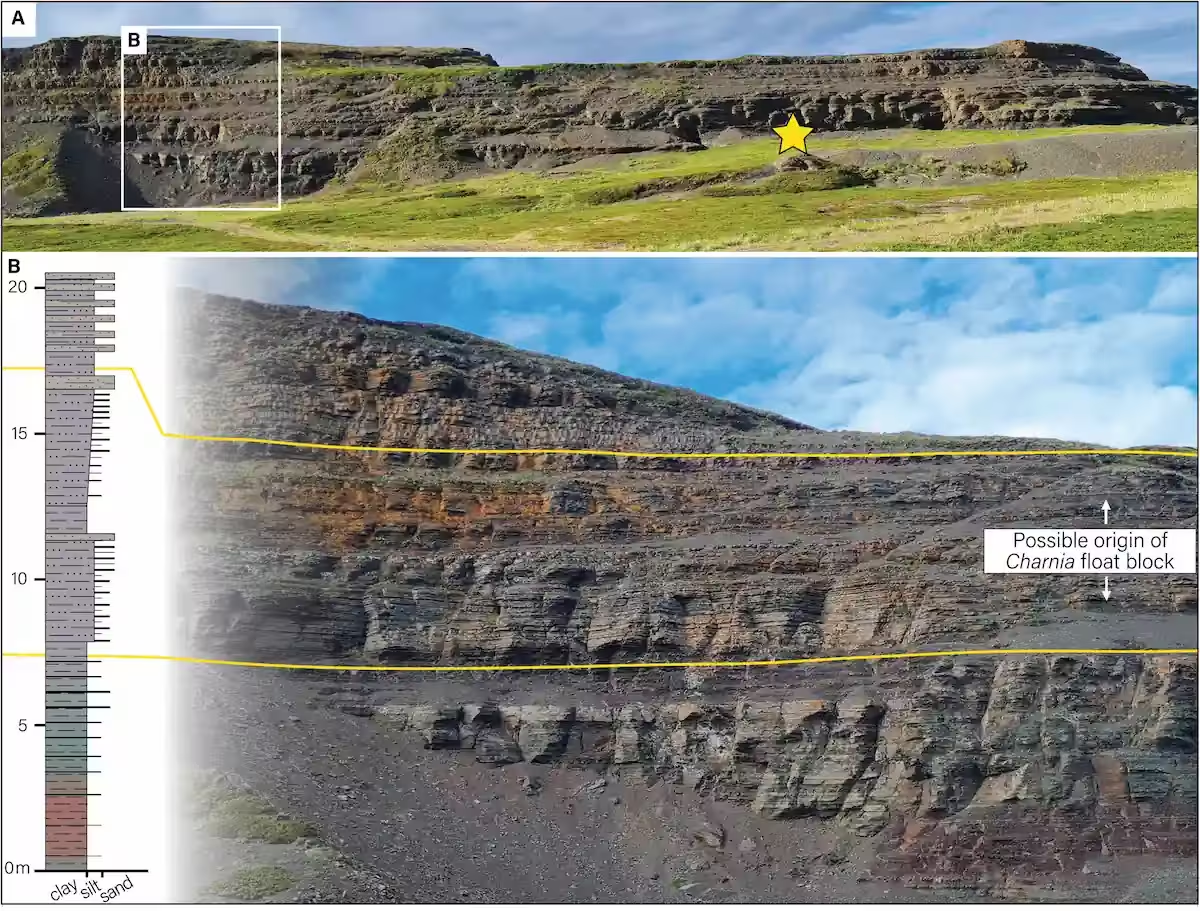
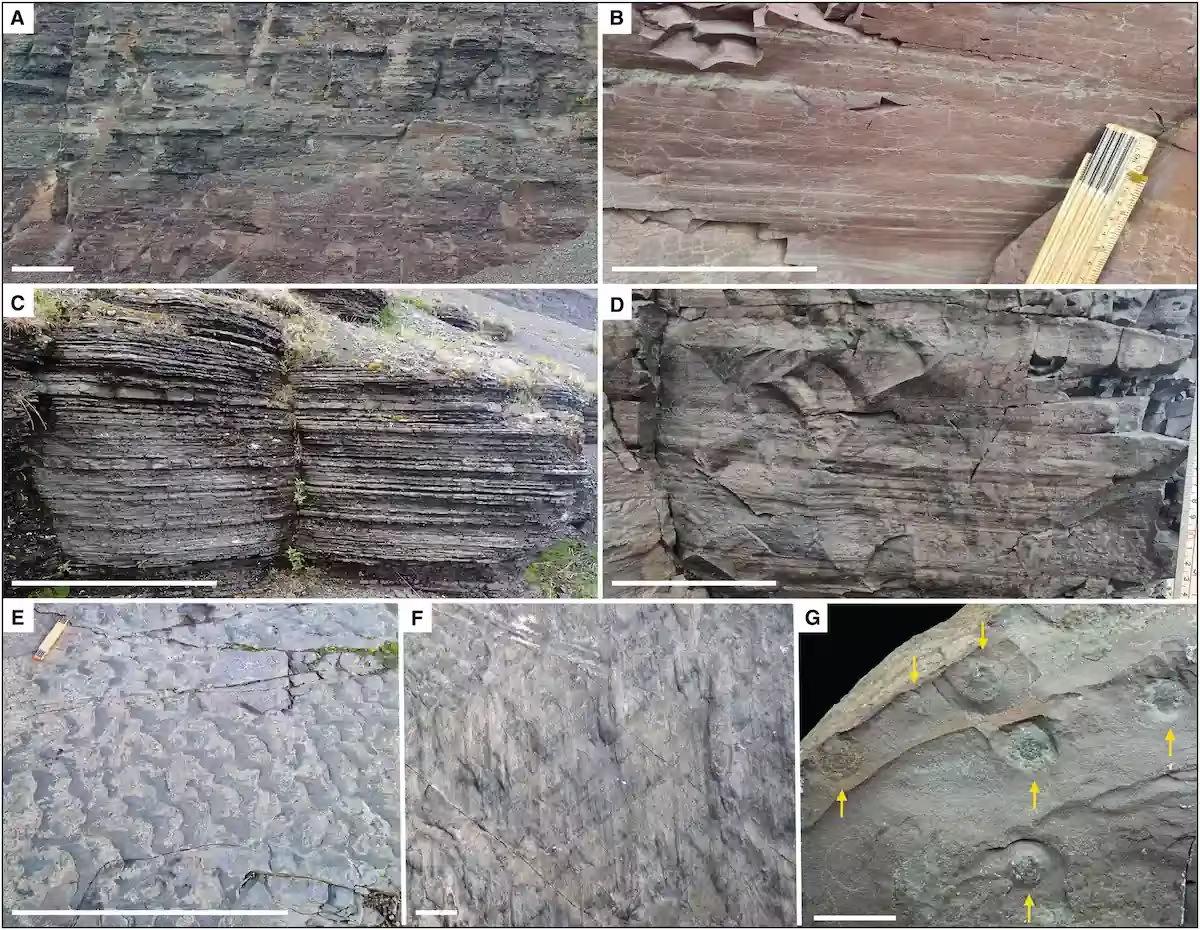
The discovery in Finnmark occurred by chance when rocks dislodged from a cliff, splitting to reveal the ancient life trapped within. This site had previously only yielded hints of ancient biological activity, such as anchoring structures used by organisms to grip the seafloor. The arrival of the Charnia fossil suggests that this region may harbor a much larger, undiscovered community of ancient life.
Researchers are optimistic that the area could contain additional, unconventional specimens, including small, umbrella-shaped organisms that do not align with existing fossil records from other parts of the world. Dr. Veenma emphasized that this find challenges the tendency of the scientific community to focus exclusively on well-known fossil sites, suggesting that a wealth of information remains hidden in less explored regions.
“As scientists, we tend to go to the same well-known sites again and again to look for fossils like these. This find shows that there is still potential for discoveries in less familiar places.”
The team advocates for continued exploration in previously ignored landscapes, noting that the global distribution of Ediacaran life may be significantly broader than current data suggests.
This article has been fact checked for accuracy, with information verified against reputable sources. Learn more about us and our editorial process.
Last reviewed on .
Article history
- Latest version
Reference(s)
- Veenma, Yorick P.., et al. “Charnia and other late Ediacaran macrofossils preserved in turbiditic deposits of the Indreelva Member (Finnmark, Norway).” Palaeontology, vol. 69, no. 5, September 9, 2026 Wiley, doi: 10.1111/pala.70082. <https://onlinelibrary.wiley.com/doi/10.1111/pala.70082>.
Cite this page:
- Posted by Vikram Desai