Archaeologists Uncover Ancient Marketplace Proving Troy Was Never Truly Abandoned
Archaeologists are uncovering new evidence of life in Troy after its Bronze Age collapse, revealing how subsequent civilizations rebuilt on the ancient site.
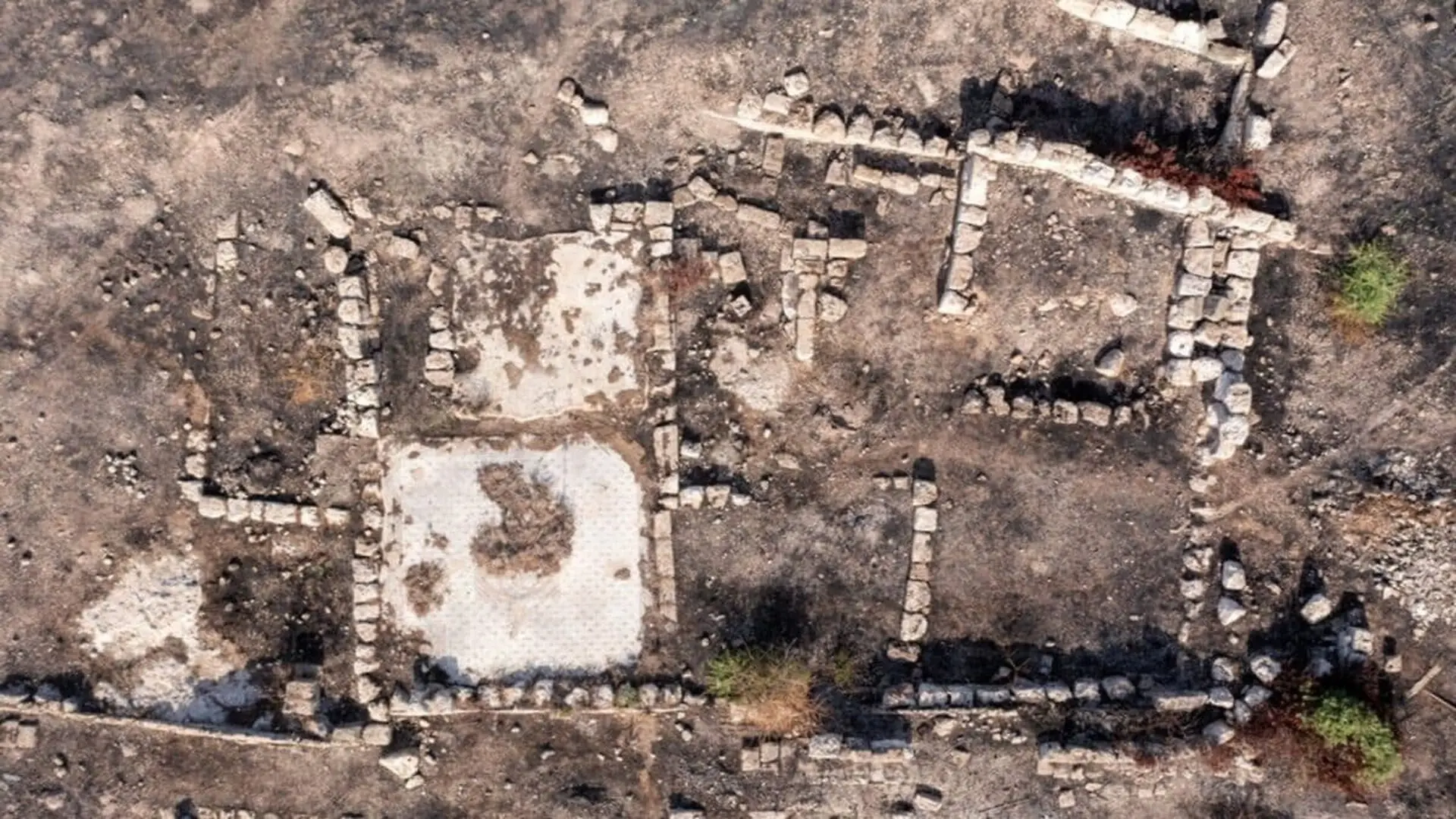
Archaeological teams digging in the ancient city of Troy, located in the Çanakkale province of Türkiye, have unearthed the remains of a 2,800-year-old marketplace, or agora. The discovery, situated near the southern gate of the iconic Troy VI site, offers fresh insights into how the settlement evolved and endured long after its Bronze Age zenith.
Evidence of a Sustained Urban Legacy
The site, which boasts a history spanning approximately 5,000 years, has endured centuries of conflict, seismic activity, and reconstruction. Recognized for its central role in Homer’s Iliad, the location achieved UNESCO World Heritage status in 1998. The current research initiative, which began in 2014, seeks to bridge the chronological gap between the high-profile Bronze Age settlement and the subsequent emergence of the city of Ilion during the Archaic and Classical periods.
According to Reyhan Körpe, deputy head of the Troy excavations, the identified area likely functioned as a bustling marketplace during the Late Bronze Age. Significantly, the team found evidence that this same space was reactivated by a new group of inhabitants only 80 to 90 years after the original site had been abandoned.
“We believe there was a marketplace, an agora, here in the Late Bronze Age,” Körpe said. “This agora was revived by settlers who came here about 80 to 90 years after Bronze Age Troy was abandoned.”
Transitioning Through the Iron Age
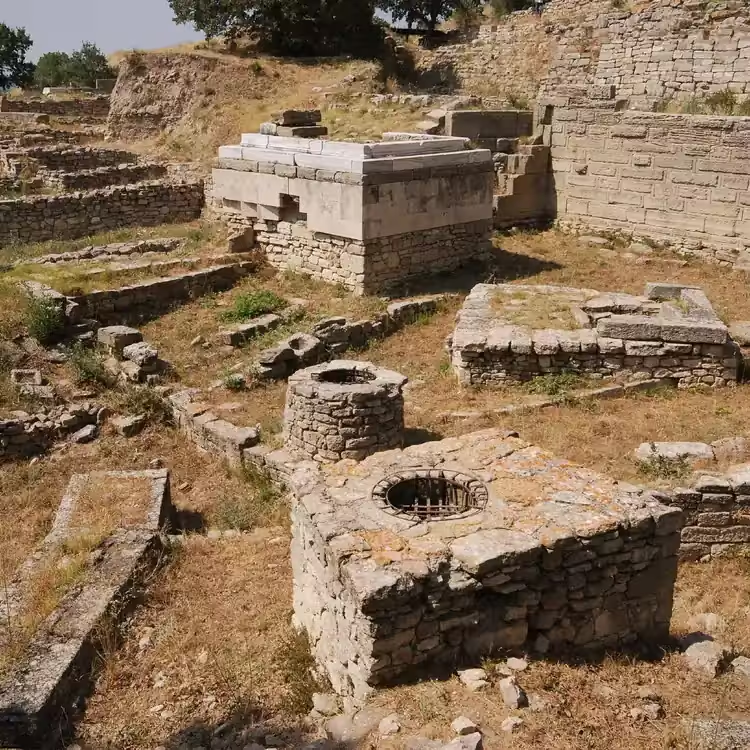
Excavation efforts have revealed a network of residential structures, segments of defensive walls, and a stone-paved thoroughfare connecting the lower city to the southern gate. The recovery of pottery fragments and amphorae dating to the Early Iron Age strongly suggests that the site was not left to total desolation, but rather saw continuous or near-continuous occupation.
Rather than clearing the site, these subsequent settlers built new dwellings directly atop the older Bronze Age layers, effectively recycling parts of the existing fortification walls. This strategic reuse underscores a degree of cultural continuity that researchers are only now beginning to fully map.
Preserving the Identity of a Legendary City
The investigation is also clarifying the nomenclature used by various civilizations to describe the site. Experts believe that while the original Bronze Age city may have been known as Wilusa, the subsequent residents chose to name their settlement Ilios or Ilion, a choice that served to anchor their community to the site’s storied, ancient identity.
Directed by Rüstem Aslan, head of the Troy Excavations Committee, this current phase of research—as highlighted by the Hurriyet Daily News—utilizes highly focused, granular excavation techniques. By moving away from the large-scale, often destructive methods of historical figures like Heinrich Schliemann, modern archaeologists are uncovering nuances that were previously overlooked.
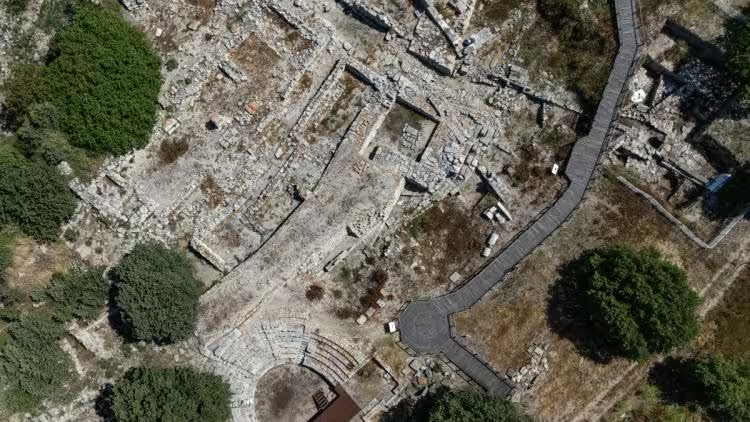
As the team continues to analyze the artifacts gathered from the southern gate, the findings promise to clarify the complex, multi-layered history of one of the world’s most enduring archaeological landmarks.
This article has been fact checked for accuracy, with information verified against reputable sources. Learn more about us and our editorial process.
Last reviewed on .
Article history
- Latest version
Reference(s)
- <https://whc.unesco.org/en/list/849/>.
- “Troy’s ancient agora uncovered in recent excavations.”, September 11, 2026 Hürriyet Daily News <https://www.hurriyetdailynews.com/troys-ancient-agora-uncovered-in-recent-excavations-226718>.
Cite this page:
- Posted by Vikram Desai