Disaster Logistics Hub Outperforms Standard Relief by 40 Percent
A repurposed warehouse and smart routing platform in València delivered 1.5 million emergency items while cutting carbon emissions.
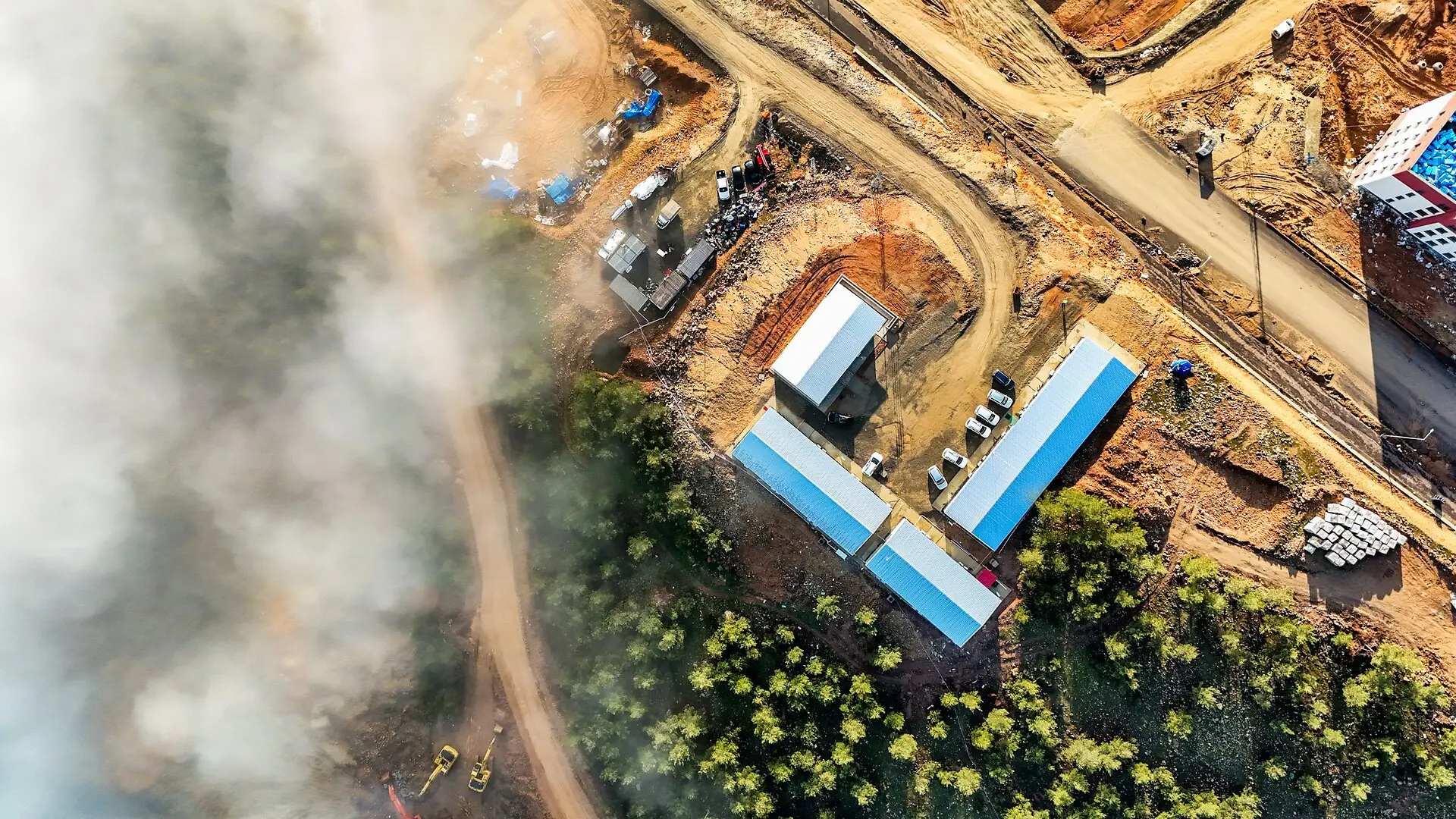
When devastating flash floods struck the Spanish province of València on October 29, 2024, claiming 230 lives and affecting 75,000 homes, traditional supply chains collapsed instantly under billions of euros in damages. In response to this humanitarian crisis, researchers and logicians established an urban experimental hub, known as a Living Lab, to test whether creative infrastructure reuse and digital coordination could rescue broken distribution networks. The emergency project transformed an unused building materials warehouse in Alcàsser into a temporary logistics base, creating an adaptable supply chain that ultimately managed more than 1.5 million items of humanitarian aid for roughly 15,000 people across 3,000 families.
How Satellite Data and Unused Warehouses Saved Critical Days
The intervention, developed under the European Union funded DISCO project, relied on satellite information from Sentinel and Maxar systems to select a strategic staging ground outside the immediate flood risk zone. Analysts evaluated the terrain to ensure the chosen location in Alcàsser had clear access to secondary roads, allowing delivery fleets to bypass severe congestion on primary routes while leaving main highways open for heavy army rescue equipment. By repurposing vacant facilities and negotiating agreements with local councils and corporate partners, the operational team established a functioning supply chain within 48 hours and reached full operational capacity in 72 hours.
This rapid setup time and smart positioning allowed the Alcàsser base to outperform three comparable relief facilities operating during the same crisis by more than 40 percent in service capacity, as detailed in work published in Re-Generation in Transport. The authors noted that ordinary humanitarian efforts often suffer from severe bottlenecks because donated goods fail to reach victims down the line. By prioritizing demand generation and mapping the actual needs of affected residents, the team turned conventional relief distribution upside down.
Digital Platforms and Electric Vans Cut Emissions in Crisis Zones
To solve the chaos of post-disaster distribution, the project deployed a web portal where affected citizens could submit requests for assistance. Geolocation tools allowed organizers to group these requests and optimize delivery routes in real time. This demand aggregation method significantly improved routing efficiency, yielding a service capacity increase of over 40 percent compared to conventional facilities in the region.
As road conditions slowly improved, the logistics base gradually transitioned its delivery fleet from standard diesel vans toward electric vehicles. The vehicle lineup shifted from an average of six diesel vans to a mixed fleet of five electric vehicles and one diesel van. This fleet electrification, combined with intelligent route tracing, successfully reduced greenhouse gas emissions from 0.3484 down to 0.1572 kilograms of carbon dioxide per kilometer, proving that green last-mile distribution is feasible even inside chaotic post-disaster environments.
What This Means for Future Climate Emergencies
Extreme weather events are increasing in frequency and severity worldwide, placing unprecedented pressure on urban transport networks. The findings from the València Living Lab suggest that integrating digital tools with flexible, temporary infrastructure can mitigate the cascading failures typical of climate disasters. The success of the Alcàsser model has already sparked interest from international humanitarian groups, including the Sahrawi Red Crescent and the United Nations Refugee Aid Committee, pointing toward wider global applications for agile, low-carbon disaster logistics.
The research was published in Re-Generation in Transport on November 18, 2026.
This article has been fact checked for accuracy, with information verified against reputable sources. Learn more about us and our editorial process.
Last reviewed on .
Article history
- Latest version
Reference(s)
- Moreno, Alberto., et al. “Resilient Urban Logistics for Disaster Response: Evaluating the Valencia Living Lab in the DISCO Project.” Lecture Notes in Mobility, November 18, 2026, pp. 79-86. Springer Nature Switzerland, doi: 10.1007/978-3-032-36101-1_10. <https://doi.org/10.1007/978-3-032-36101-1_10>.
Cite this page:
- Posted by Vikram Desai