Did Ancient Egyptians Use a Hydraulic Lift to Build the First Pyramid
Archaeologists once labeled this feature a dry moat, but new evidence suggests it may have powered a sophisticated and extraordinary ancient machine.
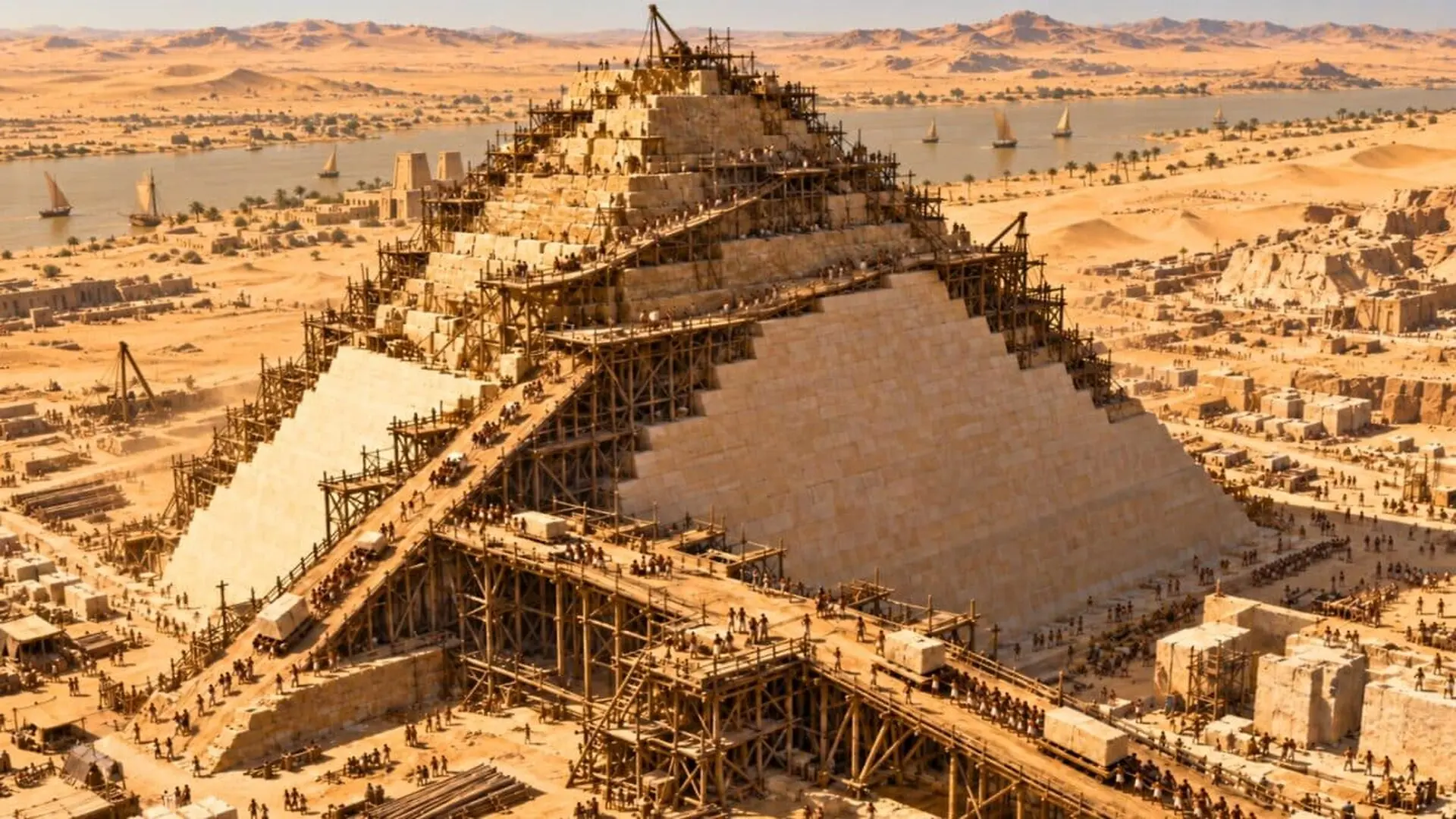
For nearly a century, archaeologists have struggled to explain the purpose of a 3-kilometer limestone trench carved deep into the bedrock surrounding the Step Pyramid of Djoser at Saqqara. While previous theories ranged from quarrying operations to symbolic spiritual boundaries, a study recently published in PLOS ONE suggests a more functional, engineering-based origin: the trench may have been the backbone of a sophisticated hydraulic system used to raise heavy stone blocks during the pyramid’s construction.
Constructed approximately 4,700 years ago, the Step Pyramid holds the distinction of being the world’s first major monument built entirely from dressed stone. Its assembly involved over 2.3 million limestone blocks, each weighing roughly 300 kilograms. Despite the ingenuity of the builders, the precise mechanism for lifting these materials to a height of 60 meters remains one of Egyptology’s most enduring debates, with theories involving everything from ramps and pulleys to wooden rollers falling short of universal acceptance.
To investigate a potential hydraulic alternative, a team of ten researchers led by Xavier Landreau, a materials scientist and CEO of the Paris-based Paleotechnic, integrated satellite imagery, civil engineering analysis, and geotechnical modeling to re-examine the Saqqara landscape.
Engineering a Water-Powered Construction Site
The research centers on the Gisr el-Mudir, a massive rectangular enclosure located 400 meters west of the pyramid. Measuring 360 by 620 meters with walls 15 meters thick, the site has been a historical enigma. By mapping the watershed upstream, Landreau’s team discovered that the enclosure was strategically positioned across the Abusir wadi, an intermittent desert stream that drains a 15-square-kilometer catchment area.
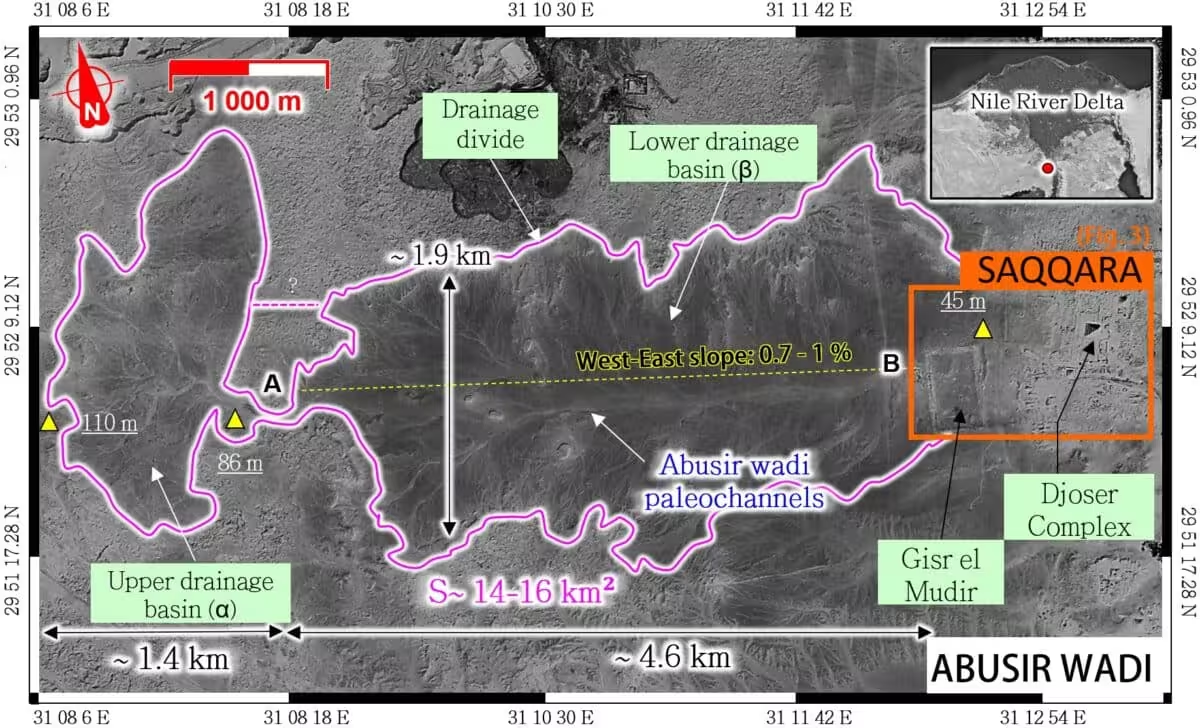
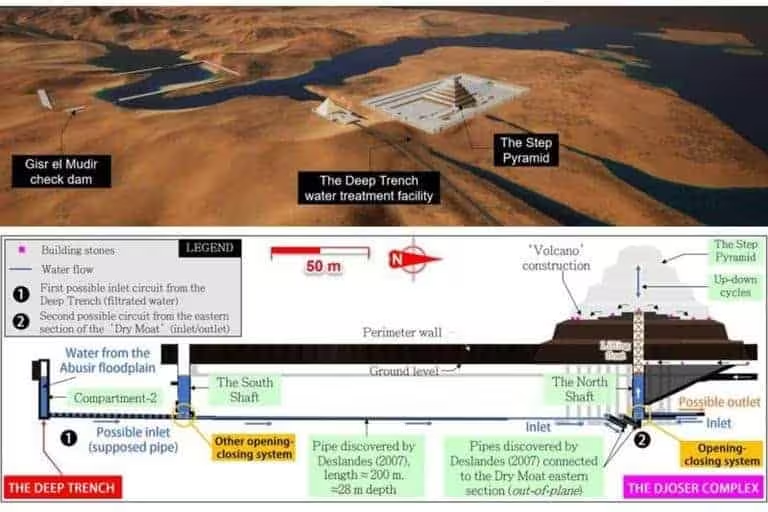
The team argues that the enclosure functioned as a dam, capturing sediment-rich floodwater and filtering it through a zoned-earthen wall structure similar to the ancient Sadd el-Kafara dam. Once the water was sufficiently cleared, it was funneled toward the pyramid complex, specifically into the Deep Trench, a 27-meter-deep channel that the authors believe acted as a water treatment and storage system.
From Water Flow to Vertical Lift
The proposed hydraulic mechanism relies on two vertical shafts within the pyramid complex, both of which terminate in sealed granite boxes. According to the research, these shafts were connected by an underground tunnel. The team suggests that water from the trench was diverted into the north shaft, where it would have triggered a buoyant wooden float connected to a platform by ropes and pulleys.
As water filled the shaft, the float would rise, pulling the stone-laden platform upward to the desired construction level. Once the cargo was deposited, the shaft could be drained, resetting the cycle. This “volcano” method of construction would allow the structure to rise from the center outward, utilizing gravity and water pressure as the primary motive forces.
![View Of Compartment 1 Of The Rock Cut Deep Trench [78] (1943), 27m Deep, 3m Wide.](https://www.bioscience.com.pk/images/daa75d0c74.avif)
An Unsettled Scientific Debate
The ambitious hypothesis has met with significant pushback from the archaeological community. Critics, such as geoarchaeologist Judith Bunbury of the University of Cambridge, note that there is no textual or artistic evidence for such hydraulic machinery in contemporary Old Kingdom records. Others, like Oren Siegel of the University of Toronto, question whether the regional rainfall at the time was sufficient to generate the massive volumes of water required for such a system.
Furthermore, the physical evidence remains incomplete. Roughly 170 meters of the Deep Trench cannot be safely excavated due to the instability of overlying structures, and the upper reaches of the pyramid’s north shaft remain largely unexplored. While Landreau’s team has proposed a compelling engineering framework, confirmation will require extensive geological sampling and future archaeological efforts to locate the structural remnants of the lift mechanisms within the pyramid’s core.
This article has been fact checked for accuracy, with information verified against reputable sources. Learn more about us and our editorial process.
Last reviewed on .
Article history
- Latest version
Cite this page:
- Posted by Vikram Desai