DNA Reveals Scythian Elite Were Linked By Family Networks Across the Eurasian Steppe
Ancient DNA shows Scythian elite families kept power across generations, forcing historians to rethink Iron Age nomadic social structures.
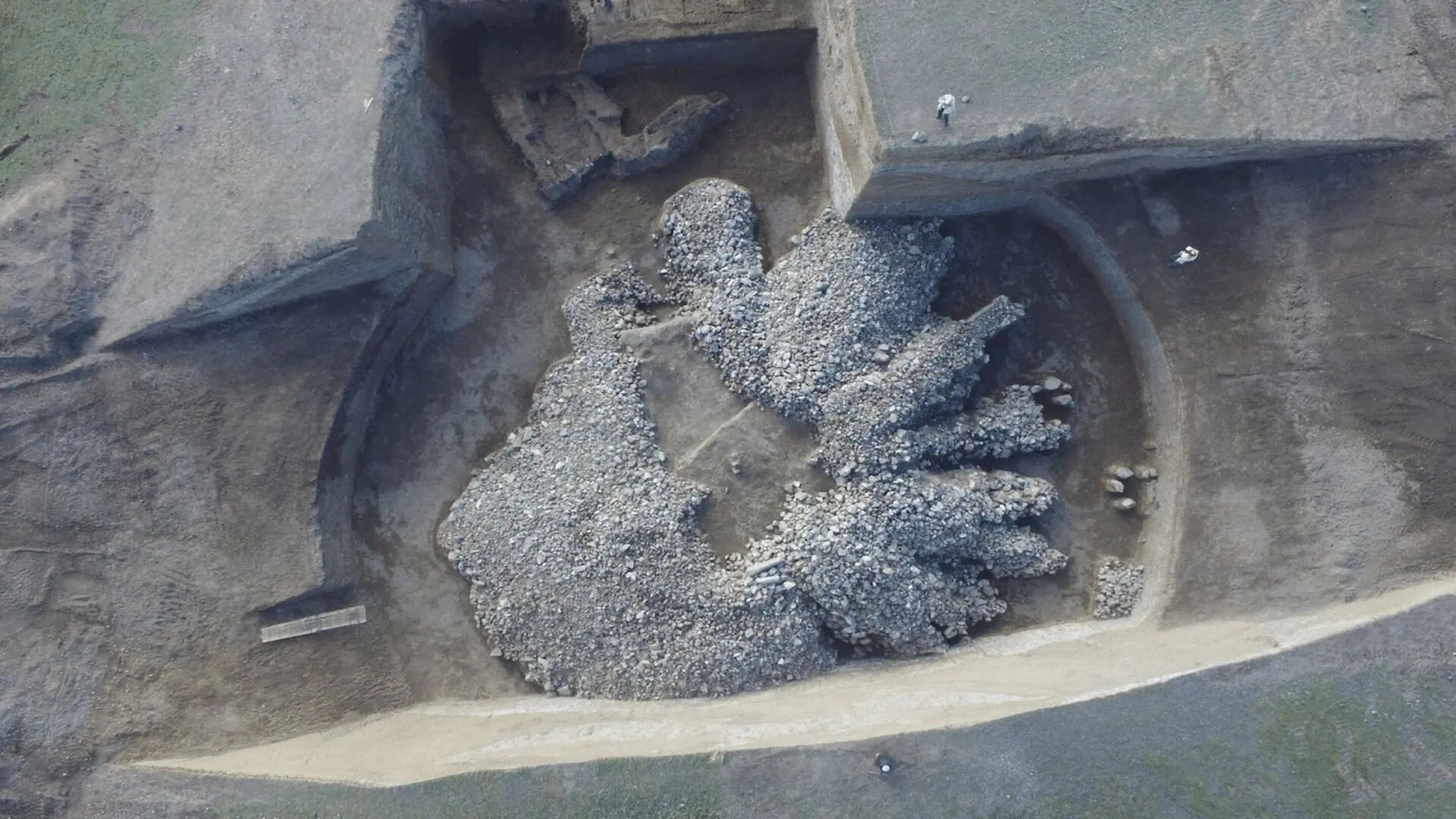
A new genetic study has supplied strong evidence that political authority among the Scythian aristocracy was passed down through extensive kinship networks that spanned the immense Eurasian Steppe. The research, appearing in Science Advances, merges archaeological, anthropological and ancient‑DNA data to show that leading families remained linked across several high‑status burial sites, offering an unprecedented view of how power and inequality arose in Iron Age nomadic societies.
Genomic Links Tie Steppe Elites Over Hundreds of Kilometers
For generations, the towering kurgans dotting the steppe have hinted at a ruling class that commanded one of the largest mobile empires of antiquity. Lavishly adorned graves brimming with gold ornaments, finely wrought weapons, sacrificed horses and ceremonial artifacts stand in stark contrast to nearby modest interments, a pattern long taken as a sign of emerging hierarchy. Yet scholars have debated whether such status stemmed from personal achievement or hereditary privilege.
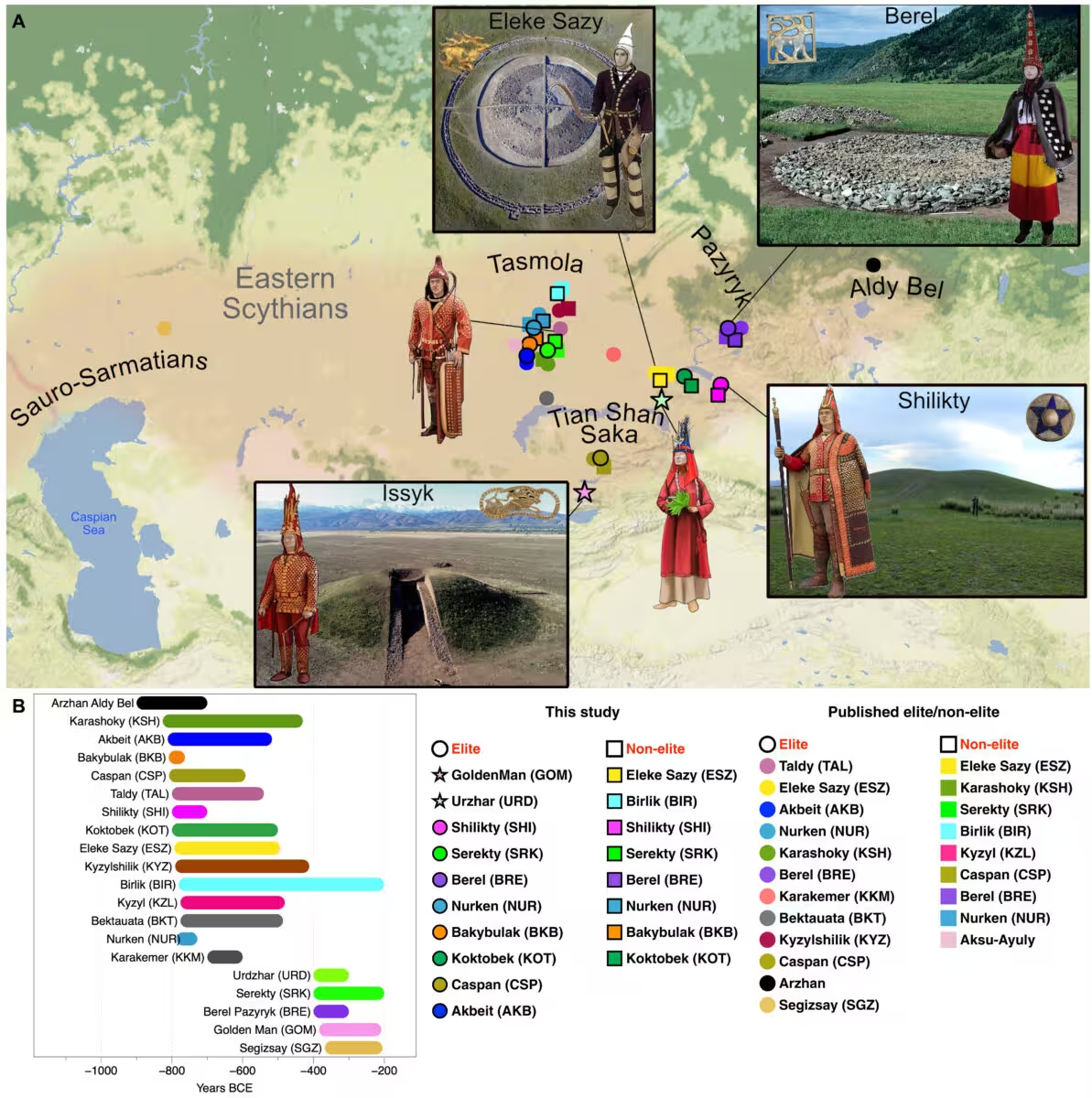
The latest analysis provides a decisive answer. Researchers examined genome‑wide DNA from 85 individuals of the Iron Age, comprising 38 members of the elite and 47 non‑elite burials spread throughout Central Eurasia. Among the newly sequenced genomes is the first comprehensive genetic profile of the celebrated Golden Man recovered at the Issyk mound in Kazakhstan, a hallmark find of the region. By mapping genetic connections both within and between cemeteries, the team uncovered remarkably close relationships among elite individuals separated by distances exceeding 100 kilometers, indicating that political clout was maintained through inter‑family ties rather than isolated local chieftains.
Ainash Childebayeva, assistant professor of anthropology at UT Austin and researcher affiliated with the Max Planck Institute for Evolutionary Anthropology and the Institute of Genetics and Physiology, noted: “We did not anticipate that status would be transmitted across generations, yet the data make it clear that high‑ranking people were more closely related to each other—even when buried at different sites—than they were to lower‑status individuals interred alongside them.”
New Genetic Insights From the Iconic “Golden Man”
A centerpiece of the project is the first successful genome‑wide sequencing of the famed Golden Man, whose opulent tomb near present‑day Almaty reshaped conceptions of the Saka culture. Dating to roughly 400–300 BCE, the burial yielded more than 4,000 gold ornaments, ornate weaponry, ceremonial attire, zoomorphic motifs and a silver bowl bearing an inscription that has long sparked scholarly debate.
Beyond its archaeological fame, the DNA work situates the Golden Man squarely within the genetic diversity of Iron Age Saka populations and confirms the individual’s likely male sex. This genetic placement provides a solid reference for comparing other elite interments across the steppe.
The study, published in Science Advances, also demonstrates that elite status was not tied to a rigid paternal or maternal lineage. Instead, the data reveal a flexible kinship system in which powerful families sustained influence through broad relational networks. Notably, nearly half of the identified elite individuals were women, suggesting that high rank was not the exclusive domain of men and that elite females played a significant role in Scythian political life.

Revising the Narrative of Scythian Power Structures
Integrating archaeological context with genomic evidence allows researchers to infer marriage patterns, kinship ties and political organization that were previously invisible in the material record. Some high‑status individuals share close biological links despite being interred in distant cemeteries, whereas neighboring non‑elite burials display no such connections. This pattern points to dynastic lineages whose reach extended across multiple settlements rather than confined to single locales.
Leyla Djansugurova of the Institute of Genetics and Physiology emphasized the broader impact: “Although they left no written records, the Scythians erected monumental burial mounds that have shaped global understanding of nomadic Eurasian cultures during this era. The most striking exemplar is the ‘Golden Man’ from the Issyk mound, now a national symbol of Kazakhstan, and many similar finds have been uncovered by Kazakh archaeologists.”
Collectively, the findings portray an Iron Age community in which political authority was reinforced by extensive family networks that crossed regional boundaries. Rather than being a loose coalition of mobile horsemen, the Scythians appear to have maintained enduring dynastic connections capable of transmitting wealth, status and leadership across generations, a revelation now illuminated by ancient DNA research.
This article has been fact checked for accuracy, with information verified against reputable sources. Learn more about us and our editorial process.
Last reviewed on .
Article history
- Latest version
Reference(s)
- Ghalichi, Ayshin., et al. “Ancient DNA reveals elite dynastic rule among Iron Age Eurasian Steppe nomads.” Science Advances, vol. 12, no. 27, July 3, 2026 American Association for the Advancement of Science (AAAS), doi: 10.1126/sciadv.aef0108. <https://www.science.org/doi/10.1126/sciadv.aef0108>.
Cite this page:
- Posted by Vikram Desai