Nearly Complete 150-Million-Year-Old Pterosaur Found in Germany Reveals New Species
A groundbreaking German fossil, exceptionally well-preserved, offers rare insights into ancient life, captivating paleontologists worldwide.
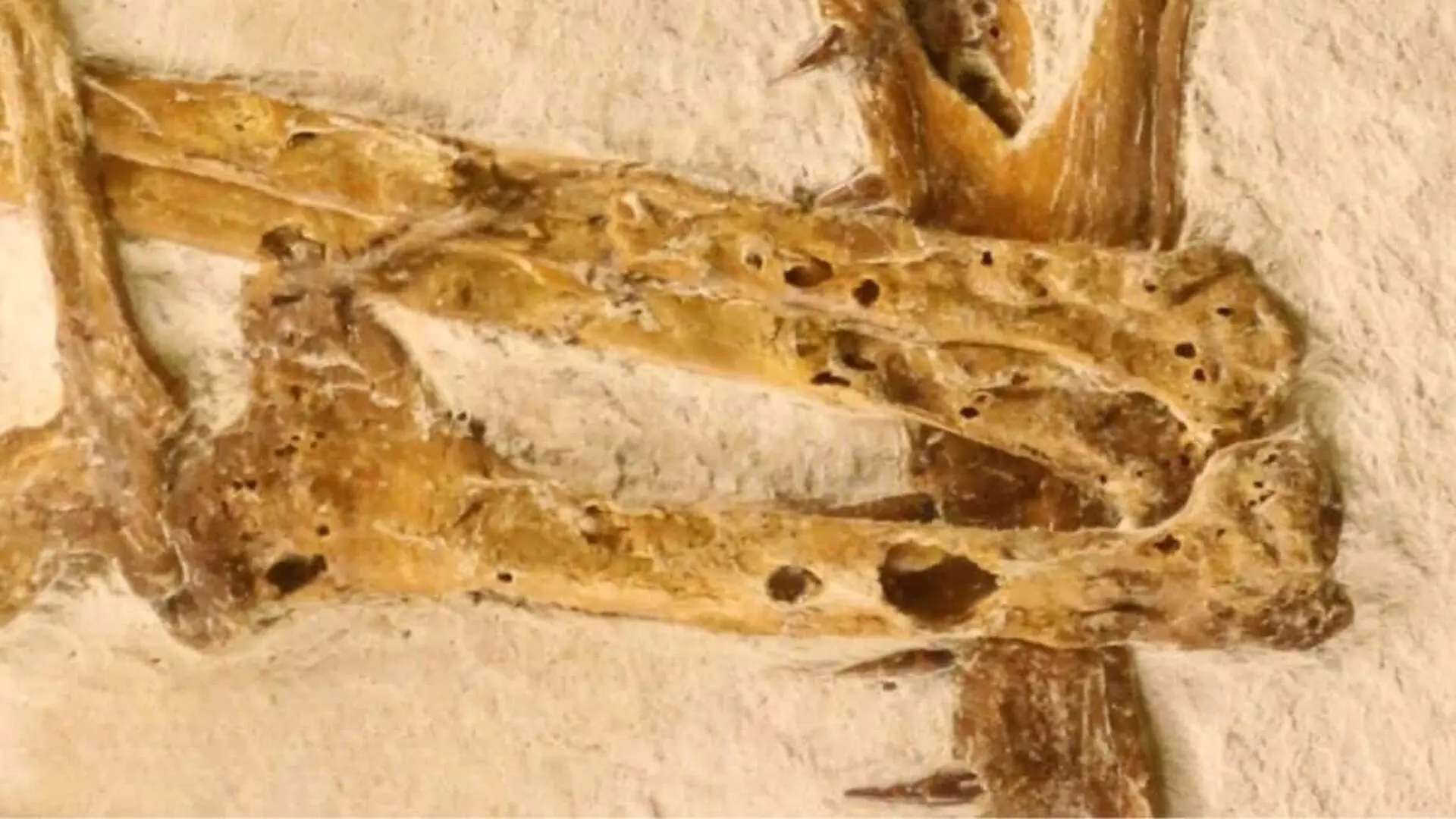
A remarkably intact pterosaur fossil from the Late Jurassic of southern Germany has been assigned to a brand‑new genus and species, Laueropterus vitriolus. The find fills a crucial gap between early, basal pterosaurs and the later, more derived members of the group.
The description appears in PeerJ, where researchers highlight the specimen’s unusual blend of ancestral and advanced anatomical traits. Pterosaurs first took to the skies roughly 210 million years ago, becoming the earliest vertebrates capable of powered flight. Over the ensuing eons they diversified into forms ranging from sparrow‑sized flyers to giants with wingspans rivaling small aircraft. One pivotal lineage, the monofenestratans—identified as a distinct clade in 2010—represents a transitional stage between the most primitive pterosaurs and the well‑known pterodactyloids.
The fossil originates from Bavaria’s Mörnsheim Formation, a rock unit already famed for yielding several notable pterosaur remains. Led by Dr. David Hone of Queen Mary University of London, the team places the new animal among the largest early monofenestratans known, estimating a wingspan of about one metre.
Exceptional Preservation on a Limestone Slab
Excavated in 2007 from the Schaudiberg quarry, the specimen dates to a window between 150 and 143 million years ago. It retains much of the cranial skeleton, jaws, vertebral column and wing elements, offering a rare window into Jurassic pterosaur anatomy.
The fossil rests on a limestone plate roughly 60 × 45 cm in size. The rock is described as chiefly grey, intersected by thick white bands that create a distinctive pattern. The bones themselves are largely free of distortion, allowing even fine details to be inspected.
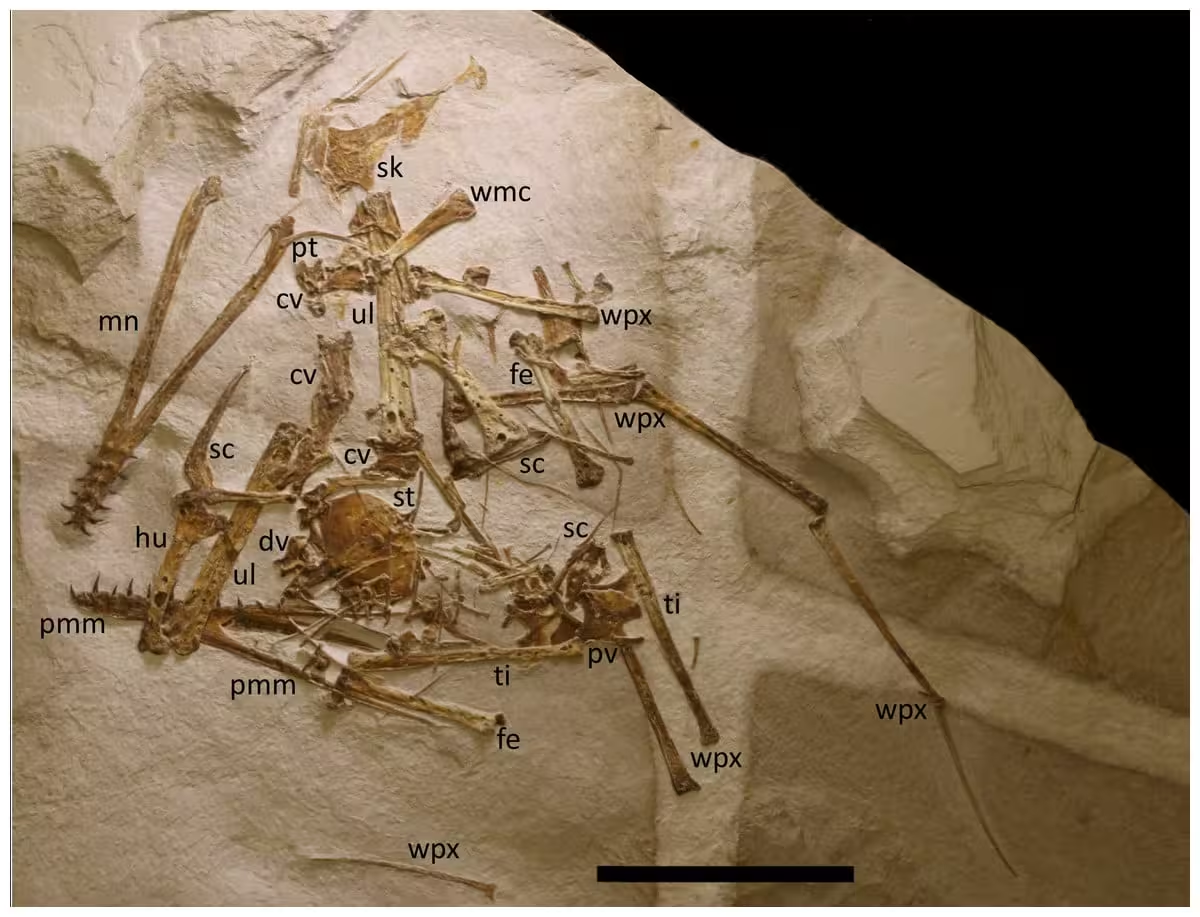
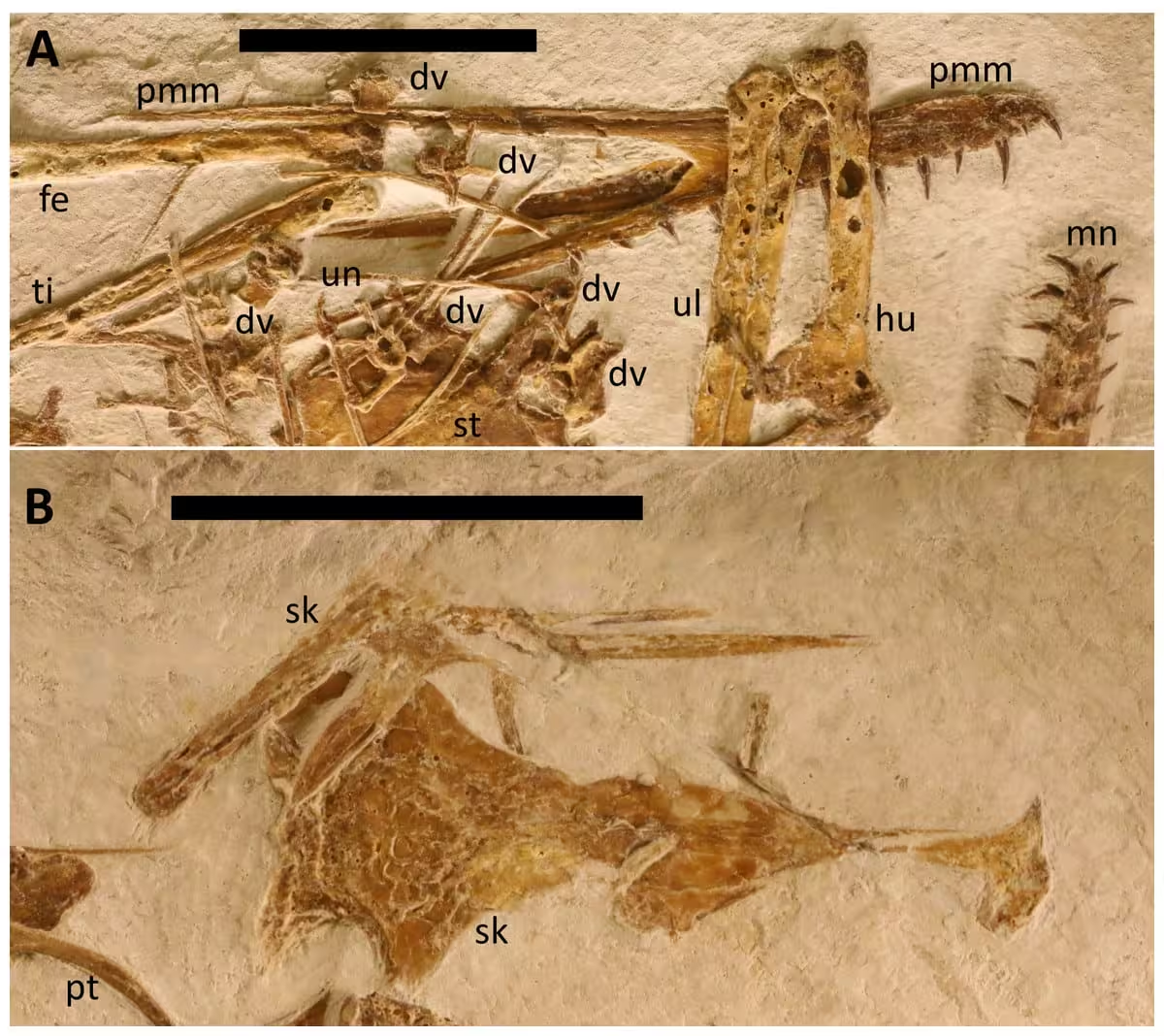
Dr. David Hone notes that even delicate structures such as the sternal plates retain clear outlines of the underlying anatomy, providing a unique opportunity to study features that are often fragmented or absent in other fossils.
A Transitional Morphology
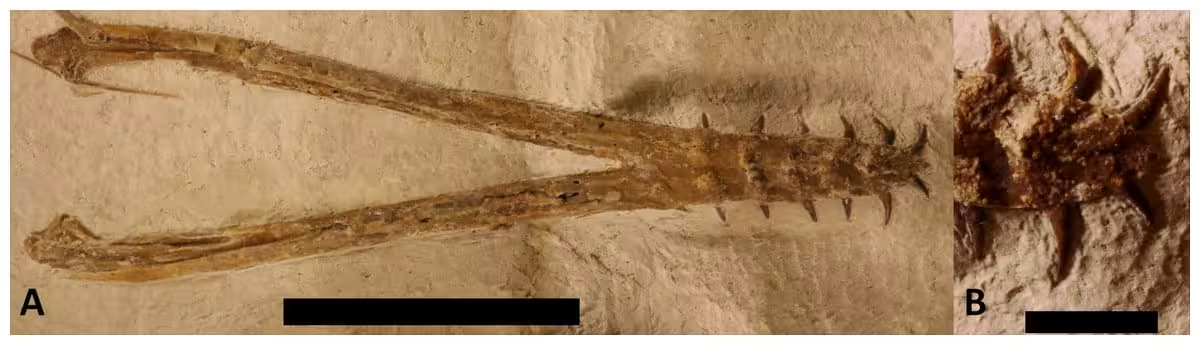
Laueropterus vitriolus exhibits a mixture of traits seen in both early and later pterosaurs. Its large skull bears a single aperture formed by the fusion of the nostril and antorbital fenestra—a hallmark of monofenestratan pterosaurs.
At the same time, the animal retains relatively short wing bones, a condition more typical of basal forms. This combination of features situates it within an evolutionary stage that has attracted increasing scrutiny over the past decade.
“Various analyses have recovered these taxa as both a clade and grade between the non‑monofenestratans and the pterodactyloids,” he explained. “Some of the most derived of these taxa have been named as pterodactyliforms and represent clade of derived monofenestratans and the pterodactyloids.”
Mühlheim: A Hotspot for Early Monofenestratans
The discovery also underscores the significance of the Mühlheim site. Laueropterus vitriolus becomes the fourth non‑pterodactyloid monofenestratan reported from this locality, joining Skiphosoura, Makrodactylus and Rhamphodactylus.
By contrast, the older Painten locality—despite yielding hundreds of pterosaur specimens from the classic Solnhofen beds—has produced only Propterodactylus as a representative of this evolutionary grade. Dr. Hone remarks:
“Hundreds of pterosaur fossils have been recovered from the traditional Solnhofen beds to yield only Propterodactylus, but with four specimens of non‑pterodactyloid monofenestratan in Mühlheim of perhaps less than a dozen pterosaurs that have been recovered this is very notable presence.”
Together, these discoveries reinforce the Mörnsheim Formation’s emerging role as a key window onto the early diversification of monofenestratan pterosaurs.
This article has been fact checked for accuracy, with information verified against reputable sources. Learn more about us and our editorial process.
Last reviewed on .
Article history
- Latest version
Reference(s)
- “David Hone.” School of Biological and Behavioural Sciences - Queen Mary University of London <https://www.qmul.ac.uk/sbbs/staff/davidhone.html>.
Cite this page:
- Posted by Hassan Raza