In 1940, a Boy Chased His Dog Into a Tree Hollow and Stumbled Upon a Hidden Cave Filled 17,000-Year-Old Artwork
The revelation sent shockwaves worldwide. However, the surge of visitors transformed the protected site into a pressing biological hazard, ultimately leading to an indefinite shutdown that remains in effect.
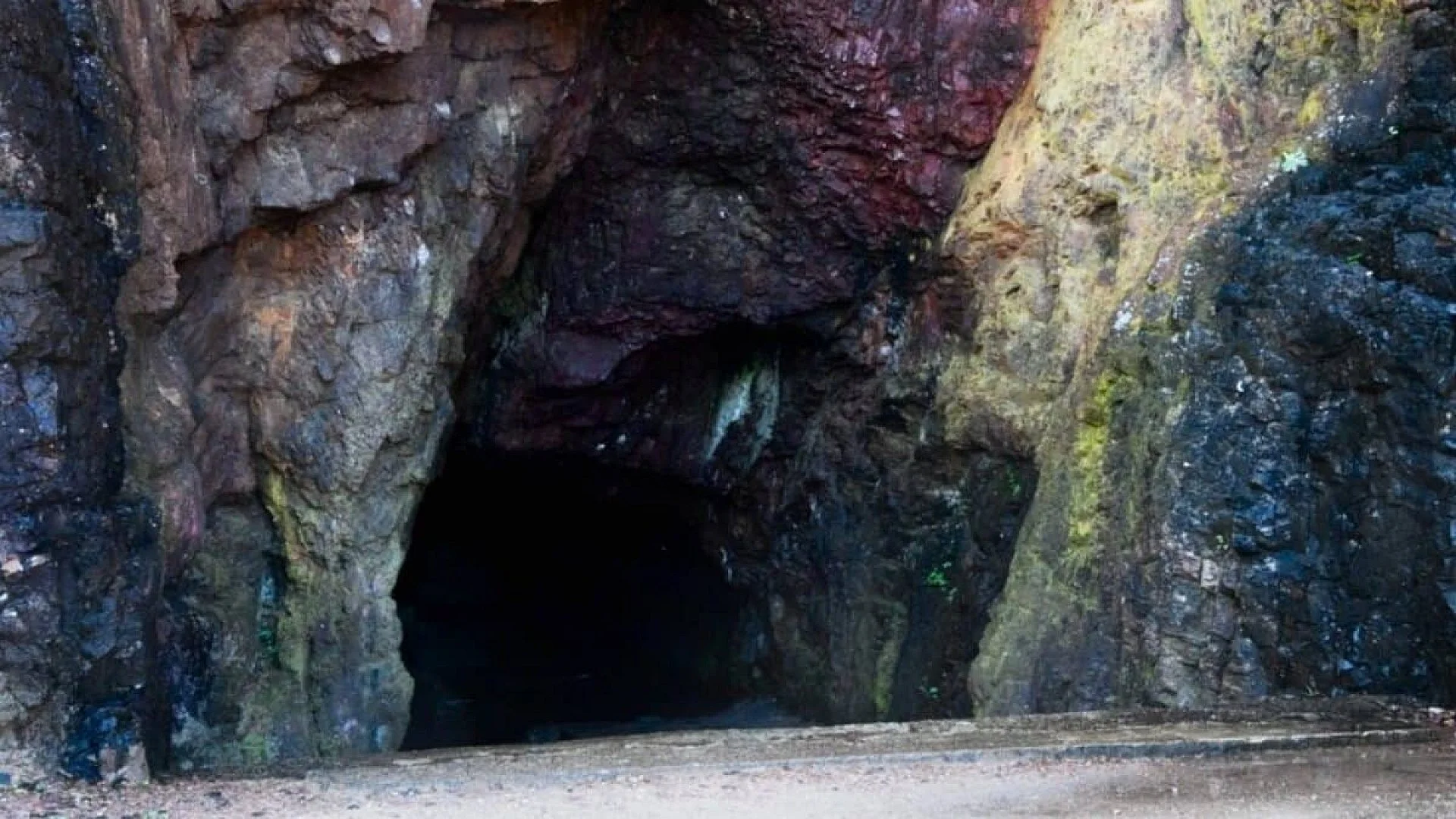
In the sweltering summer of 1940, an 18-year-old apprentice mechanic from Montignac, France, ventured into the woods with his loyal dog. The animal’s chase after a rabbit led them down a hole, and the dog vanished. Marcel Ravidat followed, unaware that beneath the hillside lay a cave system sealed for millennia, adorned with prehistoric paintings of extraordinary scale and precision.
Ravidat didn’t return to the cave alone on September 12. He was accompanied by three friends, Jacques Marsal, Georges Agnel, and Simon Coencas, who helped widen the entrance. By the light of a hastily constructed lamp, they descended through a narrow vertical shaft and landed on a cone of scree. The group navigated a passage approximately 30 meters long and stumbled upon the first painted figures in what is now known as the Axial Gallery. The next day, carrying a rope, they lowered themselves roughly eight meters down a shaft. There, at the base, Ravidat discovered one of Lascaux’s most debated images: a human figure confronting a bison.
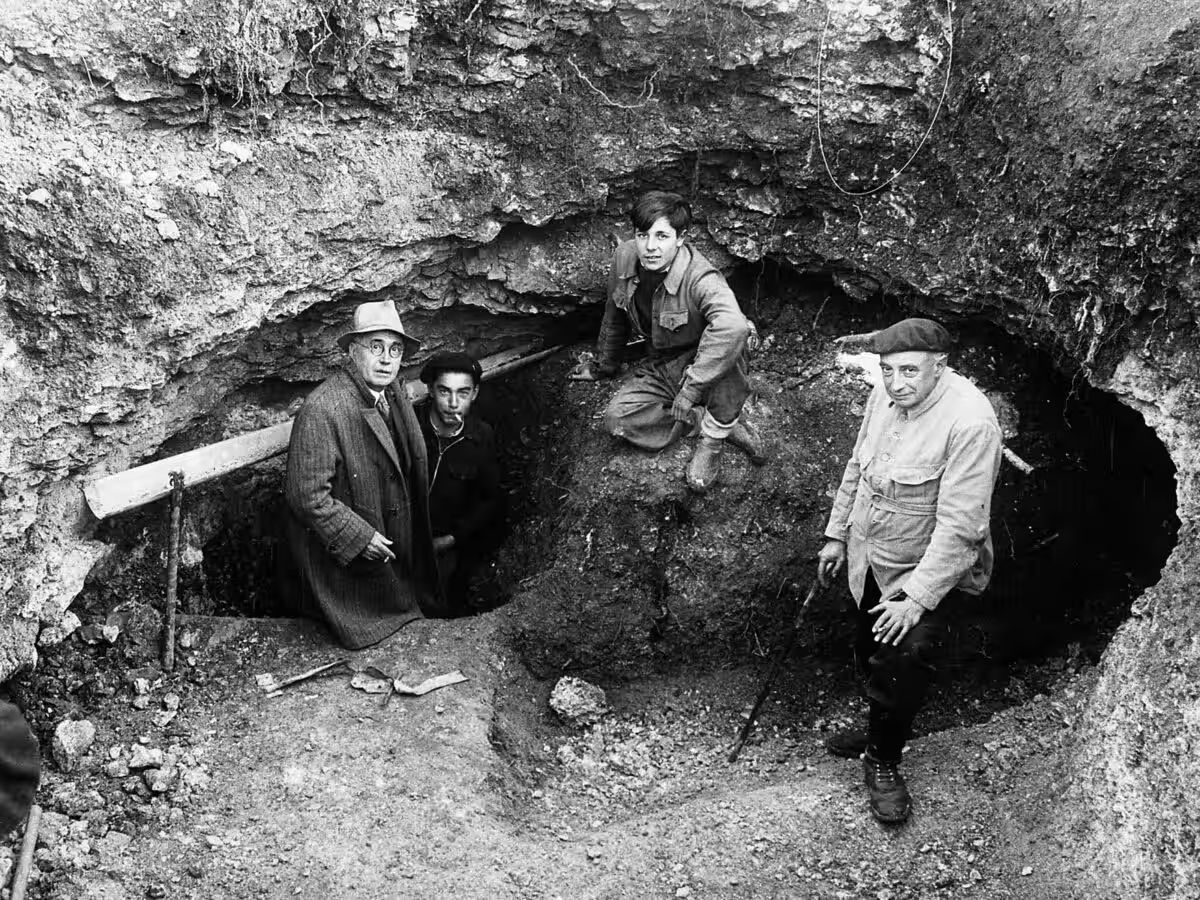
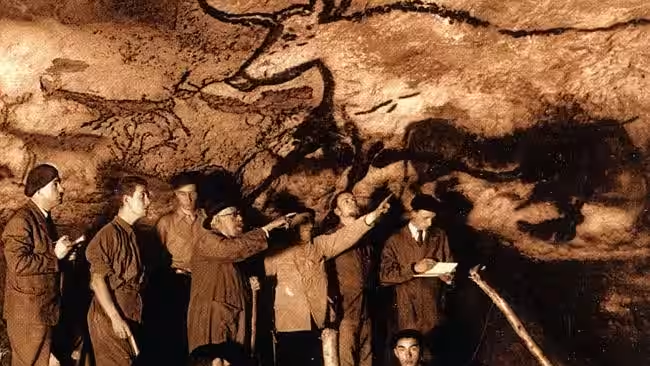
The teenagers informed their teacher, Léon Laval, who entered the cave on September 18. Laval immediately recognized the images as prehistoric and contacted Henri Breuil, a leading French prehistorian who had taken refuge in the region. Breuil viewed the site two days later and confirmed its importance, according to France’s Ministry of Culture.
The Cave Contained 2,000 Images Across Nine Decorated Sections
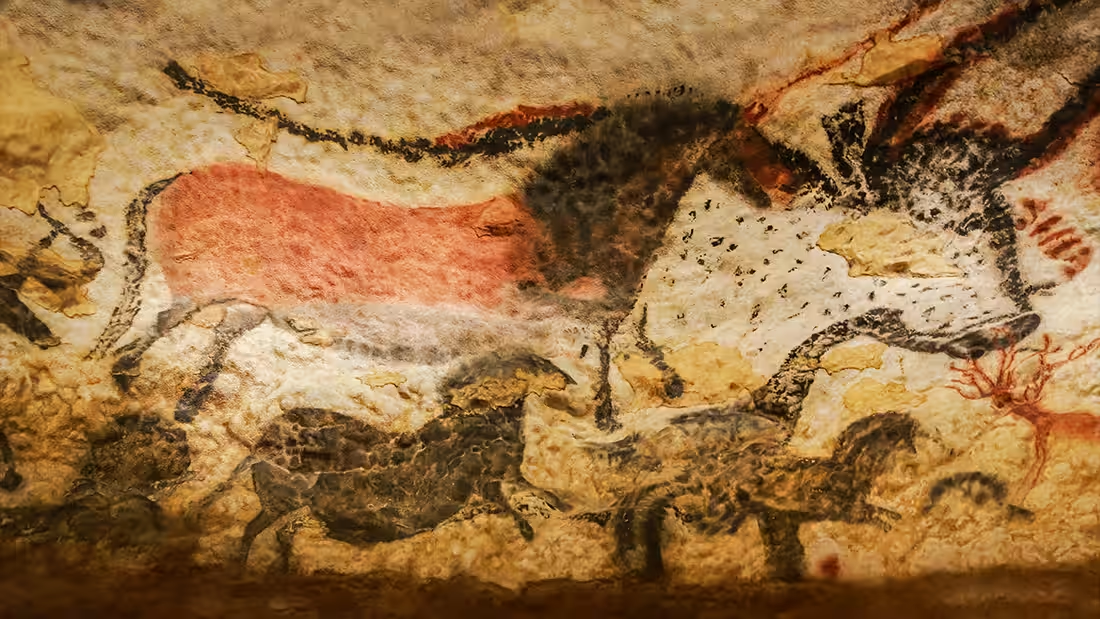
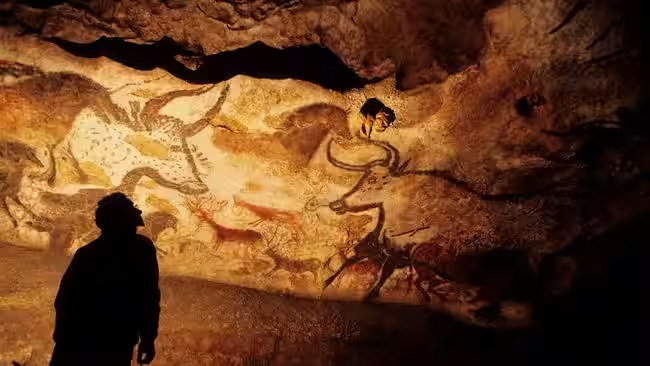
The Lascaux cave system is not a single chamber but a network of decorated spaces stretching approximately 771 feet in total length. Official documentation from the French Ministry of Culture counts about 680 painted figures and roughly 1,500 engravings organized across nine galleries, including the Hall of the Bulls, the Nave, and the Shaft.
The paintings feature aurochs, horses, deer, ibex, felines, and abstract symbols. Some individual figures exceed six feet in length and depict animals in dynamic motion. The artists used pulverized pigments, including red ochre, hematite, charcoal, and manganese oxide, to produce black, yellow, and red images on the limestone walls. A detailed account from Mainly Museums notes that researchers attribute the artwork to the Magdalenian culture and radiocarbon dating places the paintings between approximately 17,000 and 19,000 years before present.
Evidence suggests the painters built rudimentary scaffolding to reach the ceilings and worked by firelight or oil lamps. Many images sit deep within the cave in areas requiring artificial lighting and constructed pathways, a placement that researchers say points toward intentional concealment or ceremonial use.
Art historian Frances Fowle, writing for The Conversation, notes that the layering of images and remote locations may signal that the act of creation itself carried symbolic weight. Some scenes, such as the “birdman” near a wounded bison, have been interpreted as shamanic or mythic, though scholars caution against projecting modern ideas onto prehistoric work.
Public Crowds Triggered a Biological Collapse Inside the Cave
Lascaux opened to visitors in 1948 and quickly became a tourist magnet. At its peak, the site received up to 1,200 visitors per day, according to the Mainly Museums account. The confined underground space absorbed body heat, water vapor, and a steady stream of exhaled carbon dioxide. The Ministry notes that two of the original discoverers later worked as guides and were among the first to flag green algae appearing on the walls in 1958 and 1959.
Authorities closed the original cave to the public in 1963, but the biological instability did not end there. In 2001, maintenance workers replacing the air-conditioning system inadvertently introduced a Fusarium solani fungus, which spread across walls, floors, and ceilings. A 2003 ABC Science report confirmed the outbreak had not yet reached the artwork but described the organism’s rapid colonization of the cave’s surfaces.
Specialists deployed fungicides and later reinforced the treatment with an antibiotic called Polymexin, aimed at suppressing associated bacteria. The French Ministry of Culture now frames its long-term strategy around understanding the cave’s microbial communities and their dynamics, rather than pursuing quick sterilization.
Replicas and Digital Tools Now Carry the Public Experience
With the original cave permanently sealed to general visitors, French authorities constructed a series of reproductions. Lascaux II, opened in 1983, recreated the Hall of the Bulls and the Painted Gallery using the same traditional materials and techniques applied by the prehistoric artists. It sits just a few hundred meters from the original site and now draws nearly 250,000 visitors annually. Since 2014, vehicles have been prohibited on the road leading to the cave area.
The French Ministry of Culture also published a virtual tour covering all nine galleries. The platform gained particular relevance during COVID-19 pandemic restrictions, expanding cultural outreach without endangering the fragile site. Dinah Casson, one of the lead designers of Lascaux IV, summarized the conservation philosophy, as reported by Mainly Museums: “You see this, or you see nothing.”
Conservation Now Tracks Water, Carbon Dioxide, and Microbial Shifts
Modern preservation at Lascaux extends far beyond the painted chambers. The Ministry of Culture describes an effort to monitor how water and carbon dioxide move through the epikarst, the layer of porous rock above the cave. Based on results from that monitoring, a scientific committee voted in January 2015 to end CO2 extraction from the lower cave network, a reminder that even established interventions require constant reevaluation.
The Ministry frames its mandate as protecting the cave “as well as possible, for as long as possible.” The site remains accessible only to conservation staff, selected researchers, and scientific monitoring teams. The original cave, buried beneath a wooded hill near Montignac, now functions as a controlled environmental station, a closed underground gallery where carbon dioxide levels, moisture content, and microbial populations set the limits on human access.
This article has been fact checked for accuracy, with information verified against reputable sources. Learn more about us and our editorial process.
Last reviewed on .
Article history
- Latest version
Cite this page:
- Posted by Hassan Raza