Scientists Found an Exceptionally Preserved Fossil in Utah. Then Noticed Something No One Expected
Researchers examined this peculiar 500-million-year-old fossil more thoroughly and discovered an unprecedented feature in its class.
Here’s a rewritten version of the text while preserving the original meaning and intent:
A half-billion-year-old fossil unearthed in Utah is offering scientists a rare glimpse into one of the most enigmatic branches of the animal kingdom. Dubbed Megasiphon thylakos, this extraordinary find sheds light on the lives of ancient tunicates and their connection to vertebrates, a group with a remarkably scarce fossil record. This discovery stands out as a beacon of hope in understanding the mysteries of tunicate evolution.
Tunicates are often overlooked in modern times, as they sit motionless on the seafloor, their appearance a far cry from the animals we commonly associate with their relatives. However, they hold a crucial position in the animal family tree, serving as the closest living relatives of vertebrates. This unique relationship makes them essential to unraveling the secrets of our own origins.
The challenge lies in the scarcity of tunicate fossils, which has led to a significant gap in our understanding of their evolution. Most insights have been gleaned from studying living species, leaving major questions unanswered about their origins, anatomy, and lifestyle. The Megasiphon thylakos specimen begins to bridge this gap with its remarkable preservation of soft tissues, a feature almost never seen in tunicates.
A Fossil That Defies the Norm
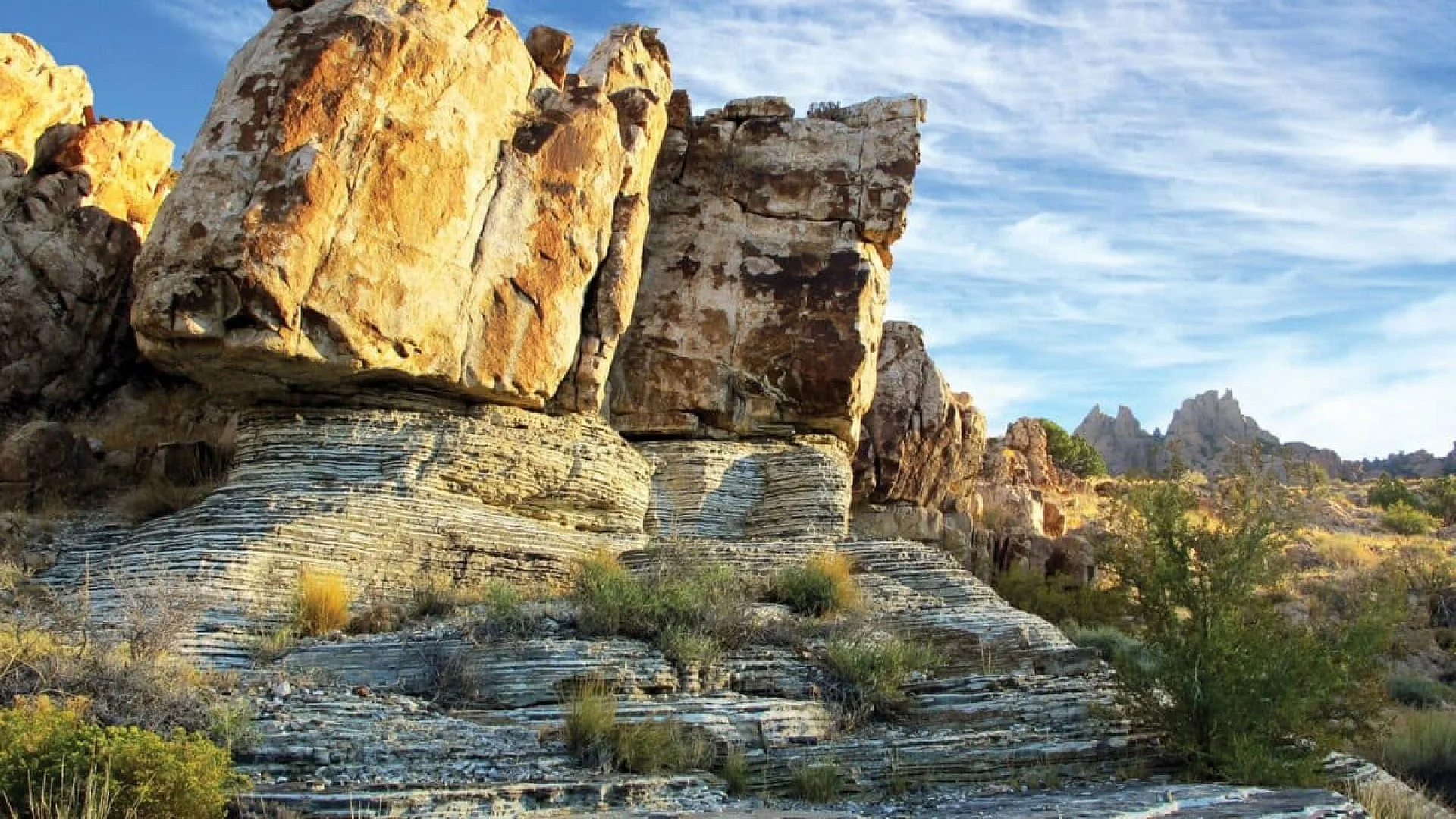
The Megasiphon thylakos fossil, discovered in the Marjum Formation in Utah, is a game-changer. The study published in Nature Communications reveals the presence of preserved soft tissues, a rare occurrence in the fossil record.

The fossil’s dark bands, which run along its body, bear a striking resemblance to the muscles of a modern tunicate called Ciona. These muscles control the siphons, which the animal uses to draw in water and filter food. A press release featured on the official Harvard department website highlights the significance of this discovery.
“It’s a remarkable find, as tunicates are almost completely absent from the fossil record, with only a handful of fossils appearing convincingly as members of the group. This specimen is a game-changer in understanding their evolution,” said Karma Nanglu, a researcher at Harvard University.
A Creature Adapting to the Seabed
A long-standing question has been whether early tunicates swam freely or lived attached to the seafloor. The shape of Megasiphon offers a clear direction. Karma Nanglu explained that:
“Megasiphon’s morphology suggests that the ancestral lifestyle of tunicates involved a non-moving adult that filter fed with its large siphons. It’s a rare find, not just a tunicate fossil, but one that provides a unique and unparalleled view into the early evolutionary origins of this enigmatic group.”
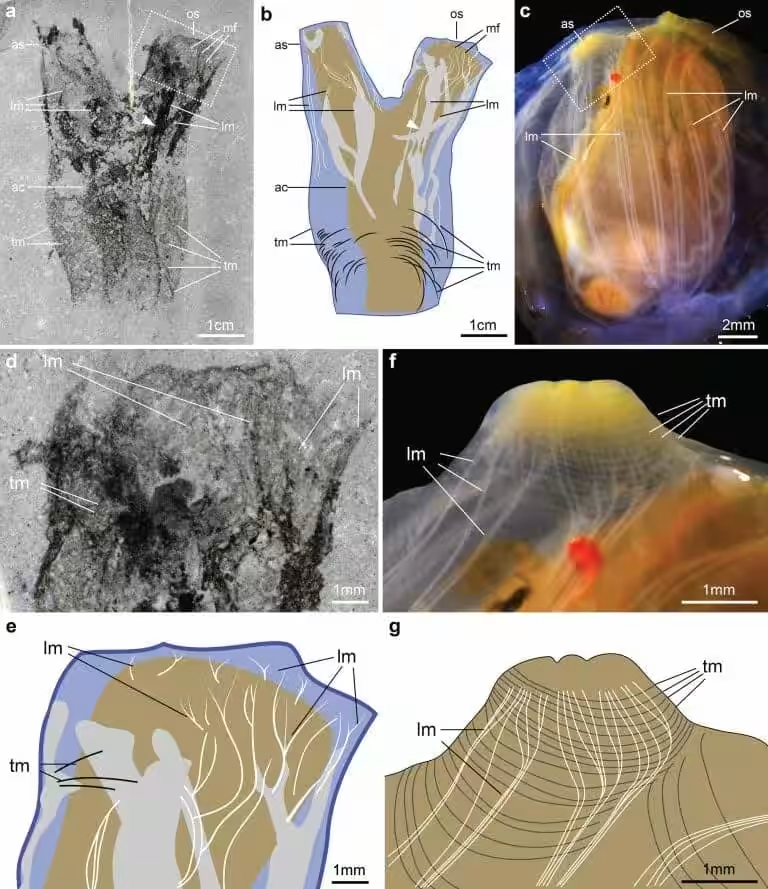
The fossil’s barrel-shaped body and two siphons support this idea. Additionally, it suggests that tunicates began as free-swimming larvae before settling down and becoming stationary adults, a process still observed today.
A Revised Timeline
The Megasiphon thylakos fossil, estimated to be around 500 million years old, pushes back the origin of tunicates by at least 50 million years. Earlier molecular data had placed the emergence of similar tunicates closer to 450 million years ago.
The findings indicate that the basic tunicate body plan was established shortly after the Cambrian Explosion, which marked a rapid diversification of animal life. However, tunicates themselves remained largely absent from the fossil record.
Javier Ortega-Hernández, associate professor of organismic and evolutionary biology, recalls that the fossil’s resemblance to modern tunicates was immediately apparent, prompting closer study.
“The fossil immediately caught our attention,” noted Ortega-Hernández, “although we mostly work on Cambrian arthropods, such as trilobites and their soft-bodied relatives, the close morphological similarity of Megasiphon with modern tunicates was simply too striking to overlook, and we immediately knew that the fossil would have an interesting story to tell.”
This article has been fact checked for accuracy, with information verified against reputable sources. Learn more about us and our editorial process.
Last reviewed on .
Article history
- Latest version
Reference(s)
- Nanglu, Karma. “A mid-Cambrian tunicate and the deep origin of the ascidiacean body plan - Nature Communications.”, vol. 14, no. 1, July 6, 2023, pp. 3832 Nature, doi: 10.1038/s41467-023-39012-4. <https://www.nature.com/articles/s41467-023-39012-4>.
- “Discovery of 500-million-year-old fossil reveals astonishing secrets of tunicate origins | Department of Organismic and Evolutionary Biology.”, July 6, 2023 <https://www.oeb.harvard.edu/news/discovery-500-million-year-old-fossil-reveals-astonishing-secrets-tunicate-origins>.
- “Karma Nanglu | Department of Organismic and Evolutionary Biology.” <https://www.oeb.harvard.edu/people/karma-nanglu>.
- “Javier Ortega-Hernández | Department of Organismic and Evolutionary Biology.” <https://www.oeb.harvard.edu/people/javier-ortega-hernandez>.
Cite this page:
- Posted by Hassan Raza