Webb Reveals Hidden Stellar Cluster: Infrared Image Unveils Crowded Star Nursery
James Webb Telescope unveils a dazzling stellar nursery, giving astronomers fresh insights into how stars shape cosmic evolution.
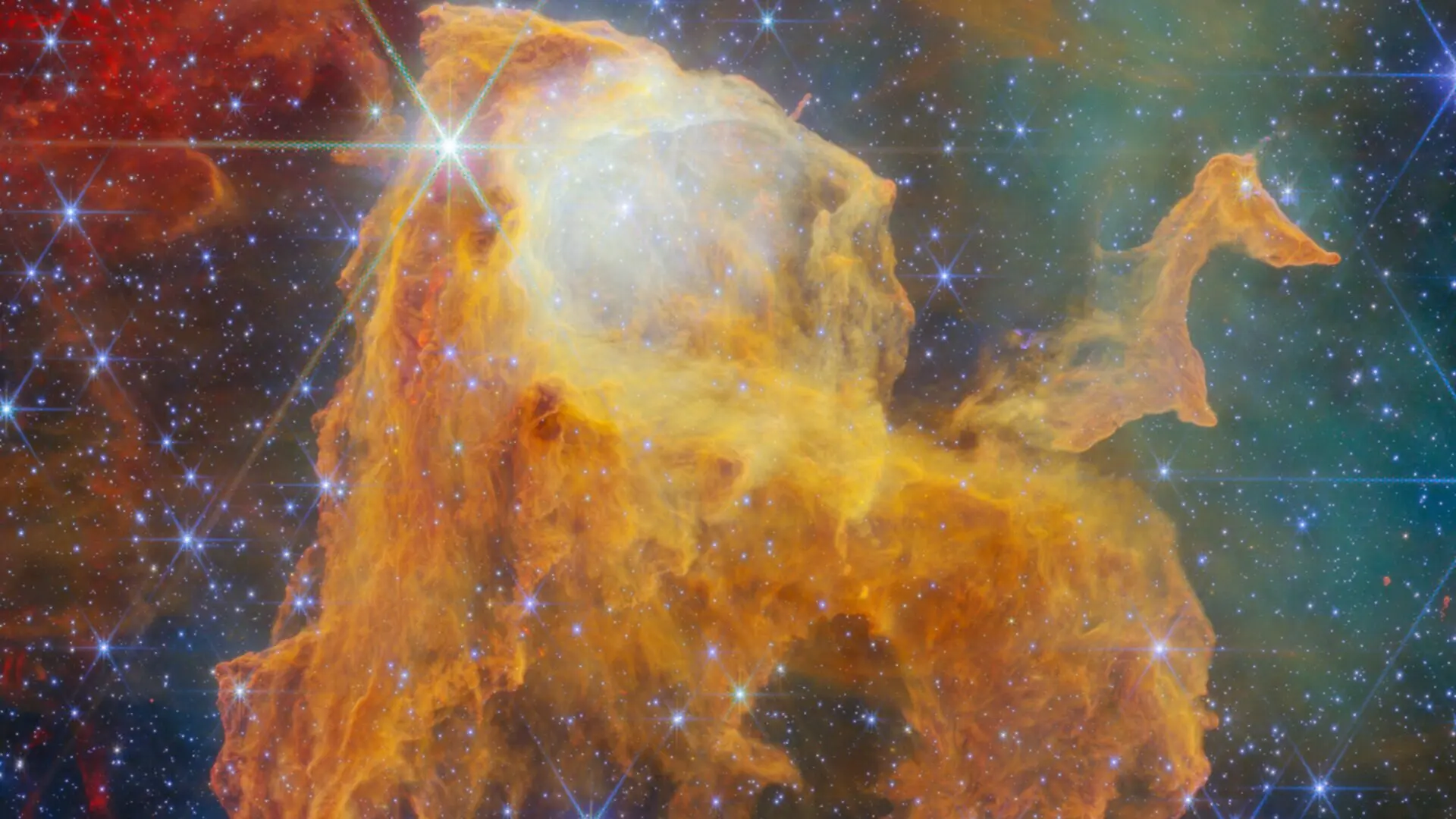
The European Space Agency (ESA) has unveiled a fresh James Webb Space Telescope image that captures a tightly packed stellar region, offering an unprecedented view of the intricate environments where stars are born and evolve.
Webb’s Infrared Lens Reveals a Crowded Star Cluster
The picture originates from the James Webb Space Telescope, a mission built to explore the cosmos primarily in infrared light. This spectral range lets astronomers peer through dust that obscures objects from conventional optical telescopes, exposing hidden structures.
ESA notes that the image displays an extraordinary density of stars and filamentary features, highlighting the complexity of stellar nurseries. Infrared observations enable Webb to penetrate dust‑filled zones, granting scientists access to regions that were previously difficult to study (ESA).
The telescope’s suite of instruments can isolate individual stars even in tightly crowded fields while also detecting faint surrounding structures. This level of detail supports investigations into how stars form, interact with nearby material, and influence the broader cosmic environment.
High‑Resolution Infrared Imaging Highlights Hidden Detail
By separating closely spaced stars and revealing delicate filaments, Webb demonstrates why infrared astronomy is reshaping our perception of space. Features that appear smooth in visible light often resolve into complex networks when examined at longer wavelengths.
The newly released image is part of a wider initiative by space agencies to distribute observations that showcase Webb’s scientific capabilities (Webb). Open releases empower researchers, educators, and astronomy enthusiasts to explore fresh perspectives on distant cosmic regions.
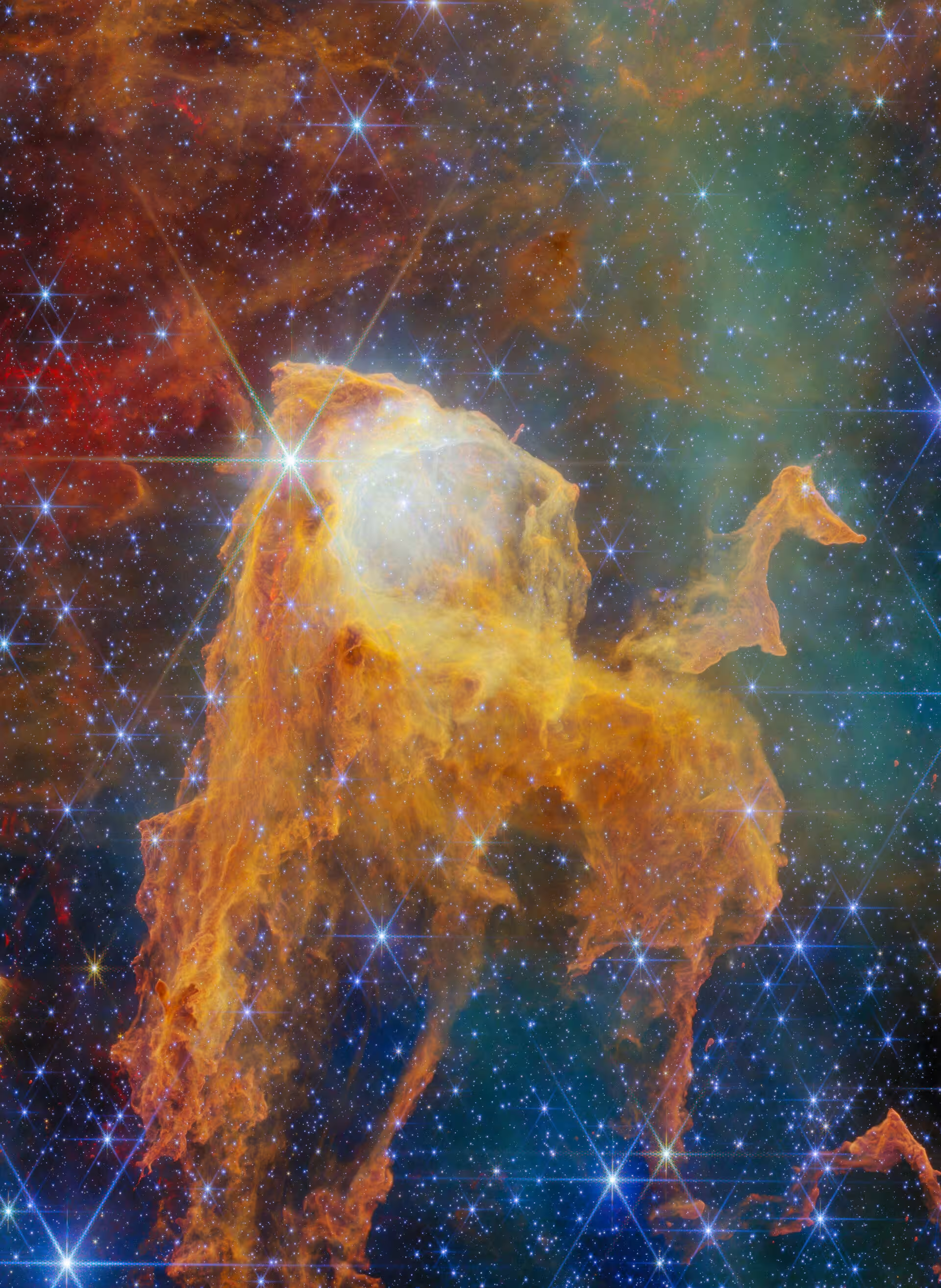
Stellar Birth and Galactic Evolution Unveiled
The captured region contains a blend of stars and surrounding material that reflects the dynamic processes shaping the universe. Star formation does not occur randomly; it is linked to massive clouds of gas and dust whose collapse under gravity spawns new suns.
As nascent stars ignite, their radiation and stellar winds reshape the nearby medium, carving out new structures that may later seed subsequent generations of stellar systems. Observing these feedback loops provides a clearer picture of the stellar life cycle.
Comparing regions at different evolutionary stages enables astronomers to trace how stellar environments transform over time, linking local activity to broader questions of galaxy formation and cosmic evolution. Each high‑resolution infrared image contributes both detailed data on individual stars and insights into the larger patterns that govern the universe.
This article has been fact checked for accuracy, with information verified against reputable sources. Learn more about us and our editorial process.
Last reviewed on .
Article history
- Latest version
Reference(s)
- “Webb opens a Treasure Chest filled with stars.” <https://www.esa.int/ESA_Multimedia/Images/2026/08/Webb_opens_a_Treasure_Chest_filled_with_stars>.
Cite this page:
- Posted by Karan Das