CIA’s Skyhook Mission: How Agents Retrieved Soviet Arctic Secrets From a Frozen Ice Station
1962 US operatives parachuted onto a deserted Soviet Arctic outpost to retrieve intel, using a plane that never landed.
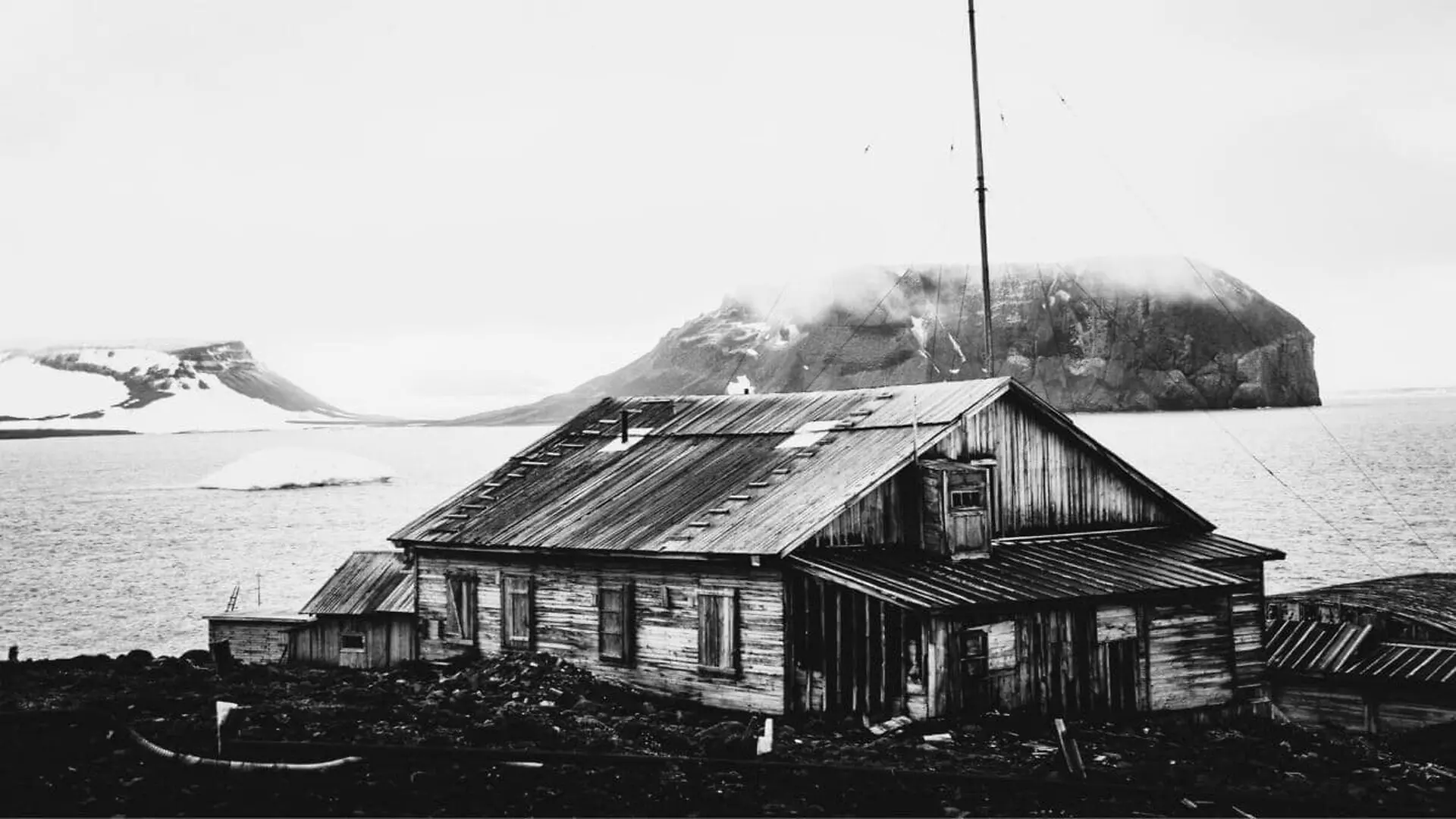
Amid the most fraught stretch of the Cold War—marked by the Bay of Pigs fiasco, the erection of the Berlin Wall, the Vienna Summit, and the tense standoff at Checkpoint Charlie—the United States was eager for any glimpse of Soviet military capability, even if it meant salvaging a forgotten outpost in the Arctic.
American reconnaissance aircraft later spotted a derelict Soviet drifting ice station, identified as NP9, after a pressure ridge had shattered its ice runway. Soviet officials announced the abandonment, assuming the equipment would be lost forever beneath the polar ice because no vessel could reach the site and helicopters lacked the range for a rescue.
Abandoned Arctic Outpost Becomes a Prize for U.S. Intelligence
The United States maintained its own drifting stations to track Soviet submarine movements, so the discovery of NP9 sparked intense interest. Analyzing the Soviet hardware, scientific data, and operational habits promised insight into how Moscow monitored the high‑latitude seas.
According to a Popular Mechanics feature, the station lay too deep in the ice pack for an icebreaker to approach and beyond the reach of any helicopter, rendering conventional recovery impossible.
When the Soviet Union later deserted a newer platform, NP8, in March 1962, the situation changed. Situated roughly 600 miles from the Canadian air base at Resolute Bay, NP8 presented a more attainable target for a covert extraction.
Robert Fulton’s Skyhook Offers a Radical Lift Solution
Inventor Robert Edison Fulton Jr., whose résumé spanned aviation, photography, and military tech, first observed the All American System in post‑war London, where aircraft snagged mail bags suspended from cables without touching down.
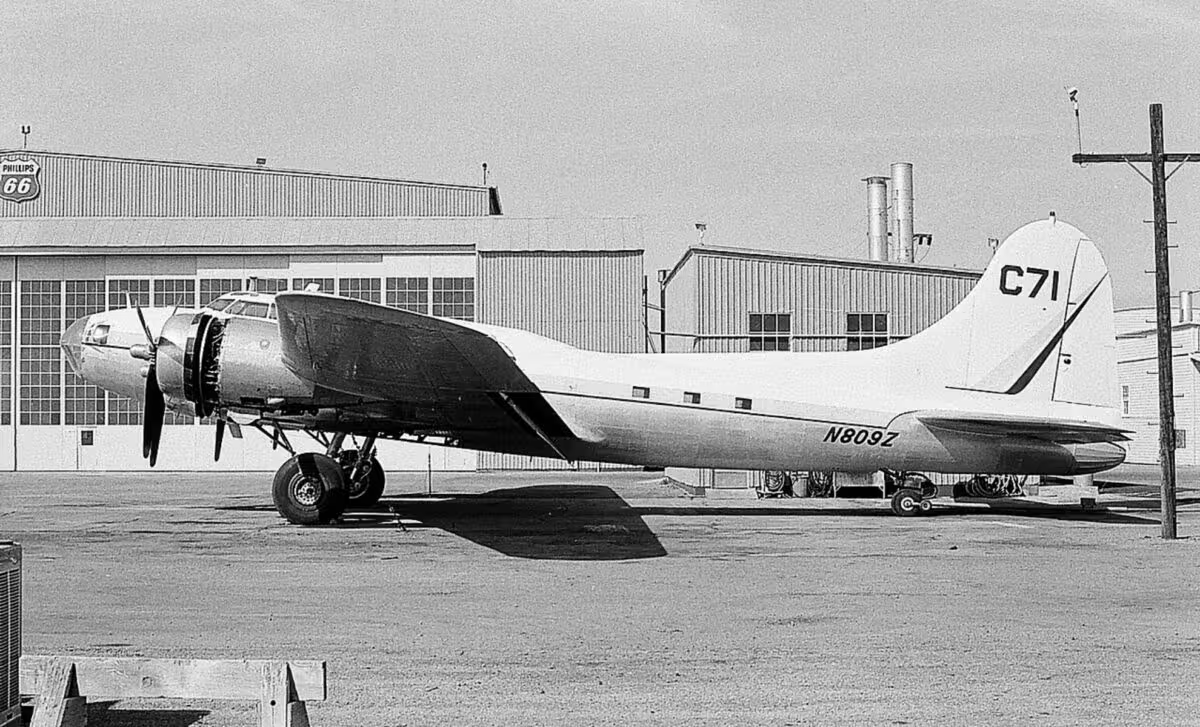
Adapting that concept for personnel, Fulton devised the aerial retrieval system later dubbed the Skyhook. A harness attached to a 500‑foot nylon line was lifted by a helium balloon; an aircraft equipped with angled steel “horns” could then snatch the line in flight, pulling the occupant aboard.
Early trials involved dummies and a pig that emerged from the aircraft unharmed, albeit bewildered. Human tests in the summer of 1958 reported that the jolt felt more like “a kick in the pants” than a parachute opening, suggesting the method was survivable.
Despite promising results, senior Navy leaders hesitated. The operation required coordination between the CIA, the Defense Intelligence Agency, and the Office of Naval Research. Concerns lingered that an untested system might jeopardize the lives of operatives—especially Lieutenant Leonard A. LeSchack, who lacked parachute experience and underwent accelerated training.
Operation Coldfeet Demonstrates Skyhook Viability in the Arctic
On 28 May 1962, a CIA‑owned Boeing B‑17 Flying Fortress, operated by Intermountain Aviation, flew Lieutenant LeSchack and Major James Smith toward the abandoned NP8. After a first‑attempt failure to locate the station, the duo successfully parachuted onto the ice on a second try. Major Smith confirmed their arrival via radio, prompting the aircraft to return for Skyhook installation while the men began probing the outpost.
The two operatives were allotted 72 hours to sift through the station’s contents. Inclement weather delayed their planned extraction on 31 May, extending their stay until 2 June.
Throughout the recovery, gray skies hampered visibility and winds gusting near 30 knots threatened both the retrieval maneuver and the 150‑pound cache of Soviet documents, film, and equipment. The men clutched the canvas bag tightly as the B‑17 approached, fearing the gusts might whisk the material away.
The intelligence haul revealed that the Soviet Union had advanced considerably in Arctic anti‑submarine warfare and possessed a robust polar‑oceanographic research program. Captain John Cadwalader later emphasized that the findings proved “the long experience in this field and the great importance that their government attaches to it.”
Cadwalader also hailed the mission as validation of the Skyhook concept, describing it as “the practicality of paradrop and aeroretriever recovery to conduct investigations in otherwise inaccessible areas.” The system continued to be employed for human extractions until a Special Forces fatality during the 1982 Flintlock exercises, after which it remained in use for non‑human payloads until the mid‑1990s, when long‑range, refuel‑capable helicopters rendered it obsolete.
Beyond its operational legacy, the Skyhook captured the public imagination. It featured in the 1965 James Bond film Thunderball, appeared in the Vietnam‑era movie The Green Berets, and resurfaced in 2008’s The Dark Knight, where the character Lucius Fox references the CIA program while explaining a non‑landing aircraft boarding technique.
This article has been fact checked for accuracy, with information verified against reputable sources. Learn more about us and our editorial process.
Last reviewed on .
Article history
- Latest version
Reference(s)
- Natale, Michael. “The CIA Found a Soviet Ghost Station Full of Cold War Secrets. To Steal Them, the U.S. Had to Do the Impossible..”, July 31, 2026 Popular Mechanics <https://www.popularmechanics.com/military/a73274458/batmans-skyhook-cia-mission/>.
- “Robert Fulton's Skyhook and Operation Coldfeet - CSI.” <https://www.cia.gov/resources/csi/studies-in-intelligence/1995-2/robert-fultons-skyhook-and-operation-coldfeet/>.
Cite this page:
- Posted by Karan Das