Mars Craters Are Acting in Unexpected Ways and Scientists Finally Know Why
New research reveals how seasonal frost patterns vary across Martian polar craters, unveiling a surprisingly complex picture of the Red Planet’s icy climate.
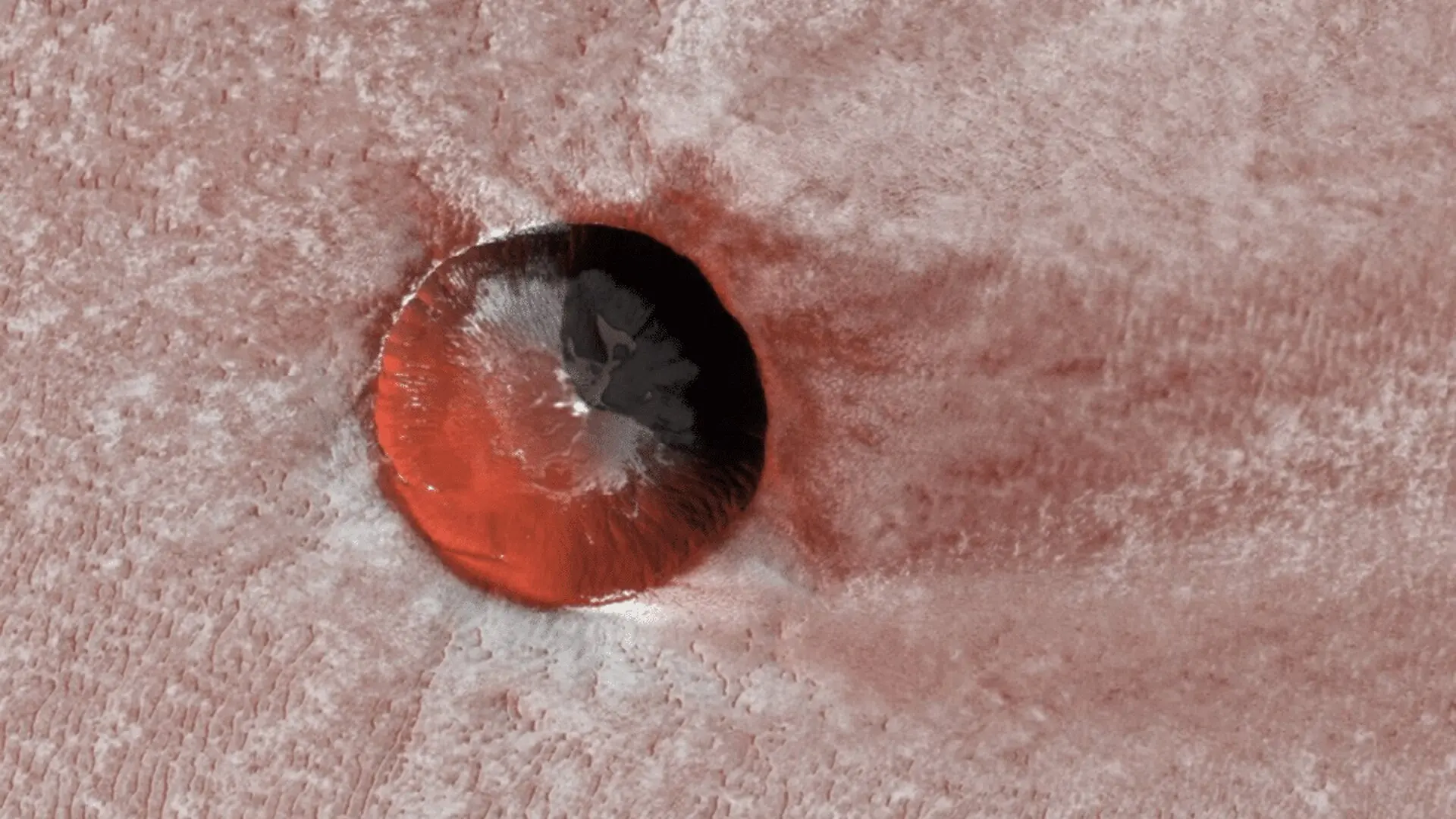
The Martian poles are far from the static, icy expanses they might appear to be. New findings published in the Journal of Geophysical Research: Planets reveal that the Red Planet’s polar craters behave as highly individualistic environments, with frost patterns that fluctuate in ways that defy a simple, region-wide seasonal trend.
Local Topography Drives Variable Ice Cycles
While large-scale climatic forcing governs the seasonal ebb and flow of ice across Mars, the new study demonstrates that neighboring craters often tell different stories. Researchers observed that while some craters maintain consistent frost deposits year after year, others show marked interannual shifts in their coverage. This variability suggests that the accumulation and sublimation of ice are not merely products of broad atmospheric conditions, but are heavily modulated by localized factors.
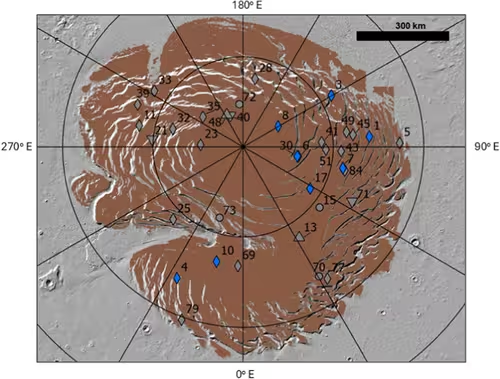
The researchers note that these distinct responses are likely dictated by a crater’s unique geometry—including its depth, diameter, and orientation relative to the Sun. Such physical traits dictate how shadows fall across the interior, directly impacting the energy balance required to sustain frozen carbon dioxide and water ice. In essence, a crater acts as a microclimate vessel, where topography dictates the survival rate of frost even when the surrounding terrain experiences identical seasonal temperatures.
Beyond Regional Averages
Mars completes one orbit around the Sun in approximately 687 Earth days, a cycle that drives the condensation and sublimation of atmospheric carbon dioxide. Because this process is sensitive to both thermal and radiative conditions, the “microclimates” found within smaller impact craters can introduce significant noise into global models. By focusing exclusively on regional averages, scientists risk overlooking these crucial, smaller-scale variations that are essential for accurate climate modeling.
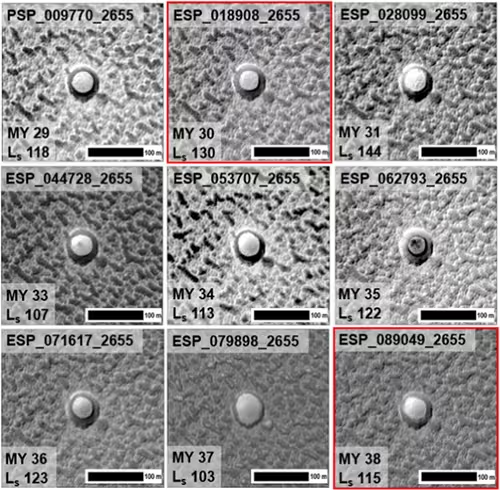
The study emphasizes that the observed spatial heterogeneity suggests that the mass balance of the polar ice caps is a collection of localized processes rather than a unified, cap-wide phenomenon. This has profound implications for how researchers interpret data collected from orbital sensors. When frost extent changes from one Martian year to the next in some locations but not others, it highlights the delicate interplay between local atmospheric circulation and surface energy budgets.
Mapping the Future of Martian Climate Science
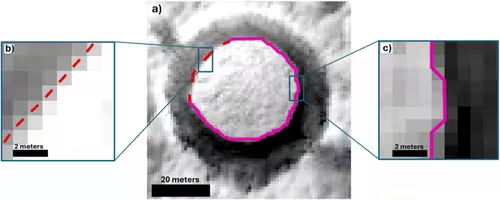
Understanding why specific craters fluctuate while others remain stable provides a clearer window into the mechanics of the Martian climate. The challenge for future researchers lies in determining whether these year-to-year shifts represent transient seasonal noise or if they are indicators of longer-term environmental evolution. As crater interiors continue to be monitored by high-resolution imaging, the persistence of these patterns will become increasingly clear.
By mapping these subtle, uneven ice deposits, scientists are gaining a more granular understanding of how the Red Planet processes its volatile materials. While the grand scale of the polar ice caps commands attention, the evidence suggests that the most critical secrets of Martian climate dynamics may be hidden within the complex, localized behavior of the planet’s smallest craters.
This article has been fact checked for accuracy, with information verified against reputable sources. Learn more about us and our editorial process.
Last reviewed on .
Article history
- Latest version
Cite this page:
- Posted by Karan Das