James Webb Finds Mysterious Atmosphere Surrounding A Boiling Lava Planet
The James Webb Space Telescope has uncovered an unexpected secret on a lava-covered exoplanet, challenging everything scientists thought they knew.
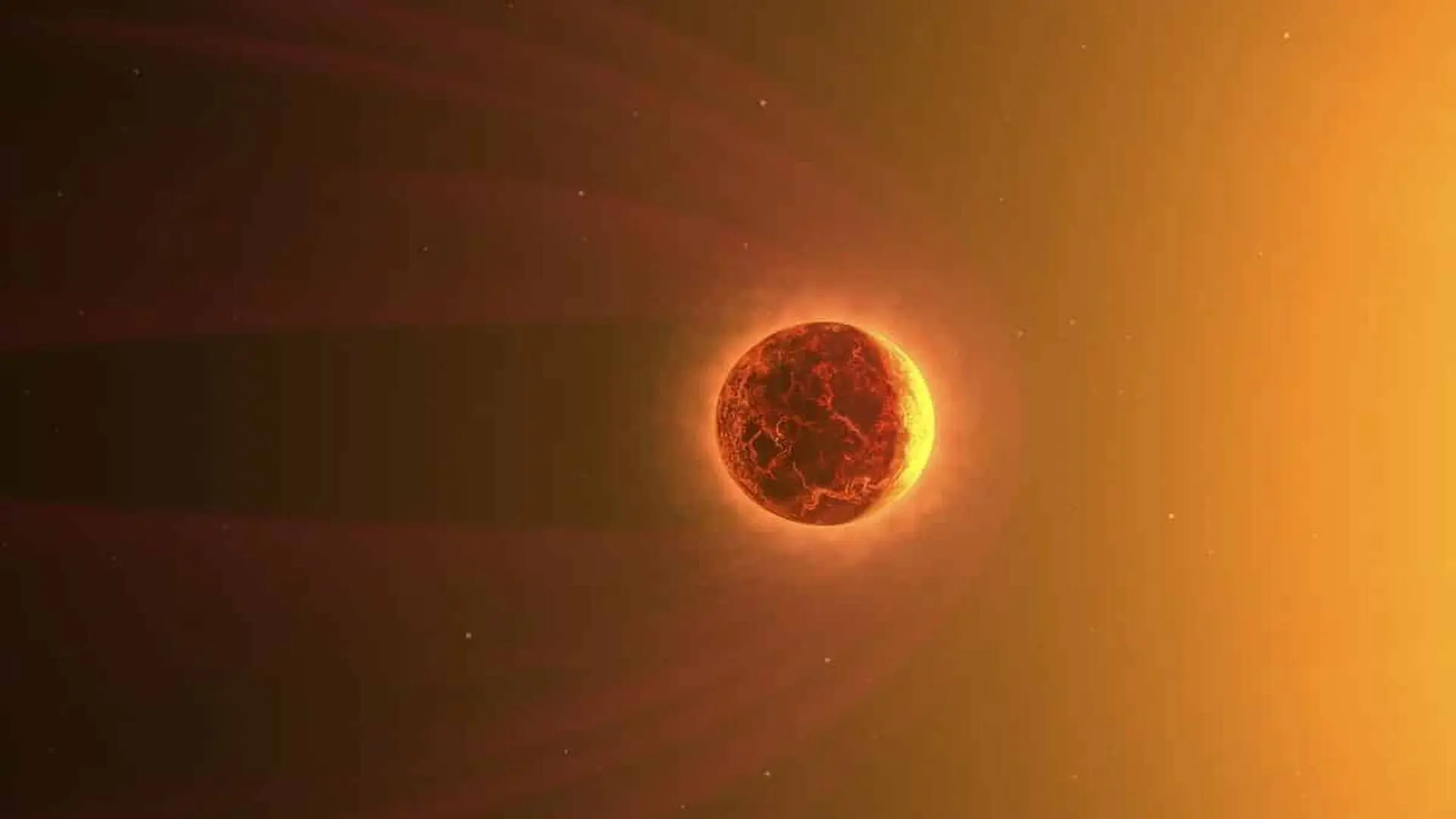
Astronomers have uncovered a surprising feature on a scorched, lava-covered world located 280 light-years from our solar system: an atmosphere that defies theoretical expectations. Despite being subjected to intense stellar radiation that should have stripped away any gaseous envelope billions of years ago, the planet TOI-561 b appears to be cloaked in a protective layer of mineral clouds that act as a planetary sunscreen.
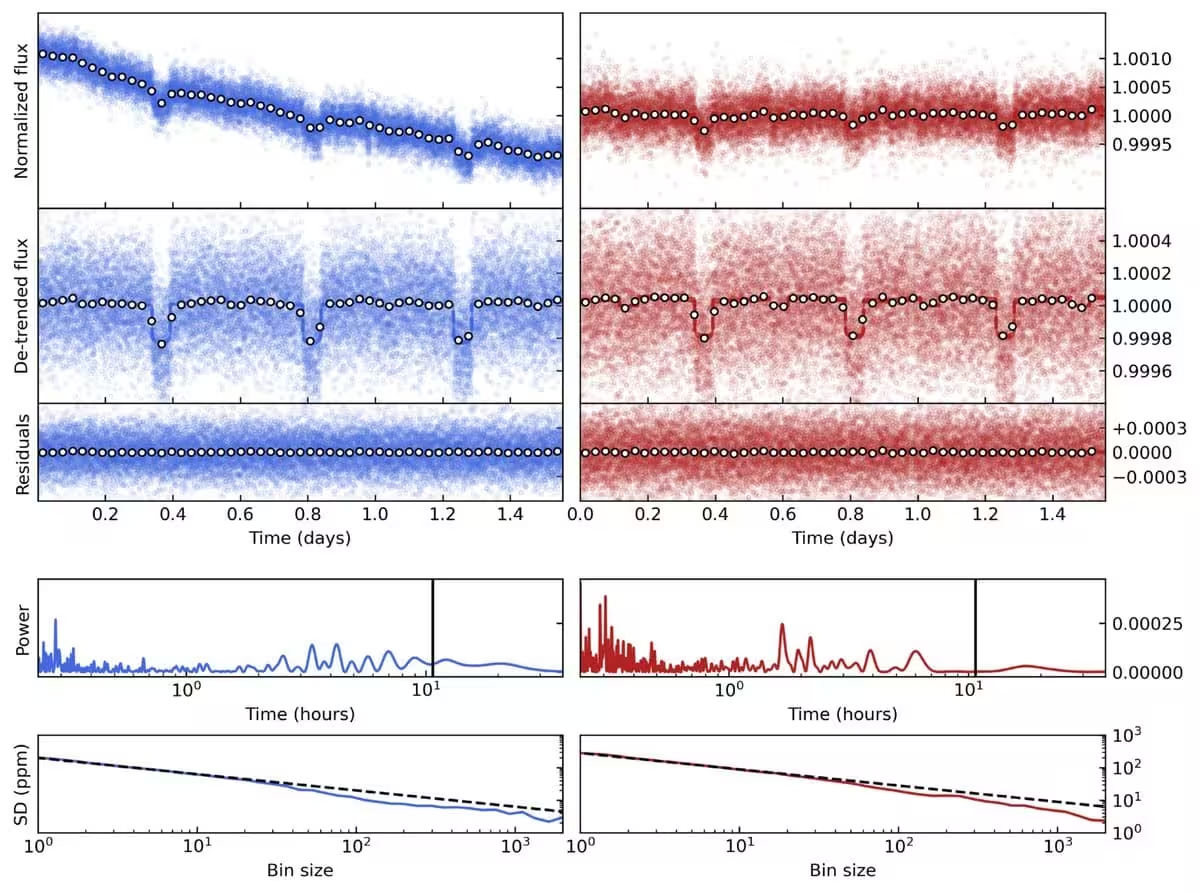
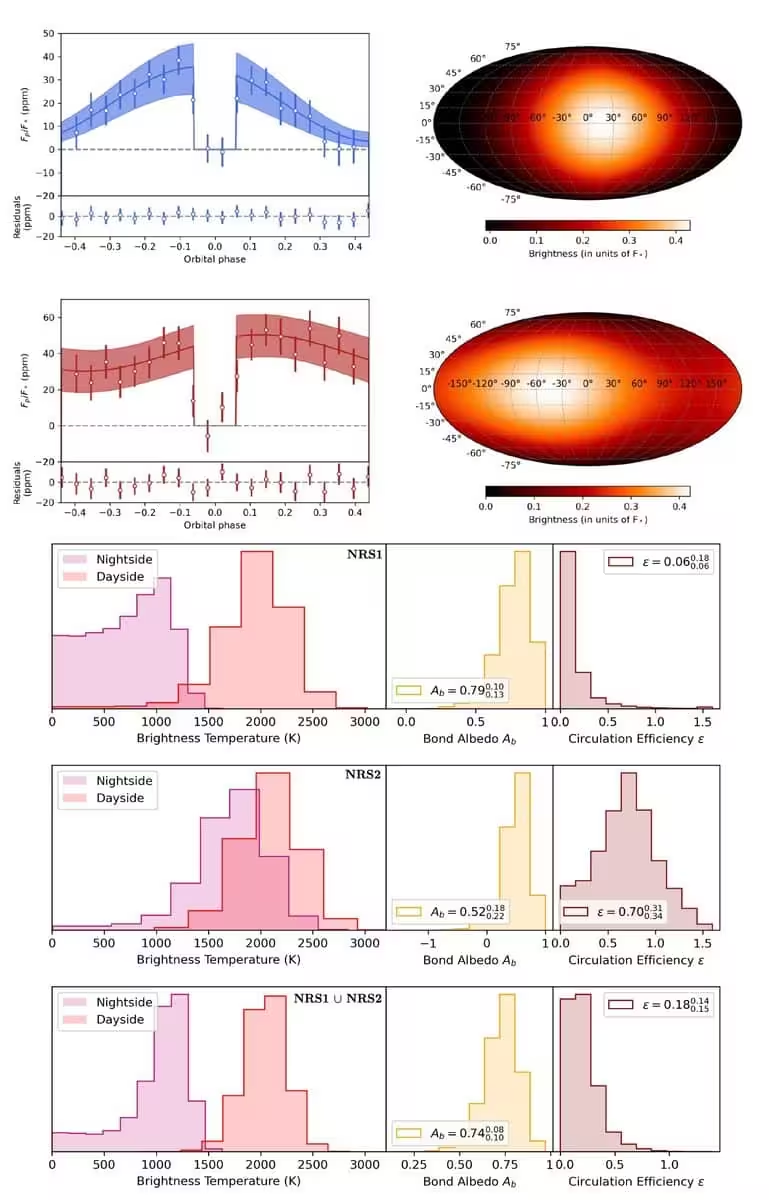
The findings, detailed in The Astronomical Journal, follow a 37-hour observational campaign using the James Webb Space Telescope (JWST). By tracking the planet through nearly four full orbits, an international research team identified anomalous temperature signatures and high reflectivity—approximately 75% of incoming starlight is bounced back into space—suggesting a persistent atmosphere rather than a bare, rocky surface.
Defying the Odds of Atmospheric Loss
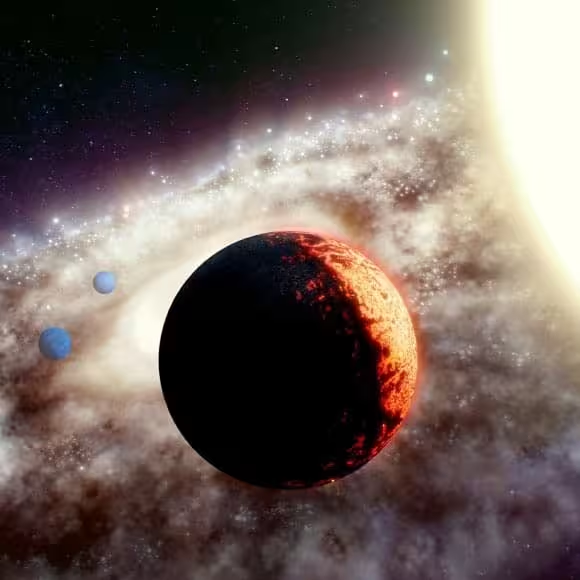
TOI-561 b is a tidally locked world, meaning it keeps one face permanently scorched by its host star while the other remains in shadow. Standard astrophysical models predict that such proximity to a star should result in the rapid evaporation of any atmosphere. However, data collected by the JWST indicate that heat is being redistributed across the planet, a process that necessitates a gaseous medium to transport thermal energy from the dayside to the nightside.
Dr. Anjali Piette, an Assistant Professor in Astronomy at the University of Birmingham, noted the significance of the findings, stating, “Our discovery challenges current theories. We would expect a heavily irradiated rocky planet like TOI-561 b to have lost its atmosphere billions of years ago.”
A Global Lava Reservoir
The research team, led by Professor Lisa Dang of the University of Waterloo, suggests that the secret to this resilience might lie beneath the clouds. Because the planet is essentially a molten rock world, its global lava ocean may be continuously outgassing, essentially functioning as a “planet-wide volcano” that replenishes atmospheric gases as quickly as they are lost to space. Alternatively, the planet may have formed with an unusually high reservoir of volatile elements.
Computer simulations suggest that the high reflectivity observed by Webb is likely caused by clouds composed of mineral particles, such as silicon dioxide (SiO₂) and magnesium silicate (MgSiO₃). While these clouds provide a vital reflective shield, the environment remains far from hospitable. Researchers are still debating the chemical makeup of the primary atmosphere, with current hypotheses focusing on either a thick carbon dioxide-rich composition, similar to a superheated Venus, or a sulfur-heavy environment reminiscent of the volcanic activity observed on Jupiter’s moon Io.
Future Investigations
To confirm the chemical nature of this persistent haze, astronomers plan to conduct further observations using longer wavelengths on the JWST. Unpacking why TOI-561 b retains its atmosphere is not merely an exercise in planetary geology; it provides a new benchmark for understanding how rocky exoplanets interact with their host stars over long timescales. For now, the “lava world” stands as a reminder that the universe frequently defies the neat models created to explain it.
This article has been fact checked for accuracy, with information verified against reputable sources. Learn more about us and our editorial process.
Last reviewed on .
Article history
- Latest version
Reference(s)
- “The Astronomical Journal - IOPscience.” <https://iopscience.iop.org/journal/1538-3881>.
Cite this page:
- Posted by Karan Das