Hubble Finally Spots Mysterious Dark Dust Trail Left by a Massive Cosmic Collision
New Hubble observations uncover the hidden structure and violent origins of a mysterious dust tail orbiting a star 63 light-years away from Earth.
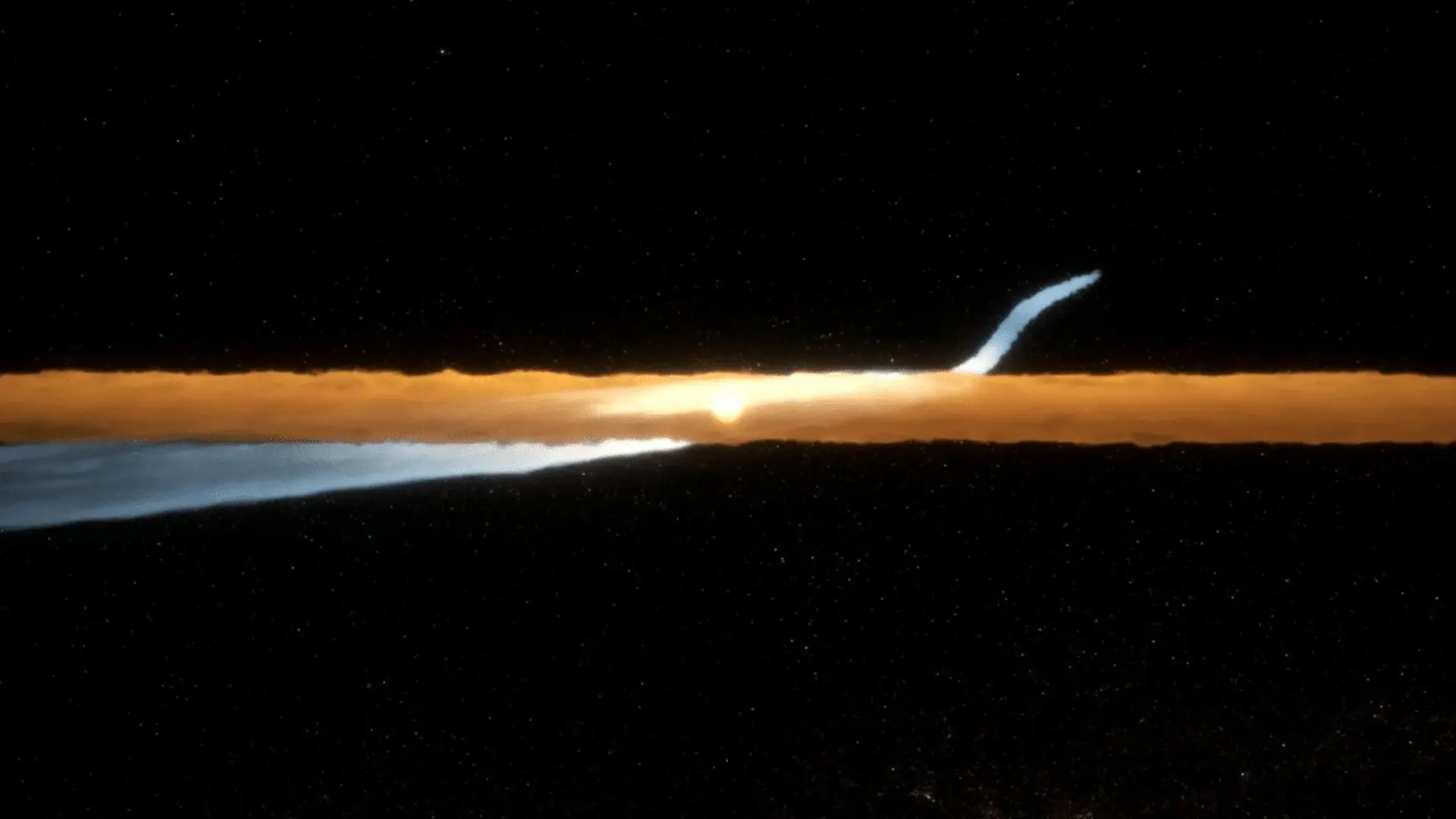
A sprawling, dark ribbon of dust encircling Beta Pictoris, a young star located 63 light-years from Earth, is providing astronomers with a rare look at the aftermath of a catastrophic planetary collision. New data from the Hubble Space Telescope, published in The Astrophysical Journal Letters, marks the first time this elusive structure has been imaged in visible light, confirming that high-energy impacts are primary architects of maturing planetary systems.
Hubble Detects the Elusive Cat’s Tail
Known as the Cat’s Tail, the structure spans roughly 1,000 astronomical units—an immense distance equivalent to 93 billion miles. While the feature was previously detected by the James Webb Space Telescope (JWST) using infrared sensors that track heat signatures from dust, it remained invisible to shorter-wavelength instruments. By analyzing data collected over 14 years and integrating Hubble’s visible-light imagery with existing infrared findings, researchers have now mapped the formation in unprecedented detail.
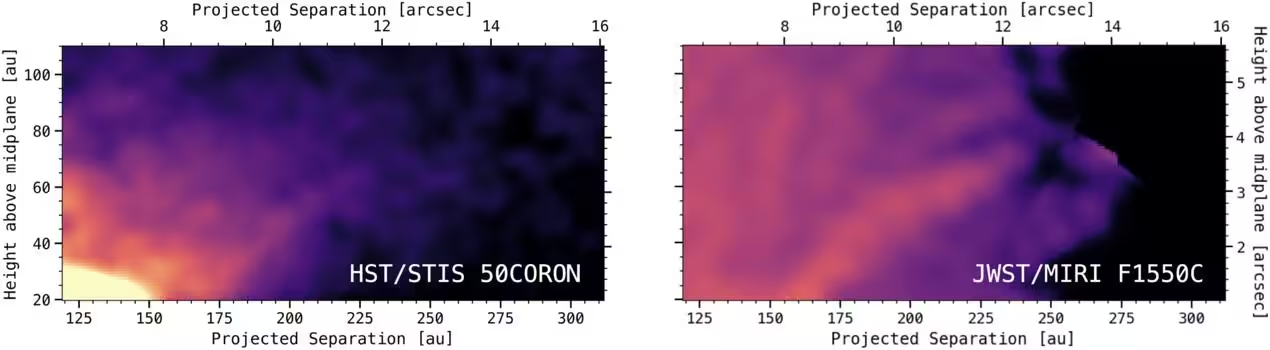
“The Cat’s Tail is thought to be the aftermath of a collision between large bodies—think something like Pluto,” said Arin Avsar, a doctoral student at the University of Arizona’s Lunar and Planetary Laboratory and Steward Observatory. “Oddly, this feature had previously only been seen with the James Webb Space Telescope, which detects infrared light, but remained invisible at shorter wavelengths, which has puzzled the community for a while.”
The study suggests the tail acts as a frozen snapshot of a destructive event, capturing a phase of planetary formation that is typically obscured from direct observation.
The Mystery of the Blackened Dust
The team’s investigation into why the tail disappeared in visible light revealed a surprising composition. The debris appears to consist largely of organic refractory material—a dark, carbon-rich substance that absorbs rather than reflects light. Furthermore, the dust grains are remarkably porous and micron-sized, a physical state that defies current models of debris formation.
Co-author and NASA Sagan postdoctoral fellow Kevin Wagner suggests the extreme energy of the original collision may be the culprit. The heat generated by such an impact could have vaporized carbon-rich material, which then recondensed into these highly porous, fluffy particles as the gas cooled.
Redefining the Geometry of Debris
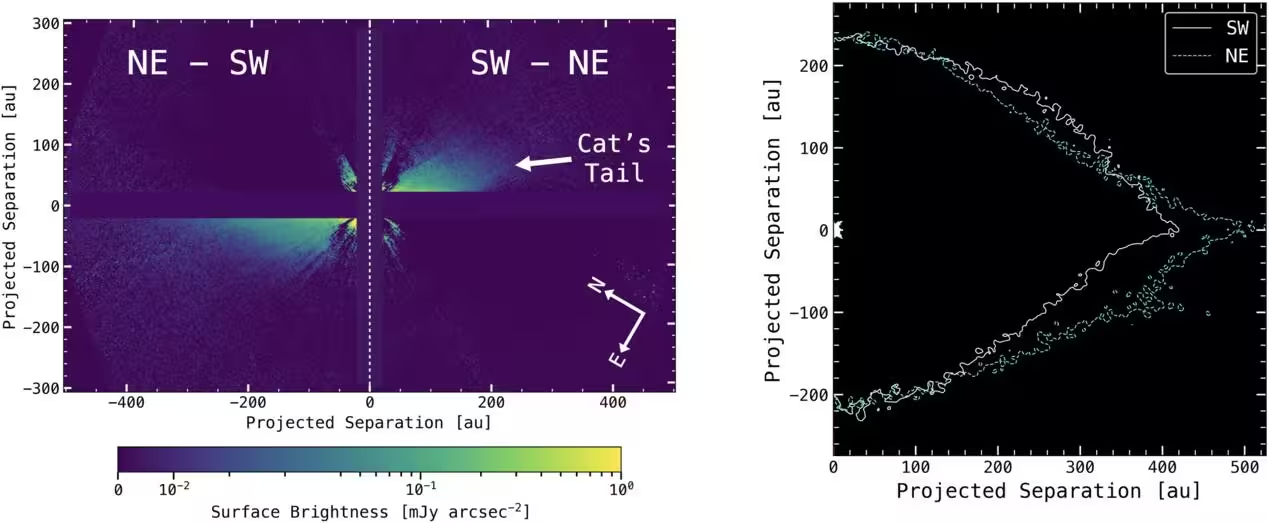
The combined datasets have also forced a revision of the tail’s spatial orientation. Contrary to previous theories that the structure extended 1,000 astronomical units into the deep background, new models indicate it sits largely in the same plane as the star, extending laterally from our perspective. This shift in understanding how the debris is positioned is critical for reconstructing the mechanics of the initial, violent impact.
Giant Planets as Cosmic Sculptors
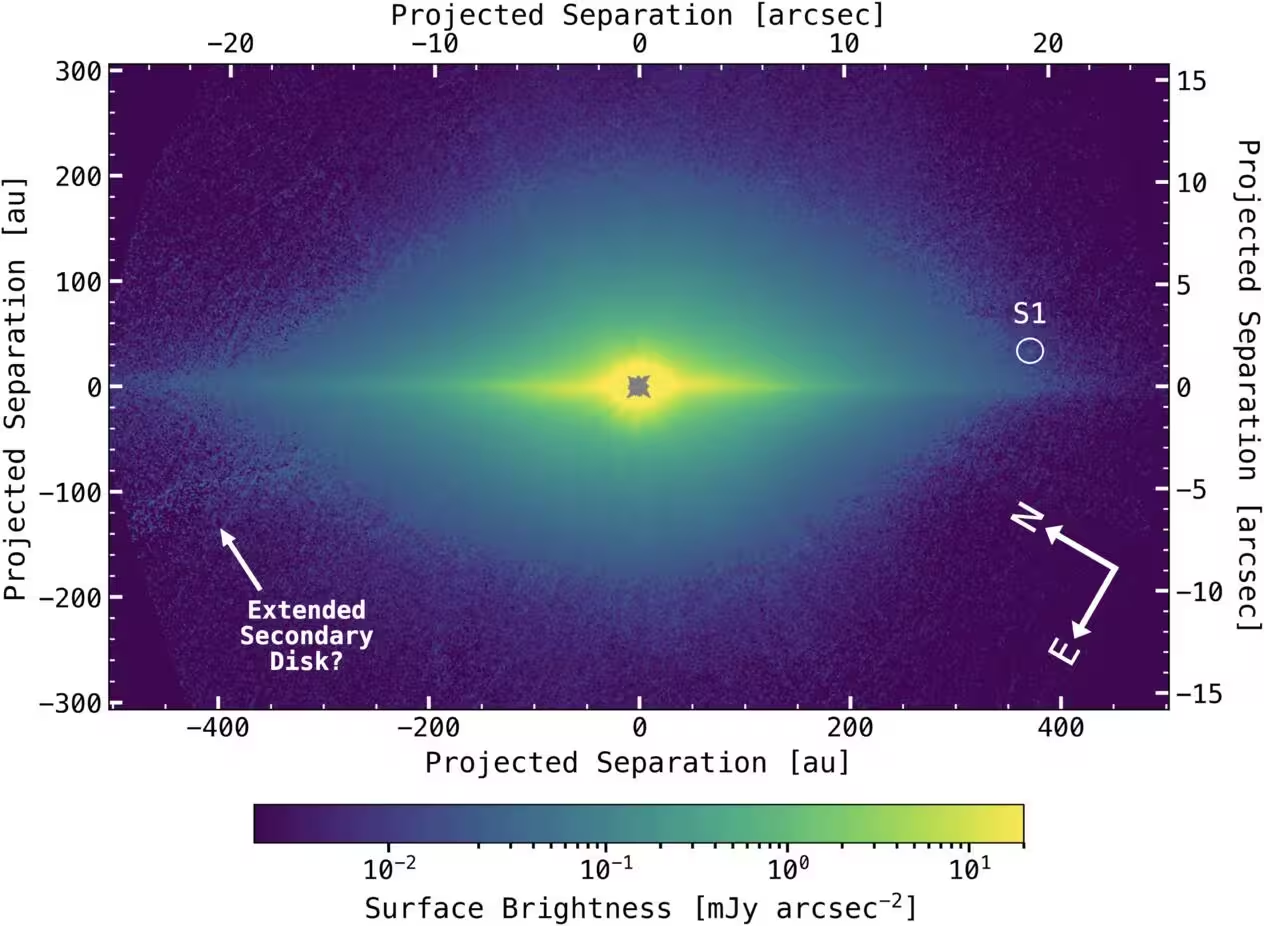
Beyond the Cat’s Tail, the research uncovered a subtle warp in the surrounding debris halo. Astronomers attribute this distortion to the gravitational influence of Beta Pictoris b, a massive gas giant roughly 10 times the mass of Jupiter. The planet’s influence on the surrounding field of icy bodies and dust provides a mirror for our own solar system’s history, where ancient, massive planets likely cleared the primordial Kuiper Belt.
By studying Beta Pictoris, scientists are gaining a clearer view of the chaotic, transformative forces that dictate the ultimate architecture of planetary systems, proving that the debris left behind is not merely waste, but a complex record of cosmic evolution.
This article has been fact checked for accuracy, with information verified against reputable sources. Learn more about us and our editorial process.
Last reviewed on .
Article history
- Latest version
Cite this page:
- Posted by Karan Das