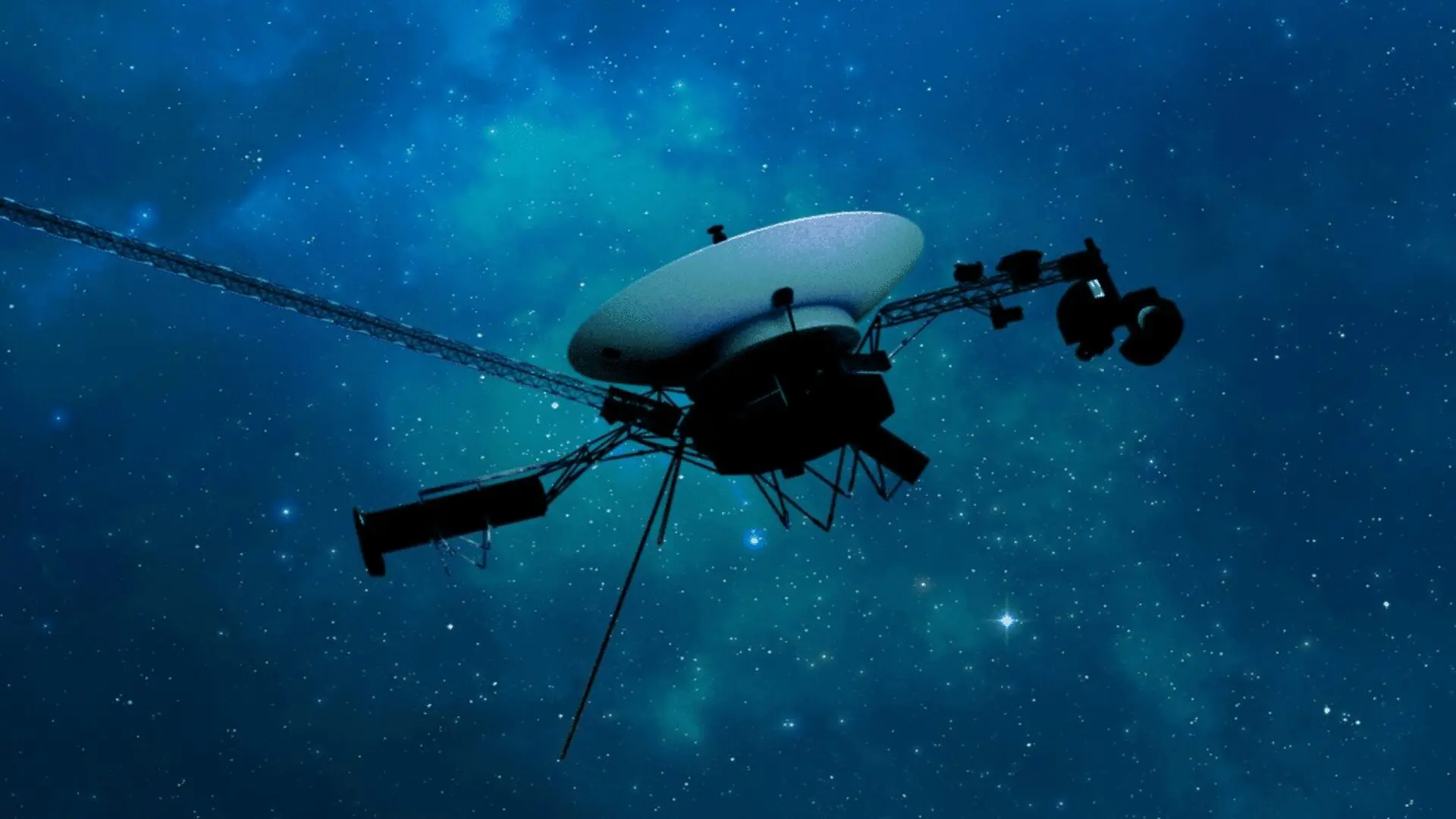
NASA’s legendary Voyager 1 spacecraft has successfully re-established contact with Earth following a brief and perplexing communications blackout. The restoration of the signal, confirmed by agency officials on October 29, 2026, marks another significant milestone for the probe as it hurtles through interstellar space, edging ever closer to its 50th year of operation.
Navigating Silence in the Deep Void
Since its launch in September 1977, Voyager 1 has pushed further into the cosmos than any other human-made object. Now situated in the pristine, largely uncharted territory of interstellar space, the craft serves as our only direct link to the environment beyond the Sun’s influence. However, maintaining that link has become a high-stakes game of patience and precision.
Because the spacecraft is billions of miles away, radio signals require hours to travel in each direction. This extreme latency prevents real-time troubleshooting, forcing engineers at NASA’s Jet Propulsion Laboratory to carefully draft and transmit commands, only to wait an entire day or more for confirmation of the result.
The recent communications pause was particularly notable for its lack of a clear trigger, leaving flight controllers to sift through diagnostic data to pinpoint the cause. “This is the first time we’ve seen the spacecraft do something like this, but we are also at a point in the mission where we have to expect the unexpected,” said Kareem Badaruddin, Voyager mission manager at JPL. “We’re relieved to be back in contact with Voyager 1 and are eager to understand what happened.”
Another successful fix ⏤ after 49 years and 16 billion miles!
Engineers recently turned off devices on Voyager 1 and substituted them with lower-power alternatives. Nicknamed the “Big Bang,” the energy-saving effort will allow the remaining instruments to operate longer. ½ https://t.co/sJpV6PbyxS
Operating a craft designed half a century ago requires a specialized approach. NASA relies on the Deep Space Network—a global array of massive radio antennas—to capture the incredibly faint signals emitted by the aging probe. The process is inherently slow and methodical, as explained by Suzanne Dodd, the Voyager project manager at JPL: “If you want to say ‘hello’ to Voyager, you send your message and then you go home and you wait two days before you finally get a response.”
This reality means that every interaction is a calculated risk. With no possibility of physical repair, the team must rely on remote software patches and creative workarounds to keep the mission alive.
Energy Management at the Mission’s Edge
The latest technical hiccup occurs against the backdrop of the spacecraft’s ongoing power crisis. Voyager 1 draws its energy from radioisotope thermoelectric generators, which rely on the decaying heat of plutonium-238. As these fuel sources lose potency over time, the total available wattage steadily declines.
NASA engineers have been forced to systematically power down non-essential systems and scientific instruments to ensure the most critical components—including the communication hardware—remain functional. While investigators have not yet confirmed if power constraints triggered this specific interruption, the finite nature of the probe’s energy budget remains a constant pressure on the mission’s future.
For now, the focus remains on interpreting the data collected during the recovery to determine if this was a random anomaly or a warning sign of further degradation. Each successful transmission reinforces the resilience of a mission that continues to rewrite the record books for human exploration.
Fact Checked
This article has been fact checked for accuracy, with information verified against reputable sources. Learn more about us and our editorial process.
Last reviewed on .
Article history
Latest version
Cite this page:
Das, Karan. “NASA Confirms Voyager 1 Is Back Online After Mysterious Silence From Interstellar Space.” BioScience. BioScience ISSN 2521-5760, 30 October 2026. <https://www.bioscience.com.pk/en/subject/space-science/voyager-1-suddenly-went-silent-then-nasa-received-the-signal-it-was-waiting-for>.
Das, K. (2026, October 30). “NASA Confirms Voyager 1 Is Back Online After Mysterious Silence From Interstellar Space.” BioScience. ISSN 2521-5760. Retrieved October 30, 2026 from https://www.bioscience.com.pk/en/subject/space-science/voyager-1-suddenly-went-silent-then-nasa-received-the-signal-it-was-waiting-for
Das, Karan. “NASA Confirms Voyager 1 Is Back Online After Mysterious Silence From Interstellar Space.” BioScience. ISSN 2521-5760. https://www.bioscience.com.pk/en/subject/space-science/voyager-1-suddenly-went-silent-then-nasa-received-the-signal-it-was-waiting-for (accessed October 30, 2026).