CAPSTONE Demonstrates Autonomous Navigation And Resilient Communications For Future Moon Missions
NASA’s CAPSTONE mission wraps up extended tests of new lunar exploration technologies, paving the way for future moon missions.
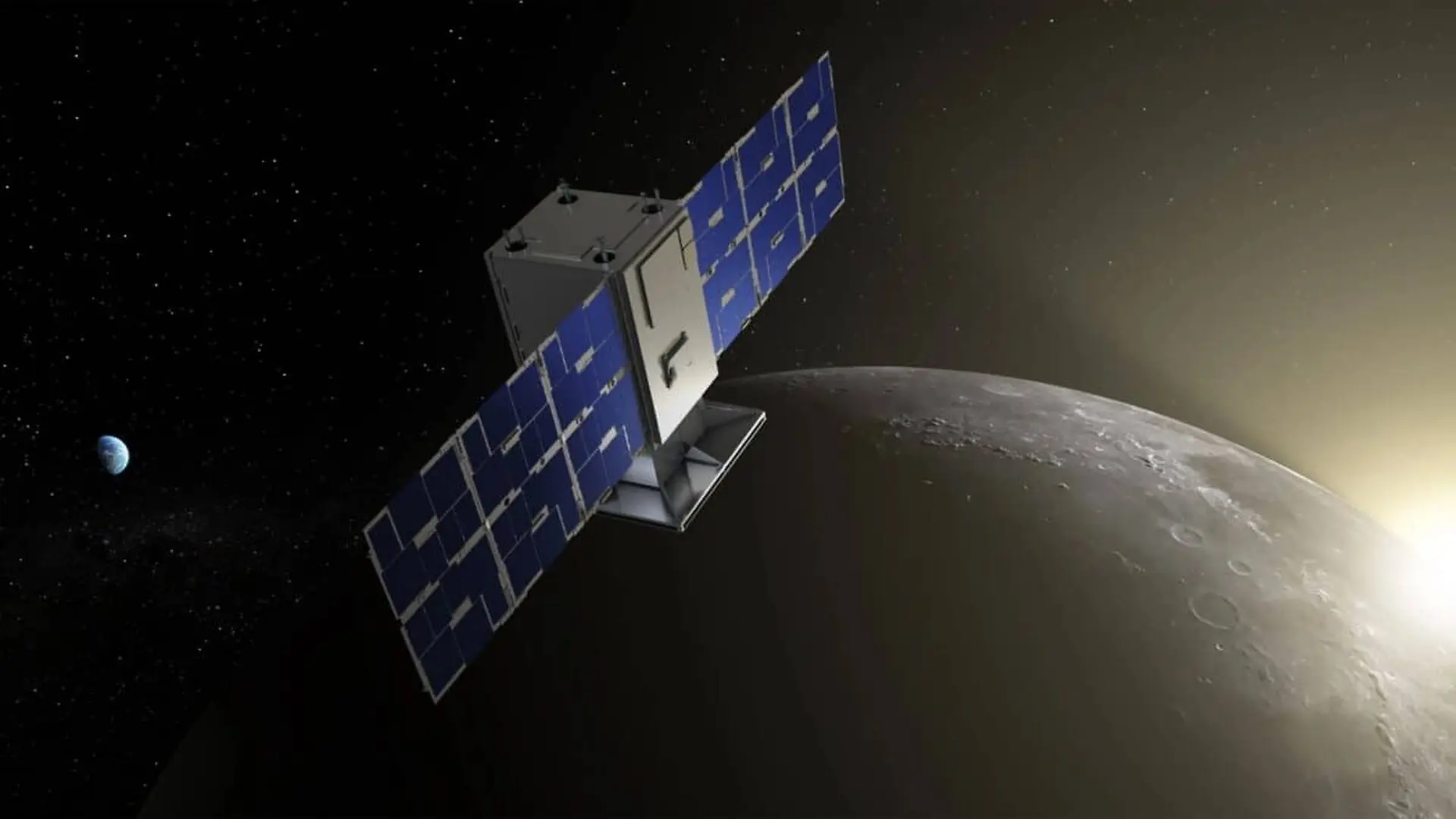
NASA reports that its CAPSTONE probe has wrapped up an extended campaign aimed at validating autonomous navigation and deep‑space communications that could underpin the next generation of lunar missions. The compact spacecraft showed how future explorers might operate with far less reliance on ground control.
Lunar Testbed Paves Way for Independent Spacecraft Operations
CAPSTONE, short for Cislunar Autonomous Positioning System Technology Operations and Navigation Experiment, lifted off in June 2022 and became the first U.S. commercial vehicle to reach the Moon. Designed as a technology demonstrator, the probe was intended to verify capabilities that will support NASA’s long‑term human presence around the lunar surface.
Managed by Advanced Space, the satellite was placed in a three‑body orbit that exploits the combined gravity of Earth and the Moon. This trajectory helps keep the spacecraft on a stable path while minimizing fuel consumption, and CAPSTONE was the inaugural mission to both fly and map such an orbit.
After achieving its primary goals, the mission was granted a 15‑month extension, turning the probe into a versatile test platform for new software and communications hardware in the actual lunar environment.
The extended phase fell under the oversight of NASA’s Research and Technology Mission Directorate, with technical support from the agency’s SCaN (Space Communications and Navigation) Division.
Autonomous Guidance Tested in Cislunar Space
A central focus of the extended mission was the validation of autoNGC (autonomous Navigation, Guidance, and Control), software that enables a spacecraft to determine its own position, plot a trajectory, and make course corrections without constant input from Earth‑based controllers.
While autoNGC had already been exercised in low‑Earth orbit, CAPSTONE provided the first near‑Moon demonstration. Researchers used the opportunity to assess how the system behaves when contact with ground stations is intermittent, a condition that arose as NASA’s Deep Space Network was simultaneously supporting other lunar activities, including the Artemis II crewed test flight.
Limited communication windows forced the probe to rely on an onboard star tracker that captures images of the Moon, Earth and distant stars, allowing it to compute its own location through optical navigation.
“To really demonstrate that something works, you have to fly it,” said Sun Hur‑Diaz, the principal investigator for autoNGC at NASA’s Goddard Space Flight Center. “The real environment is key.”
New Data‑Relay Techniques Tackling Signal Gaps
CAPSTONE also served as a testbed for delay/disruption tolerant networking (DTN), a communications paradigm that can store data when a link is unavailable and forward it automatically once the connection is re‑established.
In a demonstration, the spacecraft began transmitting a data packet toward Earth, then entered a communication blackout. Rather than discarding the incomplete transmission, CAPSTONE cached the remaining bits and resumed the download during the next DSN pass, ultimately delivering the full dataset.
“You can imagine an astronaut walking behind a lunar hill or descending into a crater and temporarily losing connectivity,” explained Ben Anderson, a systems engineer with NASA’s Near Space Network. “This technology allows that data to be automatically retransmitted once communications are restored.”
Such resilience will be crucial for missions that operate beyond the line‑of‑sight of Earth‑based antennas, ensuring continuous data flow for both crewed and robotic explorers.
NASA Leverages Existing Spacecraft for Ongoing Tech Trials
The CAPSTONE extension illustrated how a single operational spacecraft can host multiple experiments, providing a realistic laboratory for new hardware and software without the expense of launching a dedicated vehicle for each test.
“Operating multiple experiments simultaneously aboard the same spacecraft allows NASA to evaluate how these technologies perform together in a real lunar environment,” said Greg Stover, director of the Advanced Research and Technology Division within NASA’s Research and Technology Mission Directorate. “Investments in autonomous operations and resilient communications infrastructure are essential to ensuring U.S. leadership as activity around the Moon continues to increase.”
The findings from CAPSTONE will inform the design of upcoming lunar missions that demand greater autonomy, robust communications, and precise navigation. The technology demonstration phase concluded in June 2026 after nearly four years of development, but Advanced Space plans to keep the probe active as a testbed for future innovations.
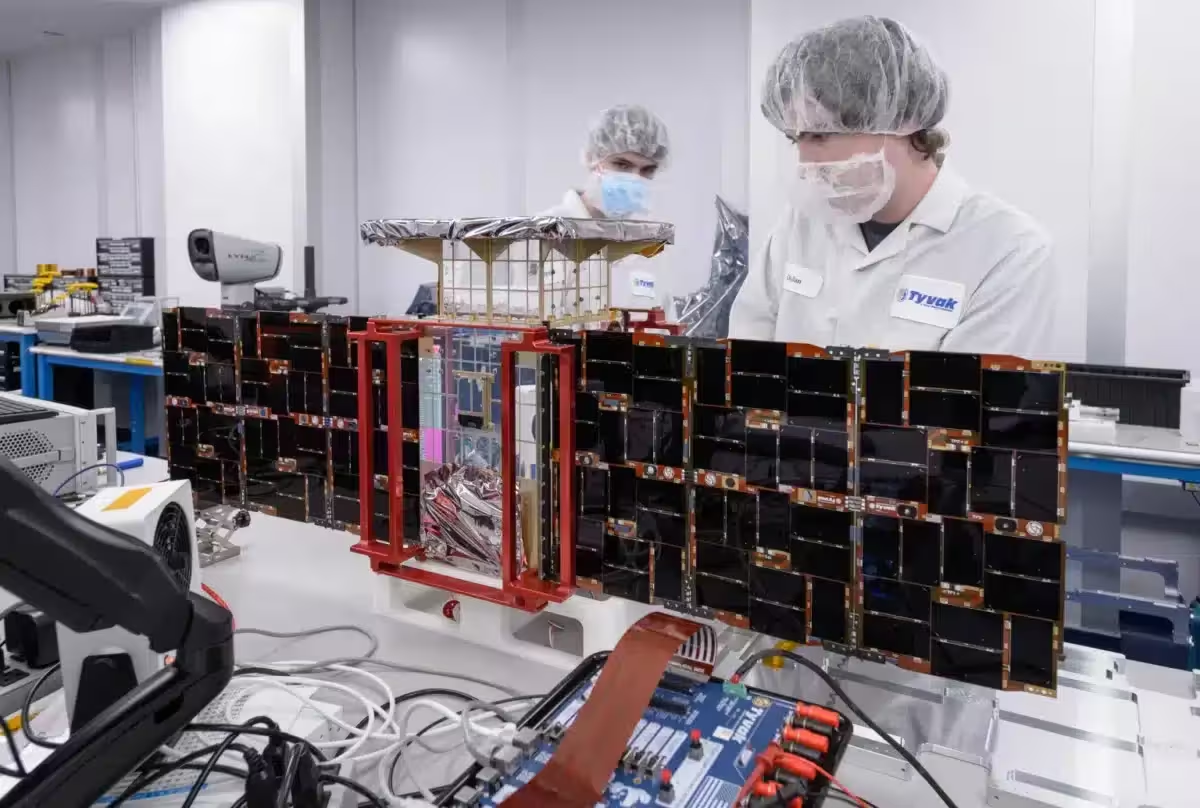
Built by Terran Orbital, CAPSTONE has supplied NASA and its partners with practical experience that will shape the next chapter of lunar exploration, where self‑sufficient spacecraft and reliable data networks will be indispensable.
This article has been fact checked for accuracy, with information verified against reputable sources. Learn more about us and our editorial process.
Last reviewed on .
Article history
- Latest version
Cite this page:
- Posted by Karan Das