Webb Unveils Hidden S‑Shaped Structure Inside Dust‑Shrouded Centaurus A
JWST uncovers hidden structures in nearby galaxy Centaurus A, giving a fresh look at the cosmic collision that drives its evolution.
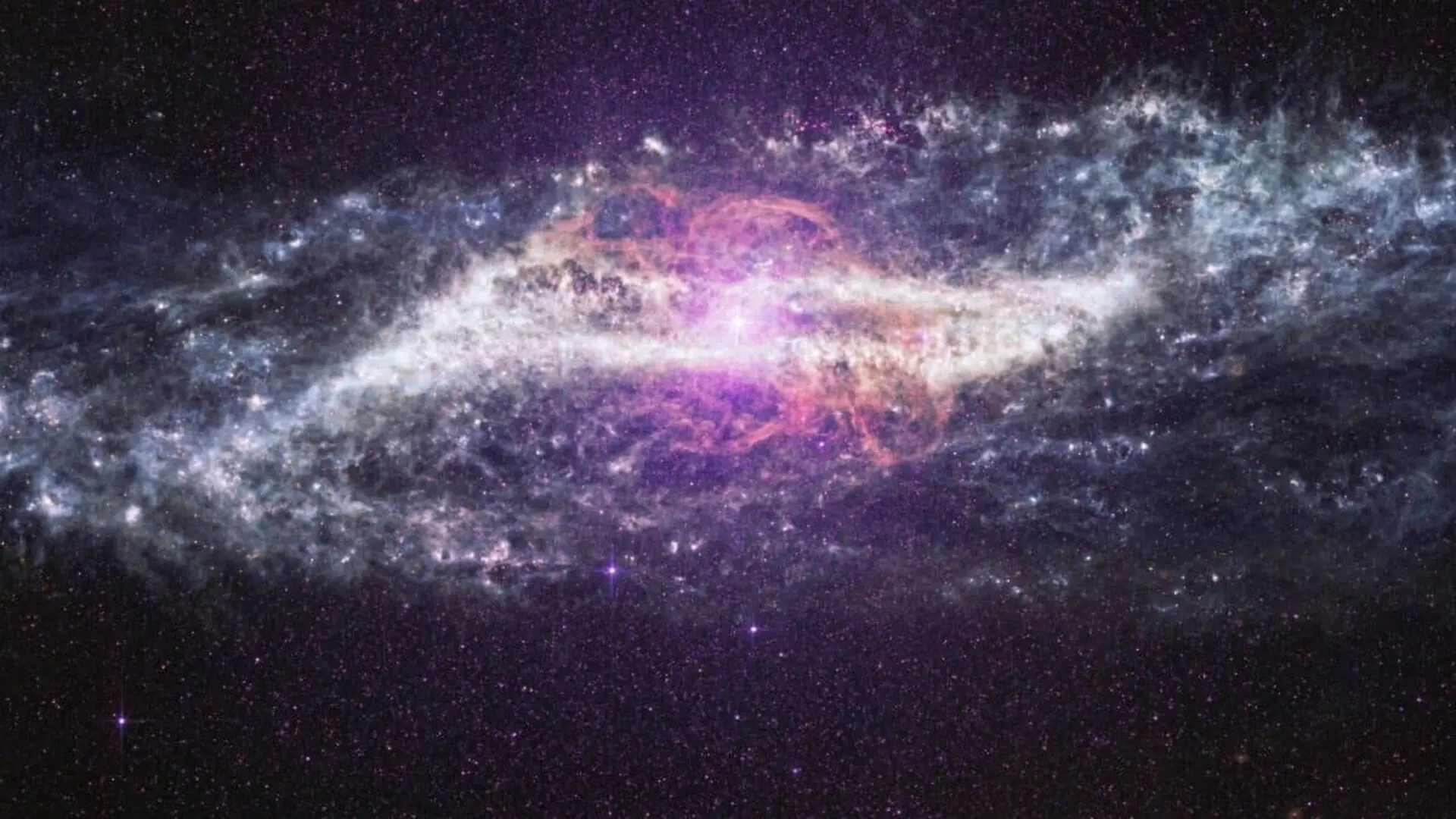
Infrared observations from NASA’s James Webb Space Telescope have pierced the veil of dust that cloaks the nearby galaxy Centaurus A, exposing a tangle of structures that have remained invisible for decades. The data, gathered in both near‑ and mid‑infrared wavelengths, illuminate how an ancient merger, a voracious supermassive black hole, and ongoing star formation continue to sculpt the galaxy 11 million light‑years from Earth.
Unveiling the Buried Core of Centaurus A
Centaurus A sits among the closest extragalactic objects, yet its central region has long eluded detailed study because thick dust lanes absorb visible light. Prior surveys with the Hubble Space Telescope and the now‑retired Spitzer telescope mapped portions of the system, but they lacked the combined resolution and infrared sensitivity that Webb provides.
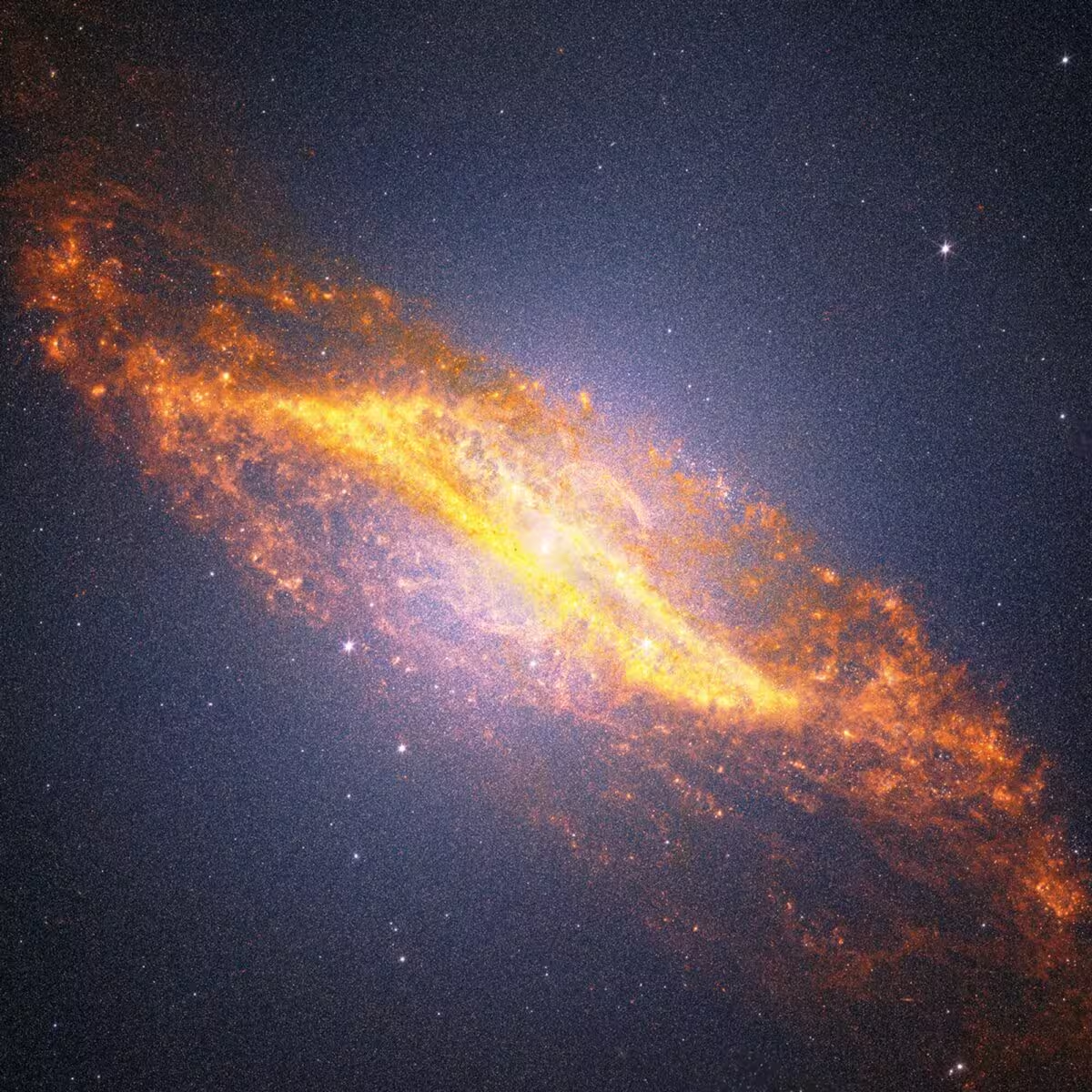
The new images resolve individual stars and reveal a network of dusty filaments, including a warped band that slices through the nucleus and an unexpected “S‑shaped” feature highlighted by Webb’s Mid‑Infrared Instrument (MIRI). These structures raise fresh questions about whether they stem from the ancient merger, from current star‑forming activity, or from the influence of the galaxy’s central black hole.
A Turbulent Past in a Nearby Galaxy
About two billion years ago, Centaurus A experienced a major collision with a smaller companion galaxy. The impact left behind a chaotic mixture of gas, dust, and stars that still defines the galaxy’s appearance. Today, researchers can trace the remnants of that event by studying the distribution of old and young stellar populations revealed in the infrared data.
Black Hole Power and Stellar Birth
At the heart of Centaurus A lies an active supermassive black hole that devours surrounding material and launches high‑energy jets far beyond the galactic core. Webb’s observations show that gas near the nucleus is moving at high velocities, a sign of the black hole’s dynamic influence. Additionally, astronomers detected warm molecular hydrogen in a rotating, distorted disk, offering a glimpse of how matter behaves under extreme conditions.
The infrared view also captures glowing pockets where dust‑rich stars and nascent stellar nurseries reside. These zones mark both the recycling of material from aging stars and the potential birthplaces of future generations of stars and planetary systems.
Centaurus A as a Laboratory for Galaxy‑Black Hole Interaction
The proximity of Centaurus A makes it an ideal test case for exploring how massive black holes and their host galaxies co‑evolve. Energy released by the central engine can compress gas, fostering new star formation, yet powerful outflows can also expel material, suppressing future growth. Webb’s high‑resolution infrared data allows scientists to disentangle these competing processes by examining individual regions rather than just the galaxy’s overall shape.
This approach mirrors “galactic archaeology,” where astronomers reconstruct a galaxy’s timeline through the analysis of its stellar, gaseous, and dusty components. The detailed mapping of the collision remnants and subsequent activity provides a clearer narrative of Centaurus A’s transformation over billions of years.
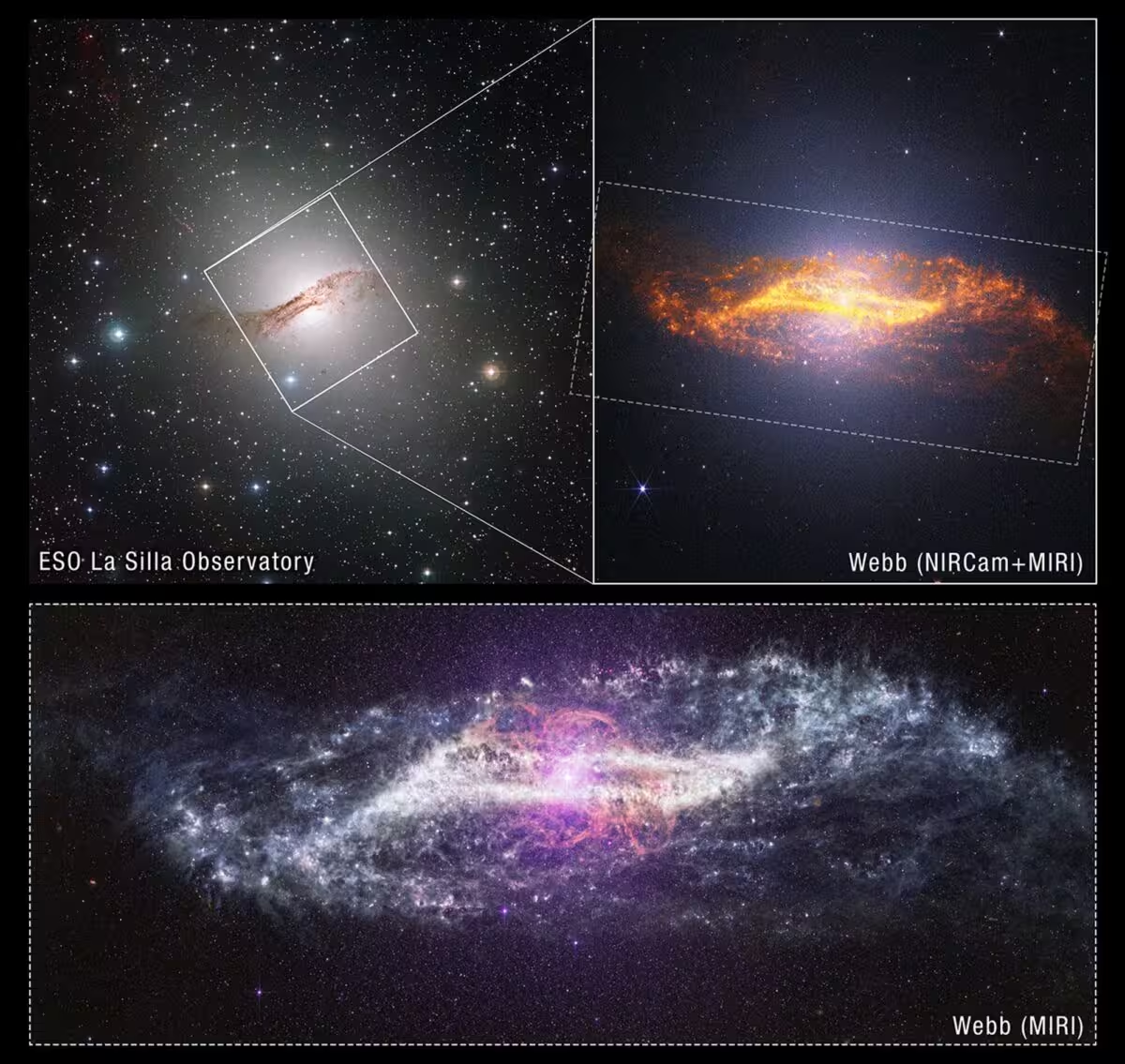
Infrared Insights Redefine Galactic Collision Studies
Webb’s latest portraits of Centaurus A demonstrate how infrared astronomy can uncover regions that remain invisible at optical wavelengths. By lifting the dust curtain, the telescope reveals the interplay of forces that drive galaxy evolution, from violent mergers to black‑hole feedback and star formation.
The findings also underscore the importance of combining data from successive generations of space observatories. Each mission contributes a new layer of understanding, building a more comprehensive picture of how galaxies and their central black holes grow together across cosmic time.
NASA highlighted the discovery of the warped dust band and the S‑shaped feature in the MIRI data, emphasizing the role of Webb in advancing the study of galaxy dynamics and black‑hole driven processes.
This article has been fact checked for accuracy, with information verified against reputable sources. Learn more about us and our editorial process.
Last reviewed on .
Article history
- Latest version
Reference(s)
- Sabia, Stephen. “NASA Webb Uncovers Unusual Galaxy Shaped by Cosmic Collision - NASA Science.”, July 6, 2026 NASA <https://science.nasa.gov/missions/webb/nasa-webb-uncovers-unusual-galaxy-shaped-by-cosmic-collision/>.
Cite this page:
- Posted by Karan Das