Canada Fossil Find Reveals Early Animals Were Moving and Reproducing 5-10 Million Years Earlier
Scientists uncover unexpected fossils in ancient Canadian rocks, illuminating a mysterious chapter that shaped animal evolution.
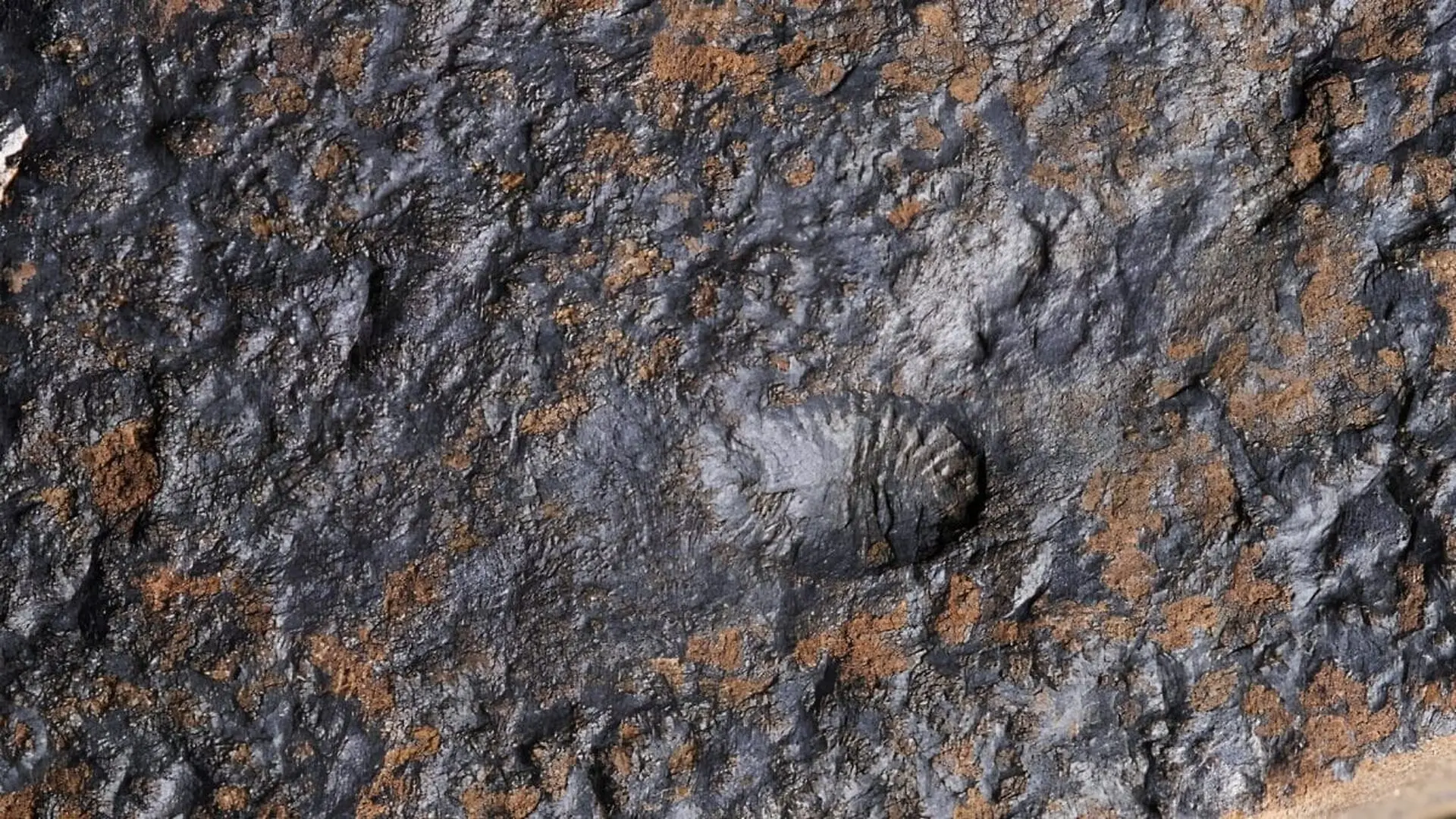
Researchers have uncovered a trove of 567‑million‑year‑old fossils in Canada’s Mackenzie Mountains, offering fresh insight into the early evolution of animal life. The finds push back the appearance of complex, mobile organisms and suggest that key animal behaviours emerged much earlier than previously believed.
The specimens belong to the enigmatic Ediacaran biota, a suite of soft‑bodied marine forms that rose after billions of years dominated by microbial life. Their preservation marks one of the first instances of macroscopic life displaying traits that echo modern animals.
North American Evidence Expands the White Sea Record
In a study appearing in Science Advances, scientists from the American Museum of Natural History and Dartmouth reported more than a hundred fossils recovered from the Mackenzie Mountains. The site hosts members of the White Sea assemblage—previously known only from Europe, Asia and Australia—making North America the newest continent to feature this group.
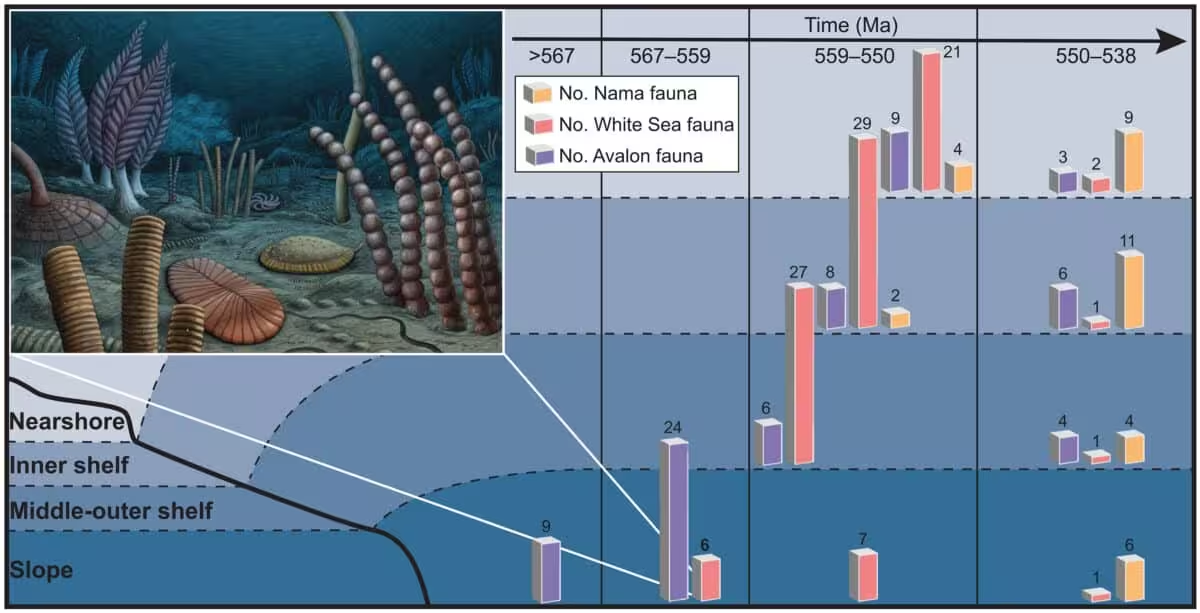
Dating indicates the Canadian fossils are 5–10 million years older than the oldest White Sea examples, placing some specimens within the older Avalon assemblage timeframe. This overlap hints that the three main Ediacaran intervals—Avalon (575‑559 Ma), White Sea (559‑550 Ma) and Nama (550‑538 Ma)—may have co‑existed more extensively than assumed.
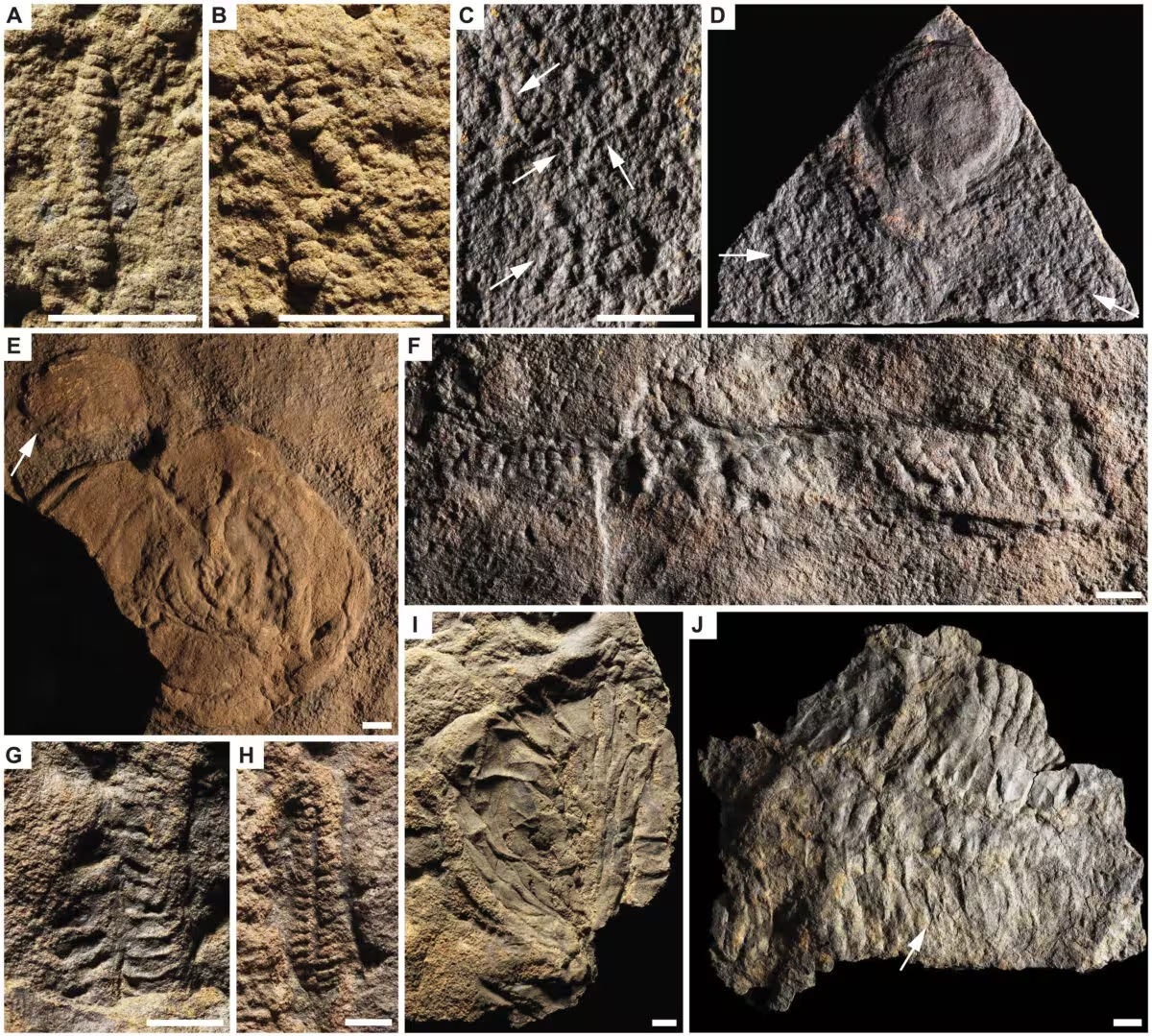
Six distinct organism groups identified at the site have never before been recorded from North America, filling a geographic gap in the White Sea fossil map.
“This is really exciting,” saidJustin Strauss, a co‑author of the study and associate professor of Earth and Planetary Sciences at Dartmouth. “Given our understanding of the regional geology in northwestern Canada, there is great potential here to revisit our understanding of Ediacaran Earth history.”
Early Animal Traits Evident in Fossil Morphology
Among the recovered forms, a Dickinsonia specimen—an iconic flat organism that glided along the seafloor—demonstrates locomotion without a mouth, likely absorbing nutrients through its ventral surface. Its shape has been likened to a divided pancake or a bathmat.
The team also documented Funisia, a tubular organism that formed dense clusters of similarly sized individuals. This fossil provides some of the oldest clues to sexual reproduction, inferred from the likely release of sperm and eggs into surrounding waters, a strategy seen in many modern marine species.
Kimberella, another specimen, possessed a muscular foot that scraped the substrate while feeding, positioning it as a potential early mollusk and perhaps the oldest known bilaterian—a creature with a defined front‑back axis, dorsal‑ventral sides, and left‑right symmetry. The researchers also identified Eoandromeda, a candidate for an early comb‑jelly with eight spiral arms.
Deep‑Sea Settings May Have Fueled Early Evolution
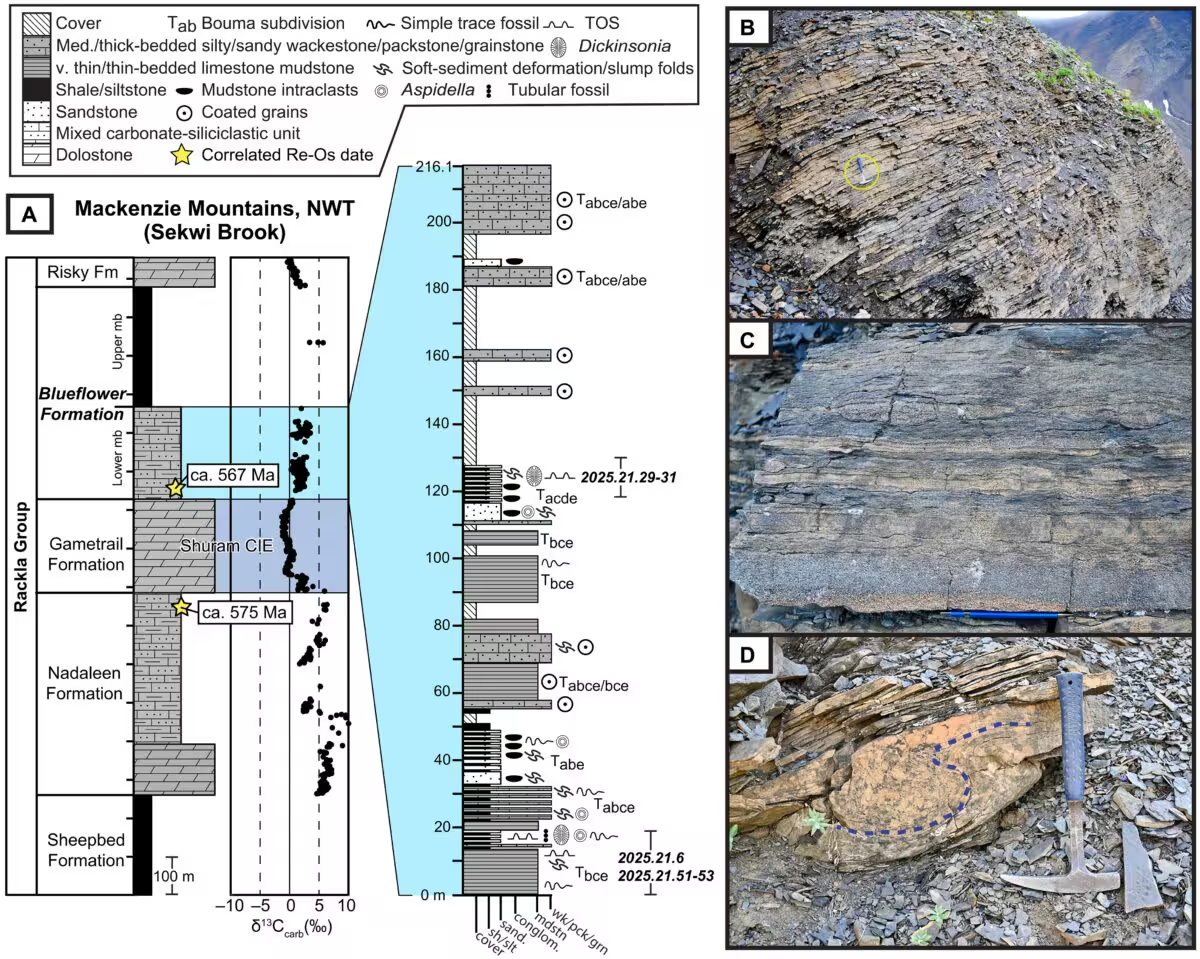
The authors argue that the Mackenzie Mountains fossils were deposited in deeper marine settings than those traditionally associated with the White Sea assemblage. This observation supports a model in which major evolutionary innovations originated in stable, deeper waters before spreading to shallower coastal zones.
Lead author Scott Evans notes that the relative constancy of temperature and oxygen in deep‑sea habitats could have offered a reliable backdrop for early animal life to diversify.
“These results suggest a pattern where evolutionary innovation begins in deeper environments and later spreads toward the coast,” Evans observed. “We think of the deep ocean as a dark, inhospitable place, but it is also relatively stable, with few fluctuations in things like temperature and oxygen essential to most animal life. This stability may have provided key opportunities to support early animal life.”
This article has been fact checked for accuracy, with information verified against reputable sources. Learn more about us and our editorial process.
Last reviewed on .
Article history
- Latest version
Reference(s)
- “Justin V. Strauss.”, October 19, 2015 Department of Earth and Planetary Sciences <https://earthsciences.dartmouth.edu/people/justin-v-strauss>.
- <https://www.science.org/authored-by/Evans/Scott+D>.
Cite this page:
- Posted by Hassan Raza