Superworms to the Rescue: How Tiny Larvae Are Replacing Chemicals for Cleaning Museum Skeletons
Scientists discover a new method to clean museum skeletons, offering a faster, less risky alternative to traditional delicate procedures.
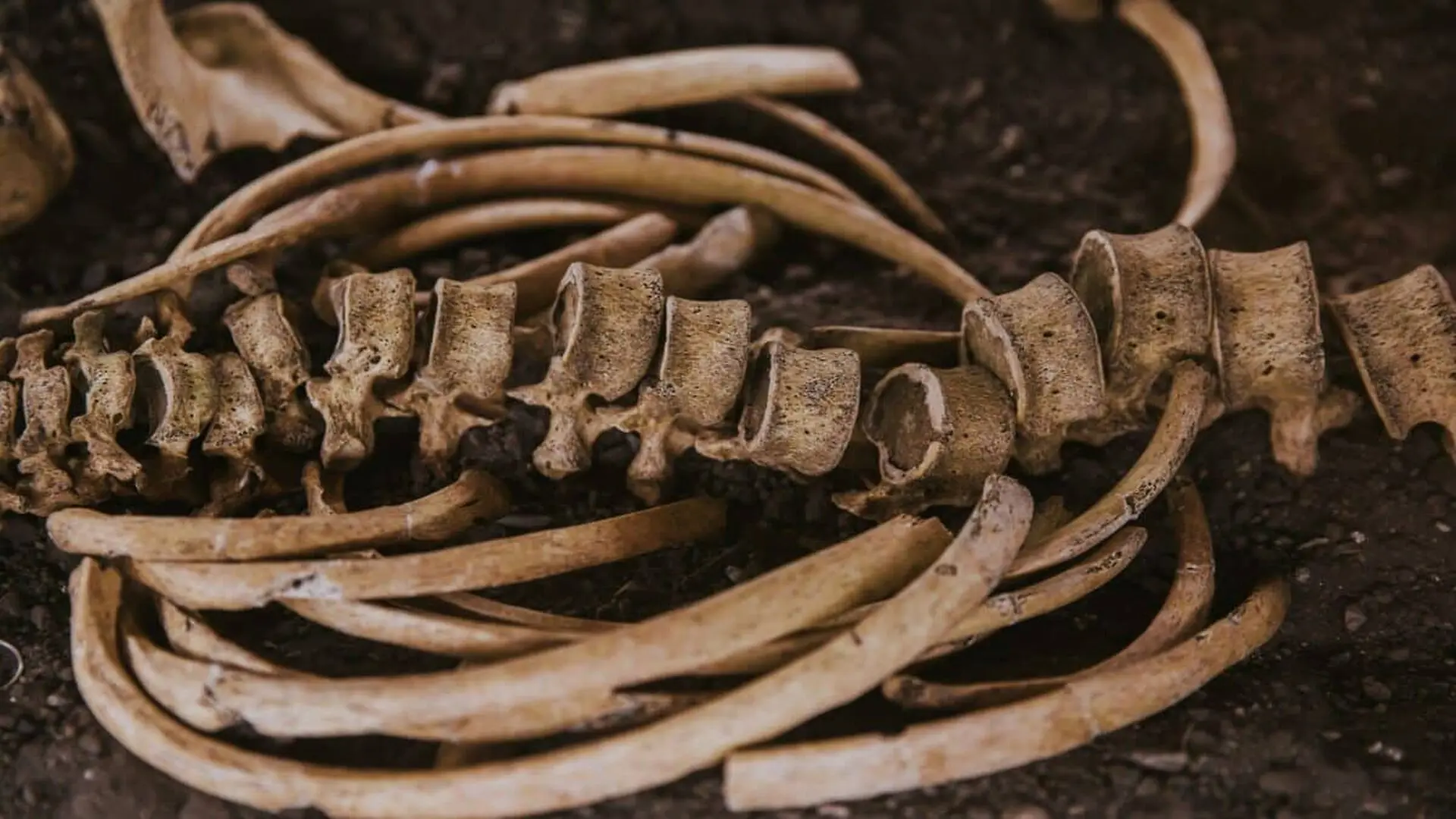
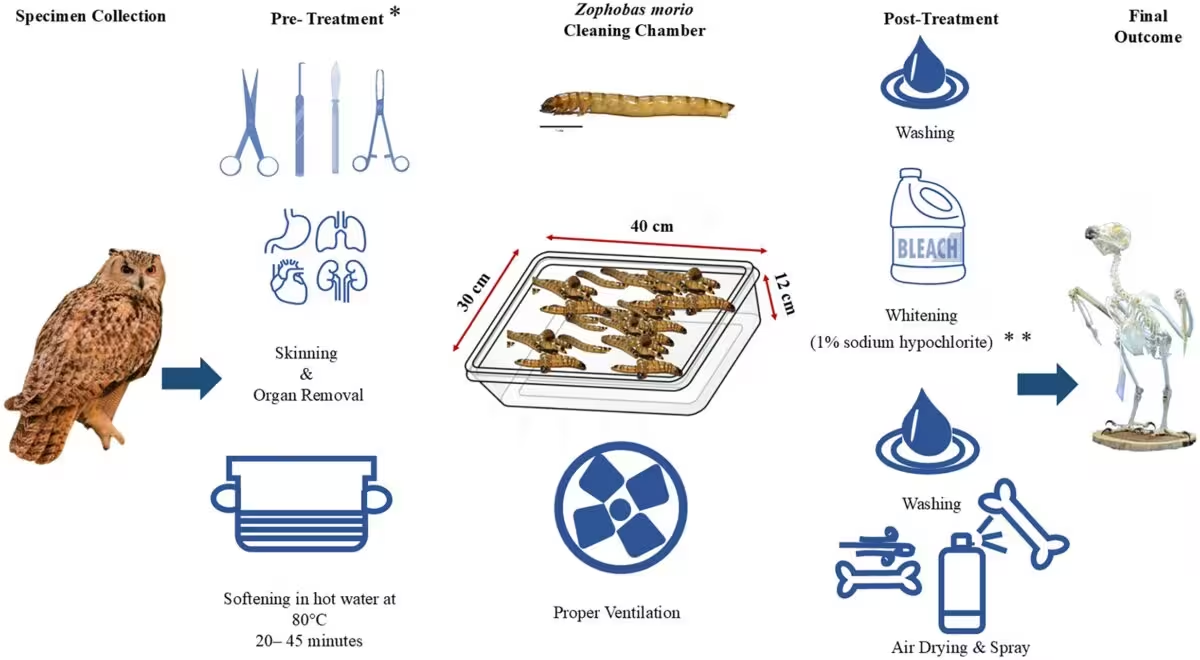
Researchers have identified a surprising new role for the larvae of the superworm (Zophobas morio): stripping flesh from animal skeletons destined for museum collections. The work, published in PLOS One, demonstrates that these insects can clear soft tissue quickly while sidestepping many of the drawbacks associated with conventional chemical baths or dermestid beetle colonies.
Preparing a clean skeleton is a painstaking task. Curators must eliminate every trace of muscle and skin without eroding the fine anatomical features that make each specimen valuable for research and public display. Finding a method that balances efficiency with ease of upkeep has remained a persistent hurdle for institutions worldwide.
Traditional Techniques for Skeleton Preparation
Historically, museums have relied on strong chemicals or enzymatic solutions to dissolve residual tissue, a practice that can prove costly and sometimes jeopardizes delicate bone structures. In recent years, many facilities have turned to biological cleaning using dermestid beetles, which are prized for their ability to consume flesh while generally leaving the underlying skeletal framework intact. Institutions such as the Natural History Museum in the United Kingdom and the Smithsonian National Museum of Natural History employ these insects for precisely this reason, according to the study.
“Unlike traditional chemical methods or dermestid beetle colonies, this approach preserves delicate bones, is environmentally friendly, safer for museum collections by minimizing the risk of pest infestation and makes colony maintenance much easier for museums,” explained the authors.
Despite their popularity, dermestid beetles pose practical challenges. Colonies can escape containment, and unnoticed eggs may hatch, creating a latent infestation risk for delicate collections. These concerns prompted the research team to test whether an alternative insect could perform the same cleaning function without the associated hazards.
Superworms Tackle a Spectrum of Animal Remains
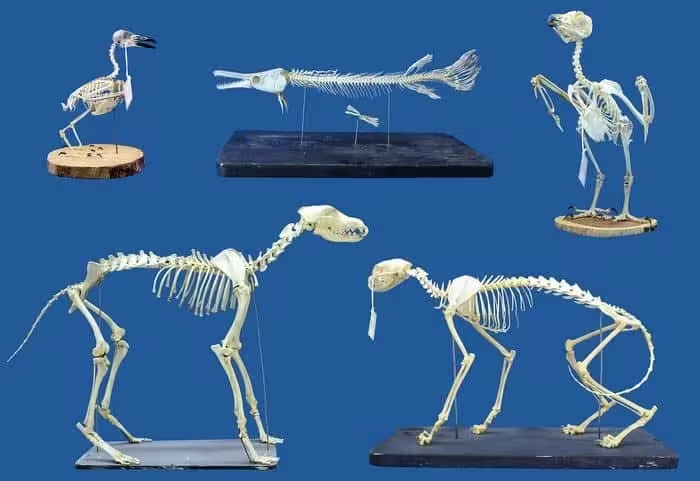
Two factors made superworms attractive candidates. First, when crowded they refrain from pupating, reducing the likelihood of unwanted escapees. Second, they are already mass‑produced as feed for pets, keeping costs low. In the laboratory, researchers placed varying numbers of larvae in sealed chambers alongside specimens that ranged from tiny Egyptian bats to a full‑size wolf. Depending on the animal’s dimensions, the worms completed the flesh‑removal phase within hours or over several days.
Niloofar Alaei Kakhki, a bioinformatician at the State Museum of Natural History Stuttgart and co‑author of the paper, told Science magazine that:
“Superworms are really fast compared to other traditional methods, they are more environmentally friendly, and their maintenance is super easy.”
Across the trials, the larvae efficiently cleared residual tissue while leaving the underlying bone structures largely untouched, a claim supported by visual comparisons of the cleaned specimens.
Optimizing Worm Load to Protect Fragile Bones
The investigation also highlighted the importance of balancing worm numbers against available flesh. When the supply of soft tissue was exhausted, excess larvae began to nibble on delicate bone surfaces. By systematically varying both specimen size and worm population, the team identified a ratio that maximized cleaning efficiency while minimizing bone damage.
The optimal range emerged as roughly 10 to 15 grams of superworms for every gram of carcass. Within this window, the insects consumed the flesh completely and halted further activity before harming the skeletal framework.
The findings, detailed in PLOS One, argue that superworm‑based cleaning preserves fine bone details, circumvents the hazards of harsh chemicals, and reduces the pest‑infestation risks linked to dermestid beetle colonies. Moreover, maintaining a superworm colony demands far less specialized equipment, offering a practical solution for institutions tasked with preparing large numbers of skeletal specimens.
This article has been fact checked for accuracy, with information verified against reputable sources. Learn more about us and our editorial process.
Last reviewed on .
Article history
- Latest version
Reference(s)
- <https://www.researchgate.net/profile/Niloofar-Alaie-Kakhki>.
- <https://www.science.org/content/article/these-flesh-eating-superworms-can-clean-skeleton-hours>.
- Rastekar, Fatemeh. “A practical and safe alternative method for skeletal cleaning for museum specimens using superworms (Zophobas morio).”, vol. 21, no. 7, pp. e0349669, doi: 10.1371/journal.pone.0349669. <https://journals.plos.org/plosone/article?id=10.1371/journal.pone.0349669&utm_source=pr&utm_medium=email&utm_campaign=plos006>.
Cite this page:
- Posted by Hassan Raza