New Research Says Hobbit Ancestors Lived Off Komodo Dragon Scraps, Not Hunting
Fossil study reveals Homo floresiensis likely survived by scavenging Komodo dragon kills, not hunting large prey.
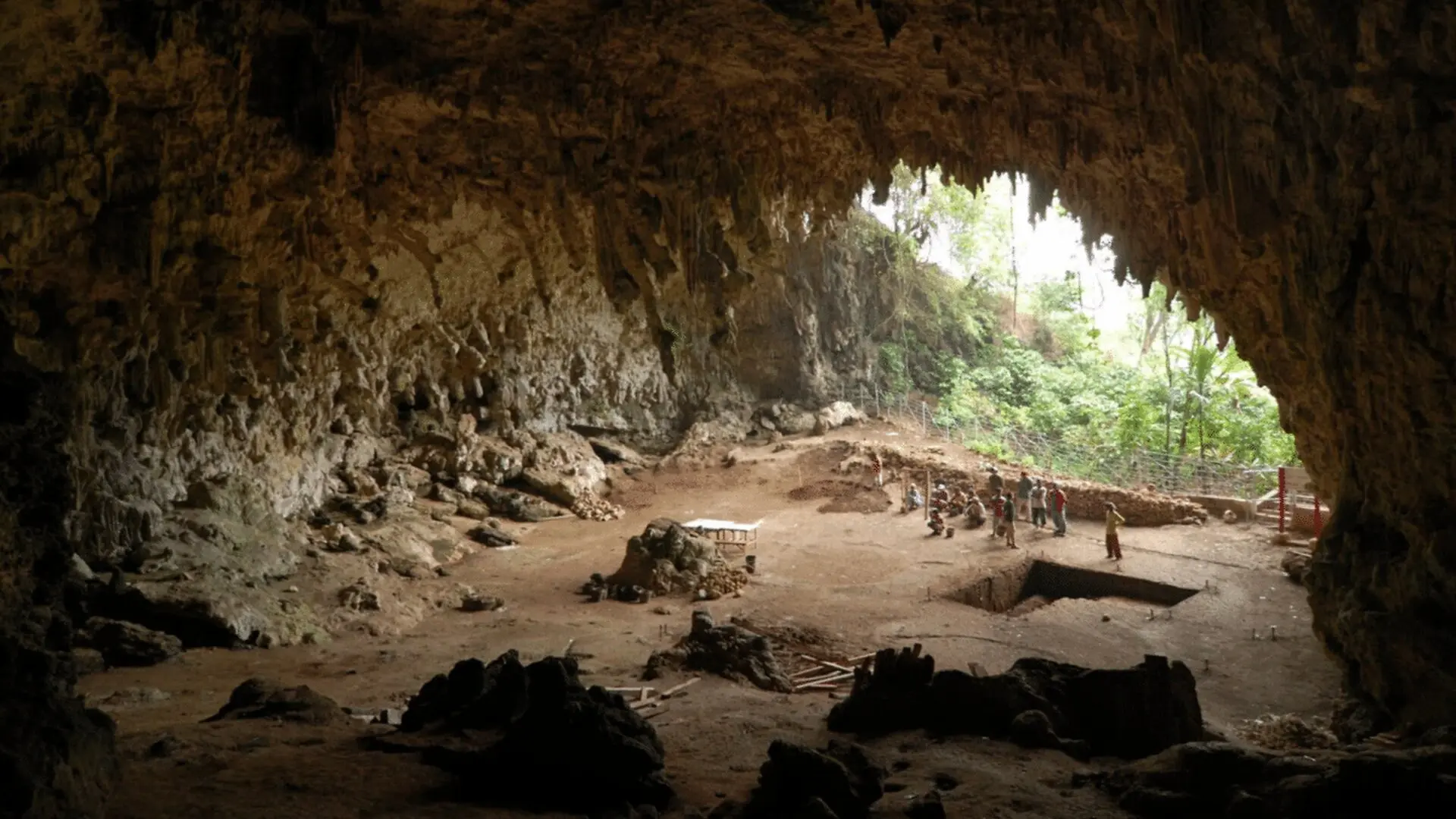
A fresh analysis of fossil remains from the Indonesian island of Flores is overturning the long‑standing view of Homo floresiensis as a skilled predator. By comparing ancient bone damage with marks produced by modern Komodo dragons, a team of researchers argues that the “hobbits” were more likely opportunistic scavengers, feeding on carcasses left behind by the island’s apex lizards.
Komodo dragon bite marks rewrite the story of Flores’ tiny hominins
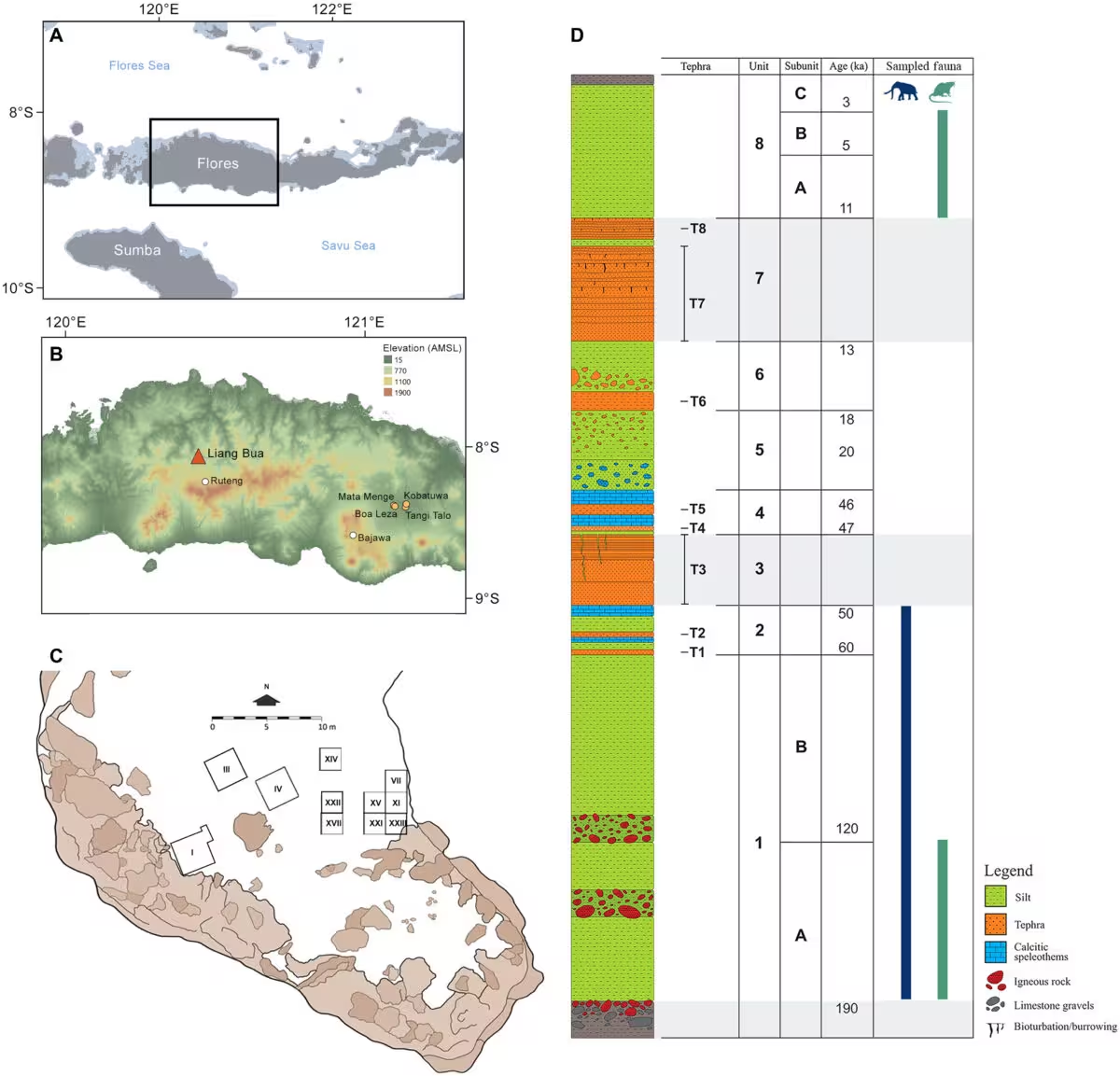
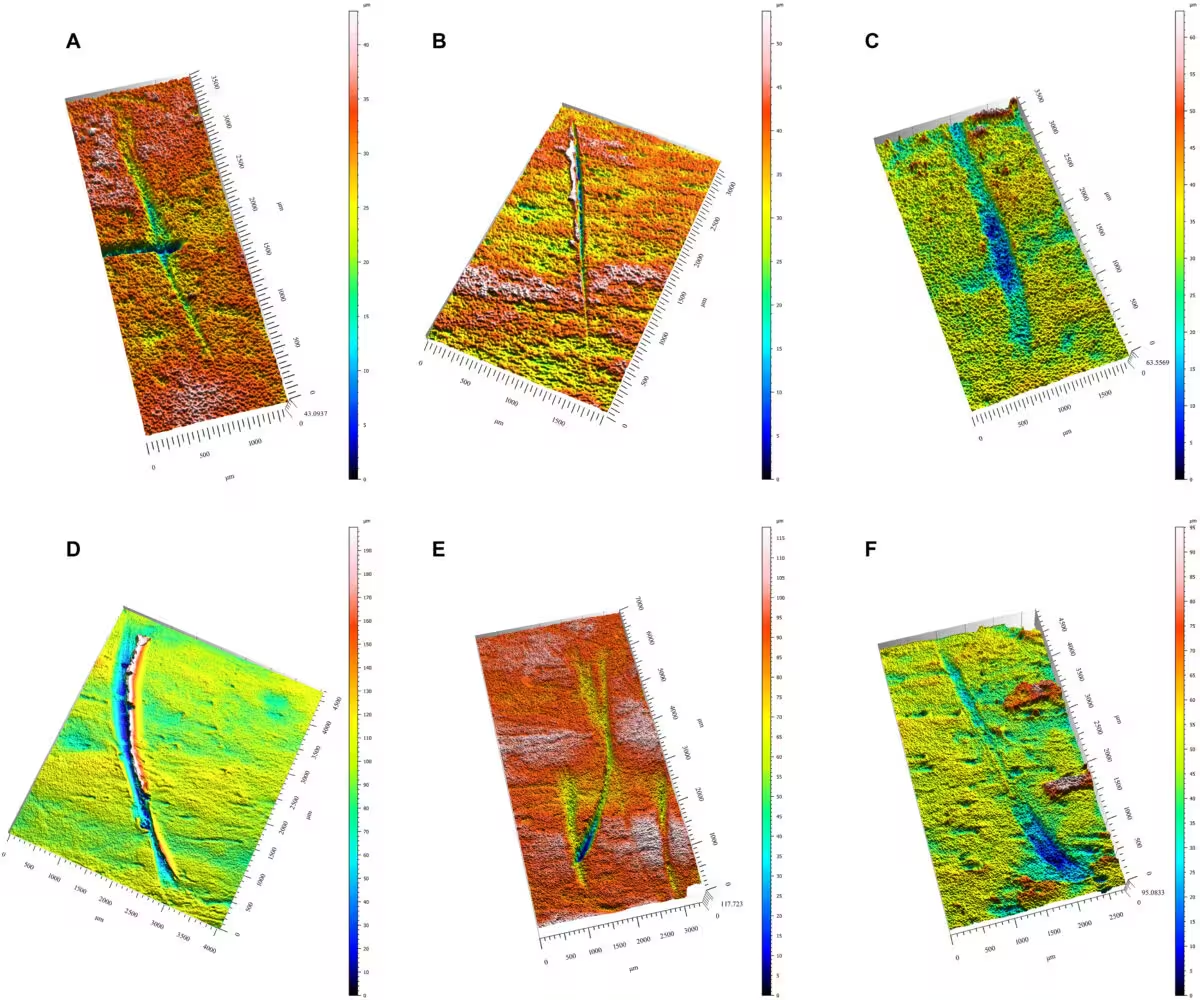
For two decades archaeologists linked the diminutive hominin to active hunting of the dwarf elephant Stegodon florensis insularis, largely because Stegodon bones and Homo floresiensis remains were found together at Liang Bua Cave. The new investigation, published in Science Advances, examined the microscopic scratches on fossilized Stegodon ribs. Instead of matching carnivore damage, the marks aligned closely with patterns generated when live Komodo dragons tore apart goat carcasses in a controlled experiment.
The authors note that Komodo dragons “are extremely skilled predators, ambushing unsuspecting prey while also relying on their keen sense of smell to locate decomposing flesh from up to several kilometers away,” a behavior that explains the concentration of marks on the most meat‑rich portions of the bones.
Scavenging, not hunting, may have fed the ‘hobbits’
When the researchers compared the experimental scores with the fossil record, they found a striking match on the forequarter and hindquarter elements—areas that modern dragons preferentially target. This pattern implies that Homo floresiensis likely arrived at a carcass after the dragon had finished the prime cuts, collecting whatever tissue remained.
The reinterpretation undermines earlier claims that the Flores dwarfs possessed sophisticated hunting tactics, coordinated group assaults, or the toolkits necessary to bring down dwarf elephants. Instead, a scavenging lifestyle would have required considerably fewer innovations, aligning more comfortably with their modest brain size—about one‑third that of modern humans.
Reassessing claims of fire use at Liang Bua
A separate line of evidence that had bolstered the “hunter‑fire‑maker” image involved several charred Stegodon bone fragments recovered from Liang Bua. The new analysis of over 3,000 specimens identified only a single piece bearing signs of burning. The authors argue that this outlier more plausibly reflects activity by later Homo sapiens populations, which occupied the site from roughly 46,000 years ago onward, well after Homo floresiensis had vanished.
“[It] is reasonable to conclude that past fire use at the site was the sole result of H. sapiens behavior that occurred from ~46 ka until present day, well after H. floresiensis and Stegodon disappeared from the area.”
If future work confirms this assessment, the Flores record would join a growing list of sites where controlled fire appears only after larger‑brained hominins entered the archaeological picture.
What the new picture means for Flores’ human story
Even without a reputation for big‑game hunting, Homo floresiensis remains an evolutionary marvel. Their ancestors managed to cross open sea gaps to reach Flores, a feat that still puzzles researchers. Once on the island, they coexisted with giant rats, dwarf elephants and the world’s largest lizards, carving out a niche that emphasized flexibility and opportunism.
The emerging view suggests that survival on Flores hinged less on technological sophistication and more on the ability to exploit leftovers in a predator‑rich environment. As additional fossils surface, scientists expect the narrative of these “hobbits” to continue evolving, reminding us that the path of human evolution is anything but linear.
This article has been fact checked for accuracy, with information verified against reputable sources. Learn more about us and our editorial process.
Last reviewed on .
Article history
- Latest version
Reference(s)
- Veatch, E. Grace., et al. “Taphonomic analysis at Liang Bua reveals the behavioral and technological capabilities of Homo floresiensis.” Science Advances, vol. 12, no. 27, July 3, 2026 American Association for the Advancement of Science (AAAS), doi: 10.1126/sciadv.aeb7219. <https://www.science.org/doi/10.1126/sciadv.aeb7219?__cf_chl_f_tk=RydJKCEHWpV4rFfstWumxTZDiTkThXkyBcZSbHT9h1o-1783170629-1.0.1.1-8VkZO0XiSx0TiZp8kto0vSoDtuSc_SZmuri2Y3UJg70>.
Cite this page:
- Posted by Hassan Raza