Four Ancient Snakes Found Curled Together Reveal 38 Million Year Old Hibernation Secret
Four ancient snakes discovered fossilized together in Wyoming offer new insights into how early reptiles survived the cold 38 million years ago.
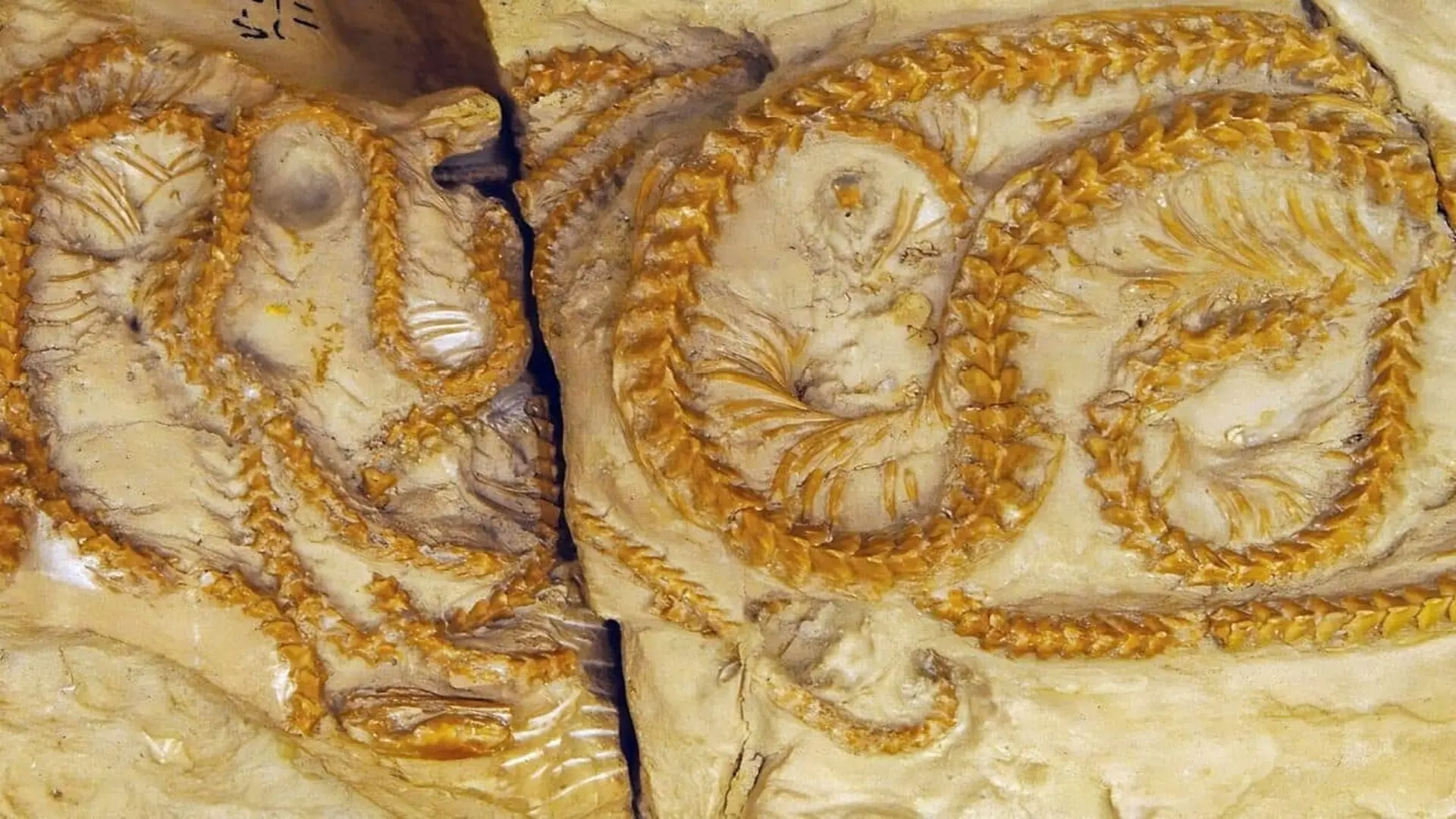
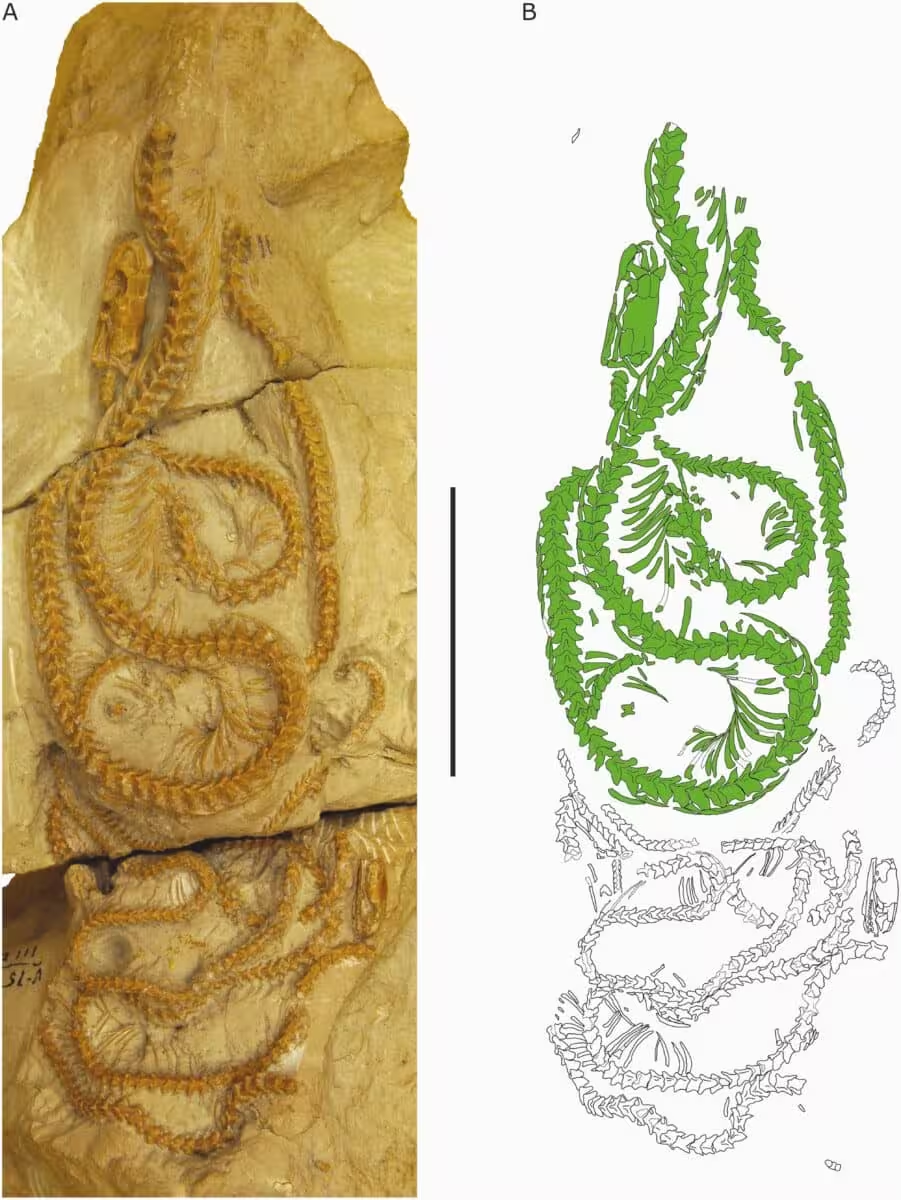
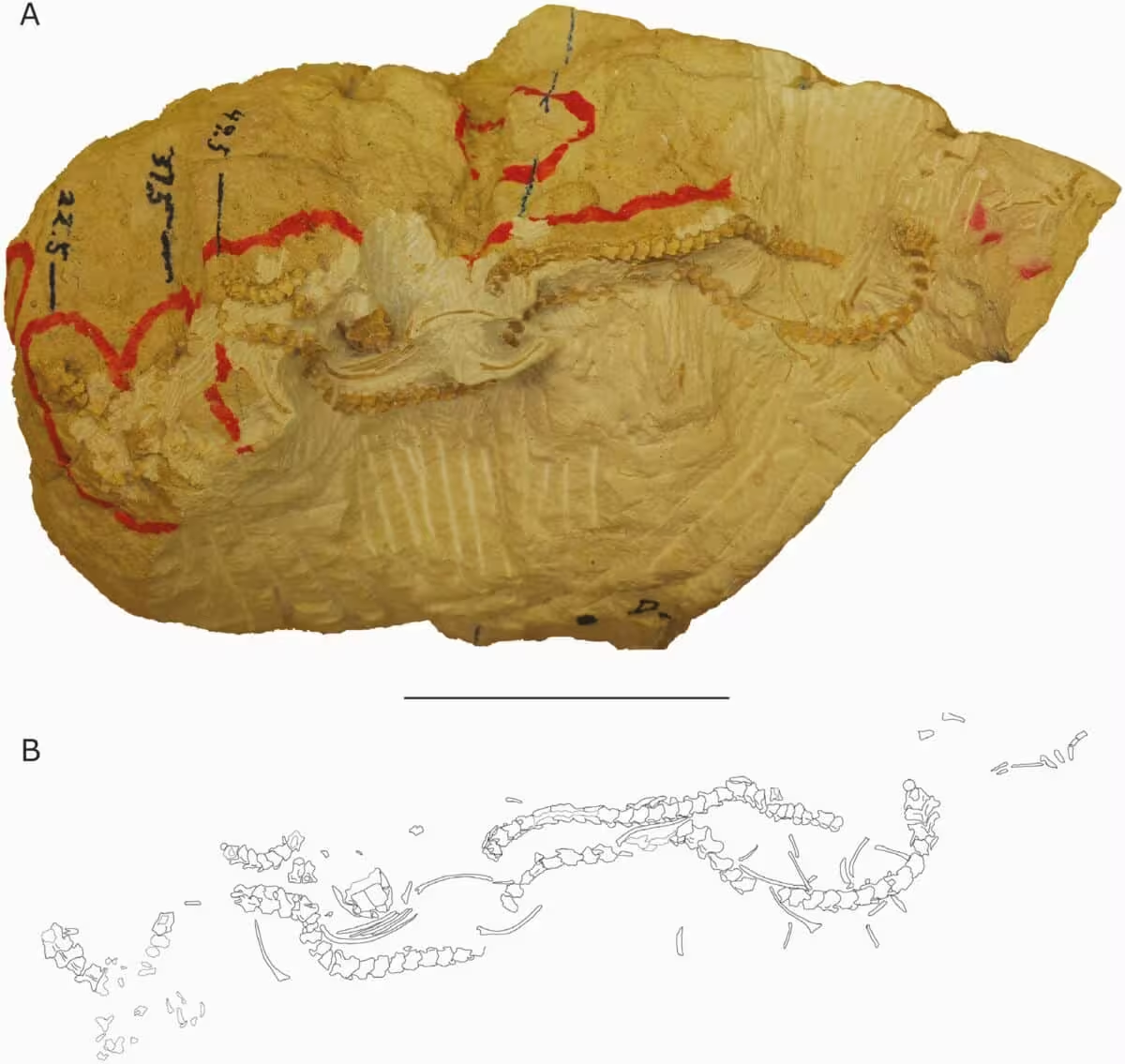
A remarkable discovery in Wyoming has provided paleontologists with a rare, 38-million-year-old window into the evolutionary history of snakes. Researchers have identified a new species, Hibernophis breithaupti, preserved in a state of near-perfect articulation. Because snake skeletons are composed of delicate, lightweight bones that typically scatter shortly after death, finding even one complete specimen is extraordinary. The recovery of four individuals intertwined in a single burrow is an unprecedented find, offering fresh insights into the origins of modern rubber boas.
Ancient Origins of Modern Boas
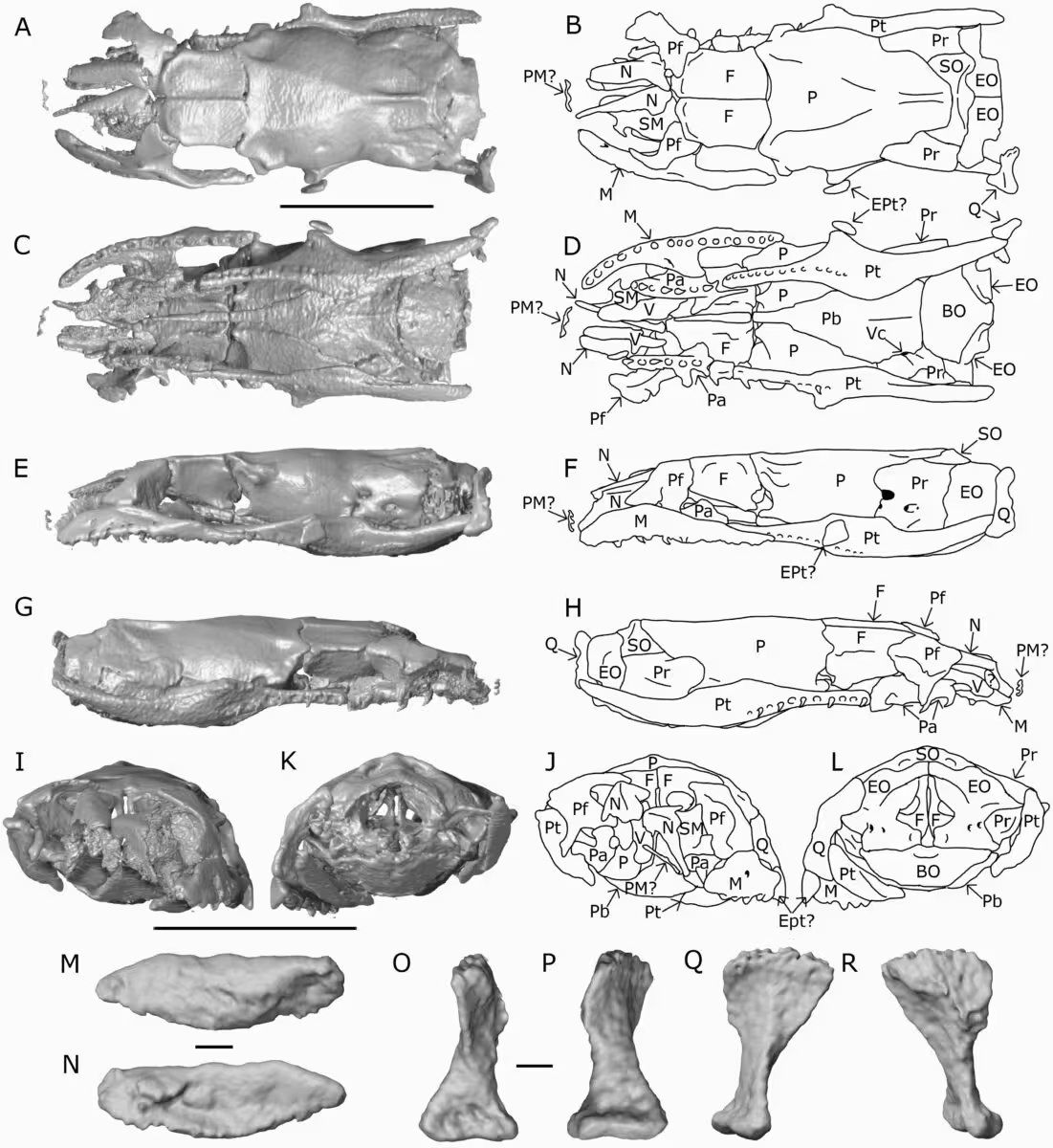
Led by University of Alberta professor Michael Caldwell, the research team identified H. breithaupti as an early member of the Booidea group, which includes contemporary boas and pythons. These fossils suggest a significant evolutionary link to rubber boas—small, secretive, and fossorial snakes that inhabit parts of North America today. According to the study, this discovery shifts the focus of early boa evolution toward the northern and central regions of North America, challenging previous assumptions that these reptiles primarily developed in warmer climates.
“Modern boas are widespread in the Americas, but their early evolution is not well understood,” Caldwell and his team noted. “These new and very complete fossils add important new information, in particular, on the evolution of small, burrowing boas known as rubber boas.”
Volcanic Preservation in the Early Oligocene
The pristine condition of the fossils is attributed to a unique geological event during the Early Oligocene. As the Southern Basin and Range Volcanic System remained active, massive quantities of volcanic ash blanketed the region. These remains were encased within the fine, sandy mudstone of the White River Formation. Experts believe a localized flood event likely ended the lives of these snakes, trapping them in their burrow and shielding them from the typical taphonomic processes that usually destroy fragile skeletal remains.
“Fossilization is a rough process. You need exactly the right conditions to preserve something,” said Caldwell. “Modern garter snakes are famous for gathering by the thousands to hibernate together in dens and burrows.”
Evidence of Ancient Social Behavior
Beyond the anatomical significance, the findings published in the Zoological Journal of the Linnean Society suggest that communal hibernation may have been an established survival strategy for snakes for tens of millions of years. Much like modern snakes that huddle together in dens to regulate temperature, these ancient reptiles appear to have engaged in similar social behaviors to survive the cold.
Caldwell expressed that observing such behavioral evidence from the deep past is remarkable. If confirmed, this would represent one of the earliest known examples of group hibernation in the fossil record, providing a rare and intimate view into how these creatures adapted to ancient environments.
This article has been fact checked for accuracy, with information verified against reputable sources. Learn more about us and our editorial process.
Last reviewed on .
Article history
- Latest version
Reference(s)
- “Michael Caldwell - [email protected].” <https://apps.ualberta.ca/directory/person/mikec>.
- Croghan, Jasmine A., et al. “Morphology and systematics of a new fossil snake from the early Rupelian (Oligocene) White River Formation, Wyoming.” Zoological Journal of the Linnean Society, vol. 203, no. 3, June 19, 2024 Oxford University Press (OUP), doi: 10.1093/zoolinnean/zlae073. <https://doi.org/10.1093/zoolinnean/zlae073>.
Cite this page:
- Posted by Hassan Raza