Fossilized Bite Marks Reveal Giant Crocodiles Hunted Massive Mammals 12 Million Years Ago
Ancient fossil bones from Colombia reveal evidence of massive crocodilians hunting giant mammals, offering a rare glimpse into an intense prehistoric ecosystem.
Paleontologists have uncovered the first direct physical evidence that massive crocodylians acted as apex predators in the Neotropics during the Middle Miocene, roughly 12 million years ago. Analysis of four fossilized bones from Colombia’s Huila Department reveals that these reptiles hunted large herbivorous mammals weighing between 600 and 1,800 kilograms.
The fossils originated from the La Venta assemblage, an area renowned as one of the most significant vertebrate sites in South America. This discovery bolsters long-standing ecological theories suggesting that large crocodylians dominated the predatory landscape of the era, a time when mammalian carnivores played a comparatively minor role in the ecosystem.
Violent Encounters Etched in Bone
The research, published in the Journal of Vertebrate Paleontology, details bite marks found on the remains of three distinct herbivores: Pericotoxodon platignathus, Xenastrapotherium kraglievichi, and Granastrapotherium snorki. The damage—which includes punctures, pits, fractures, and crushed cortical bone—mirrors the predatory signatures observed in modern crocodilian feeding.
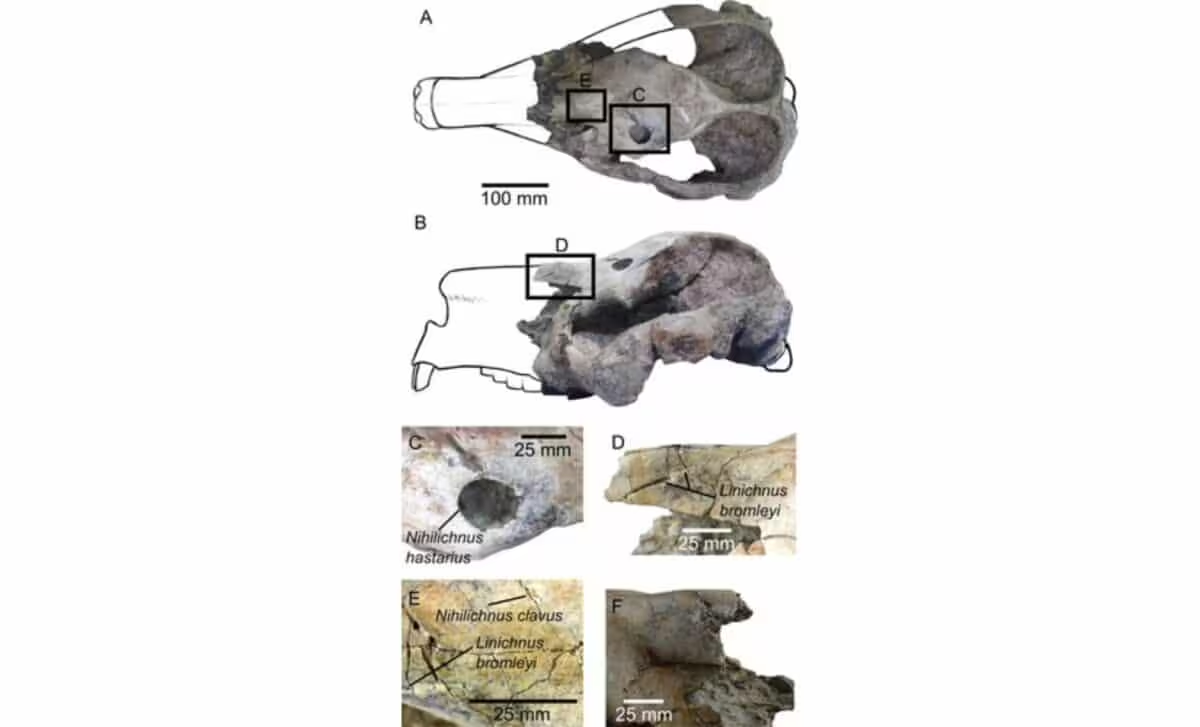
A striking example is a Pericotoxodon skull featuring a 29.2-millimeter puncture on the frontal bone, classified as Nihilichnus hastarius. Its dimensions and structural characteristics align with the teeth of Purussaurus neivensis, the most formidable crocodyliform within the La Venta fossil record. Biomechanical modeling of the damage indicates the predator exerted a force approaching or exceeding 40,000 newtons per tooth, a level of pressure consistent with Purussaurus’s known bite strength.
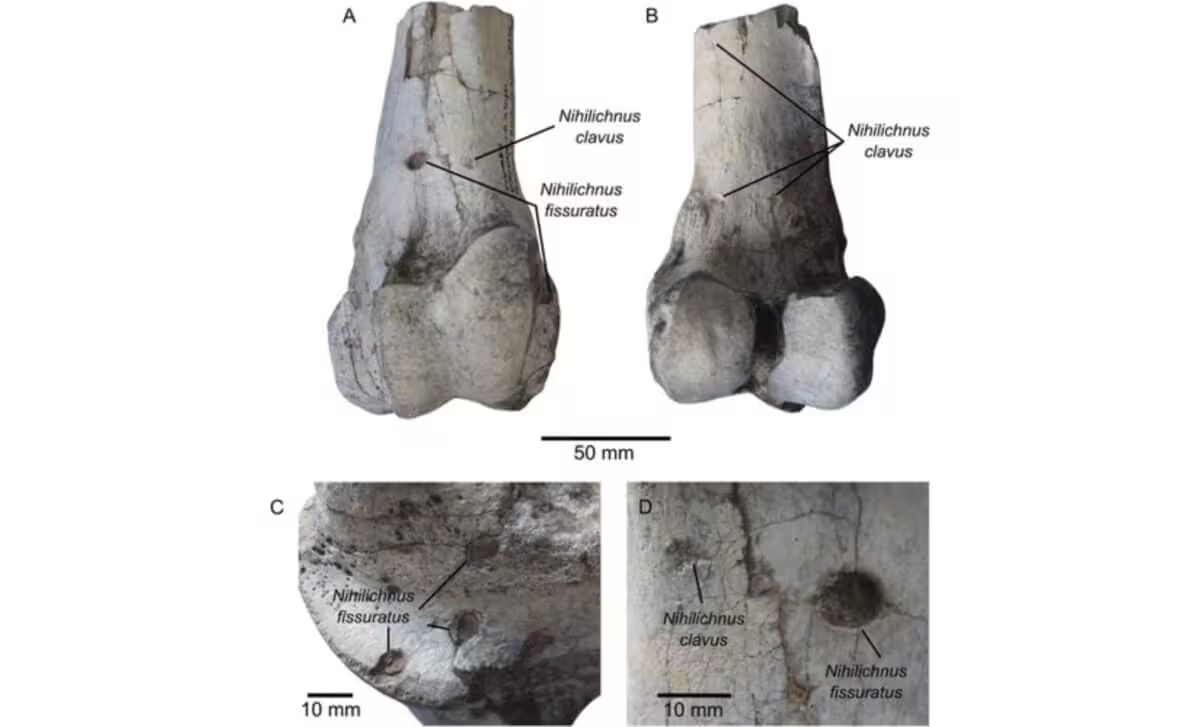
Evidence on a Pericotoxodon femur and two astrapothere jawbones further illustrates the severity of these attacks. The femur exhibits nine distinct traces, including bisected punctures characteristic of teeth with sharp cutting edges.
A Specialized Predator Strategy
The positioning of the injuries offers a glimpse into the hunting tactics of these ancient giants. Many of the marks are concentrated on the facial region of the prey, a behavioral pattern closely resembling the strike techniques used by modern saltwater and Nile crocodiles to secure and subdue large animals.
In one instance, a Xenastrapotherium jaw appears to preserve the sequence of a hunt followed by scavenging. While the primary damage was attributed to the massive Purussaurus, a set of narrower, parallel grooves suggested a secondary encounter with Langstonia huilensis. Given that Langstonia was significantly smaller than its 1,600-kilogram prey, researchers suggest it was likely scavenging on a carcass already dispatched by a larger predator.
While the frequency of these interactions is still being studied—as no comprehensive survey of bone-surface modifications at La Venta has yet been undertaken—these findings confirm that ancient crocodylians were capable of and frequently engaged in hunting some of the largest mammals in their environment.
This article has been fact checked for accuracy, with information verified against reputable sources. Learn more about us and our editorial process.
Last reviewed on .
Article history
- Latest version
Reference(s)
- Wilson, Oscar E.., et al. “Physical evidence of crocodylian predation on ungulates in the Middle Miocene of Colombia.” Journal of Vertebrate Paleontology, August 16, 2026 Informa UK Limited, doi: 10.1080/02724634.2026.2701154. <https://www.tandfonline.com/doi/full/10.1080/02724634.2026.2701154>.
Cite this page:
- Posted by Hassan Raza