Mining Blasts Expose Deep Flaw In Popular Vibration Trenches
Simulations reveal that 16-meter trenches successfully shield nearby buildings from destructive shockwaves, but fail to prevent mine wall collapse.
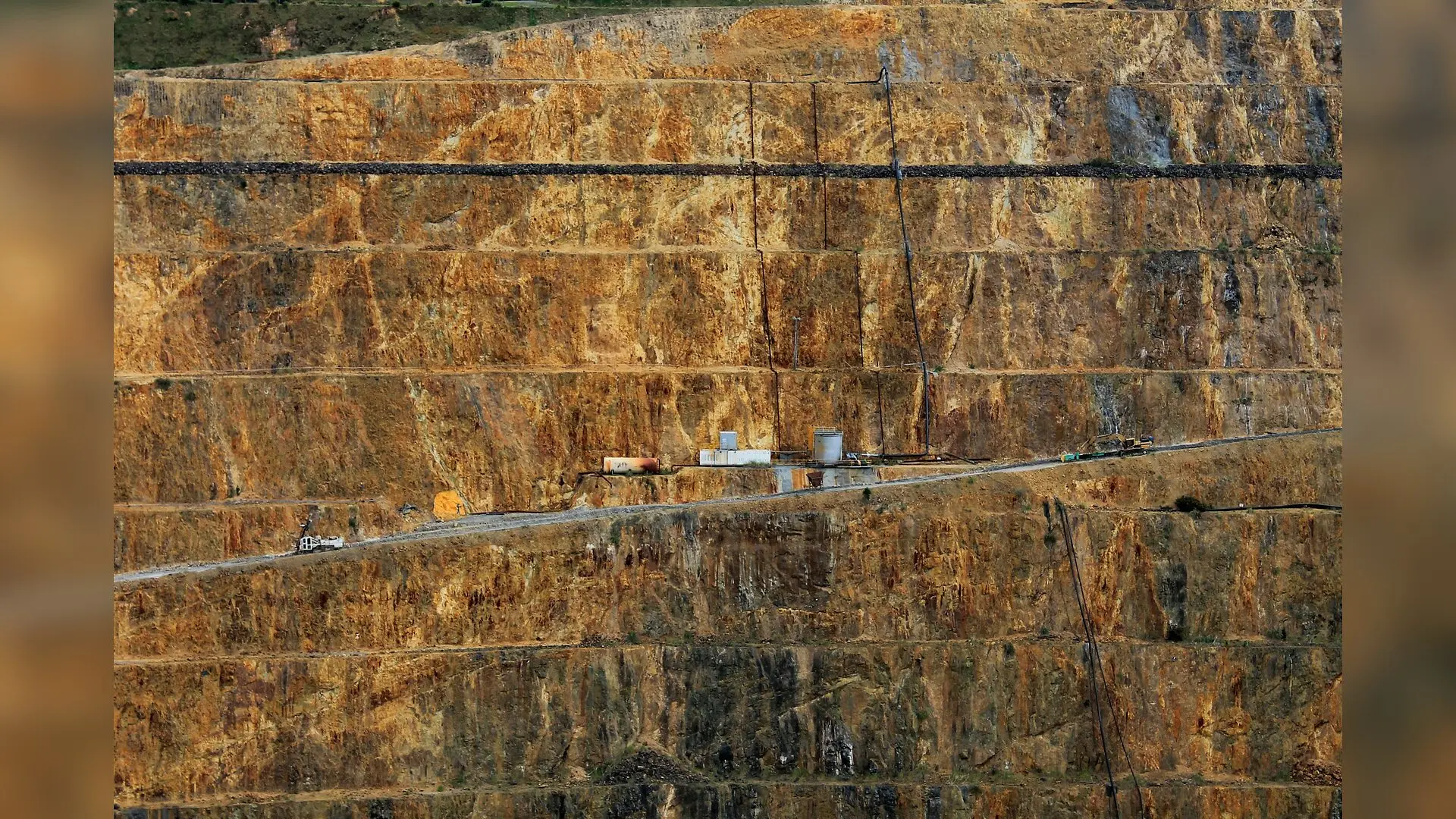
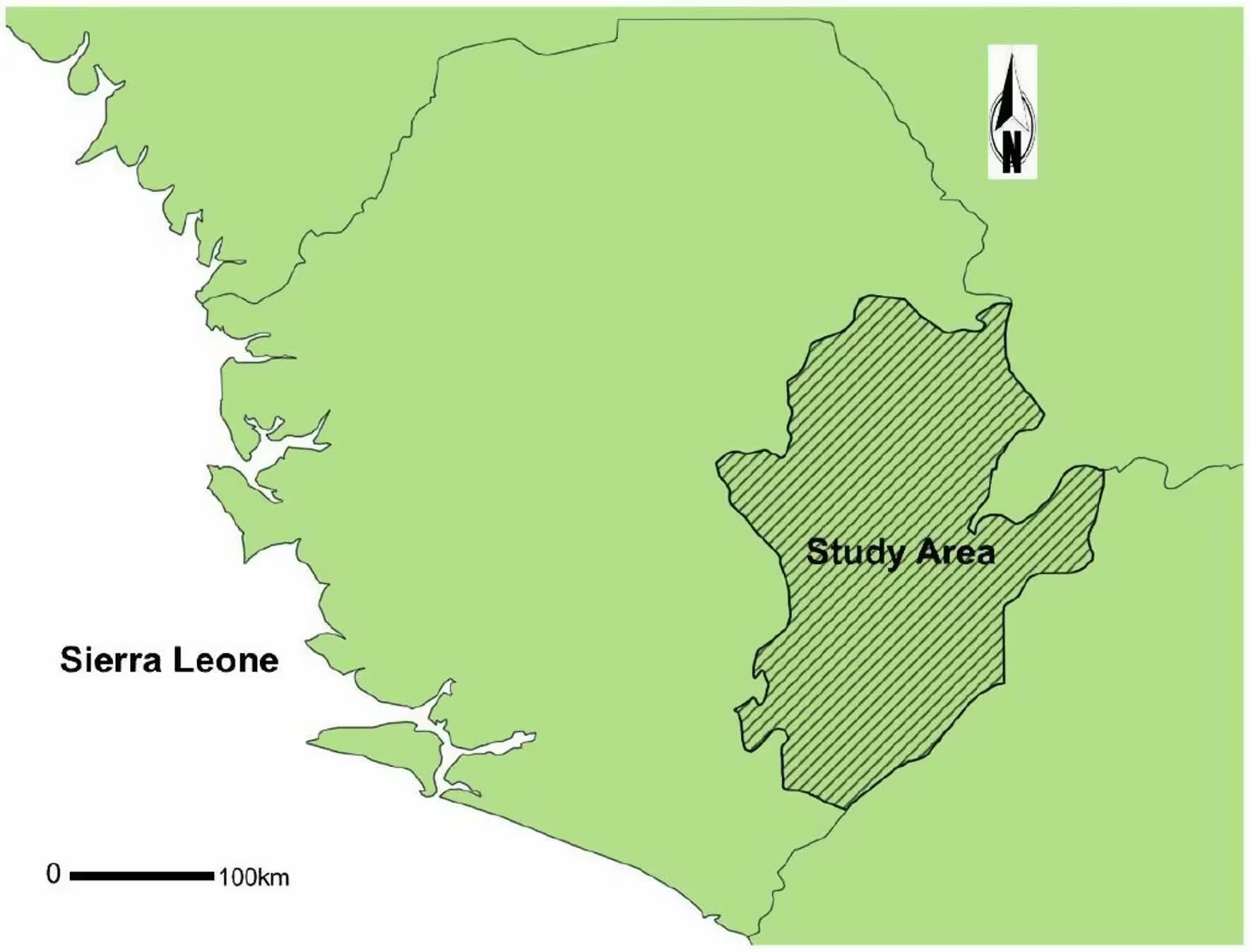
When mining engineers set off explosives to break apart hard rock, powerful shockwaves ripple through the ground, threatening nearby towns and destabilizing open-pit mine walls. Researchers investigating the Koidu Mine in Sierra Leone have discovered that digging deep protective trenches can successfully shield surface structures from these violent tremors, yet the same tactic completely fails to protect the stability of steep mine slopes.
The study, published in PLoS One (read the study), was led by Ibrahim Ahmed Kanu and colleagues to address the persistent hazard of blast-induced ground vibrations in surface mining operations. Operating heavy machinery and using explosives are vital for extracting minerals efficiently, but the resulting shockwaves create severe environmental and structural challenges for nearby communities and operational pit walls.
How Ground Tremors Threaten Buildings and Slopes
Ground motion from a blast radiates outward in waves that put stress on everything in their path. For residential buildings located just 50 meters away from the blast source, these vibrations create foundation-level shaking. At the Koidu Mine site, a baseline test without any protective trenching recorded a peak particle velocity of 7.94 millimeters per second at the nearest structure. Peak particle velocity measures how fast the ground moves as a wave passes by, serving as a primary indicator for potential structural damage.
While this baseline velocity remained below the United States Bureau of Mines standard limit of 12.7 millimeters per second, it exceeded the stricter German standard guideline of 5 millimeters per second established for sensitive structures. Lighter brick and mortar buildings near the mine experienced higher vertical accelerations and ground displacements compared to heavier concrete structures, leaving them vulnerable to cumulative fatigue and cracking over time.

Testing Deep Trenches as Wave Barriers
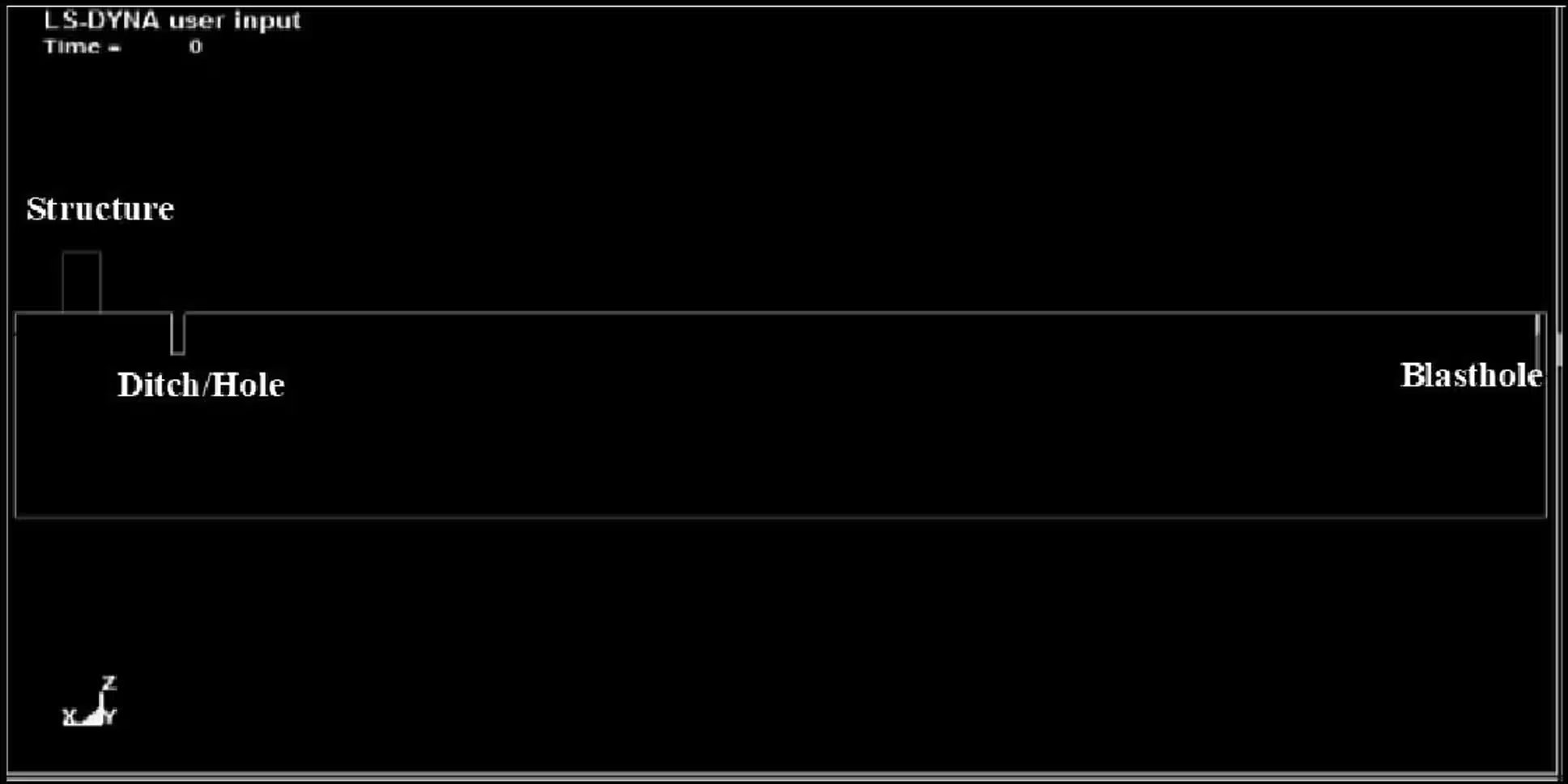
To block these destructive shockwaves before they reached nearby receptors, the research team developed a sophisticated three-dimensional computational model using ANSYS LS-DYNA software. They simulated a standard 15-meter-deep blast hole charged with emulsion explosives and tested the effects of carving empty vibration isolation trenches between the blast source and the protected zone. The team evaluated trench depths of 10 meters, 16 meters, and 22 meters, all maintaining a constant width of 1.5 meters.
The numerical simulations revealed that trenches act as effective wave barriers by reflecting incoming surface energy and creating a shadow zone behind them. Without a trench, peak particle velocity reached 7.94 millimeters per second. Introducing a 10-meter trench cut that velocity down to 4.26 millimeters per second, marking a 46 percent reduction. Digging the trench deeper to 16 meters reduced the velocity to 3.01 millimeters per second, achieving a 62 percent reduction.
The Law of Diminishing Returns at 16 Meters
Extending the trench even further to 22 meters lowered the peak particle velocity to 2.68 millimeters per second, representing a 66 percent reduction. However, comparing the 16-meter depth to the 22-meter depth showed only a marginal 4 percent additional improvement. This sharp drop in effectiveness demonstrated that a trench depth matching the 15-meter blast hole depth represents the practical optimum due to diminishing returns.
At this optimal depth of 16 meters, the ground vibration at the building foundation dropped well within internationally recognized safety limits. This proves that trench-based isolation is a highly viable strategy for minimizing structural risks to nearby community infrastructure in active mining environments.
Why Slope Stability Remains Unresolved
Despite the success in protecting buildings, the team found alarming results regarding pit slope stability. Using limit equilibrium methods to calculate the factor of safety under undrained blast loading conditions, the researchers assessed how rapid dynamic stress impacts the rock walls. Under static, drained conditions, the slope safety factor sat at a stable 1.829. However, during an explosive blast, generated shockwaves cause excess pore water pressure that crushes the shear strength of the rock mass by more than 94 percent.
Across all tested trench configurations, the safety factor plummeted to values between 0.101 and 0.105, which is drastically below the critical threshold of 1.0 required to prevent failure. Even the deepest 22-meter trench failed to prevent potential slope collapse. The data indicates that the critical vibration threshold required to trigger slope failure lies below 2.68 millimeters per second, meaning any standard mining blast compromises the already vulnerable rock.
Consequently, the authors emphasize that trenching alone is insufficient to guarantee slope safety. Managing mining risks effectively requires an integrated approach combining vibration trenches with advanced drainage systems to reduce pore water pressure, ground improvement techniques to enhance rock shear strength, and modified blast charge designs to lower overall energy output.
The research was published in PloS one on November 17, 2026.
This article has been fact checked for accuracy, with information verified against reputable sources. Learn more about us and our editorial process.
Last reviewed on .
Article history
- Latest version
Reference(s)
- Kanu, Ibrahim Ahmed., et al. “Geotechnical assessment of the effects of blast-induced ground vibrations on structural integrity and open-pit slope stability.” PLOS One, vol. 21, no. 11, November 17, 2026, pp. e0362874 Public Library of Science (PLoS), doi: 10.1371/journal.pone.0362874. <https://doi.org/10.1371/journal.pone.0362874>.
Cite this page:
- Posted by Michael Ellison