Urban Renewal Fails to Build Resilient Neighborhoods Without This One Element
A new survey of nearly 900 residents reveals that physical upgrades only improve community resilience when emotional attachment and active participation are present.
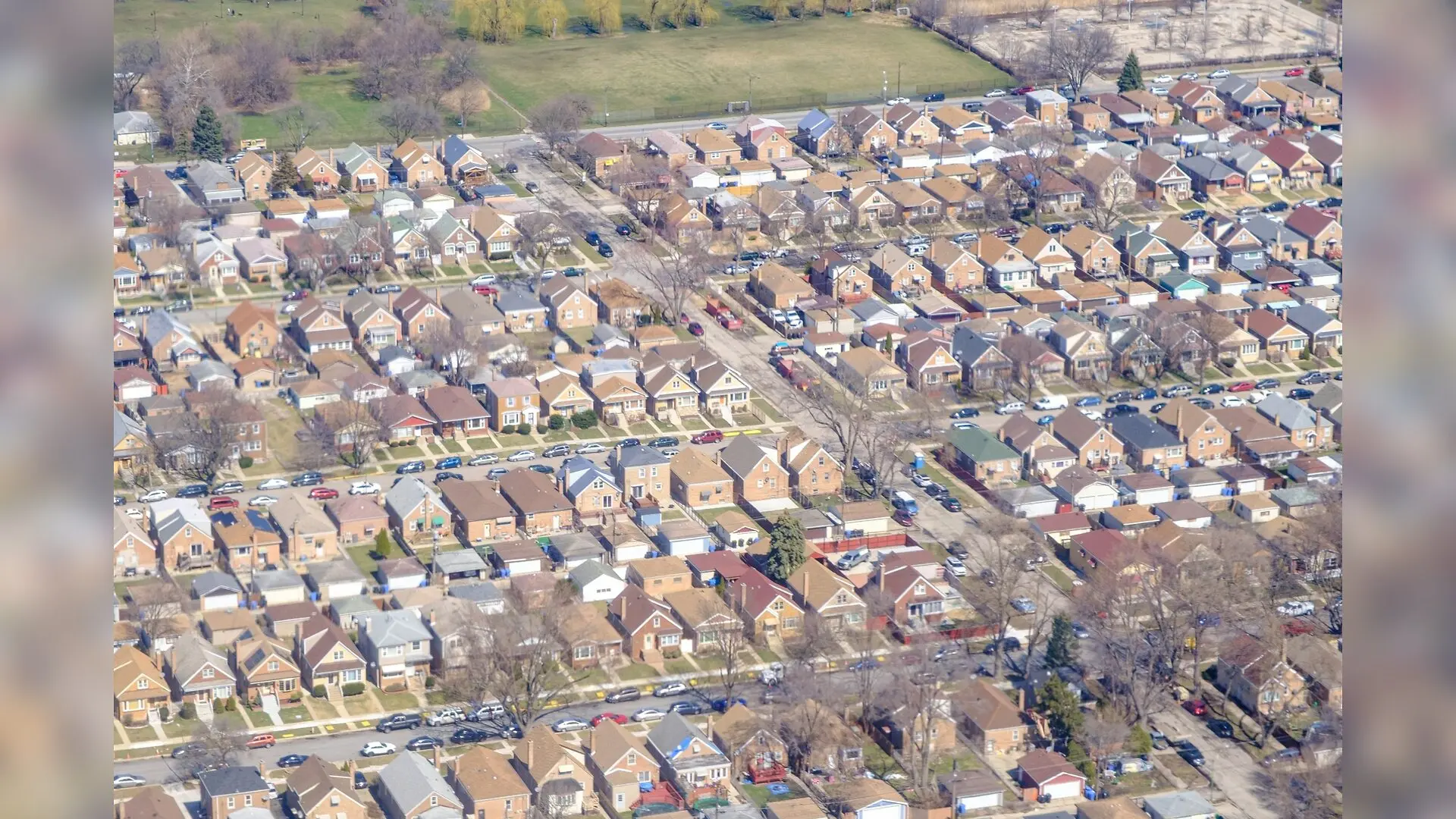
Neighborhood design improvements do not automatically build resilient community bonds on their own, according to a large survey of urban residents published in PLOS One. The research reveals that physical and service upgrades only foster stronger collective trust and mutual support when residents develop a deep emotional attachment to their neighborhood and actively take part in local affairs.
How Urban Renewal Connects Spaces and People
Urban community renewal has largely shifted away from large-scale demolition toward micro-regeneration, focusing on walkability, public spaces, and social integration. Researchers Bin Zhu and Lingxia Pan sought to understand how these physical upgrades translate into what they call Relational Resilience. This term describes a community’s capacity to maintain and adapt its relationship networks when facing social friction or environmental change.
The authors surveyed 892 residents across urban communities in China that had undergone recent neighborhood renewal. They measured a new design-centered concept called Design Connectivity, which combines Spatial Connectivity (accessible public spaces), Service Connectivity (coordinated community services), and Social Connectivity (shared spaces that encourage neighbor interactions).
The Critical Role of Emotional Attachment
When analyzing the survey responses using structural equation modeling, the authors discovered that Design Connectivity had no direct statistical link to Relational Resilience. Instead, the association was fully transmitted through psychological and behavioral steps. Better spatial and service design was strongly linked to higher Place Attachment, meaning residents viewed their neighborhood as meaningful and dependable.
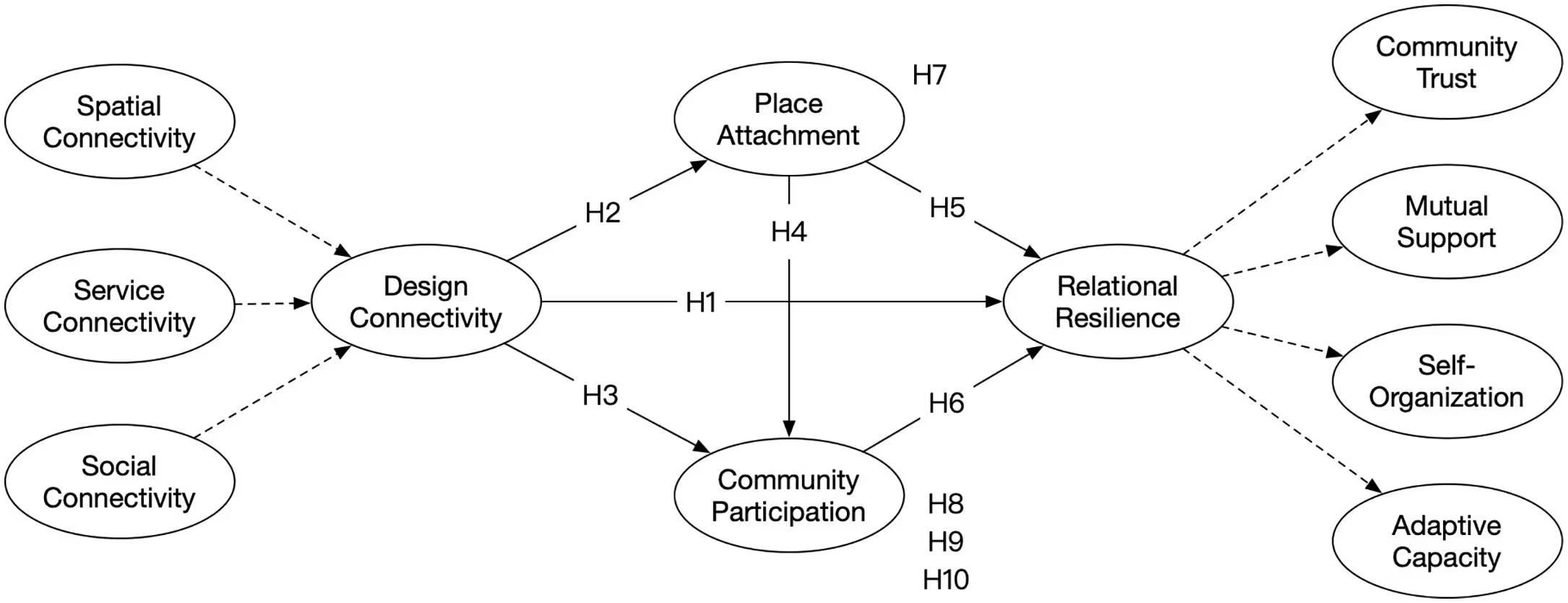
This emotional bond then fueled Community Participation, which subsequently connected to higher Relational Resilience. The findings indicate that physical updates alone cannot manufacture neighborhood trust. Renewal projects succeed in building resilience only when they cultivate emotional bonds and provide clear channels for residents to participate in local problem-solving.
Understanding the Limits of the Survey Data
The study relies on cross-sectional survey data collected at a single point in time, meaning the researchers cannot prove a strict cause-and-effect sequence. Furthermore, the survey sample was highly educated, with more than 83 percent of respondents holding a bachelor’s degree or higher, which means the patterns might not fully reflect the experiences of all demographic groups.
Future research will need to use longitudinal studies to track neighborhoods before and after renewal to confirm how design changes influence social dynamics over time. For city planners, the findings suggest that successful urban renewal must balance physical investments with programs that encourage local participation and strengthen community identity.
The research was published in PLOS One on November 19, 2026.
This article has been fact checked for accuracy, with information verified against reputable sources. Learn more about us and our editorial process.
Last reviewed on .
Article history
- Latest version
Reference(s)
- Zhu, Bin., et al. “How design connectivity is associated with relational resilience in urban community renewal through place attachment and community participation.” PLOS One, vol. 21, no. 11, November 19, 2026, pp. e0361506 Public Library of Science (PLoS), doi: 10.1371/journal.pone.0361506. <https://doi.org/10.1371/journal.pone.0361506>.
Cite this page:
- Posted by Michael Ellison