Space Station Grows Cartilage and Maps Blood Flow in Week‑Long Medical Breakthrough
NASA astronauts finish a week of advanced biomedical research on the ISS, paving the way for healthcare breakthroughs and long‑duration space missions.
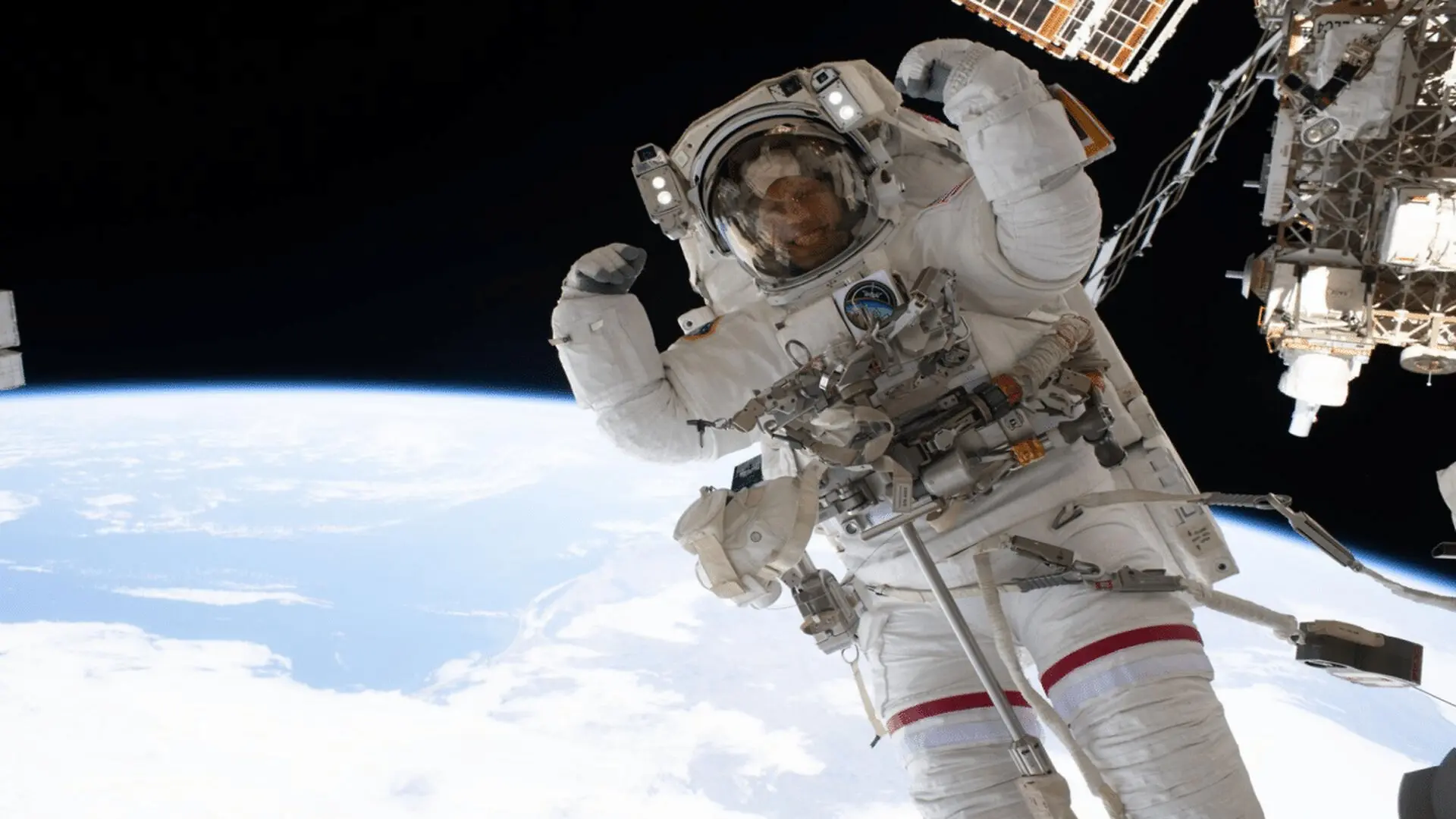
During a seven‑day stint on the International Space Station, the crew of Expedition 74 wrapped up a series of experiments that probe how the human body copes with weightlessness and set the stage for the next wave of astronauts. NASA highlighted advances in cartilage growth, cardiovascular monitoring and routine station upkeep that together inform long‑duration missions beyond Earth’s orbit and promise medical benefits for patients on the ground.
Tissue‑Engineering Experiments Test Cartilage Growth in Microgravity
In the Kibo laboratory, astronaut Jessica Meir tended to cartilage cell cultures inside the Life Science Glovebox, then transferred them to a dedicated incubator. The study seeks to determine whether the absence of gravity alters the way cartilage matrices organize, a question that could lead to engineered grafts for joint repair. Findings may eventually aid older adults, athletes and future explorers who need resilient joint tissue after prolonged space travel.
The work dovetails with broader objectives of preserving astronaut health on upcoming lunar and Martian missions, where immediate medical care will be limited. Each data point gathered on the ISS helps narrow the uncertainties surrounding extended human presence in deep space.
Cartilage repair, cardiac research, and cargo ops wrapped up the week for the Expedition 74 crew heading into a three-day weekend. The space station is also orbiting higher following a reboost maneuver on Wednesday. More… https://t.co/nJctx76NxWpic.twitter.com/usTejEUlQX
— International Space Station (@Space_Station) July 2, 2026
Microgravity Blood‑Flow Scans Reveal Vascular Adaptations
Astronaut Chris Williams and Roscosmos cosmonaut Sergei Mikaev deployed the newly installed Ultrasound 3 unit to image veins in the neck, shoulders and legs, gathering data on fluid redistribution in weightlessness. The scans aim to clarify whether the headward shift of blood in space heightens clot‑formation risk or triggers long‑term heart complications.
Station commander Sergey Kud‑Sverchkov joined the effort, applying laser‑based sensors to monitor capillary flow in the forehead, fingertips and toes. By catching subtle changes in the tiniest vessels, researchers hope to develop early‑warning diagnostics that could benefit both spacefarers and terrestrial patients with cardiovascular disorders.
Crew Maintenance and Cargo Handling Ready the Station for Incoming Visitors
Alongside scientific work, Expedition 74 performed a suite of upkeep tasks. NASA astronaut Jack Hathaway and ESA astronaut Sophie Adenot installed a new sleeping berth inside the Columbus module, expanding crew capacity for the next rotation. Hathaway also inspected hatch seals and stowed equipment from a recent spacewalk, while Adenot refreshed the onboard exercise log that tracks how physical training mitigates bone and muscle loss.
Williams kept the supply chain moving by reorganizing cargo inside the attached Cygnus XL vehicle, ensuring that research hardware and provisions remain accessible throughout the spacecraft’s six‑month docked phase. On the Russian side, cosmonaut Andrey Fedyaev serviced plumbing lines, calibrated an oxygen generator, ran diagnostics on the Nauka module’s computers and catalogued storage in Zarya, all critical steps for uninterrupted station operations.
Reboost Maneuver and Upcoming Soyuz Launch Set the Transition Timeline
NASA reports that a brief engine burn from the docked Progress 95 vehicle lifted the ISS to a higher orbit, positioning the laboratory for the planned arrival of Soyuz MS‑29 in mid‑July. The incoming crew will include Roscosmos cosmonauts Pyotr Dubrov and Anna Kikina, together with NASA astronaut Anil Menon. Following their docking, current Expedition 74 members—Kud‑Sverchkov, Mikaev and Williams—are slated to depart aboard Soyuz MS‑28, concluding their mission.
These coordinated activities underscore the ISS’s role as a continuously operating research platform, where each week contributes to a growing knowledge base that supports both future exploration and medical advances on Earth.
This article has been fact checked for accuracy, with information verified against reputable sources. Learn more about us and our editorial process.
Last reviewed on .
Article history
- Latest version
Reference(s)
- “https://go.nasa.gov/4weiFuk.” <https://t.co/nJctx76NxW>.
- “https://twitter.com/Space_Station/status/2072710299673940158/photo/1.” <https://t.co/usTejEUlQX>.
Cite this page:
- Posted by Hassan Raza