Three Tiny Mammals Reveal Arctic Life Thriving 73 Million Years Ago
A tiny Alaskan fossil uncovers an unexpected glimpse of the ancient Arctic, reshaping scientists’ view of the region’s past.
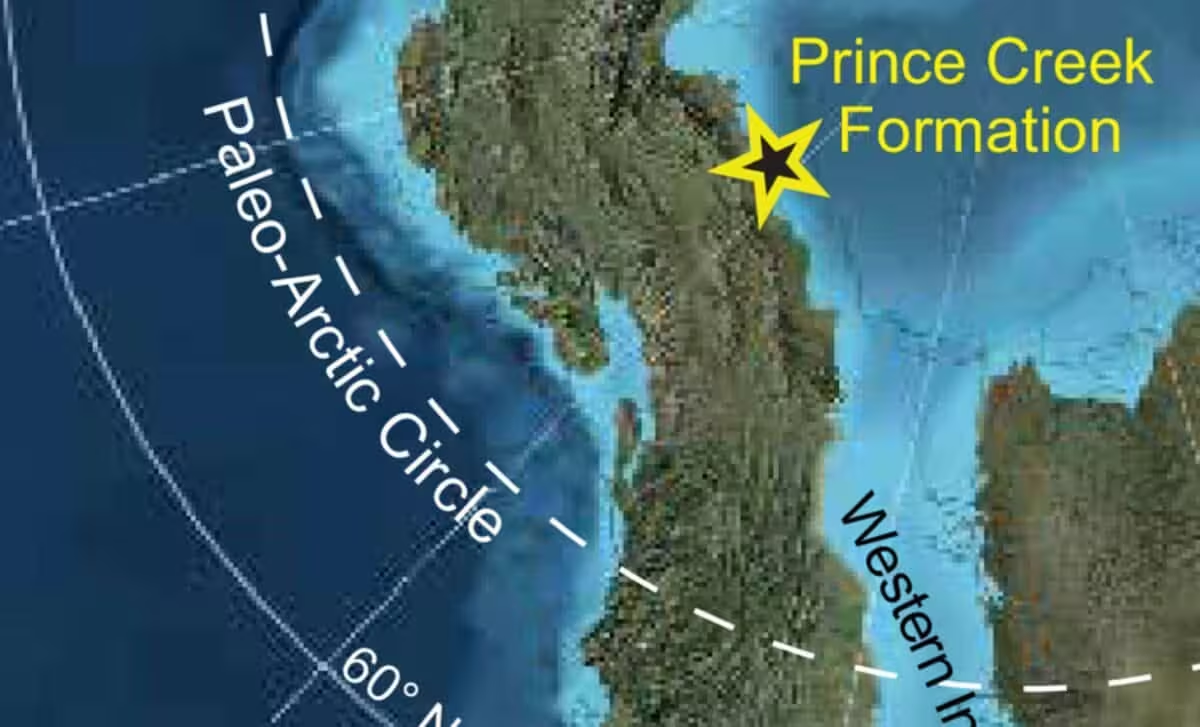
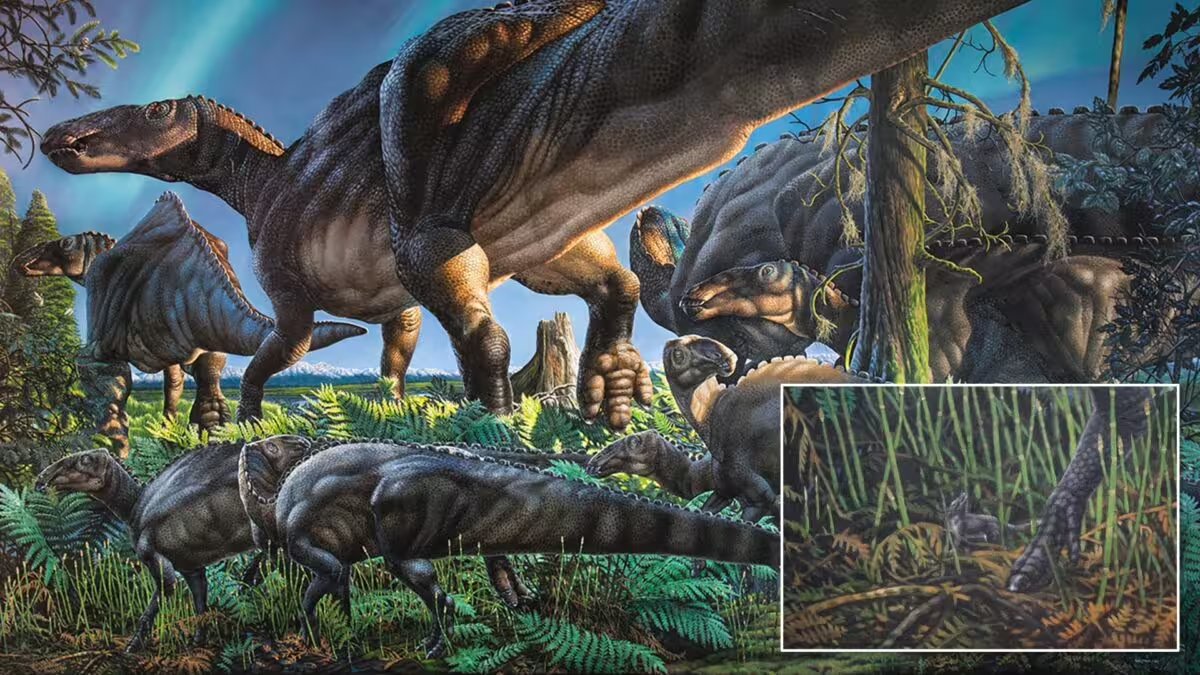
New fossil teeth from Alaska’s Prince Creek Formation show that the Late Cretaceous Arctic was far from barren, supporting a small but diverse group of mammals around 73 million years ago. The finds, reported in the Proceedings of the National Academy of Sciences (PNAS), overturn the notion that the ancient polar region played a marginal role in mammalian evolution.
New Arctic Mammals Identified from 73‑Million‑Year‑Old Teeth
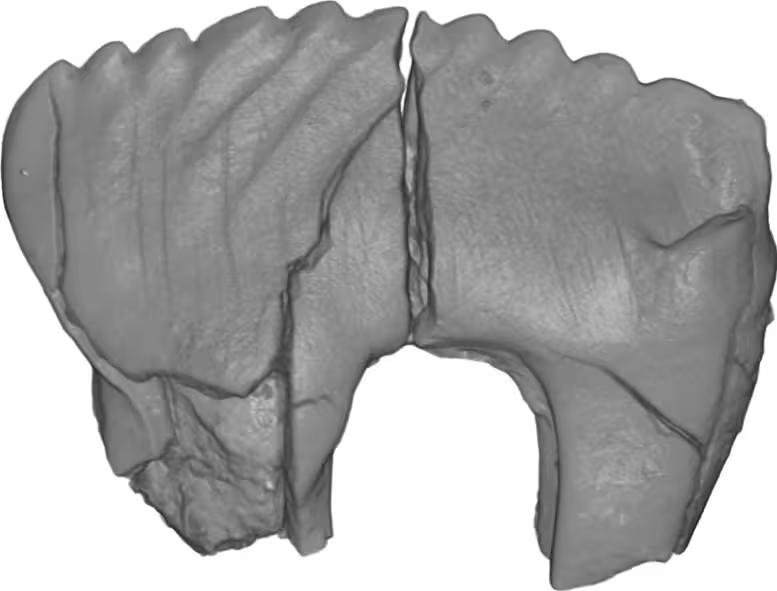
Three multituberculate species—named Camurodon borealis, Qayaqgruk peregrinus and Kaniqsiqcosmodon polaris—were distinguished based on the morphology of their teeth. These tiny mammals, comparable in size to modern mice or rats, belonged to a lineage that survived for more than 100 million years and outlasted the asteroid that ended the reign of non‑avian dinosaurs.
Dietary Specialization Reduced Competition
Analysis of the dental wear patterns suggests distinct feeding strategies: Camurodon borealis appears to have been a strict herbivore, Qayaqgruk peregrinus likely combined plant material with insects, and Kaniqsiqcosmodon polaris seems to have been primarily omnivorous with a plant‑heavy diet. These differences would have eased resource competition in an environment marked by long, dark winters and limited food availability.
Sarah Shelley, the study’s first author, explained that such niche partitioning may be a key factor behind the long‑term success of multituberculates. She added, “I think they can reveal a lot about the resilience of mammals, not just to the mass extinction, but also to climatic stresses that many organisms are facing today.”
“These three new mammal species add to a growing body of evidence that this ancient arctic region was home to unique, polar‑adapted species.”
Early Intercontinental Dispersal Revealed
One of the new species, Qayaqgruk peregrinus, shares close anatomical features with a contemporaneous mammal from present‑day Mongolia. This relationship points to a migration event that carried its ancestors from Asia into North America roughly 92 million years ago, well before the final breakup of the Cretaceous land bridge.
Patrick Druckenmiller, co‑author from the University of Alaska Fairbanks, noted that the findings illustrate how mammals adapted to extreme polar conditions. Jaelyn Eberle, senior author, emphasized that the fossil record already shows small mammals exploiting a north‑south corridor about 90 million years ago, reshaping our view of “native” species as dynamic participants in a long‑term ecological exchange.
“It really challenges how we think about native species. Deep time reminds us that a place is not just a point on a map, but a long, layered history of landscapes and inhabitants,” she added.
This article has been fact checked for accuracy, with information verified against reputable sources. Learn more about us and our editorial process.
Last reviewed on .
Article history
- Latest version
Reference(s)
- “Sarah Shelley.” <https://carnegiemnh.org/research/sarah-shelley-2/>.
- “Dr. Pat Druckenmiller | Museum | Museum of the North.” <https://www.uaf.edu/museum/collections/earth/staff/curator/>.
Cite this page:
- Posted by Hassan Raza