James Webb Telescope Finds Three Supermassive Black Holes Colliding in an Ancient Galaxy
Astronomers using the James Webb Space Telescope have discovered an astonishing triple black hole system at the dawn of the universe.
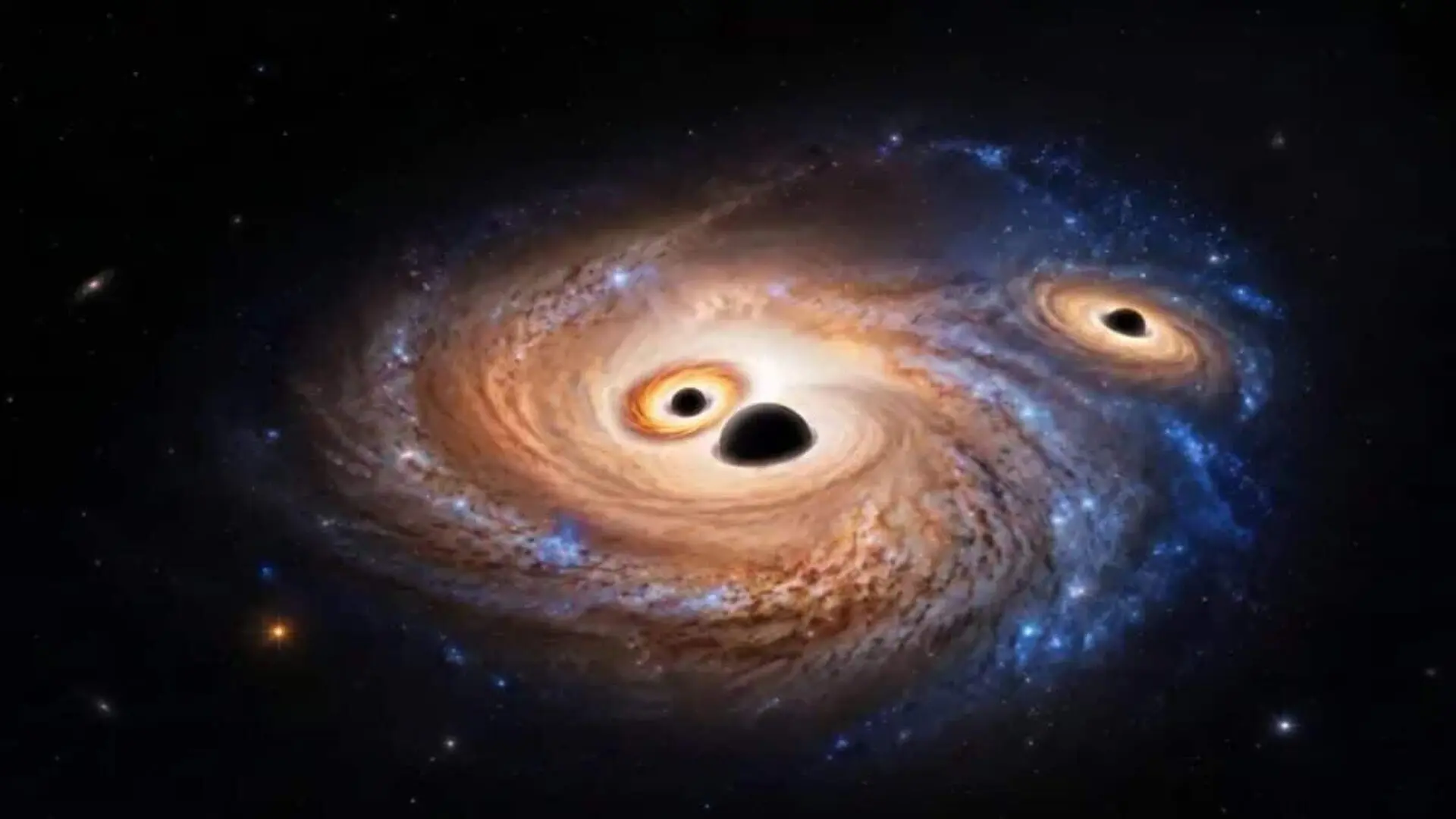
Astronomers have unveiled a rare cosmic configuration in the early universe: a galaxy containing three active, massive black holes. Located in J0148-4214, a system observed as it appeared just 1.3 billion years after the Big Bang, this discovery offers a new window into the mysterious processes that allowed supermassive black holes to reach such extreme sizes during the infancy of the cosmos.
The light from this distant galaxy, which sits at a redshift of 5.0167, has traveled for approximately 12.5 billion years before reaching our instruments. The presence of such massive objects so early in the history of the universe has long puzzled researchers, as it leaves little time for them to have grown through standard accretion alone.
Revealing the Invisible via High-Speed Gas
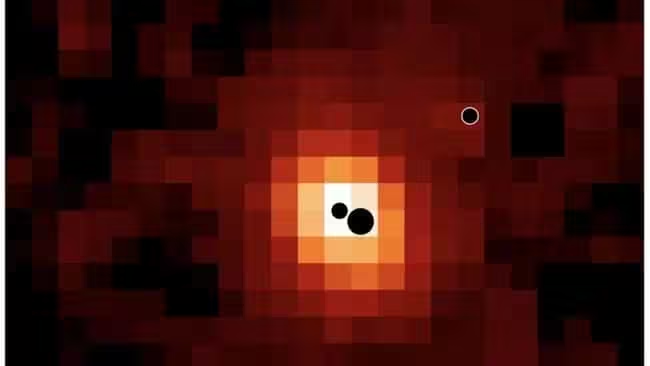
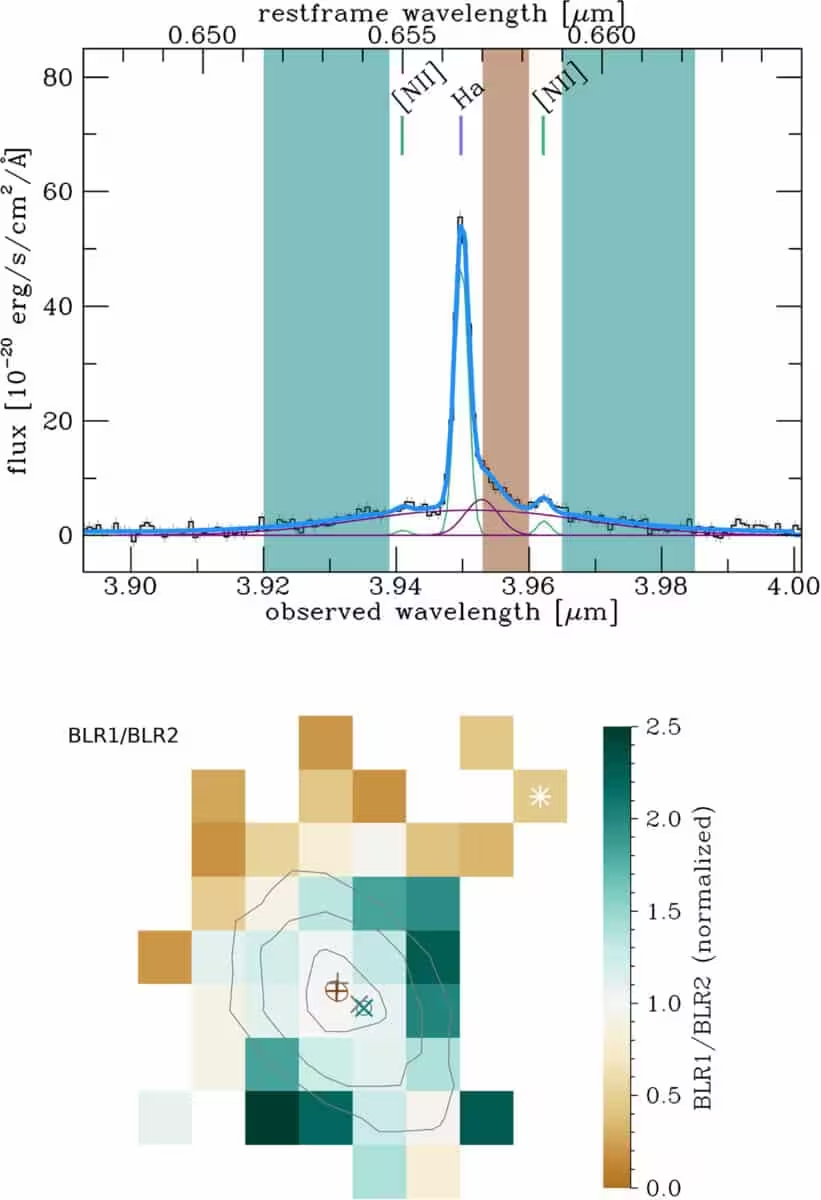
While the black holes themselves are obscured, the James Webb Space Telescope’s Near Infrared Spectrograph (NIRSpec) enabled scientists to detect their presence by tracking ionized hydrogen gas moving at extreme velocities around each gravitational well. Hannah Übler, an astronomer at the Max Planck Institute for Extraterrestrial Physics and leader of the study, noted that this is the first definitive evidence of three active black holes within a single galaxy from this epoch.
The trio exhibits a striking disparity in mass and location. The primary black hole clocks in at 80 million solar masses. A much smaller companion, weighing roughly 600,000 solar masses, orbits just 620 light-years away from the center. Despite its modest size, this secondary object is consuming gas at a rate that exceeds the Eddington limit, a state where the radiation pressure is so intense it usually halts the inflow of matter. The third member of the group, positioned about 5,500 light-years from the galactic core, weighs in at approximately two million solar masses—roughly half the mass of our own Milky Way’s central black hole, Sagittarius A*.
Galaxy Mergers as a Catalyst for Rapid Growth
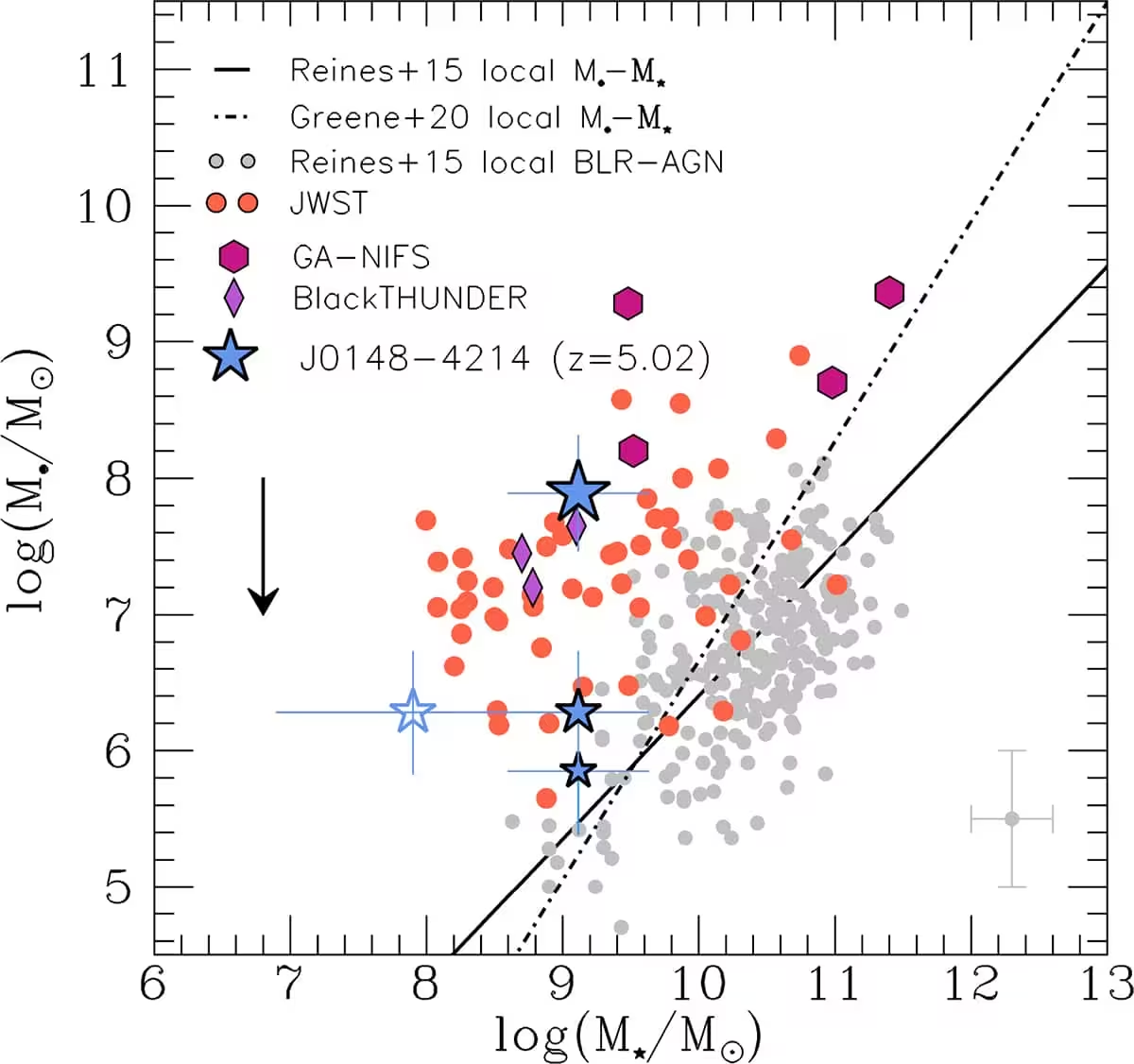
Reporting their findings in Astronomy & Astrophysics, the research team suggests that these black holes likely converged within J0148-4214 through a series of galaxy mergers. Giovanni Mazzolari, also of the Max Planck Institute, explained that the JWST data allowed for a comprehensive look at the galaxy, which contains a total stellar mass of 1.3 billion suns. The sheer scale of the black holes relative to this stellar population suggests that mergers serve as a fast-track mechanism for rapid mass accumulation in the early universe, a sentiment echoed by co-author Roberto Maiolino of the University of Cambridge.
The Complexity of a Three-Body Problem
However, the future of this system remains uncertain. Astronomers are currently debating whether the third black hole is destined to merge with the central pair or if it is being ejected from the galaxy entirely. This scenario reflects the classic “three-body problem,” where gravitational interactions can lead to the “slingshot” effect. Similar to how stars in the Milky Way can be accelerated to extreme speeds during close encounters with Sagittarius A*, this black hole may have been thrown outward during a complex dance with the other two.
For now, the trajectory of this third object remains unclear, leaving its ultimate fate—collision or cosmic exile—an open question. Should these massive entities eventually collide, they would generate low-frequency gravitational waves, a phenomenon that current ground-based detectors like LIGO or Virgo are not designed to capture. The upcoming LISA mission, which will deploy a triangle of spacecraft separated by 1.55 million miles, is specifically engineered to detect these types of heavy-duty cosmic events.
This article has been fact checked for accuracy, with information verified against reputable sources. Learn more about us and our editorial process.
Last reviewed on .
Article history
- Latest version
Reference(s)
- Sabia, Stephen. “NIRSpec - NASA Science.”, August 12, 2024 NASA <https://science.nasa.gov/mission/webb/nirspec/>.
- “ESOblog: The story of our quest for Sagittarius A*, the supermassive black hole at the heart of the Milky Way..” www.eso.org <https://www.eso.org/public/germany/blog/our-quest-for-sagittarius-a/?lang>.
- <https://www.aanda.org/articles/aa/full_html/2026/08/aa57419-25/aa57419-25.html>.
Cite this page:
- Posted by Aisha Ahmed