Urban Age-Friendliness Varies By Region And Technology Access In Malaysia
A new multigenerational study across six local authorities reveals how digital divides and master-planned urban designs shape daily life for aging city residents.

Neighborhood environments in fast-growing urban regions shape everyday life for residents of all ages, yet the ways cities support aging populations remain unevenly understood. Researchers analyzing demographic shifts in the Klang Valley region discovered that perceived neighborhood age-friendliness varies significantly across local councils and ethnic groups, with digital technology emerging as a major dividing line between younger and older generations.
By 2030, residents aged 60 and older are projected to make up more than 15 percent of Malaysia’s population while urbanization climbs past 82 percent. To capture how contemporary pressures affect urban livability, researchers adapted the World Health Organization Age-Friendly Cities framework by adding technology and financial security to the traditional assessment domains. The work was published in PLOS One on November 17, 2026, offering new quantitative data from 511 respondents across six major urban local authorities.
How Master-Planned Cities Compare to Mature Urban Centers
The study collected self-administered questionnaires between March and June 2025, capturing perspectives from young adults aged 18 to 59 alongside older residents. Participants evaluated 75 closed-ended indicators across ten distinct categories, including outdoor spaces, housing, transport, health services, and digital access. Statistical analysis revealed that overall scores sat above the neutral midpoint, pointing to generally favorable perceptions of neighborhood environments.
However, significant differences emerged when comparing specific administrative regions. Putrajaya Corporation recorded higher ratings across physical infrastructure and outdoor spaces compared to older, high-density municipal areas like Kuala Lumpur City Hall. Researchers attribute this contrast to master-planned development, where parks, pathways, and accessible facilities were integrated from the outset, whereas established cities face spatial and structural constraints when adapting to demographic changes.
The Digital Divide and Generational Perceptions of City Life
When examining generational differences, chronological age showed little impact on overall scores, but technology proved to be a striking exception. Younger participants reported significantly higher satisfaction with digital tools and communication systems than older adults, highlighting an environmental mismatch where rapid technological shifts outpace digital literacy among seniors. Financial security and healthcare services showed moderate, consistent ratings across all age brackets and ethnic groups.
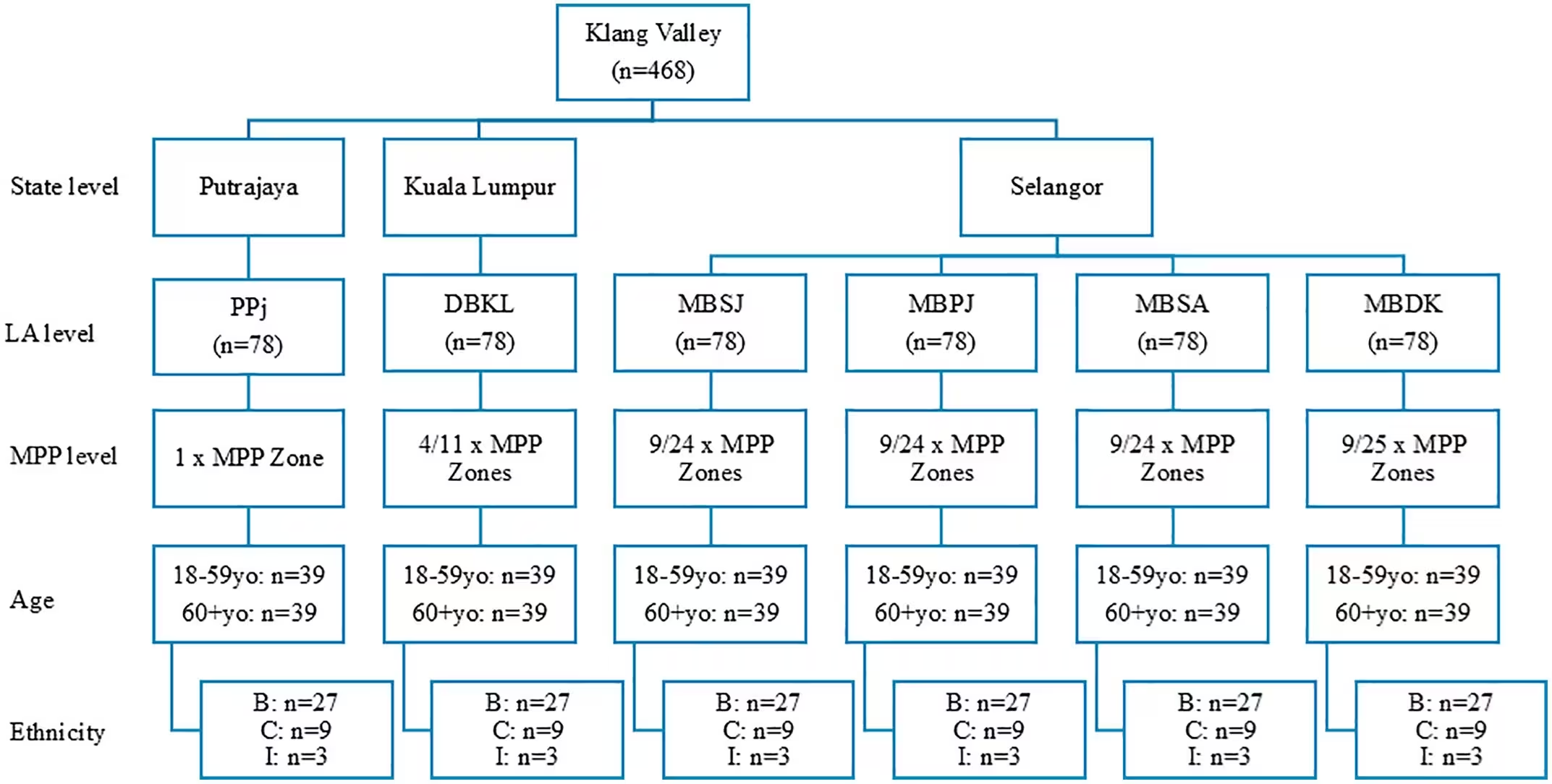
Civic participation and employment stood out as the sole domain scoring significantly below the neutral midpoint across the entire region. Residents indicated that meaningful opportunities to engage in local decision-making and community volunteer work remain limited. Meanwhile, majority Bumiputera respondents reported higher scores across several domains compared to Chinese and Indian participants, pointing to the influence of cultural and socioeconomic factors on how urban spaces are experienced.
What Next for Inclusive Urban Planning
The study highlights limitations, noting that the cross-sectional survey design captures perceptions at a single point in time and relies on self-reported data from a predominantly long-term resident population. Future investigations using longitudinal tracking and advanced psychometric testing will help clarify how urban interventions influence daily life over longer periods.
The authors conclude that modern city planning must adopt a multigenerational approach rather than focusing exclusively on senior-specific amenities. Bridging the digital divide through targeted literacy programs and opening up visible channels for civic engagement will be essential as urban areas continue to age.
The research was published in PLOS One on November 17, 2026.
This article has been fact checked for accuracy, with information verified against reputable sources. Learn more about us and our editorial process.
Last reviewed on .
Article history
- Latest version
Reference(s)
- How, Sin Meun., et al. “Perceived age-friendliness in multiethnic and multigenerational Klang Valley, Malaysia: An extended WHO Age-Friendly Cities assessment.” PLOS One, vol. 21, no. 11, November 17, 2026, pp. e0363048 Public Library of Science (PLoS), doi: 10.1371/journal.pone.0363048. <https://doi.org/10.1371/journal.pone.0363048>.
Cite this page:
- Posted by Michael Ellison