Archaeologists Find 700-Year-Old Medieval Notebook Hidden Beside Silk Toilet Paper
Archaeologists have discovered a tiny 700-year-old book believed to have been lost by a medieval merchant, offering a rare glimpse into life in the past.
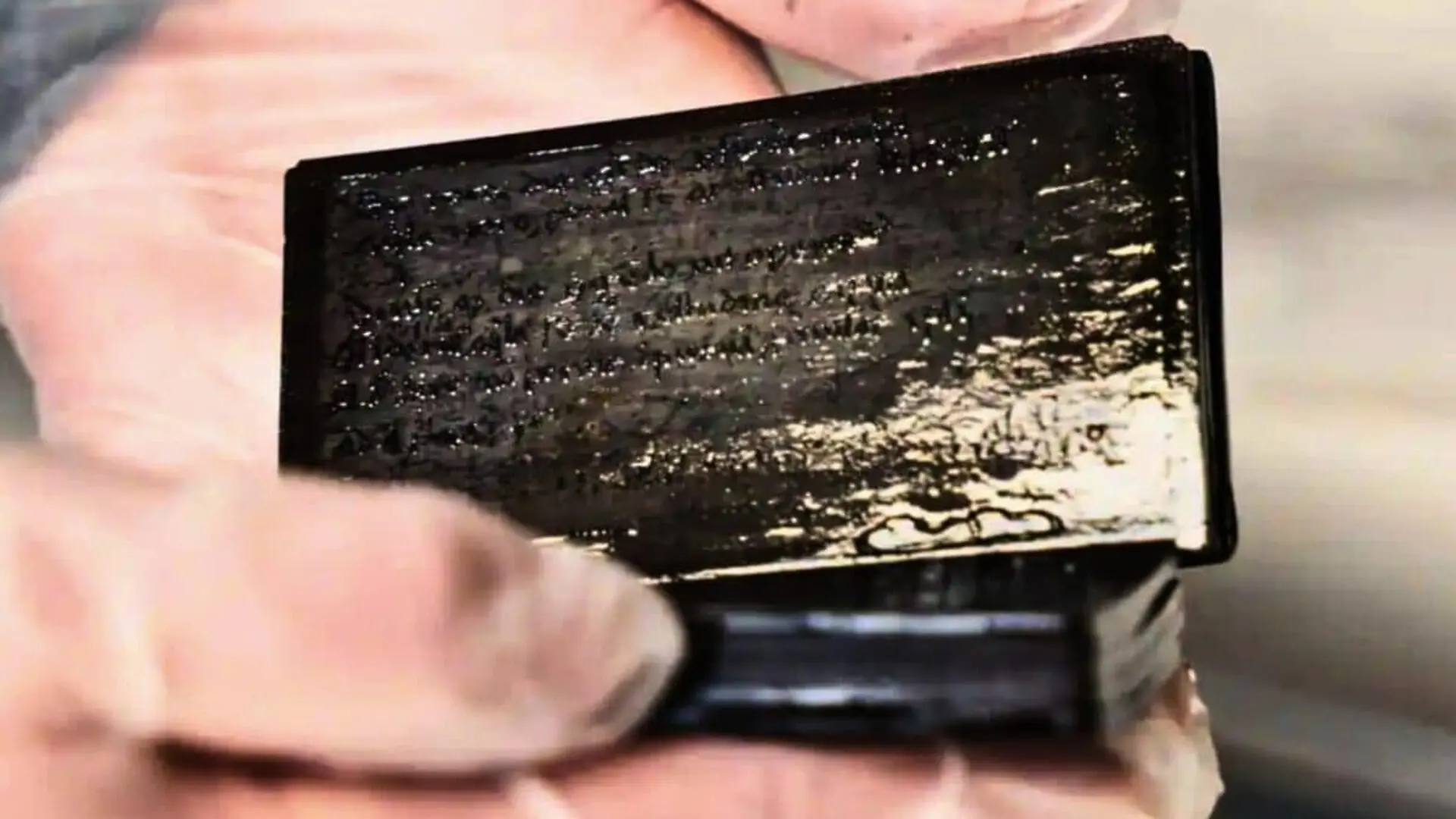
Archaeologists working in Paderborn, Germany, have unearthed a rare window into the medieval world, discovering a remarkably preserved wax tablet notebook discarded centuries ago. The object was recovered from a waterlogged, airtight chamber within one of five ancient latrines located beneath a construction site for a new administrative building.
Initially appearing as a nondescript, saturated clump of earth, the artifact revealed its true identity only after a meticulous cleaning process by conservator Susanne Bretzel. The find, which dates to between the 13th and 14th centuries, represents a significant discovery for the region of North Rhine-Westphalia, where such complete medieval notebooks are virtually unheard of.

The notebook, measuring roughly 10 by 7.5 centimeters, is smaller than a modern smartphone. It consists of ten wooden pages coated in wax and bound within a stamped leather pouch featuring a distinct lily motif—a symbol frequently associated with purity and nobility during the Middle Ages. The wax surfaces still bear legible Latin cursive, etched by a stylus centuries ago. Intriguingly, experts have identified faint traces of earlier writing beneath the final entries, suggesting the notebook was a reusable tool for quick, daily notations.
High-Tech Imaging to Reveal Hidden Layers
City archaeologist Sveva Gai believes the notebook likely belonged to a merchant. During the medieval period, merchants were among the few members of the public with the literacy required to maintain such records of business deals and personal thoughts. Because the wax surfaces were meant to be smoothed over with the flat end of a stylus, the surviving text offers a rare opportunity to study layers of historical data.
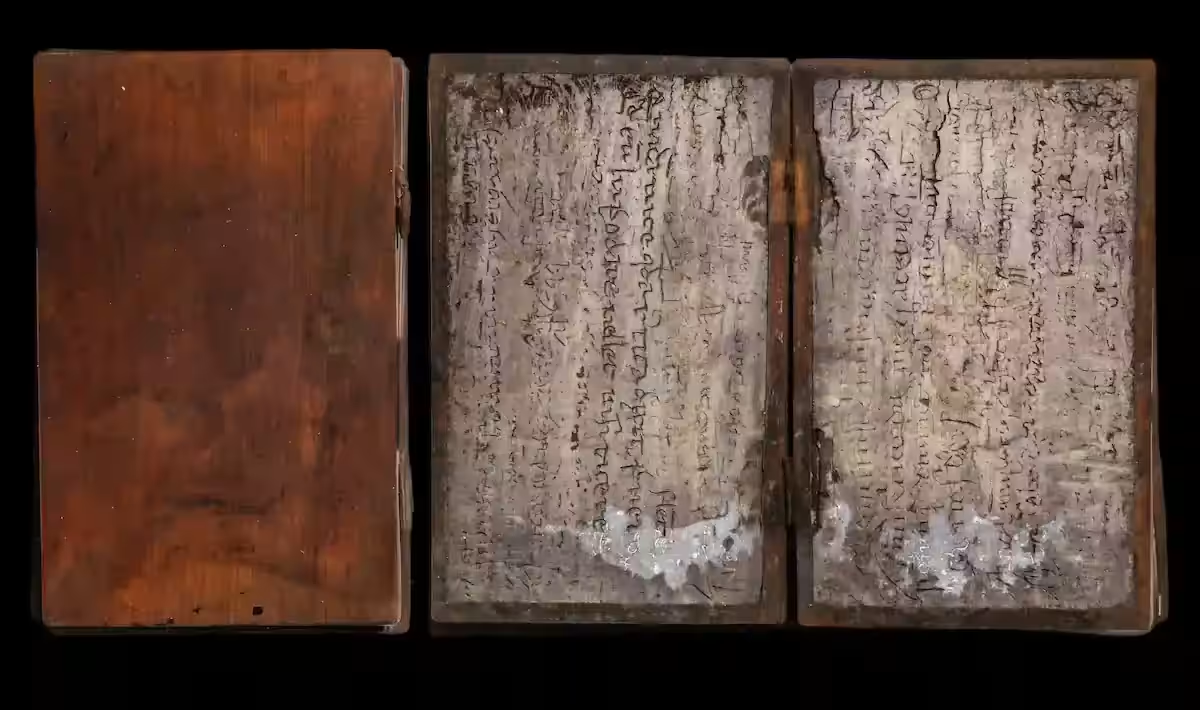
The research team at the Landschaftsverband Westfalen-Lippe (LWL) intends to employ advanced imaging technology to differentiate the overlapping scripts, which currently present a challenge even for specialists. The LWL confirmed that the artifact is undergoing a rigorous preservation process, remaining submerged in distilled water to stabilize the organic materials before a comprehensive transcription can be attempted.
Evidence of an Affluent Household
The location of the find adds further context to the lifestyle of the Paderborn elite. The same latrine that yielded the notebook also contained fragments of fine silk. Researchers hypothesize that these expensive fabrics, once worn, were repurposed as toiletry items. Combined with the refined leather casing of the notebook, the archaeological evidence suggests the site was connected to a well-to-do household, likely from the city’s upper middle class.
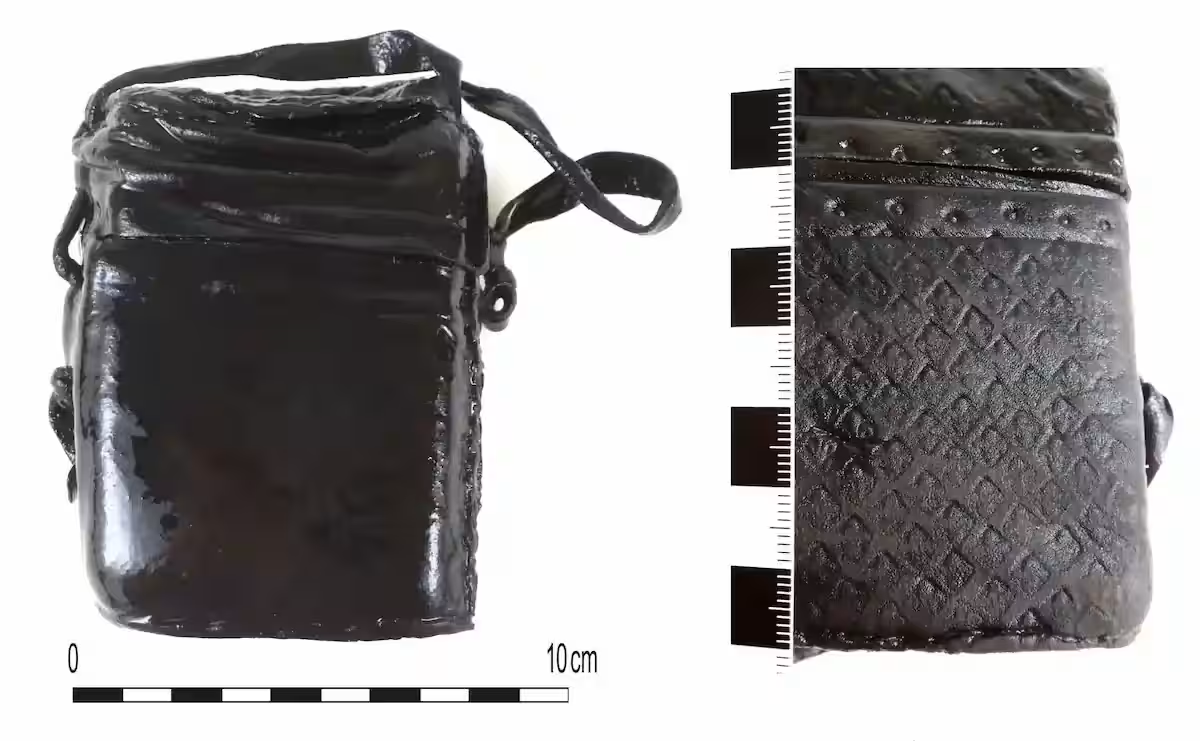
The excavation, which began in late 2024 near the former Abdinghof monastery, has provided a trove of daily items, including knives, basketry, and pottery. These artifacts are helping experts date the latrines precisely to the 11th-century limestone quarry site. While it remains unclear how exactly the notebook ended up in the latrine, archaeologists suggest it may have been an accidental loss rather than a deliberate disposal.
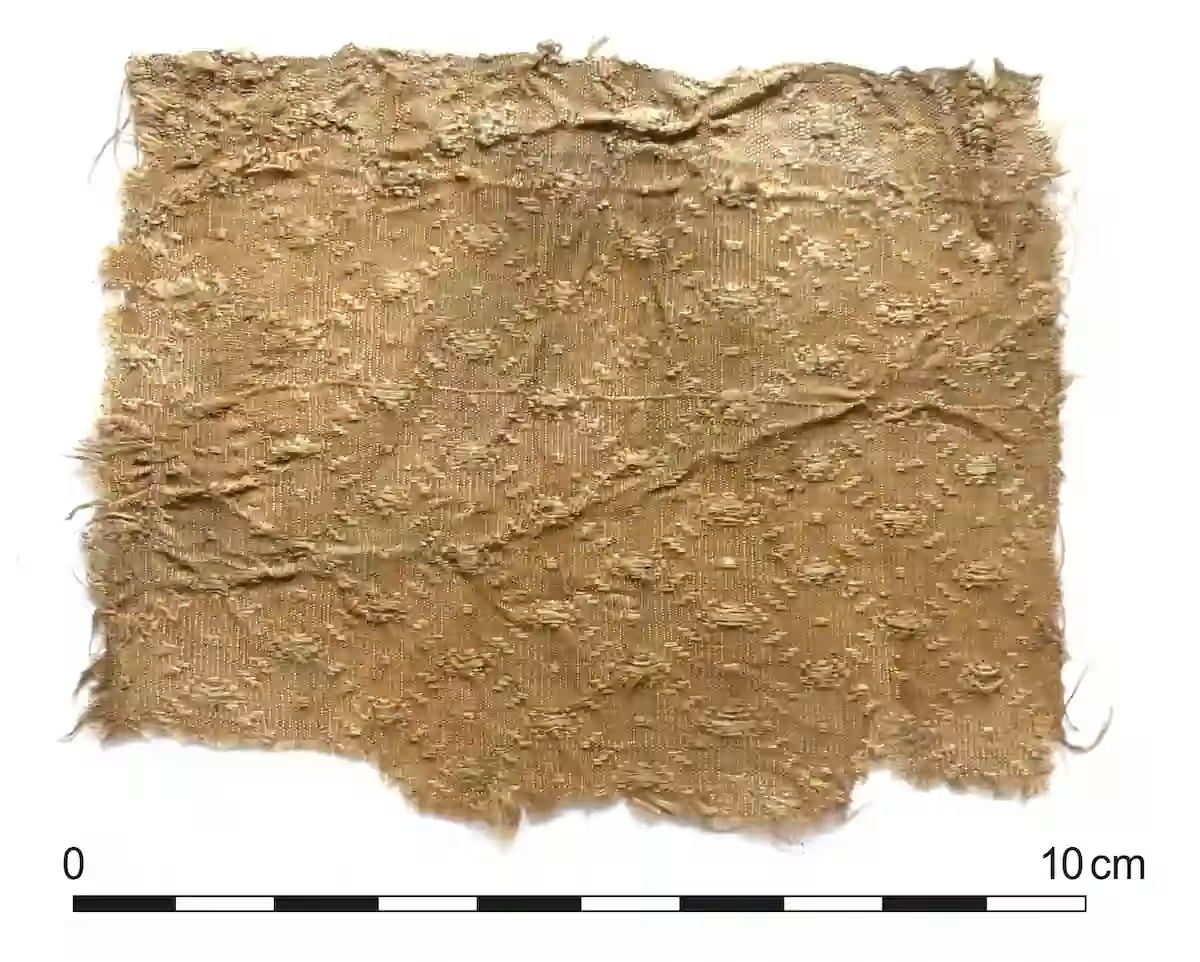
Conservation efforts are expected to continue for up to a year as experts analyze the composition of the wax, resin, and wood. Once the delicate work is complete, the public will have the opportunity to view this unique piece of history at the LWL-Museum in der Kaiserpfalz in Paderborn.
This article has been fact checked for accuracy, with information verified against reputable sources. Learn more about us and our editorial process.
Last reviewed on .
Article history
- Latest version
Reference(s)
- “Seltener Fund in Paderborn.” <https://www.lwl.org/pressemitteilungen/nr_mitteilung.php?urlID=63721>.
Cite this page:
- Posted by Vikram Desai