Archaeologists Discover Ancient Dwelling Carved Into Corsican Bedrock Near Mysterious Port
Archaeologists have uncovered a Roman-era dwelling carved into bedrock in Corsica, potentially revealing a long-lost coastal settlement from 1,500 years ago.
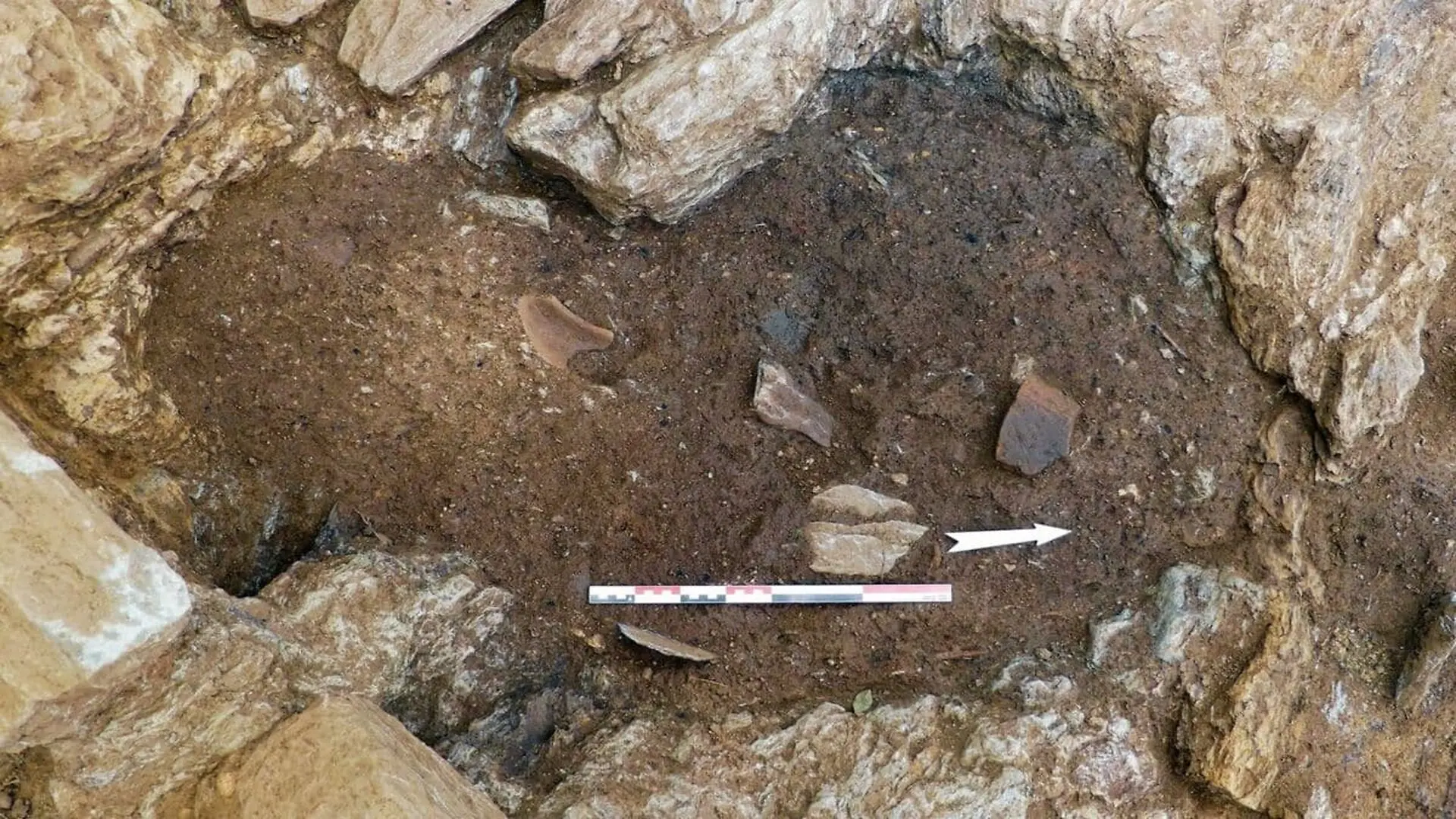
Archaeologists working on the Cap Corse peninsula in northern Corsica have unearthed the stone foundations of a Late Antique dwelling, offering a rare window into coastal life during the transition from the Roman era to the Middle Ages. The excavation, conducted over two months in early 2026, occurred ahead of private construction work on a site overlooking the Bay of Meria.
The discovery is particularly significant due to its location. Situated less than 100 meters from the shoreline, the structure sits just 30 meters above a maritime landing stage that was uncovered in a separate dig just one year prior. Experts from France’s National Institute for Preventive Archaeological Research (Inrap) are now working to determine if the hillside home functioned as an isolated residence or part of a larger, maritime-focused community.
Ingenious Construction Built into the Landscape
The dwelling occupied a footprint of at least 50 square meters, carved directly into the schist bedrock of a northern slope. The builders utilized local stone to create robust foundation sections, employing a mix of squared blocks laid in alternating patterns to ensure structural stability. In some areas, the natural topography of the hill was integrated into the building’s walls, augmented by large vertical schist slabs reinforced with timber posts and stone wedges.
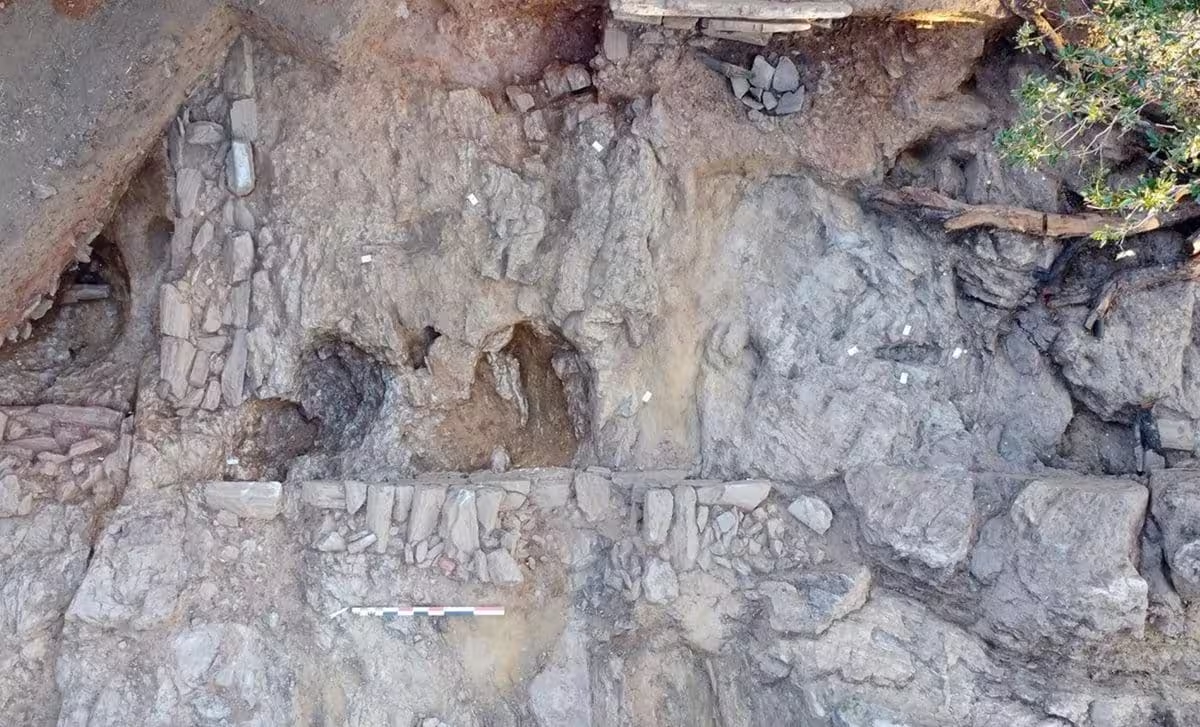
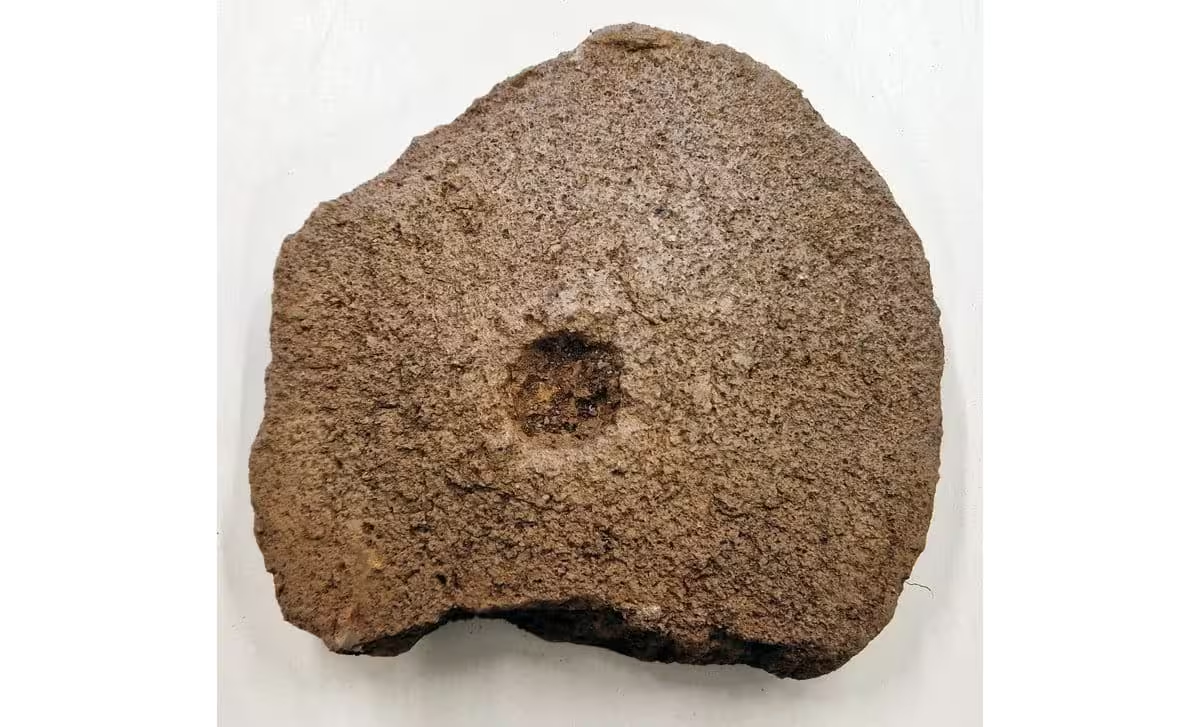
Archaeological evidence suggests the interior was divided into at least three distinct rooms. The recovery of numerous tegulae—traditional Roman roof tiles—indicates the structure was once covered by a tiled roof. Excavations within the rooms and their associated refuse pits revealed a wealth of domestic artifacts, including iron tools, glass tableware, fragments of cooking pottery, and a catillus, or hand-operated millstone. These findings confirm the site served as a functional home rather than a simple storage facility.
Coastal Networks and Maritime Legacy
The proximity of the house to the Meria stream landing stage suggests a deliberate connection to the sea. Lead archaeologist Brice Chevaux, who noted the rarity of finding two such distinct archaeological sites in such a confined area, posits that the region may have supported a small hamlet of laborers or traders active during the fifth and sixth centuries.
The discovery is bolstered by the recovery of imported ceramics rarely documented in Corsica, pointing to established Mediterranean trade networks. These findings supplement a longer history of maritime presence in the Bay of Meria, which includes a marble architectural fragment pulled from the sea in 2012 and a 19th-century find of a marble altar dedicated to the Emperor Claudius.
Currently, researchers are analyzing environmental data—including pollen, mollusks, and biological remains—found near the landing site to reconstruct how the local coastline and water flow have shifted over the last 1,500 years. While the full scale of the settlement remains an open question, the combined findings offer significant insight into how Corsican coastal communities navigated the profound social and political shifts of the early Middle Ages.
This article has been fact checked for accuracy, with information verified against reputable sources. Learn more about us and our editorial process.
Last reviewed on .
Article history
- Latest version
Reference(s)
- “Actualité | Un habitat tardo-antique dans le Cap Corse (Meria, Haute-Corse).”, October 15, 2026 Inrap <https://www.inrap.fr/un-habitat-tardo-antique-dans-le-cap-corse-meria-haute-corse-20949>.
- “CCJ - Centre Camille Jullian.” CCJ - Centre Camille Jullian <https://ccj.cnrs.fr/spip.php?article2766>.
- “À Meria, une fouille archéologique révèle les traces d’un possible hameau antique.” Corse Net Infos - Pure player corse <https://www.corsenetinfos.corsica/A-Meria-une-fouille-archeologique-revele-les-traces-d-un-possible-hameau-antique_a91004.html>.
Cite this page:
- Posted by Vikram Desai